
Article
Candidates Would Take a Pay Cut to Avoid a Bad Interview Process
Last Updated


By Ricardo Rodriguez and


Article
Last Updated
By Ricardo Rodriguez and
Job seekers are navigating hiring processes in which securing an offer can require repeated applications, unpaid work, and long stretches without employer communication. To understand the toll of modern hiring, Software Finder surveyed 1,020 Americans who had actively searched for a job in the past 18 months about the length, cost, and frustration involved. Their experiences show how hiring practices can affect not only whether candidates accept an offer but also how they view an employer afterward.

Submitting an application is only the beginning of the hiring process, and repeated attempts can make a job search particularly demanding. For some candidates, that effort stretched across the entire 18-month period covered by our survey.
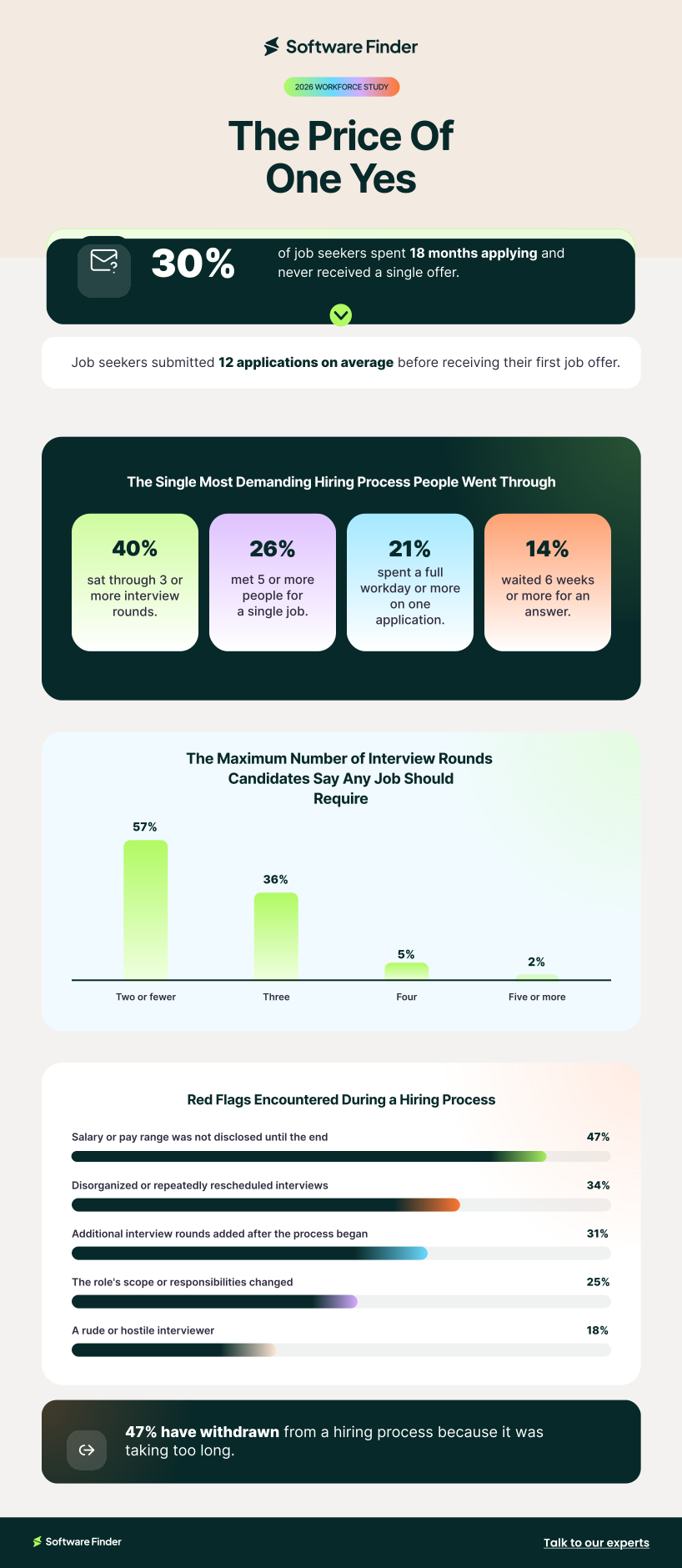
Successful job seekers submitted an average of 12 applications before receiving an offer. Yet success was far from universal: 30% of job seekers spent 18 months applying without receiving a single offer.
The share was even higher among candidates targeting certain industries. Government and public administration applicants were the most likely to spend 18 months applying without an offer, at 44%, followed by hospitality and food applicants (38%).
Information technology applicants followed at 34%, while 31% of those seeking education roles went the full period without an offer. These results show how much the job search experience can differ depending on the field candidates are trying to enter.
Silence from employers and requests for unpaid work both add to what a hiring process costs candidates. When either happens, the applicant spends the time regardless, with no sign of whether the process is still moving.
Ghosting was widespread, with 75% of job seekers saying an employer had stopped communicating with them at some point during their search. Among those who were ghosted, 78% stopped trying to contact the employer after two or fewer follow-ups, including 16% who never followed up at all.
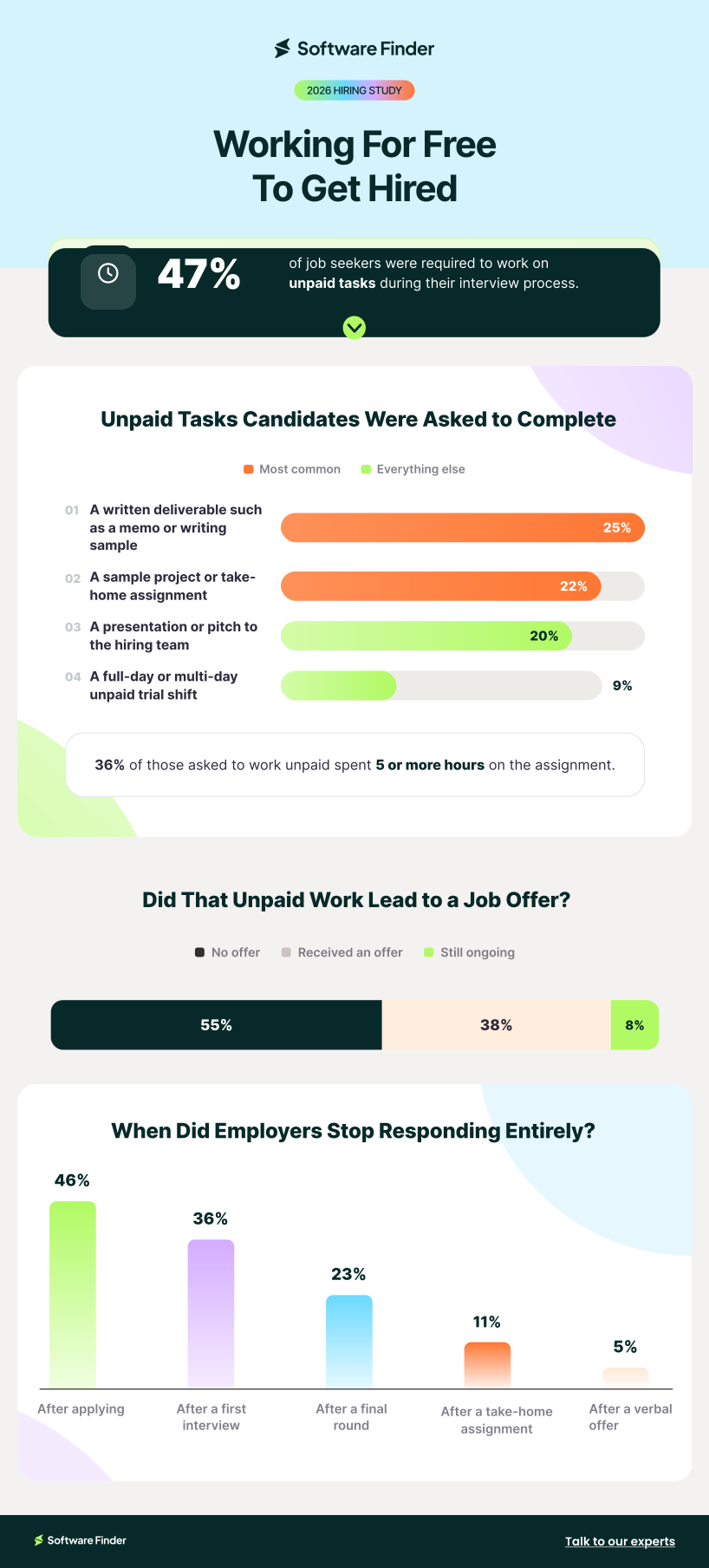
Unpaid interview work was another common demand. Nearly half of job seekers (47%) were required to complete unpaid tasks during the interview process, with the practice most prevalent among information technology applicants (66%), finance applicants (56%), and education applicants (49%). Separately, 10% of candidates said they had seen a company use their interview assignment without ultimately hiring them.
Completing free work offered no guarantee of employment. Among candidates required to perform unpaid interview tasks, 55% did not receive a job offer. That outcome was most common among information technology applicants at 64%, followed by finance and healthcare applicants at 49% each.
Candidates evaluate employers throughout the hiring process just as employers evaluate candidates. Interview methods, questions, and overall treatment can influence whether someone wants the job by the time an offer arrives.
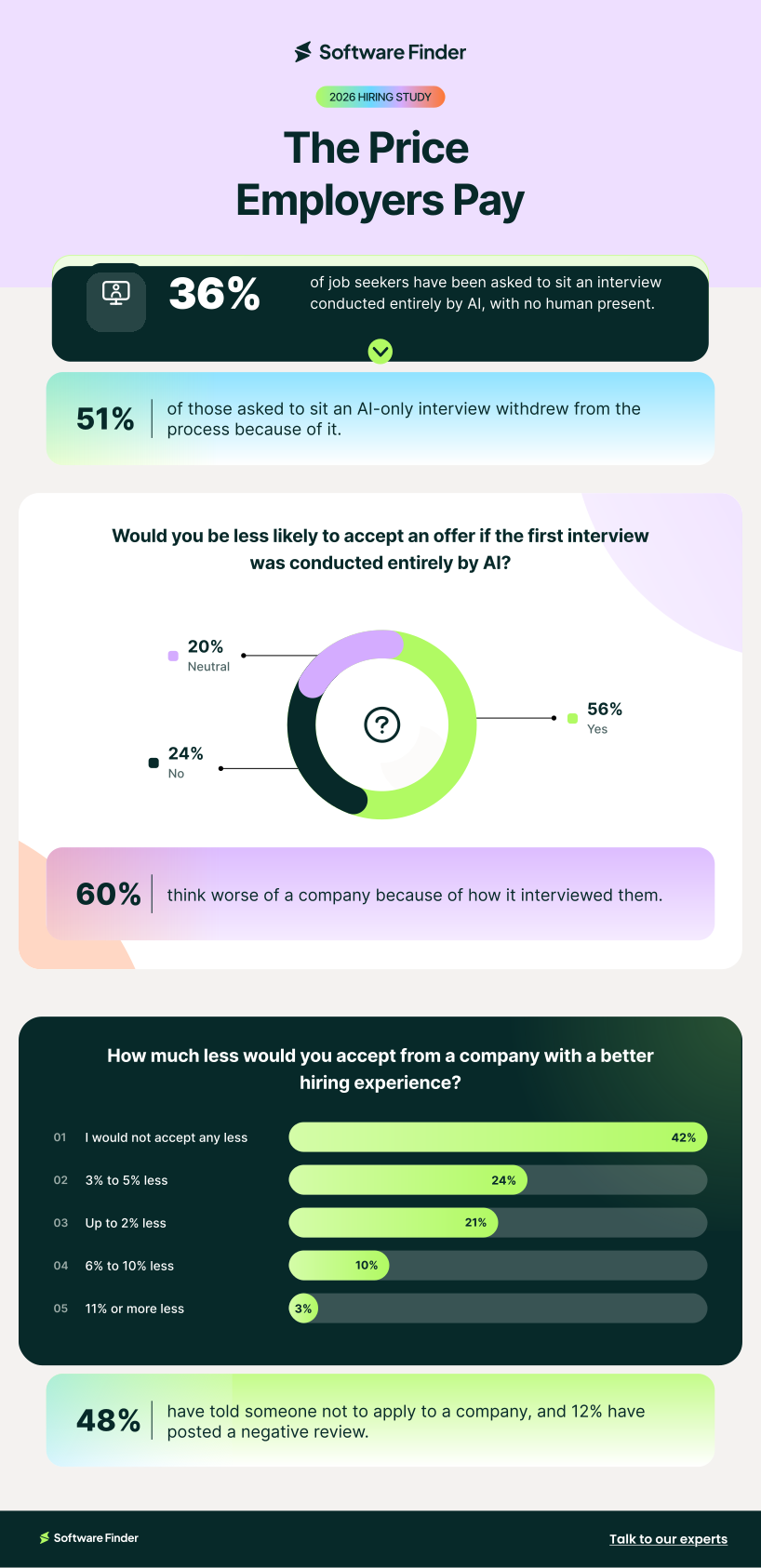
A majority of job seekers were willing to trade compensation for a better experience, with 58% saying they would accept less money in exchange for an improved hiring process. Gen Z candidates were the most willing to make that trade (67%). Gen X was more resistant to compromising on compensation, with 49% saying they would not accept a dollar less for a better process.
Technology also had the potential to influence candidates' decisions. More than half (56%) said they would be less likely to accept an offer if their interview had been conducted entirely by AI.
Candidate frustration could extend beyond the hiring decision itself. Overall, 60% said they thought worse of a company because of how it interviewed them, while 48% had warned someone else away from an employer.
Some respondents also recalled unusual or inappropriate questions that made their interviews stand out for the wrong reasons. Their examples included:
For many job seekers, finding work involved far more than submitting a few applications and attending an interview. Candidates encountered ghosting, unpaid assignments, unsuccessful searches, and experiences that changed how they viewed prospective employers.
Those consequences can reach beyond one hiring decision. With 58% of job seekers willing to accept less money for a better hiring experience and 60% reporting a worse opinion of a company because of its interview process, employers have reason to consider candidate experience an important part of recruitment. A hiring process does more than identify who gets the job—it can determine who still wants it when the process ends.
We surveyed 1,020 Americans who went through an active job search in the past 18 months about the length, cost, and frustration of modern hiring processes. The sample spanned generations, including millennials (45%), Gen Z (30%), Gen X (21%), and baby boomers (4%), and genders, including women (57%), men (41%), and nonbinary or prefer not to say (2%). Methodology percentages that do not total 100% are due to rounding or to respondents selecting more than one option. The data was collected in August 2026.
Software Finder helps businesses evaluate and compare software solutions through in-depth research, user reviews, and expert guidance, including tools for recruiting, HR, and workforce management.
The information and findings in this article may be shared for noncommercial purposes only. When referencing or republishing these findings, please provide attribution and a link to Software Finder.