




After years of job-hopping and workers holding the upper hand, American employees have flipped the script. They're staying put, playing defense, and keeping their heads down, a shift economists have started calling the Great Stay. Software Finder surveyed 1,004 employed U.S. adults to find out what that looks like from the inside.
Staying in a job isn't the same as being happy in it. Our data found that a large share of workers who aren't going anywhere would leave in a heartbeat if the market felt safer, and many have quietly checked out in the meantime. For a lot of workers, the choice to stay comes down to caution, and it's changing how they feel about their jobs.
“The risk for businesses is mistaking a cautious workforce for a loyal one. When employees are turning down opportunities because moving feels too risky, companies may be benefiting from labor-market uncertainty rather than earning long-term retention. That creates a window for leaders: use this period to give people stronger reasons to stay, or risk discovering how much pent-up turnover was hiding beneath the surface when confidence returns.”
Adnan Mailk, CEO & Cofounder of Software Finder.

- Most American workers (63%) are hunkering down in their current jobs, staying put because the market feels too uncertain to leave.
- More than half of workers (54%) would quit if the market improved, meaning most stayers are reluctantly loyal.
- About 1 in 4 workers (26%) think they'd be paid less if they switched jobs today.
- 41% of workers are less willing to take a career risk today than they were 2 years ago, while 30% are more willing.
- Comfort is the top reason workers stay (56%), ranking above pay and loyalty.
- Reluctant stayers are 5 times more likely to feel trapped and nearly 4 times more likely to feel resentful than content stayers.
- Nearly 3 in 4 reluctant stayers (72%) have pulled back at work, versus 41% of content stayers.
Most of the people staying put aren't chasing a promotion. They're avoiding taking a risk.
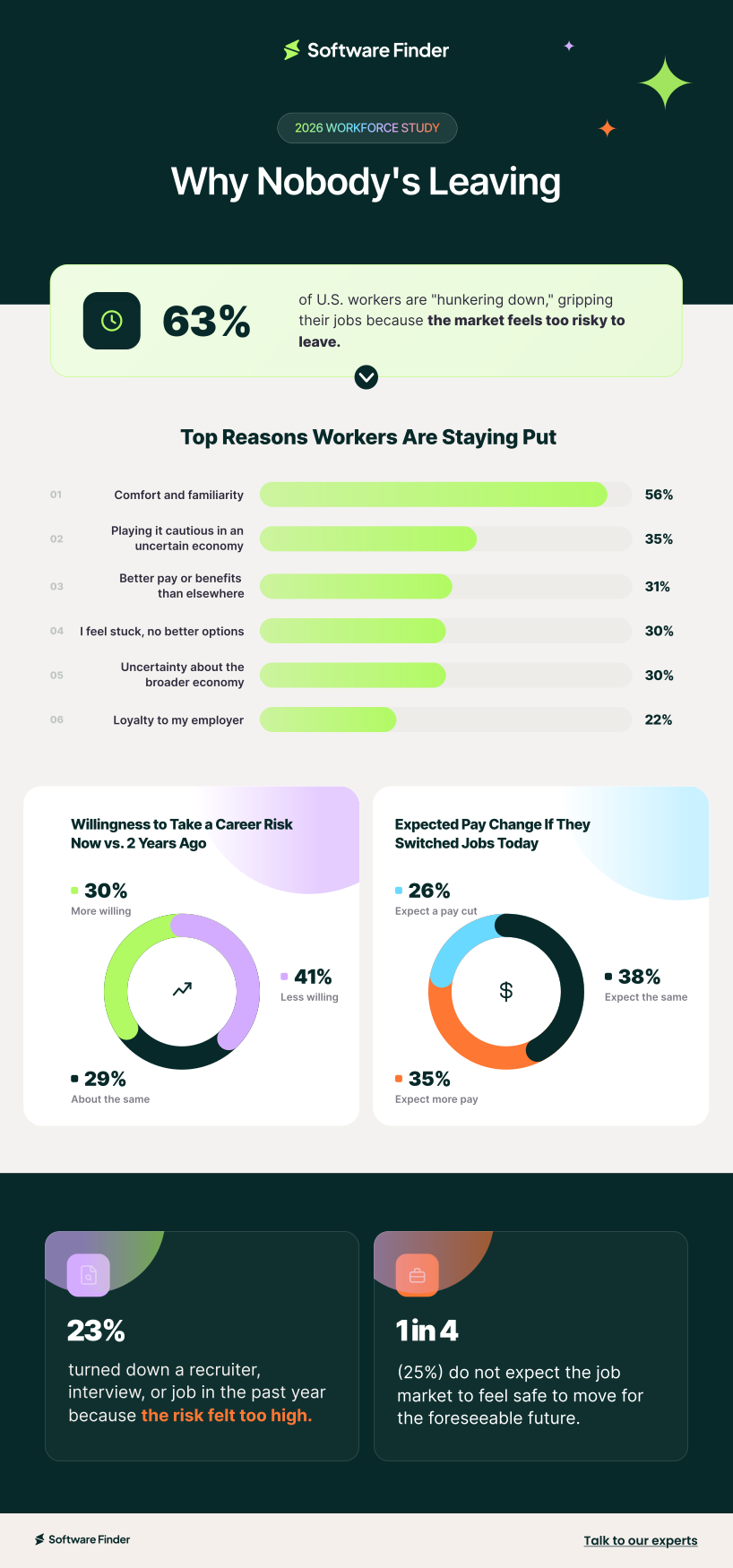
Here's what's keeping workers where they are:
- Staying Put on Purpose: 63% of workers say they are hunkering down, and 13% say they are intentionally staying until the market feels safer.
- Comfort Beats a Bigger Paycheck: 56% say comfort and familiarity are their reasons for staying, ahead of better pay (31%) and loyalty (22%).
- Shrinking Risk Appetite: 41% are less willing to take a career risk than they were 2 years ago, while just 30% are more willing.
- Leaving Money on the Table: 26% think they would be paid less if they switched jobs today, and another 35% believe they would earn more elsewhere but stay anyway.
- Turning Down the Offer: 23% turned down a recruiter, interview, or job opportunity in the past year because the risk felt too high, rising to 32% among workers who actually had a recruiter or opportunity reach them
- Hunkering Down Peaks in the Middle: Managers reported the highest rate (68%), ahead of individual contributors (62%) and executives (45%).
“Comfort can be a positive reason to stay, but employers shouldn’t confuse familiarity with engagement. When employees feel the external market is too risky to make a move, retention numbers alone don’t tell you whether people are genuinely committed to the organization. The fact that so many reluctant stayers are already pulling back at work is the bigger warning sign. Leaders need to understand not just who is staying, but whether they still see a future for themselves inside the company.”
Ali Gohar, CHRO of SoftwareFinder
Beneath the calm surface of the Great Stay, many workers feel stuck rather than settled.
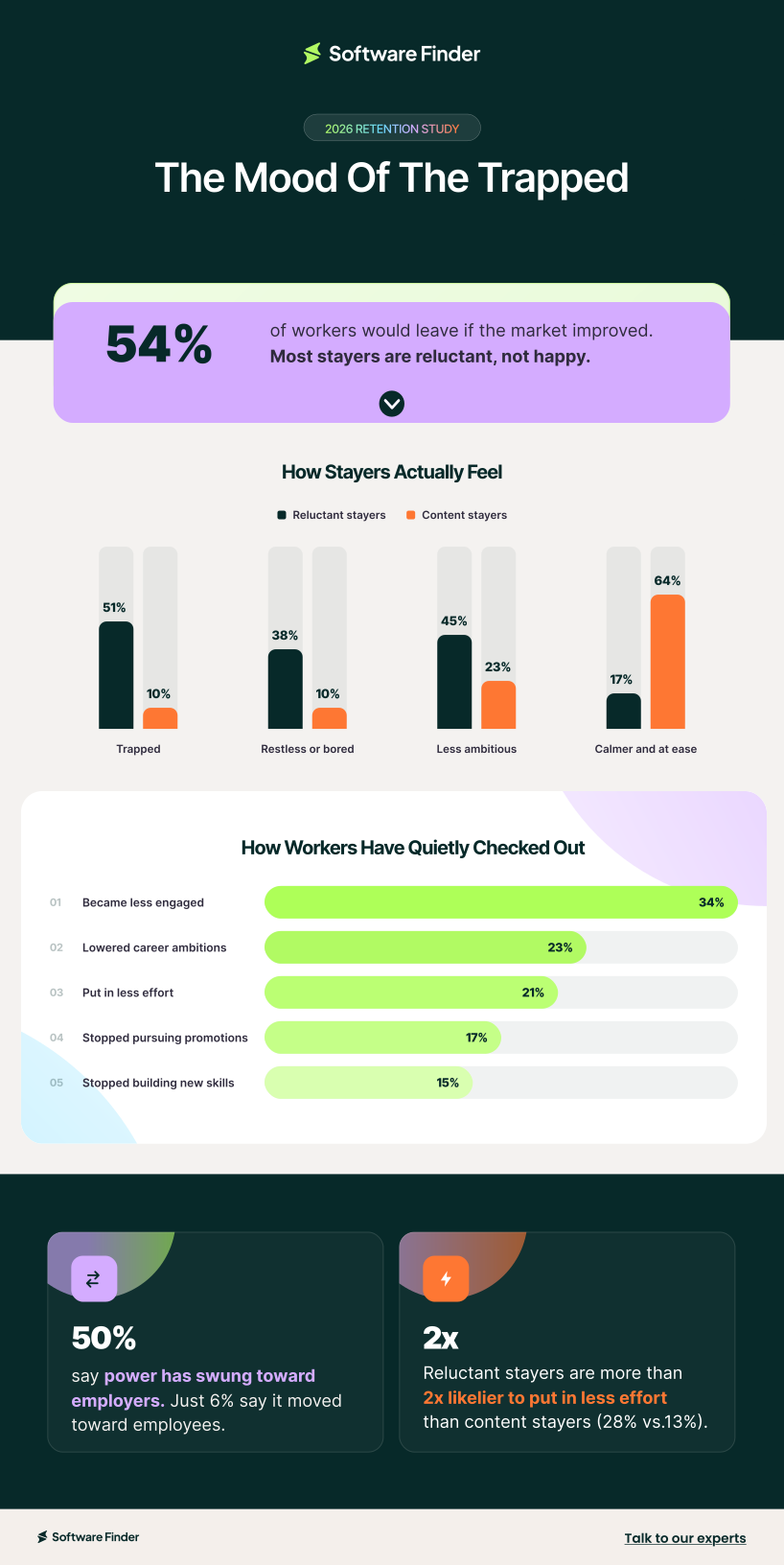
The mood split sharply depending on why someone was staying:
- A Reluctant Majority: 54% of workers say they would leave if the market were better, so most of the Great Stay would rather be somewhere else.
- Stuck Is the Feeling: 48% of workers feel stuck, and Gen X feels it most (52%).
- Two Different Workforces: Reluctant and content stayers describe almost opposite experiences, from feeling trapped (51% vs. 10%) and resentful (35% vs. 9%) to less ambitious (45% vs. 23%). Only 17% of reluctant stayers feel calm and at ease compared to 64% of content ones.
- Pulling Back at Work: 72% of reluctant stayers have pulled back in some way at work, versus 41% of content stayers, showing up as being less engaged (49% vs. 17%), putting in less effort (28% vs. 13%), and lowering their ambitions (28% vs. 17%).
- Power Has Shifted: Half of workers (50%) say the balance of power has swung toward employers, while just 6% say it has moved toward employees.
Methodology
Software Finder surveyed 1,004 employed U.S. adults in August 2026 to understand how workers are approaching their careers amid economic uncertainty, a trend widely described as "hunkering down." Respondents were fielded through CloudResearch Connect and asked about their reasons for staying in their current roles, their willingness to take career risks, how staying makes them feel, and their outlook on the balance of power between employers and employees.
Respondents ranged in age from 18 to 78, with an average age of 40. The breakdown by generation was 53% millennials, 25% Gen X, 18% Gen Z, and 4% baby boomers. By gender, 54% were female, 44% male, and 2% non-binary or preferred not to say. Household income was distributed across under $25,000 (7%), $25,000 to $49,999 (17%), $50,000 to $74,999 (22%), $75,000 to $99,999 (17%), $100,000 to $149,999 (23%), $150,000 to $199,999 (6%), and $200,000 or more (8%). By job level, 64% were individual contributors, 32% were managers, and 4% were senior leaders or executives. Work arrangements were split into 52% in-person, 24% hybrid, and 24% remote.
Generational bands follow standard definitions: Gen Z (ages 18 to 29), millennials (30 to 45), Gen X (46 to 61), and baby boomers (62 and older). Throughout this study, "reluctant stayers" refers to respondents who said they would leave their current job if the job market were much stronger, while "content stayers" would stay regardless. For questions where respondents could select multiple options, percentages are based on the total number of respondents and may exceed 100%. Percentages that do not total 100% are due to rounding. This survey relied on self-reported data. Potential limitations include memory recall, exaggeration, and other sources of response bias.
About Software Finder
Software Finder is a software discovery platform that helps businesses find the right tools faster, offering more than 100,000 options across categories such as HR, CRM, project management, EMR, and legal. It combines unbiased user reviews, transparent pricing, and free recommendations from its solution experts, so teams can choose with confidence instead of relying on sales pitches. Explore reviews, comparisons, and buying guides from Software Finder today.
Fair Use Statement
We welcome the noncommercial reuse of this study's data and findings. If you share them, please attribute Software Finder by linking back to this page so your readers can view the comprehensive research.