Today's job market is testing how much workers will give up to get hired. Longer searches, fewer interviews, and mounting financial pressure are pushing many people to reconsider what they're willing to accept, from a smaller paycheck to a return to the office. For job seekers weighing those trade-offs, the question isn't just what they want, but what they'll compromise on to move forward.
Software Finder surveyed 1,009 adults who are currently searching for a job to find out which concessions they'd make to receive an offer sooner, and how those trade-offs shift the longer a search drags on. The results show where job seekers draw the line, where they'll bend, and how quickly resolve gives way to compromise as the months add up. Here's what job seekers are actually willing to trade to get hired, and what it's costing them along the way.
Key Takeaways
63% of job seekers would accept a pay cut below their previous salary to land a new role faster.
Job seekers who've lowered their salary expectations to land a job faster have cut them by an average of 21%, or roughly $14,239 below where they started their search.
14% of job seekers say they would never return to a full-time in-office schedule to secure a job faster.
29% of job seekers who have been searching for more than a year would still be willing to relocate to a different city or state to get hired.
The average job seeker has been searching for 9 months and has completed just 2 interviews.
66% of job seekers would accept a role below their experience level, the most-accepted single concession in the study.
Which Sacrifices People Will Make To End Their Job Search Sooner
When getting hired takes priority, some trade-offs go down easier than others. We asked job seekers which concessions they'd accept to speed up their search, and a clear hierarchy emerged.
Key Takeaways
The Concessions Job Seekers Will and Won't Make
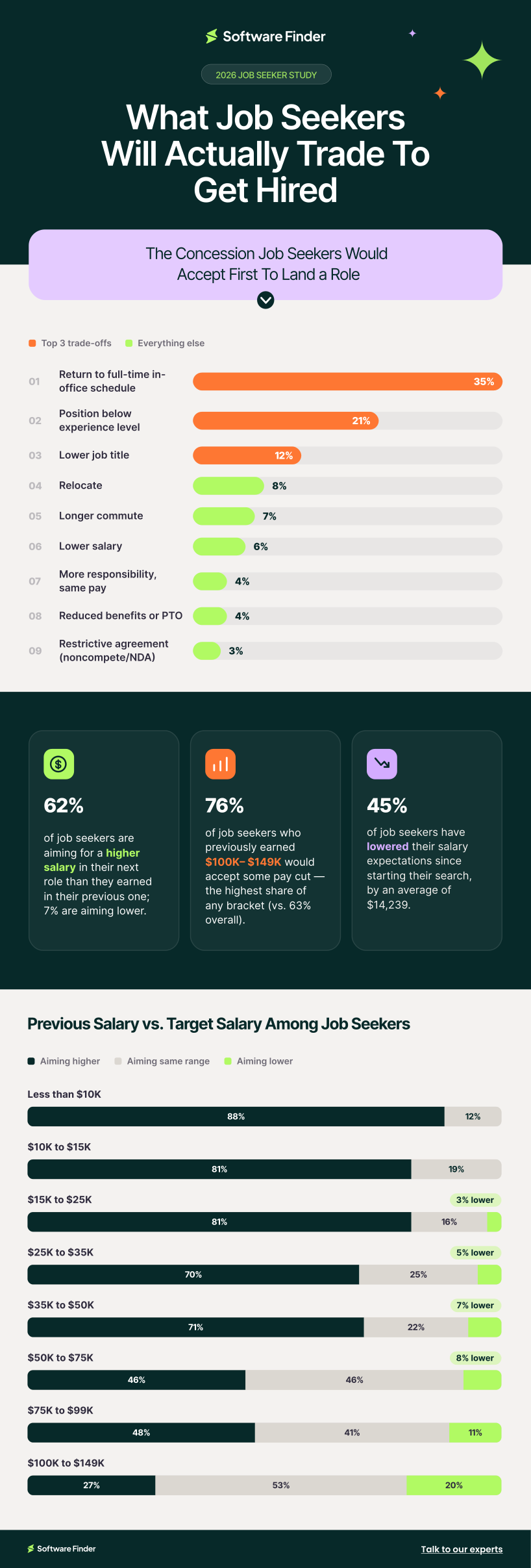
Nearly two-thirds of job seekers (63%) say they'd accept a pay cut below their previous salary to land a role faster.
66% of job seekers would accept a role below their experience level, the most-accepted single concession in the study.
Only 30% of job seekers would relocate to a different city or state, the least-accepted concession in the study.
35% of job seekers say returning to a full-time in-office schedule is the single concession they'd accept first.
Where Job Seekers Draw the Line Differs by Situation
Job seekers employed full time name a lower salary as their single biggest deal-breaker (37%), while unemployed and part-time job seekers point instead to relocating (32% and 34%, respectively).
Gen X job seekers are the most open to any pay cut, with 71% willing to accept one, compared with 63% of millennials and 55% of Gen Z.
More than three-fifths of seekers (62%) are targeting a salary range above their previous role, while 31% are aiming for the same range and 7% are targeting a lower one.
Job seekers who've lowered their expectations have cut their target salary by 21% on average, about $14,239 below where they started.
Remote Workers Guard Their Setup Most Closely
Overall, 14% of job seekers say they'd never return to a full-time in-office schedule, no matter how long their search drags on.
27% of job seekers who want a fully remote role say they'd never return to a full-time in-office schedule to secure a job, nearly five times the 6% rate among job seekers open to in-person work.
Remote-preferring job seekers are more willing than in-person seekers to take a pay cut (49% versus 40%) or a role below their experience level (72% versus 65%) to keep working from home.
How the Length of a Job Search Changes What Candidates Are Willing To Accept
Resolve tends to soften with time. As a search stretches from weeks into months and years, job seekers grow more willing to compromise, and the toll of the search grows with it.
Many Searches Stall Before They Start
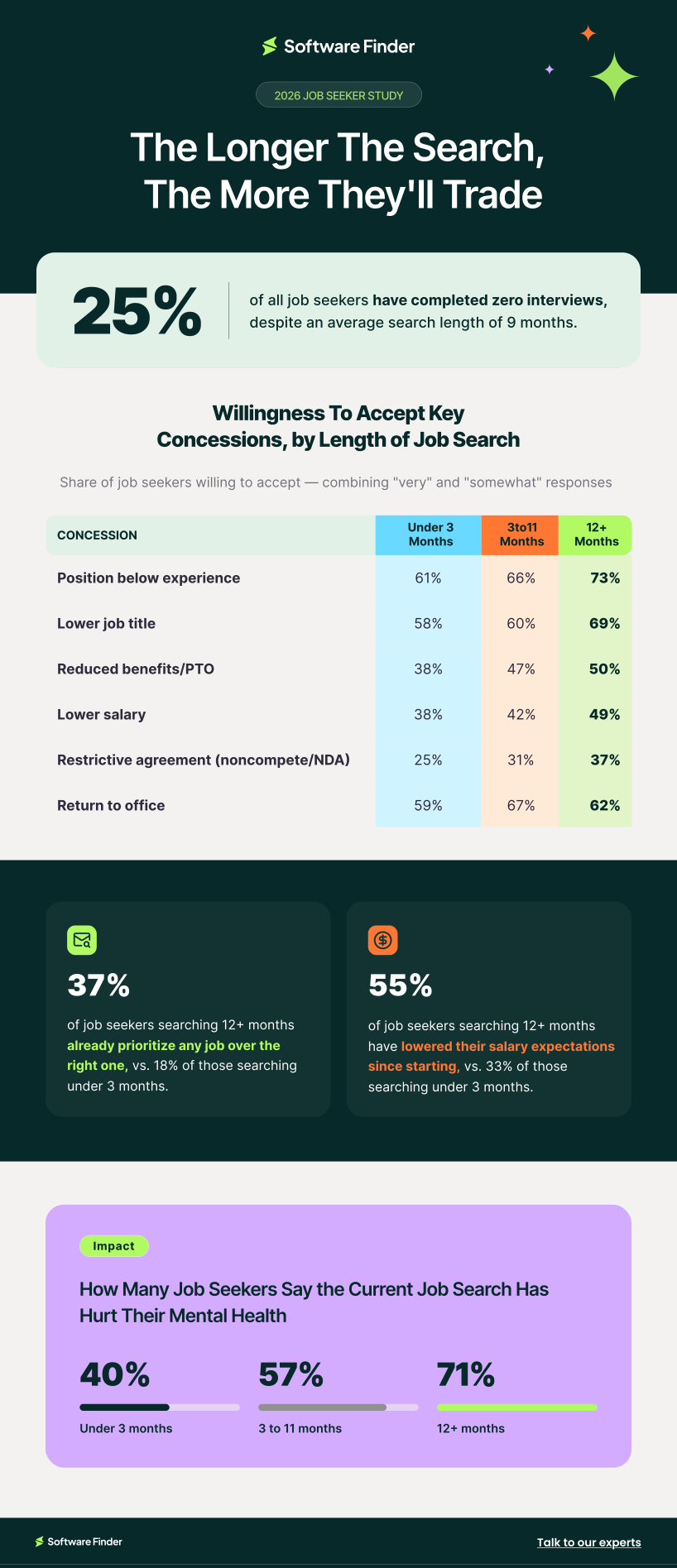
A quarter of all job seekers (25%) have completed zero interviews, despite an average search length of nine months.
More than a third of job seekers (36%) have completed one or fewer interviews since starting their search.
More than three-quarters of job seekers (78%) are now open to jobs they would have previously ruled out, with 26% saying "yes, definitely" and 52% saying "yes, somewhat."
Willingness To Compromise Climbs the Longer It Takes
Willingness to accept a role below their experience level climbs 12 points as the search drags on, from 61% at under three months to 73% at 12 or more months.
Willingness to accept a lower salary rises from 38% among short-timers to 49% among job seekers searching 12 or more months, an 11-point shift.
Nearly three in 10 of job seekers (29%) searching for more than a year say they'd still be willing to move to a different city or state to get hired.
The Toll on Well-Being Grows With Every Month
Mental health decays steeply with search length: 40% of job seekers under three months say the search has hurt their mental health, climbing to 57% at three to 11 months and 71% at 12 or more months.
Methodology
We surveyed 1,009 adults who are currently searching for a job to understand which career concessions they'd accept to receive a job offer sooner, and how those trade-offs shift as a search stretches from weeks into months and years. The survey examined willingness to accept nine specific concessions, from returning to a full-time in-office schedule to relocating or accepting a lower salary, and captured how job seekers' salary expectations, mental health, and openness to previously ruled-out roles change over time.
The average age of respondents was 37. The gender breakdown was 56% women, 41% men, and 2% nonbinary or not listed. Millennials made up the largest share of respondents (50%), followed by Gen Z (25%), Gen X (22%), and baby boomers (3%). When asked about the work arrangement they'd be willing to take on, 42% were open to fully in-person roles, 33% to fully remote, and 25% to hybrid. The survey was conducted online in July 2026.
About Software Finder
Software Finder helps businesses evaluate and compare software solutions across categories like Business & Finance, Education & Research, and Design & Development, connecting decision-makers with expert reviews and side-by-side comparisons. From HR platforms to learning management systems, our goal is to help teams find the right tools to support their people and their growth.
Fair Use Statement
Feel free to share these findings with anyone weighing their own career trade-offs. We just ask that you use the data for noncommercial purposes and link back to Software Finder so readers can view the full study and its sources.