


Customer Data Platform
Last Updated
Overview
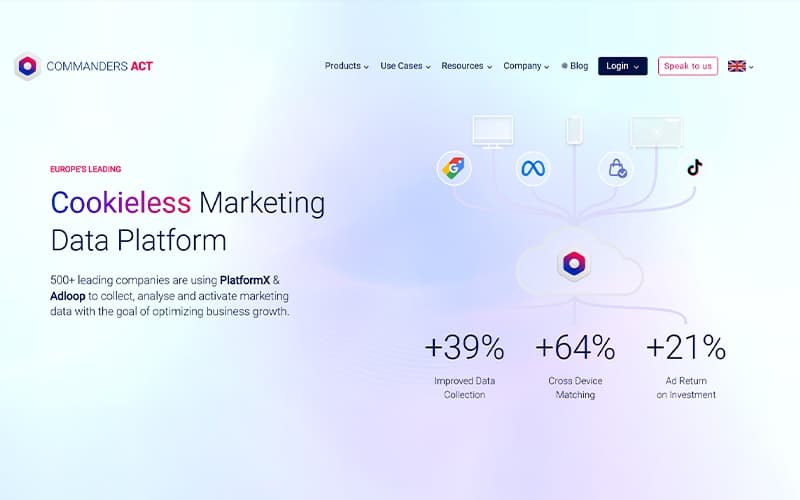
Customer Data Platform unifies first-party data for personalized customer experiences and improved campaign performance with GDPR-compliant data governance. Despite evolving UI and occasional complexity noted in reviews, users praise its robust support and strong feature set. Its real-time segmentation, identity resolution, and audience activation make it a compelling CDP choice.
Customer Data Platform Specifications
- Omnichannel Support
- CRM Integration
- Analytics And Reporting
- Customer Profiles
Customer Data Platform Features
First-Party Data Collection
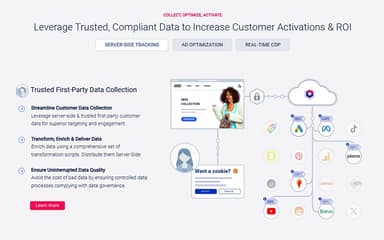
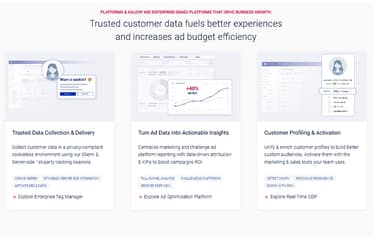
The platform enables comprehensive first-party data collection via server-side tracking, enabling organizations to capture customer interactions without reliance on third-party cookies. It also standardizes, cleans, and centralizes data from web and mobile sources to feed accurate insights into marketing initiatives.
Enterprise Tag Management
The software provides robust tag management, allowing businesses to manage and deploy tags across digital properties quickly and securely. It supports server-side data distribution and easy migration from client-side tag setups while enhancing consent management and data governance.
Real-Time CDP And Identity Resolution
Commanders Act’s real-time CDP consolidates customer data from disparate systems to build unified profiles. It supports identity resolution and enables consistent cross-device experiences, helping marketers segment users and deliver timely personalized campaigns.
Cross-Device Identity Resolution
The software consolidates customer interactions across devices and channels to generate unified, persistent customer profiles. This capability improves targeting precision and enables consistent personalization in campaigns, helping marketers understand customers holistically rather than in siloed segments.
Data Quality And Compliance Controls
Customer Data Platform includes tools that manage and monitor data quality and governance, ensuring that data used for segmentation and activation adheres to compliance requirements like GDPR. It supports consent management and data standardization across sources, reducing legal risk, and improving campaign integrity.
Pros And Cons of Customer Data Platform
Pros
Strong GDPR compliant tracking and governance
Responsive and helpful support team
Real-time segmentation and activation
Cons
Some users find integrations require manual setup
Advanced feature evolution is sometimes confusing for new users
Customer Data Platform Reviews
Total 1 reviews
5
All reviews are from verified customers
Rating Distribution
5
Stars100%
4
Stars0%
3
Stars0%
2
Stars0%
1
Stars0%
Share your experience
Food & Beverages, N/A employees
“Customer data access done right”
Pros
Keeping all customer information in one place is really convenient and this tool makes storing and accessing that data very easy.
Cons
It also feels very flexible and dynamic when it comes to handling customer data and related information.
Rating Distribution
Ease of use
10
Value for money
10
Customer Support
10
Functionality
10
Frequently Asked Questions
What types of pricing plans does Customer Data Platform offer?
Customer Data Platform pricing is customized based on the features and scale required. Request a custom Customer Data Platform cost for your needs.
Does Customer Data Platform have a mobile app?
Information regarding the availability of any mobile app is not listed on the software website.
What level of support does Customer Data Platform offer?
Customer Data Platform offers support via email/help desk and documentation resources.
What language does Customer Data Platform support?
Customer Data Platform software is primarily available in English
What other apps does Customer Data Platform integrate with?
It integrates with platforms like Google Analytics 360, Adobe Analytics, Snapchat for Business, Shopify, and Microsoft Power BI.
Does Customer Data Platform offer an API?
Yes, the platform supports API access for data integration and activation.
Who are the typical users of Customer Data Platform?
Typical users include organizations in retail, e-commerce, finance, travel, media, telecom, and healthcare sectors.