


Ermes
Last Updated
Overview
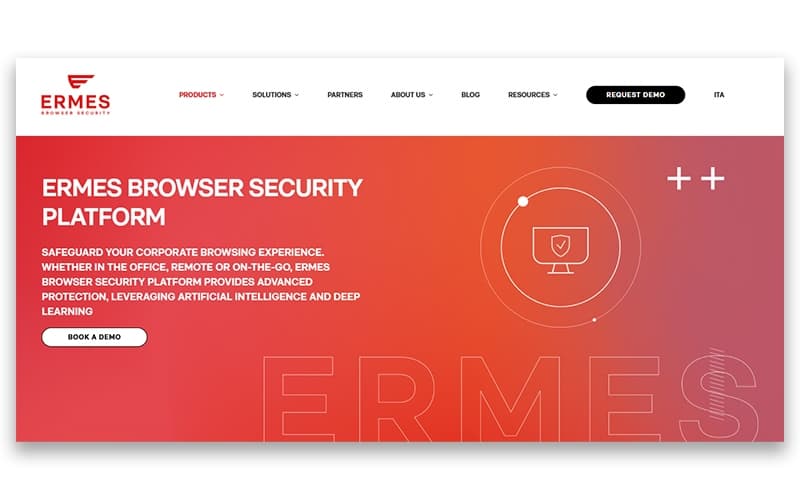
Ermes is a browser-level security platform that uses AI to detect phishing and help prevent data leaks into public AI tools without VPN infrastructure. While its browser-focused approach may offer less protection outside the browser, its lightweight extension deployment and zero-day threat detection support BYOD and remote workforce security.
Be the first one to leave a review!
No review found

Starting Price
Custom
Ermes Specifications
- Data Encryption
- Threat Intelligence
- Phishing Prevention
- Web Filtering
What Is Ermes?
Ermes is an Italian cybersecurity firm that specializes in securing the browser, preventing phishing, and data leakage at the time of interaction. Its proprietary platform utilizes AI-powered, real-time scanning to prevent browser-based intrusions and data exfiltration attempts. It does not require the use of traditional VPN or proxy services to mask internet traffic, instead, it can be deployed as a regular extension for desktop browsers or a mobile application: thus, organizations with browser-based workflows can use it to secure employees against phishing attempts, data theft, and unauthorized use of Gen AI tools.
What Is Ermes Best For?
The platform is best known for preventing employees from accidentally leak-surfacing sensitive information to Public Gen AI APIs. Unlike traditional software designed to restrict access to Gen AI tools, Ermes is capable of analyzing the context of the information being entered. For example, if a worker attempts to paste financial details or a company’s intellectual property into ChatGPT’s prompt field, the browser extension will be able to recognize the context and either conceal the inputted information or halt the request. After the user leaves the prompt, Ermes would be able to suggest available alternatives within the corporate environment. When returning results, the platform automatically pastes them into Excel or de-anonymizes the data if necessary.
How Much Does Ermes Cost?
Ermes pricing is estimated to range between $6-$12/user/month according to industry benchmarks for browser security platforms. Since Ermes pricing is custom-based, actual costs vary by deployment size and configuration. Estimated cost by deployment size are:
- Small Rollout (50-100 Users): $8-$15/user/month
- Mid-Market (100-500 Users): $6-$12/user/month
- Large Enterprise (500-2,000 Users): $4-$10/user/month
Beyond the per-user subscription, organizations should also budget an additional 10-25% of the base license cost for onboarding, proof-of-concept deployment, configuration, and integration with existing security tools.
Disclaimer: Pricing references are based on publicly available third-party information and industry benchmarks. Actual costs may vary.
Ermes Integrations
It integrates with Microsoft security tools, such as:
- Microsoft 365
- Microsoft Sentinel (SIEM)
How Does Ermes Work?
Organizations can follow these steps to deploy and manage the platform:
- Install and deploy Ermes as a lightweight browser extension on Chrome, Edge, or Firefox. Users can access its browser security controls without installing a separate browser
- Organizations can roll out Ermes using centralized policy management. Administrators can define security policies and manage the deployment without requiring and additional browser or proxy
- The AI engine analyzes browsing behavior as it happens rather than relying only on website reputation or predefined threat lists. This allows Ermes to identify suspicious behavior and potential threats during web sessions
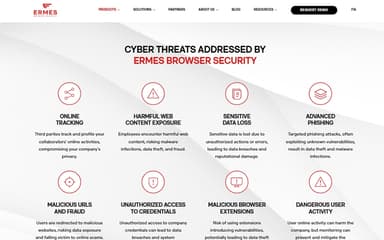
- The platform can detect and block phishing attempts, malicious websites, credential theft, harmful advertisements, and tracking technologies based on the organization's configured policies
- Ermes provides seven security tools covering areas such as web data loss prevention (DLP), credential protection, and web filtering. These controls help organizations address different browser-based security risks through the same deployment
- Security teams can inspect Ermes events through their existing SIEM infrastructure. The platform supports integration with tools such as Microsoft Sentinel for centralized security monitoring
- Administrators can use the dashboard to review browsing-related risks across the organization, identify security events, and monitor activity that may require further investigation
Who Is Ermes For?
It serves organizations across a range of industries and sectors, including:
- Energy
- Transport
- Banking and financial markets
- Digital infrastructure
- Public administration
- Postal and courier services
Ermes Use Cases
Based on our analysis of Ermes features, reviews, and market positioning, we have identified key scenarios where this platform is a strong fit:
Companies Managing BYOD And Contractor Access Without Invasive Endpoint Controls
It is common for organizations to hire outside agencies or rely on employees’ personal devices (BYOD policy) to perform work tasks. However, requiring such users to install traditional security software on their personal computers comes with significant risks and privacy concerns. Ermes is capable of scanning data within the browser without interfering with other processes running on the device. This way, it is possible to secure company-owned web applications without monitoring the user’s personal files or violating their privacy.
Development Teams Adopting Public AI Tools While Protecting Proprietary Code And IP
The majority of employees use public AI platforms to accelerate their work, which makes such tools popular among developers. However, when utilizing features such as Copy-Paste into prompts or training AI models on sensitive data, there is a possibility of leaking intellectual property, trade secrets, or client information. Ermes is capable of scanning the text within the prompt to prevent such data from being transferred to external endpoints. This way, developers can use public AI tools without exposing sensitive information contained within the clipboard.
Finance And HR Teams Preventing Insider Data Theft To Personal Cloud Storage
The majority of corporate data leaks originate from insider threats: an employee utilizes their access to the company’s web applications to transfer files to their personal cloud storage before leaving the organization. Email security tools or laptop monitoring software are often unable to distinguish between a legitimate login request to Microsoft 365 and a similar interface designed by an attacker. Ermes is able to block unauthorized access to personal cloud storage solutions in the corporate network while allowing access to enterprise-grade software.
Security Teams Catching Phishing Sites Too New For Blocklists
Traditional cybersecurity solutions often rely on URL reputation scores or blacklists to prevent initial access to phishing domains and malicious sites. Cybercriminals utilize this approach by registering temporary malicious domains, utilizing deceptive CAPTCHA challenges, or weaponized browser extensions (‘ClickFix Attacks’). Due to the short lifespan of phishing URLs, conventional firewalls are unable to add them to the blacklist in time. During the short window when such a domain becomes active, threat actors can redirect users to fake banking or enterprise software interfaces and steal credentials. The software is capable of terminating weaponized web pages at the moment of interaction: the behavior of such URLs is analyzed in real-time when the page is opened, not waiting for the domain to be blacklisted.
Is Ermes Right For You?
Ermes is highly recommended for mid-market and enterprise organizations with large remote or BYOD workforces seeking to prevent zero-day phishing and data leaks into AI tools, all while maintaining high browsing speeds and user privacy.
In addition, the software has official ISO 27001 certification for data security management along with high-level standards for cloud security (ISO 27017) and privacy (ISO 27018). This indicates that user data, administrative access, and telemetry infrastructure are handled in accordance with international regulatory requirements. This eliminates the need for independent third-party audits and ensures that a company’s internal cybersecurity team can pass external audits with ease.
Still unsure if Ermes software is the right choice for your organization? Connect with us at (661) 384-7070 for further guidance.
Ermes Features
Anti-Tracking
This feature blocks unauthorized telemetry, hidden scripts, background web trackers, and malicious advertising (malvertising) vectors from monitoring corporate users. It strips out background trackers and ad injection code before a web page loads in the browser, maintaining extreme user privacy. It benefits most corporate users who enjoy cleaner, significantly faster browsing speeds, and network architects who save corporate endpoint bandwidth while securing user identity privacy across the public web.
Zero-Day Phishing Protection
This capability uses proprietary on-device AI algorithms and behavioral deep learning to detect and block active phishing pages for the exact second they go live. Unlike legacy web tools that wait for a bad website to be blacklisted, Ermes scans the live behavior of the page itself. It intercepts completely new, unclassified phishing links before they can trick a user. This is valuable for employees and remote workers who face daily social engineering attacks, and security operations centers (SOCs) that need to stop credential theft before traditional email and web gateways can catch a brand-new threat domain.
Business Credential Protection
This feature acts as a security gate in the browser to prevent users from entering sensitive data into phishing forms. It scans text input fields to establish whether they are legitimate or not: if an employee attempts to type a password or a username into a deceptive website, the process will be interrupted by the security tool.
Web Data Loss Prevention (DLP)
This toolset ensures granular visibility and control over the movement of files, documents, and data within browser applications. It can detect and prevent unauthorized uploads of files containing sensitive information or stop users from pasting data into Gen AI tools such as ChatGPT or Claude. This feature assists data-security teams and compliance departments in fulfilling regulatory obligations (GDPR, NIS 2, etc.) while preserving business productivity and access to modern tools.
Mobile Guardian
It has a dedicated mobile application that extends Ermes' web defenses over enterprise mobile hardware. It guards mobile browsing sessions and offers targeted anti-smishing (SMS phishing) and instant-messaging traffic defense to block malicious links embedded in texts or chat platforms. It is best for remote field workers who frequently check company portals and communication channels directly from their mobile devices.
Pros And Cons of Ermes
Pros
Offers lightweight browser extension that does not require a dedicated browser
Provides browser-based protection against phishing, data leakage, and other web-based threats
Supports data masking and anonymization to reduce exposure of sensitive information
Cons
Focuses primarily on browser-level protection rather than full endpoint security
Deployment and configuration may require assistance for complex environments
Ermes Reviews

No reviews yet!
Be the first to review this product
Frequently Asked Questions
Does Ermes have a mobile app?
Yes, Ermes offers a mobile app.
What types of pricing plans does Ermes offer?
Ermes price is custom based, with costs estimated to fall between $6-$12/user/month, according to industry benchmarks for browser security platforms. Contact us for a custom Ermes price quote.
Who are the typical users of Ermes?
Typical users of Ermes include employees, IT teams, and security officers across industries like retail, finance, industrial, and legal.
What level of support does Ermes offer?
Ermes offers support through email.
What language does Ermes support?
Ermes platform supports the English language.
Does Ermes offer an API?
No, Ermes does not offer an API.
What other apps does Ermes integrate with?
The platform offers integration with Microsoft 365 and Microsoft Sentinel.