


Last Updated
Overview
Oxford Abstracts is a powerful platform streamlining conference management experience through its Academic Conference Software. Despite its limited graphic options, the software offers quick access to information and provides users with reliable solutions. Oxford Abstracts allows you to experience seamless management, efficient communication, and enhanced collaboration altogether.
Overall Rating
Based on 10 users reviews
5
Rating Distribution
Positive
100%
Neutral
0%
Negative
0%
Starting Price
$890
per event
Oxford Abstracts Specifications
- Registration Management
- Agenda And Schedule Management
- Speaker And Content Management
- Communication Tools
Oxford Abstracts Features
Complete Communication Control
This powerful feature allows users to manage all event communications from one place. It means they don’t need to look for missed emails and enjoy customized, scheduled messages that keep participants well informed. It also simplifies communication, ensuring everyone stays on track with deadlines and event updates.
Effortless Program Building
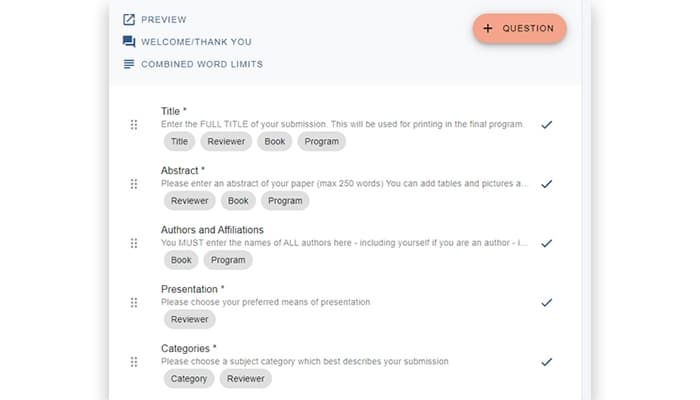
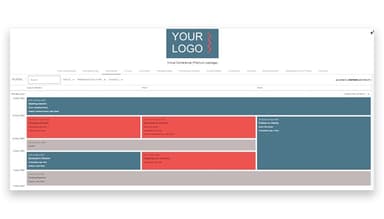
Oxford Abstracts helps users create their event program easily by importing abstracts and building schedules. It also helps the users easily organize multi-track days, thus saving them time and allowing event planners to focus more on the experience than the logistics.
Integrated Ticketing System
The integrated ticketing system empowers users with a built-in ticketing solution, so no third-party tools are required for this process. The users can manage everything from ticket sales to discounts and add-ons in one place, resulting in a smooth process for event organizers and attendees.
Enhanced Attendee Experience
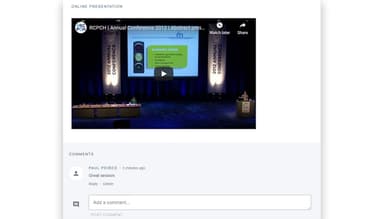
This essential feature ensures a delightful attendee experience with mobile-friendly networking tools, interactive displays, and customizable certificates. Oxford Abstracts has designed everything from exhibitor booths to engaging sessions to keep attendees engaged and satisfied throughout the event.
Automated Reviewer Assignment
Oxford Abstracts allows organizers to automatically assign submissions to reviewers using predefined rules such as categories and reviewer limits. Organizers can also control assignment rules, like minimum and maximum reviews per reviewer. This reduces manual workload and ensures submissions are distributed fairly and efficiently across reviewers.
Advanced Reporting And Data Export
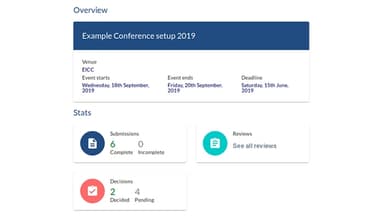
The platform includes built-in review tables and reporting tools that give organizers a full overview of submissions and review progress, along with decision data in real time. Users can filter and export data from review tables to generate structured reports for analysis or event planning. These tools help teams track progress across submissions and reviews and extract key insights directly from the system without external tools.
Pros And Cons of Oxford Abstracts
Pros
Supports easy export in multiple formats
Frequent updates keep the system improving
Provides a quick access to essential information
Runs virtual conferences smoothly and reliably
Cons
Reviewer selection process can be smoother
There are occasional challenges with data merging
Moving between different sections of the software can feel a bit confusing
Oxford Abstracts Pricing
Basic | Abstract Management | Standard Conference | Professional Conference |
|---|---|---|---|
Free | $890per event | $2,290per event | $3,450per event |
|
|
|
|
Disclaimer: The pricing details were last updated on Sep 07, 2026 from the vendor's website. Please contact us for a tailored pricing list.
Oxford Abstracts Reviews
Total 10 reviews
5
All reviews are from verified customers
Rating Distribution
5
Stars100%
4
Stars0%
3
Stars0%
2
Stars0%
1
Stars0%
Share your experience
Luis
Education, 1-10 employees
More than a year
“Excellent multi-lingual feature for global events”
Pros
This software is incredibly simple and easy to use, whether you're a submitter, an admin, or especially an evaluator. We organize a multilingual conference and the platform allows submitters to send their proposals in their preferred language, which is a huge plus.
Cons
There are some limitations when it comes to branding or customizing the interface graphically. However, this doesn't affect its main purpose that is abstract management, so it's not a major issue for me.
Rating Distribution
Ease of use
9
Value for money
10
Customer Support
8
Functionality
10
Helen
Education, 51-100 employees
More than a year
“A reliable solution”
Pros
I've been using this platform for about 10 years now, and it just keeps getting better every year. I love how simple it is to use, and the customer support is outstanding. The online help is really thorough, but if you ever get stuck, the team is always there to point you in the right direction or provide hands-on assistance. It does exactly what I need it to do, and I think it's excellent overall.
Cons
I like the platform and haven't had any issues with it. I use the basic package though I admit I haven't explored the other options yet.
Rating Distribution
Ease of use
10
Value for money
10
Customer Support
10
Functionality
10
Nicole
NonProfits, 1-10 employees
More than a year
“Ideal solution for organizing annual meetings”
Pros
This is a comprehensive and reliable abstract management software that has all the functionality we need to organize abstracts for our annual meetings. It's been a great tool for us.
Cons
One thing I would improve is the reviewer selection process. Right now, I have to select reviewers for an abstract and then select them again when sending the email asking them to mark it. It would be much more efficient if I could select the reviewers and send the email notification at the same time.
Rating Distribution
Ease of use
10
Value for money
10
Customer Support
10
Functionality
9
Frequently Asked Questions
Does Oxford Abstracts offer an API?
No, Oxford Abstracts does not offer a public, open developer API.
What other apps does Oxford Abstracts integrate with?
Oxford Abstracts integrates with Zoom, Cvent, Idloom, EventsAir, and Swap Card.
Does Oxford Abstracts support mobile devices?
Oxford Abstracts does not have a standalone mobile app, though it is compatible with mobile devices via its web interface.
What language does Oxford Abstracts support?
Oxford Abstracts primarily supports English.
What types of pricing plans does Oxford Abstracts offer?
Oxford Abstracts price starts at $890/event for its Abstract Management plan and follows a one-off cost/event model. Other available plans include Basic at $0, Standard Conference at $2,290/event, and Professional Conference at $3,450/event. Get a tailored Oxford Abstracts cost quote that fits your needs and requirements.
Who are the typical users of Oxford Abstracts?
Typical users of Oxford Abstracts include education, healthcare, non-profit organizations, and associations.
What level of support does Oxford Abstracts offer?
Oxford Abstracts offers support via contact form, FAQs, and knowledge base.