


Last Updated
Overview
eTool delivers advanced life cycle assessment capabilities that help teams uncover carbon insights, test improvements, and produce verified outputs. While the platform's customization capabilities can be enhanced, its in-depth analytics, trusted datasets, and reporting strength make it a compelling sustainability decision platform.
Be the first one to leave a review!
No review found

Starting Price
Custom
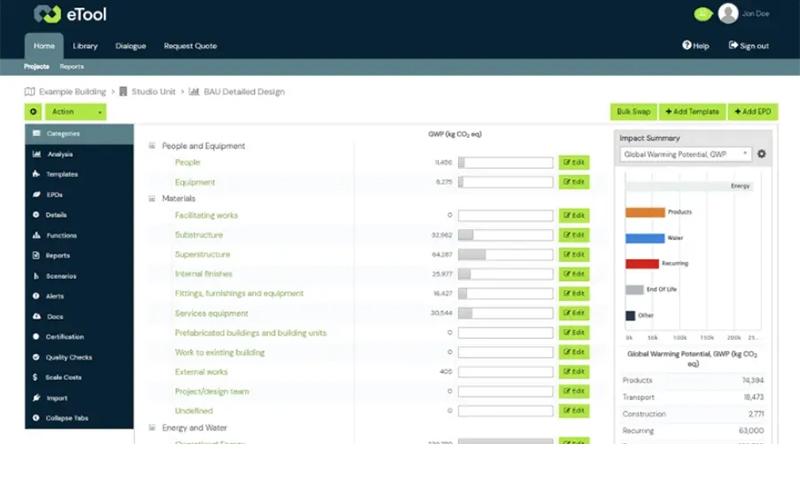
eTool Specifications
- Reporting And Analytics Dashboards
- Mobile Accessibility
- CAD/BIM Integration
- Energy Performance Analysis
What Is eTool?
eTool is a cloud-based life cycle assessment platform built to help project teams measure, understand, and improve environmental outcomes. It enables fast modelling, detailed scenario comparisons, and structured documentation that supports certification and reporting. The platform enables organizations to reduce risk, validate assumptions, and guide sustainable design choices with reliable, standards-aligned insights.
How Much Does eTool Cost?
The vendor has not publicly disclosed its pricing quotations. However, comparable LCA and carbon modelling platforms in the architecture and infrastructure markets generally range from $3,000 to $25,000+ per organization per year. The vendor offers the following four packages with a custom eTool price quotation for each:
- Starter – One user/account and two projects/year
- Standard – One user/account and five projects/year
- Specialist/Hotseat – Five read-only users and unlimited projects
- Enterprise – Designed for large teams managing complex workflows
Besides the subscription fee, users must consider the following additional charges:
- Implementation And Platform Configuration: Frequently budgeted at $1,000–$8,000
- Data Migration Or Project Uploads: May run $500–$5,000+ based on history depth
- Specialist Co-Authoring Or Expert Review: Often $150–$300 per hour for advanced guidance
- Training Workshops: Generally $750–$6,000 depending on format and team size
- Enterprise Reporting Or Certification Support: Can add $2,000–$15,000+ annually for audit-ready deliverables
Disclaimer: Pricing references are based on publicly available third-party information and industry benchmarks. Actual costs may vary.
eTool Integrations
Who Is eTool For?
eTool software is ideal for professionals specializing in the following:
- Architecture
- Design engineering
- Sustainability
- Infrastructure
Is eTool Right For You?
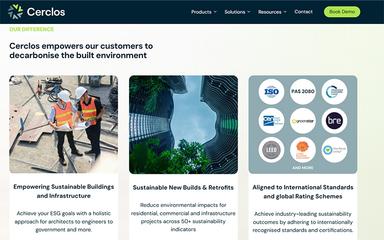
Teams pursuing verified carbon reductions, procurement transparency, or green building certifications often require defensible calculations and rapid iteration. eTool features support that needs deep analytics and expert-backed data. Additionally, the software complies with international standards, including ISO 14044, PAS 2080, and EN 15978, ensuring the safety and security of confidential user data.
Still have concerns about the eTool software? Connect with our customer support experts at (661) 384-7070, who will address all your queries to help you make the right decision.
eTool Features
Hotspot Analysis
This functionality reveals which materials, components, and lifecycle stages drive the greatest environmental burden. It lets teams review dozens of indicators, reorganize results through custom filters, and export visuals for discussions, enabling faster prioritization and clearer communication around improvement opportunities.
Scenario Modelling
eTool features side-by-side evaluation of design pathways so decision-makers can understand trade-offs before committing. It enables users to test alternatives, measure percentage improvements, and maintain documented reasoning that feeds directly into transparent deliverables for clients and rating authorities.
Automated Reporting
The platform streamlines the creation of assessor-ready documents by transforming calculated outputs into structured summaries and detailed inventories. It allows practitioners to reduce manual compilation, maintain methodological consistency, and deliver professional submissions within demanding project timelines.
Co-Authoring Your LCA
eTool software allows organizations to work alongside experienced LCA specialists who strengthen modelling approaches and validate results. This collaboration supports credible studies, builds internal capability, and ensures projects progress efficiently even when specialist resources are limited.
Datasets And EPDs
Datasets and EPDs connect users with extensive, verified environmental information drawn from global and regional sources. It allows professionals to compare products fairly, upload declarations, and address data gaps while maintaining alignment with international standards and audit expectations.
Pros And Cons of eTool
Pros
Efficient sustainability calculations
Excellent reporting outputs
Trusted global datasets
Cons
Limited integration options
Lacks a dedicated mobile app
eTool Reviews

No reviews yet!
Be the first to review this product
Frequently Asked Questions
Does eTool offer an API?
Yes, eTool offers an API.
What language does eTool support?
eTool supports the English language.
Does eTool have a mobile app?
No, eTool does not have a mobile app.
What types of pricing plans does eTool offer?
The supplier has not made its pricing information publicly available. Based on prevailing rates for similar life-cycle assessment (LCA) and carbon modelling solutions used across the architecture and infrastructure sectors, annual subscription costs typically range from approximately $3,000 to more than $25,000 per organization. Get a flexible eTool pricing plan today.
What level of support does eTool offer?
eTool offers email and phone submission support options.
What other apps does eTool integrate with?
The vendor has not publicly disclosed its third-party integrations.
Who are the typical users of eTool?
Typical users of eTool include sustainability professionals, infrastructure teams, architects, and design engineers.