


Last Updated
Overview
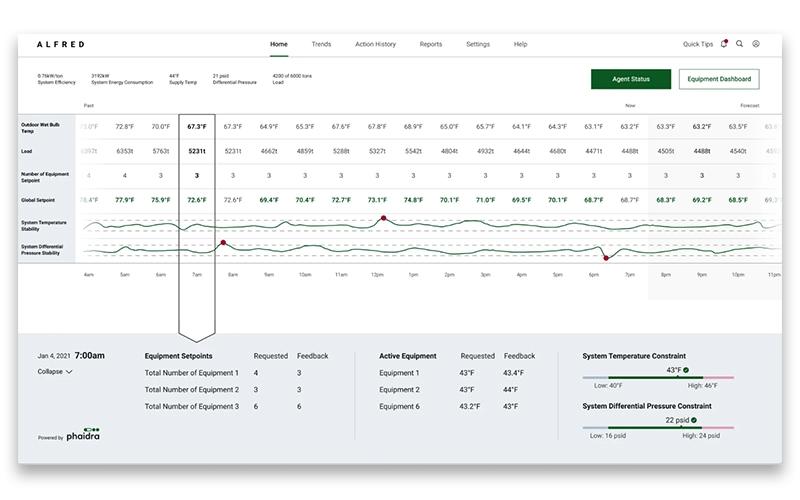
Phaidra streamlines facility management by integrating AI agents that proactively manage equipment loads and minimize power consumption. While performance slows during peak usage hours, its closed-loop control system maintains rigorous safety and stability standards. The software is best suited for large industrial manufacturers requiring advanced energy optimization.
Be the first one to leave a review!
No review found

Starting Price
Custom
Phaidra Specifications
- Reporting And Analytics Dashboards
- IoT integration
- Energy Performance Analysis
- Space Management And Planning
What Is Phaidra?
Phaidra is a cloud-based AI-driven facility management software that provides real-time optimization and autonomous control of critical infrastructure. The platform uses intelligent agents to manage environmental systems, such as cooling and chiller plants, enhancing energy efficiency, and operational stability. Phaidra also offers predictive monitoring and advanced analytics, enabling businesses to anticipate issues before they arise. Its scalable architecture supports large-scale operations, helping organizations reduce downtime, optimize performance, and improve overall facility management.
Phaidra Pricing
Phaidra cost is estimated to range from $10,000 to $50,000/facility/year, based on industry benchmarks for comparable autonomous AI-driven facility management and industrial cooling optimization software. This range is intended for general budgeting purposes; actual costs may vary based on the number of connected sensors, the complexity of existing SCADA or BMS integrations, and the specific performance-based energy savings targets required.
In addition to the base subscription costs, organizations should account for the following estimated expenses when implementing Phaidra:
- Implementation And Digital Twin Mapping: $50,000–$150,000 for enterprise-grade facilities
- SCADA And BMS Integration: $20,000–$60,000, depending on the complexity of the existing industrial control infrastructure
- Operational Training And Safety Onboarding: $5,000–$15,000
Disclaimer: Pricing references are based on publicly available third-party information and industry benchmarks. Actual costs may vary.
Phaidra Integrations
Who Is Phaidra For?
Phaidra software is ideal for facility managers, operations teams, and enterprises managing large-scale, mission-critical environments:
- Facility managers
- Data center operators
- Industrial engineers
- IT infrastructure leads
- Energy managers
Is Phaidra Right For You?
Are you looking to transform your facility into a self-optimizing powerhouse? Phaidra is the best choice for data centers and industrial plants seeking to eliminate the inefficiencies of manual setpoint management. Solving the pain points of thermal instability and rising energy costs, it ensures total operational reliability. The platform meets SOC 2 Type 2 and ISO/IEC 27001:2013 standards for secure, compliant operations.
Trusted by industry leaders such as Merck, it provides a secure, future-proof path toward autonomous sustainability.
Still doubtful if Phaidra is the right fit for you? Connect with our customer support staff at (661) 384-7070 for further guidance.
Phaidra Features
AI-Driven Cooling Optimization
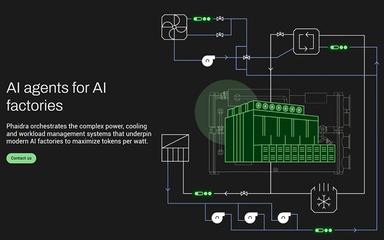
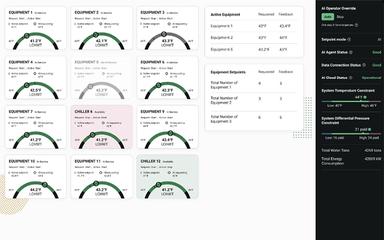
Phaidra’s AI agents autonomously manage cooling systems, from liquid cooling CDUs to chiller plants, significantly reducing Power Usage Effectiveness (PUE) while maintaining service level agreements. This reduces energy costs and increases IT capacity for revenue-generating workloads.
Rapid Issue Detection And Troubleshooting
The platform’s LLM-based analytics enable facility teams to discover and resolve operational issues in minutes instead of days. This accelerates root-cause analysis and minimizes downtime, ensuring continuous, reliable operations.
Enhanced Reliability And Thermal Stability
Phaidra’s AI agents monitor infrastructure 24/7, detecting hidden issues and improving thermal stability. This proactive approach reduces equipment wear, prevents failures, and supports uninterrupted facility performance.
Energy Consumption Minimization
Phaidra utilizes autonomous AI agents to dynamically optimize industrial cooling and heating systems. The software continuously adjusts setpoints in real-time to reduce power usage significantly while maintaining strict operational stability for critical infrastructure.
Pros And Cons of Phaidra
Pros
Significantly improves energy efficiency and PUE
Accelerates troubleshooting and issue resolution
Enhances facility reliability and uptime
Cons
Advanced customization may require support
Initial setup can be resource-intensive
Phaidra Reviews

No reviews yet!
Be the first to review this product
Frequently Asked Questions
What level of support does Phaidra offer?
Phaidra offers support via an informative blog and contact form.
Does Phaidra offer an API?
Yes, Phaidra offers an API.
What other apps does Phaidra integrate with?
Information about third-party integrations has not been specified by the vendor.
Does Phaidra have a mobile app?
No, Phaidra does not currently offer a dedicated mobile app.
What language does Phaidra support?
The software is available in English.
What types of pricing plans does Phaidra offer?
Phaidra offers subscription pricing estimated at $10,000 to $50,000/facility/year, plus implementation and integration costs. Get in touch for a personalized Phaidra price estimate.
Who are the typical users of Phaidra?
Typical users include facility managers, data center operators, industrial engineers, IT infrastructure leads, and energy managers who rely on Phaidra features to optimize operations.