


Stuart
Last Updated
Overview
Stuart enables businesses to manage last-mile deliveries through time tracking, automated customer notifications, and support for different vehicles. Its reliance on independent couriers can sometimes affect scheduling consistency. However, it remains a practical option for retailers and urban delivery operations that need visibility into their delivery processes.
Be the first one to leave a review!
No review found

Starting Price
£5.50
per delivery
Stuart Specifications
- Vehicle Tracking (GPS)
- Reporting & Analytics
- Real-time Alerts
- Trip History Logging
What Is Stuart?
Stuart is a last-mile delivery tool that helps businesses send orders to customers in local areas. It connects businesses with independent couriers who handle the delivery. Businesses can arrange and monitor deliveries through Stuart, and customers can receive updates about their orders. The service is used by businesses that want to offer local delivery without hiring and managing their own couriers.
What Is Stuart Best For?
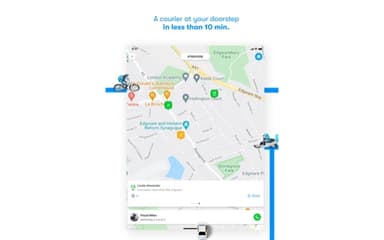
Stuart software’s Live GPS Tracking feature lets businesses and customers see a delivery’s location from pickup through drop-off. The shipment remains visible as it moves, so teams can check its progress without waiting for an update. This makes it easier to spot delays and keep customers updated about when their orders are expected to arrive.
How Much Does Stuart Cost?
Stuart pricing starts from £5.50/delivery (~$7.45/delivery) for SMB plan. The software offers two other plans: Mid-Market and Enterprise, each tailored to different delivery volumes and business sizes.
In addition to the base delivery cost, organizations should budget for the following potential expenses:
- Implementation And Onboarding: £800–£8,000 (~$1,080–$10,830)
- Transport Mode Variation: £2–£5 extra/delivery (~$2.70–$6.75)
- Location And Peak Fees: £2–£6/delivery (~$2.70–$8.10)
Disclaimer: The pricing is subject to change.
Stuart Integrations
The platform integrates with several third-party applications and systems, such as:
- Deliverect
- Shopify software
- Flipdish
- Klareo
- Zapiet
How Does Stuart Work?
Here is how businesses can set up and manage deliveries through Stuart:
- Sign in to the Stuart Dashboard with your account details
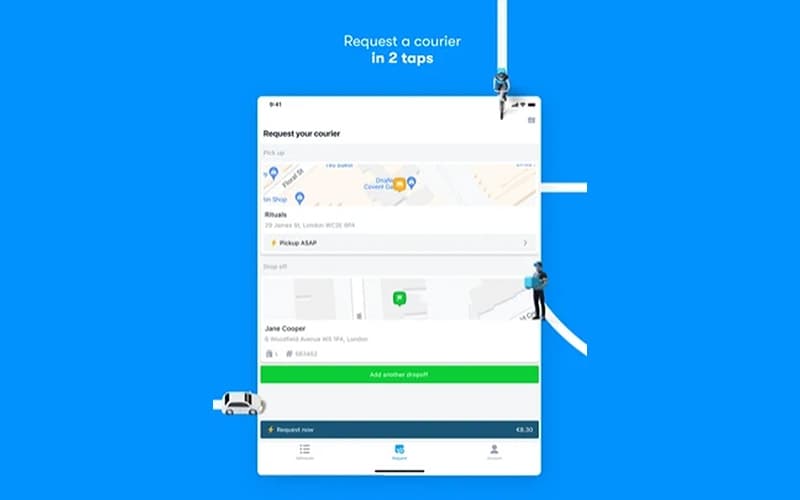
- Create a delivery request by adding the pickup and drop-off information. Review the estimated delivery cost
- Choose the delivery service and timing that match the order
- Open active orders in the dashboard to check their progress from pickup to drop-off
- Use live GPS tracking to follow deliveries. Where available, branded tracking pages can also be shared with customers
- Check automated notifications as the delivery moves through each stage
- Confirm delivery using the available proof-of-delivery method, such as a PIN or courier photo
Who Is Stuart For?
Stuart is well-suited for a wide range of industries and services, including:
- Restaurants
- Grocery
- Retail
- Ecommerce
- Professional services
Stuart Use Cases
Based on Stuart's current capabilities, these are some of the situations where the tool may fit businesses handling last-mile deliveries:
1. Restaurants Fulfilling Direct Website Orders Through Third-Party Couriers
Restaurants that receive orders through their own websites can use Stuart for the delivery stage. The restaurant keeps its own ordering process while Stuart provides the courier. This can work for businesses that want to accept direct orders without running their own delivery fleet.
2. Grocery Chains Offering Same-Day Delivery From Local Stores
Grocery retailers can use Stuart to send online orders from local stores to nearby customers on the same day. The service can handle orders with chilled and frozen items, along with age-restricted products that may require verification at the door. This setup suits grocery businesses that want store-to-door delivery without running their own courier fleet.
3. Retailers Using Ship-from-Store for Local Order Fulfillment
Retailers with physical stores can use Stuart to deliver online orders from the nearest store instead of routing every order through a central warehouse. This is useful when inventory is already held at individual locations, and the business wants to use those stores as local fulfillment points for customer orders. Stuart's ship-from-store service is specifically designed around this delivery model.
4. Retailers Scheduling Deliveries Around Customer Availability
Some retailers need an order to arrive when the customer is available to receive it. Stuart supports scheduled delivery windows, so the delivery can be arranged for a chosen time rather than sent out immediately. This can be used for retail orders, grocery purchases, and other deliveries where someone needs to be present at the time of arrival.
Is Stuart Right For You?
Stuart is mainly suited to restaurants, retailers, or e-commerce businesses that want to outsource last-mile delivery. Smaller businesses can manage deliveries through the Stuart Dashboard, while larger operations can use integrations or API connections. Tesco, Co-op, and Papa John's are among the businesses using Stuart for delivery services. Stuart also supports GDPR rights such as data access, portability, and erasure. Businesses that need vehicle maintenance, fuel tracking, or asset management would need separate fleet management software.
Still doubtful if Stuart is the right fit for you? Get in touch at (661) 384-7070, and we will help you make an informed decision.
Stuart Features
Stuart Dispatcher
Stuart matches courier dispatch with the expected order preparation time. For restaurants and grocery businesses, this helps coordinate courier arrival with when an order is ready for pickup. This reduces the chance of a courier arriving before the order is prepared.
Proof of Delivery
Stuart records how a delivery was completed. A customer may confirm receipt with a PIN, or the courier may take a photo at the drop-off location. Businesses can refer to this information if they need to check a completed order or resolve a delivery issue.
White-Label Delivery
The customer-facing tracking page can carry the business's own branding. This means a customer following an order from a restaurant or retailer sees that business rather than Stuart as the brand. The option is intended for businesses that take orders through their own sales channels.
Delivery Scheduling
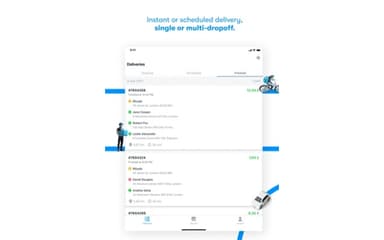
Deliveries can be arranged for immediate dispatch or a later time. An urgent order can use an express service, while other orders can be booked for a chosen delivery window. The available choices depend on the order and the location being served.
Pros And Cons of Stuart
Pros
Real-time delivery tracking for all orders
Supports different transport types (bike, scooter, car)
Automated customer notifications improve transparency
White-label pages keep delivery journeys under the merchant's branding
PIN and photo verification provide evidence for completed deliveries
Cons
Limited customization for delivery workflows
Dependent on availability of independent couriers
Scheduled delivery availability can vary by location and service area
Stuart Pricing
SMB | Mid-Market | Enterprise |
|---|---|---|
£5.50 per month | Custom Pricing | Custom Pricing |
|
|
|
Disclaimer: The pricing details were last updated on Oct 23, 2026 from the vendor's website. Please contact us for a tailored pricing list.
Stuart Reviews

No reviews yet!
Be the first to review this product
Frequently Asked Questions
What language does Stuart support?
The software supports multiple languages, including English, Polish, and French.
Does Stuart offer an API?
Yes, Stuart offers an API.
What types of Stuart price plans are available?
The pricing of Stuart starts at £5.50/delivery (~$7.45/delivery). Contact us to request a personalized Stuart cost quote based on your institution's requirements.
What level of support does Stuart offer?
The platform provides support via resources, help centers, email, and live chat.
What other apps does Stuart integrate with?
The platform connects with many third-party applications and systems, including Deliverect, Shopify software, Flipdish, Square, and Zapiet.
Who are the typical users of Stuart?
Stuart features are used by a wide range of industries and sectors, including restaurants, grocery stores, retail businesses, e‑commerce platforms, and professional services.
Does Stuart have a mobile app?
No, Stuart does not offer a dedicated mobile app.