Last Updated
Overview
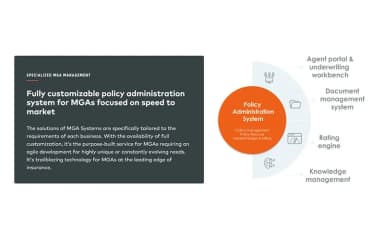
AIM offers Managing General Agent (MGA) management software for underwriting, policy administration, accounting, and broker operations, helping insurance teams manage core workflows. While its interface may feel dated to some users, its claims management and real-time reporting features support daily insurance work.
Be the first one to leave a review!
No review found
Starting Price
Custom

AIM Specifications
- Policy Management
- Claims Management
- Underwriting Management
- Quote Management
What Is AIM?
AIM, by Vertafore, is a management system built for managing general agents and wholesale brokers. It puts underwriting, accounting, and claims in one place, so teams can quote, bind, and invoice without switching between systems. The automated general ledger handles invoices, taxes, and fees without manual reconciliation. For firms working with surplus lines or specialized program business, it also covers the reporting and compliance requirements that most standard tools do not.
What Is AIM Best For?
AIM is best known for its surplus line management capabilities built for MGAs and wholesale brokers. It handles non-admitted market placements while keeping underwriting, accounting, and claims in the same workflow. The software is a strong fit for MGA and wholesale brokerage firms that are moving away from disconnected back-office systems or need quoting, binding, invoicing, and compliance managed in one place.
How Much Does AIM Cost?
The pricing of AIM is estimated to fall between $6,000 and $50,000/month, based on industry benchmarks for comparable enterprise insurance management solutions. This range provides a general sense of budget scale. What a firm actually pays will depend on factors like organization size, which modules are included, and how the system is deployed or integrated.
In addition to the base subscription costs, organizations should account for the following expenses:
- Implementation: Usually priced between $100,000–$750,000 (one-time), covering enterprise setup, workflow configuration, underwriting rules, and policy structures for MGA operations
- Data Migration: Commonly priced in the range of $25,000–$300,000 (one-time), depending on the volume and complexity of moving legacy policy, claims, and accounting data into structured insurance formats
- Training And Onboarding: Typically falls around $10,000–$100,000 (one-time), covering practical training sessions for underwriters, brokers, and accounting teams as they start using the system
- Integrations: Often priced between $20,000–$250,000 (one-time), depending on the number of external systems connected and how complex those connections are to set up
- Customization And Configuration: Usually ranges from $50,000–$500,000 (one-time), covering adjustments to underwriting workflows, rating logic, and compliance rules based on MGA requirements
- Premium Support: Typically priced at $15,000–$200,000/year, covering ongoing support, SLA-based assistance, and help with technical or operational issues
- Infrastructure: Typically ranges from $10,000–$150,000/year, covering system hosting, scaling, security management, and routine environment maintenance for enterprise deployments
Disclaimer: Pricing references are based on publicly available third-party information and industry benchmarks. Actual costs may vary.
AIM Integrations
The software supports integration with multiple systems and platforms, such as:
- ePayPolicy
- ImageRight
How Does AIM Work?
Log in to your AIM software account to access a centralized insurance management system and follow the given steps to complete core MGA workflows:
- Build underwriting structures by setting policy rules, rating factors, and program configurations based on business needs
- Manage submissions by entering risk details, creating quotes, and moving cases through bind and issuance stages
- Handle policy administration by updating records, tracking active policies, and processing renewals within the system
- Process financial entries by generating invoices, recording premiums, and maintaining accounting records through the general ledger
- Manage claims by creating claim files, updating status, and tracking payments and related activity in one system
Generate reports using built-in reporting tools to review policy activity and claims performance
Who Is AIM For?
AIM is suitable for organizations and professionals in the insurance sector, including:
- Managing general agents
- Wholesale insurance brokers
- Specialty lines underwriters
- Surplus lines brokers
AIM Use Cases
Based on our analysis of user reviews and AIM’s current capabilities, we have identified key scenarios where this software is a good fit for managing general agents and wholesale brokerage operations:
MGAs Managing High-Volume Submission Workflows
MGAs processing large submission volumes can run into bottlenecks when quoting, binding, and invoicing depend on manual handoffs at each step. Delays build up, and keeping track of where each submission stands becomes harder without a structured workflow in place. AIM may be suitable for underwriting teams where submission throughput is a daily priority and slow or missed processing has a direct impact on business performance.
Wholesale Brokers Handling Surplus Lines And Specialty Program Business
Wholesale brokers writing surplus lines or managing specialty programs face accounting and compliance requirements that standard agency management tools are not built to meet. Misaligned reporting, tax handling errors, and regulatory gaps are common problems in this space. AIM could be a practical fit for firms that need a system designed to handle the distinct financial and reporting obligations tied to non-standard market business.
Finance Teams Verifying Policy-Level Accounting Accuracy
At MGAs with high policy counts, verifying that invoicing, taxes, and fees are calculated correctly becomes hard to manage by hand. Errors build up quietly and create reconciliation problems that take significant staff time to resolve. AIM may be worth considering for MGA finance teams where transaction-level accuracy is a daily requirement and the volume of policy activity makes manual verification no longer practical.
MGA Operations Teams Monitoring Claims Alongside Active Risk Exposure
Firms that handle claims internally tend to find that claims data and underwriting activity get reviewed separately, which makes it harder to spot patterns or assess ongoing risk with confidence. AIM could serve operations teams that need claims status and underwriting activity visible in the same view, particularly where claims history plays a role in renewal decisions or program-level risk assessment.
MGAs Transitioning Away From Manual Or Spreadsheet-Based Processes
Smaller or mid-sized MGAs still relying on spreadsheets and manual recordkeeping for policy administration and financial tracking often reach limits as their book of business grows. AIM may be relevant for firms at this stage that need more structure and real-time visibility without the complexity of a large enterprise deployment.
Is AIM Right For You?
If you are a managing general agent or wholesale broker handling specialized or hard-to-place risks, AIM is designed to support your workflow needs. Its document processing and unified underwriting workflow bring structure to policy handling in niche insurance environments. Vertafore, the company behind AIM, reports serving a large share of fast-growing MGAs and operates within a broad insurance software portfolio, which speaks to its established position in the insurance technology market.
Still unsure about AIM? Connect with us at (661) 384-7070 for further guidance.
AIM Features
General Ledger
AIM maintains a full general ledger that records financial activity tied to invoicing, taxes, and fees. The system checks entries against policy transactions to keep accounting records aligned with underwriting and billing processes within MGA environments.
Underwriting Workflow
Through AIM, underwriting teams can move submissions through clearing, quoting, binding, and invoicing stages within a connected workflow. Each step is linked within the system, allowing policy activity to progress from intake to billing in a structured order.
Data Retention Module
The platform includes a data retention module that organizes and stores policy documents tied to insurance activity. It applies retention rules to maintain structured records that support regulatory requirements and internal documentation standards for MGA operations.
Claims Management
Claims management tools in AIM allow users to create, track, and process claims as they move through their lifecycle. The system records claim details, updates status information, and includes fraud monitoring that runs alongside standard claims handling activity.
Real-Time Reporting
AIM provides real-time reporting that compiles data from policy, financial, and claims activity. Reports are generated directly within the system, reflecting ongoing operations for MGA and wholesale brokerage workflows.
Pros And Cons of AIM
Pros
Reduces manual work in policy processing tasks
Improves accuracy in invoicing, taxes, and fees
Brings underwriting, quoting, binding, and invoicing together for better operations
Supports consistent handling of MGA insurance workflows
Helps organize document retention for compliance needs
Cons
Navigation could be improved for smoother use
Accounting reporting could use further development focus
Connecting with development team could be more direct
AIM Reviews
No reviews yet!
Be the first to review this product
Frequently Asked Questions
Does AIM have a mobile app?
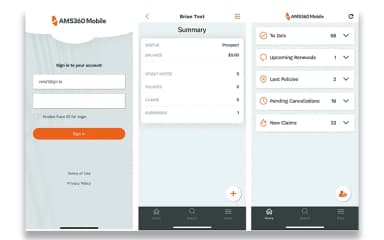
No, AIM does not offer a dedicated mobile app.
What language does AIM support?
AIM software primarily supports English.
Does AIM offer an API?
Yes, AIM offers an API.
What level of support does AIM offer?
AIM offers support via phone and an online contact form.
What types of pricing plans does AIM offer?
AIM pricing is estimated at $6,000 to $50,000/month based on similar enterprise insurance systems. Get a detailed AIM cost breakdown to make an informed decision.
Who are the typical users of AIM?
AIM features are used by managing general agents, wholesale insurance brokers, specialty lines underwriting teams, and commercial insurance agencies.
What other apps does AIM integrate with?
AIM supports integration with platforms such as ImageRight and ePayPolicy.