



 Modern clients expect immediate responses. Firms that don't reply within minutes lose prospects to competitors. For years, the solution was simply to hire more staff. But this is an expensive and unscalable solution. That is where AI legal intake comes into the picture.
We have moved past clunky chatbots. Next-generation AI tools now evaluate case viability, qualify leads, and schedule consultations instantly.
If you want to turn your intake process into a competitive advantage, you should keep track of where the technology is heading. Here are the leading AI trends that are redefining legal client acquisition.
AI legal intake uses Natural Language Processing (NLP), Machine Learning (ML), and automated systems to manage the earliest stages of the client journey. It captures inquiries across multiple channels, analyzes case viability using case qualification rules, and executes the next step (document sending, scheduling, or rejection) without manual intervention.
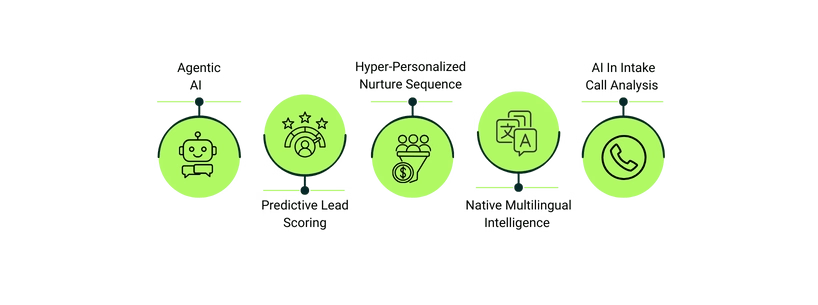
Artificial Intelligence (AI) is reshaping the legal intake at an unprecedented pace. We have mentioned a few shifts that will separate high-growth firms from stagnant ones:
Agentic AI
The era of ‘dumb chatbot’ that used to get stuck in a loop is over. Now, it is time for Agentic AI. Unlike the script-based bot, the AI agent can reason. For instance, your potential client mentions they have a court date tomorrow. The agent will recognize the urgency and escalate it to a partner instead of just taking a message. As a result, it will reduce time-to-consultation since it will be acting as an intake specialist who can book meetings.
Predictive Lead Scoring (Smart Triage)
AI-driven triage tools use predictive analytics to score leads the moment they arrive. The system reviews the intake form information, such as identifying case type, urgency, and key factors, without needing manual review. This technology enables intake teams to move past simple data capture by predicting case value. High-priority leads are flagged for immediate follow-up, while low-viability leads enter automated nurturing sequences.
Hyper-Personalized Nurture Sequence
The generic ‘Thanks for contacting us’ emails are being replaced by AI-driven personalized messaging. The system evaluates the lead’s specific issue, for instance, divorce involving custody, and generates a follow-up email sequence that addresses custody laws in their state. This leads to higher engagement rates as the client will feel heard even before they speak to a human.
Native Multilingual Intelligence
For years, law firms have been restricted by the languages their staff speak. Without multilingual staff, firms lose access to market segments that prefer communication in their primary language. AI removes this barrier as the newer models have native fluency. They can conduct complex intake interviews in various languages and transcribe the notes into English for the attorney. This increases your Total Addressable Market (TAM).
AI In Intake Call Analysis
Many clients still call law firms, and AI can enhance this process through speech-to-text transcription and NLP that turn intake calls into searchable summaries. These tools extract key facts, surface important case details, and flag potential issues or qualification criteria based on the firm’s standards. By instantly analyzing call content, AI reduces manual review time and helps intake teams focus on high-value clients who need immediate follow-up.
Decision Matrix: Traditional Vs. AI-First Intake
Feature | Traditional Intake | AI-First Intake |
Availability | 9 AM to 5 PM | 24/7/365 |
Response Time | Hours or days | Instant |
Lead Qualification | Manual review by staff | Predictive Scoring |
Follow-up | Dependent on staff memory | Automated, multi-channel drip |
Data Entry | Manual; prone to errors | API integration |
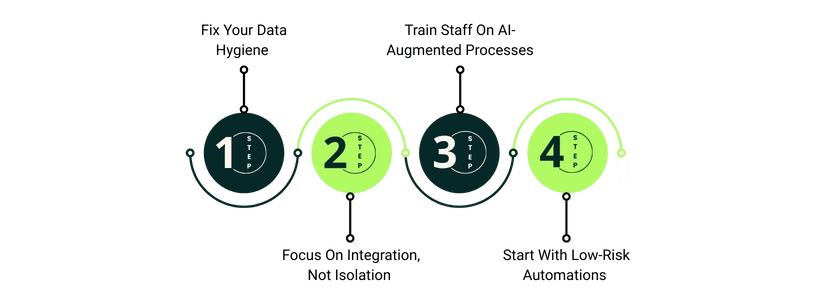
Adopting these AI trends is not just about getting software; it is about preparing your firm’s infrastructure. The steps below outline practical ways firms can get ready for what’s coming:
Step 1: Fix Your Data Hygiene
Firms need a stable intake structure before introducing advanced tools. This includes organizing current forms, centralizing communication channels, and standardizing the questions asked across practice areas. A cleaner workflow makes AI easier to implement and more effective from day one.
Firms that have not yet formalized this foundation may benefit from evaluating dedicated client intake software, which provides the structured forms, lead tracking, and centralized communication channels needed before any AI layer can perform effectively.
Step 2: Focus On Integration, Not Isolation
Choose tools that integrate bidirectionally with your case management system. Standalone AI tools create data silos that undermine efficiency and accuracy. Data silos are something you can’t afford.
Step 3: Train Staff On AI-Augmented Processes
Intake teams must understand how AI fits into daily work. This means learning when to rely on automation, when to step in manually, and how to review AI-generated case information. A trained team creates smoother collaboration between human and automated workflows.
Step 4: Start With Low-Risk Automations
Always start small; don’t automate your biggest cases immediately. It is better to start with simple automations, such as guided forms, document collection, or basic follow-ups, and gradually adopt more advanced features. This approach reduces disruption and allows the team to adjust as new capabilities roll out.
AI is set to redefine the way law firms manage intake. Its implementation into the case intake system keeps your firm competitive and supports more efficient, profitable operations. The best legal intake software helps capture and retain more leads, converting hesitant inquiries into valuable cases. It will work in those cases strategically for the best possible outcome, shaping the direction of legal intake for the years to come.
Since intake is the first step in the client lifecycle, the data captured here often flows into case management, billing, and client communication systems... many of which are covered in our best legal software guide.