Article
How To Choose An EHR System In 2026: A Step-by-Step Selection Guide
9 mins read
Last Updated


By Rana Jazib Ali and


Article
9 mins read
Last Updated
By Rana Jazib Ali and

Selecting an Electronic Health Record (EHR) system is a huge part of how well a medical practice operates in 2026. Such platforms serve as intelligent data centers that can automate documentation, while also helping medical teams communicate in a better way across a global healthcare network.
With regulations like Trusted Exchange Framework and Common Agreement (TEFCA) becoming the standard, any software you choose will either be a big asset or an administrative burden.
This guide provides a step-by-step roadmap to help you navigate the landscape and choose a system that will support the future of your practice. What follows is a breakdown of the process.

The most successful EHR adoption starts with an honest look in the mirror. You can’t expect to pick the perfect tool if you do not have a clear understanding of how your organization works and what your financial health looks like.
For choosing the right system, you need a cross-functional team that represents every person involved with your practice:
Map out your current patient journey, everything from the moment they book an appointment to the moment the final bill is paid. Mark out your primary needs by considering issues like intake forms, lobby backlogs, and billing issues. Make sure the EHR solution you select can fill these specific gaps.
Point To Be Noted: While it is true that these steps apply to all practice sizes, it needs to be understood that the scope of application can vary greatly. Solo practitioners might be able to complete this process in 4-6 weeks, while multi-location systems may require up to 4 months, and adoption timelines must be adjusted accordingly.
With your internal needs defined, the next phase involves an outward look. A glance at the marketplace to identify which EHR providers can actually deliver on their promises. This phase is about finding a partner that fits your clinical culture.
You can begin by gathering an overview of the current landscape through review platforms and industry rankings. Rather than looking for a perfect system, look for consistent patterns in the feedback. If multiple practices of your size consistently praise a vendor support team but criticize their billing module, you can gain valuable data points into your search.
Finding the best EHR is subjective, as it can depend largely on the size and complexity of your organization. A solo practitioner requires a simple, intuitive interface that can minimize administrative overhead, while a multi-location health system might need better data aggregation and user-permission hierarchies.
In a crowded market, it's the finer details that often determine long-term satisfaction with an EHR system. Pay close attention to the quality of a vendor’s implementation support as some vendors provide a dedicated project manager to guide you through the set-up process, while others rely solely on self-service features.
As you move through your research, keep a structured record of the pros and cons for each potential system. Documenting specific features, preliminary pricing models, and support tiers in a side-by-side format prevents the details of different vendors from blurring together. This organized approach will make sure that when you present your findings to stakeholders, your recommendations are backed by hard data rather than general impressions.
Once you have a clear understanding of your practice requirements, the next phase is to filter your options and begin direct contact with potential partners. This is where high-level research transitions into practical evaluation.
To gather the right technical and financial details that aren't usually available on public websites, you need to send out Requests for Information (RFI) or a Request for Proposal (RFP). These documents are your opportunity to ask pointed questions about things like data migration costs, security certifications, and specific clinical workflows. Using a structured document ensures that you receive comparable data from every vendor, making your final decision much easier to justify.
Scheduling a demonstration is the most important part of the selection process. Rather than letting the vendor give you a generic tour, ask them to walk through your most common clinical pain points. Pay close attention to the user interface and how many clicks it takes to perform routine tasks like e-prescribing or viewing a patient's history. A system that feels intuitive during a demo is much more likely to be adopted by your staff without resistance.
Apply a consistent scoring system across all candidates. This means you need to make a detailed checklist of must-have features, and grade each vendor based on the availability of their support staff, pricing transparency, and ease of use. This objective approach should remove any bias and make sure the final choice is based on functional merit.
Before signing a contract, you need to translate your research into a professional business case that can bring your leadership and stakeholders on board. This document should bridge the gap between clinical needs and financial reality.
Map out the daily frustrations faced by your team, such as documentation backlogs or high error rates due to manual data entry. By framing the new EHR as a direct solution to these pain points, you demonstrate the tangible value of the investment. Use concrete examples to show how the transition will improve on issues like patient safety and reduce administrative burnout.
Leadership teams need to see the full financial plan laid out in front of them. Present a clear table of estimated costs, including implementation fees, hardware upgrades, and recurring subscription totals. You also need to outline a realistic deployment timeline so that the organization can plan for reductions in productivity that usually occur during the implementation period. Market estimations claim that a dedicated cloud-EHR can cost $150-$700/provider/month, with the 5-year cost ranging anywhere from $55,000-$85,000.
Explain the return on investment by highlighting long-term efficiency and improved billing accuracy. Equally important is outlining the risks of maintaining the status quo, such as falling behind on regulatory compliance or losing patients to more technologically advanced competitors.
The success of your new EHR depends entirely on how well your team adopts it. A smoother rollout requires better planning and communication.
Transparency is the best way to manage anxiety that often accompanies new technology in healthcare. Share a detailed rollout schedule with all staff members, including when training will occur and when the old system will retire. Keeping everyone informed through regular meetings or internal updates ensures there are no surprises on the first day of use.
Identify the most important users within your practice; these can be clinicians or administrators who can serve as the primary points of contact during the transition. These internal users bridge the gap between your staff and the technical support team, providing immediate help for minor issues and ensuring the rollout stays on track.
Mandatory training sessions are essential for a successful launch. Ensure that every user completes the necessary tutorials and hands-on workshops. Track these completion rates and offer refresher courses a few months after the go-live date to ensure everyone is utilizing the system's most efficient shortcuts.
Create a simplified process for users to report bugs and frustrations during the first ninety days. Regularly check in with your team to see how the software is performing and work closely with the vendor to resolve any lingering issues. This collaborative approach shows your staff that their input is valued and helps fine-tune the system for maximum efficiency.
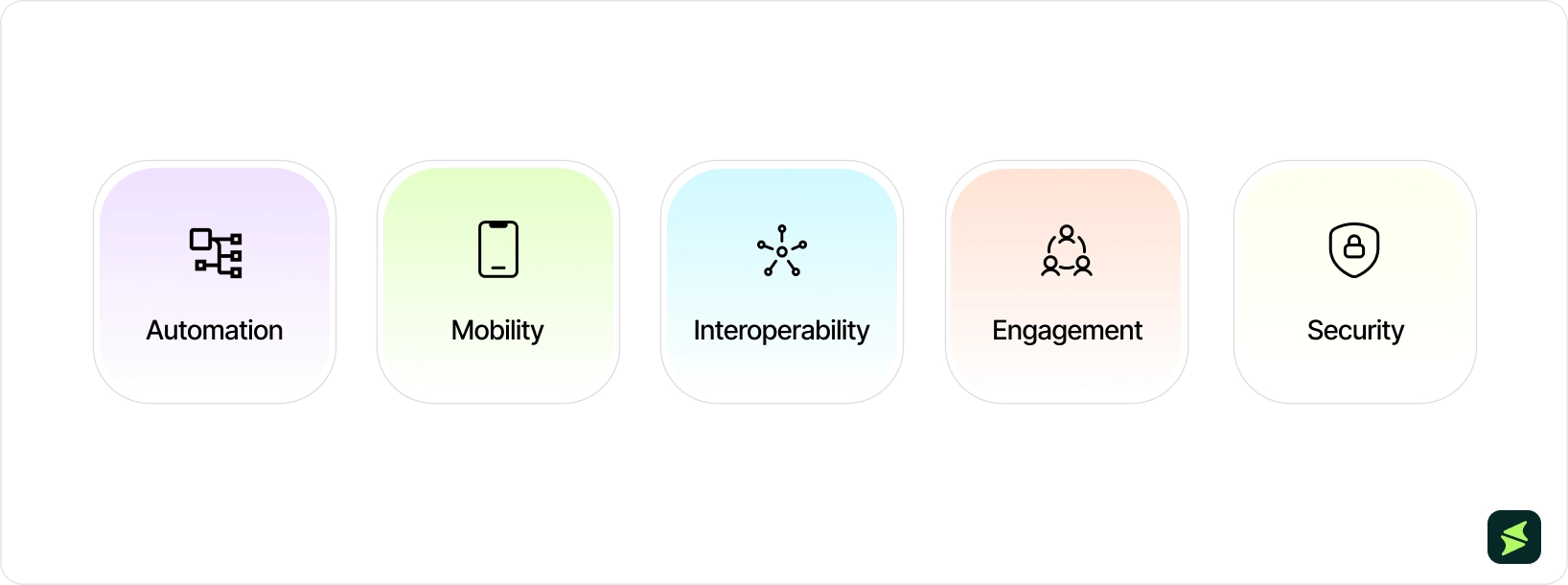
What follows is a checklist of questions to consider while choosing an EHR for their practice. Keep in mind that this list is not universal; it simply offers the best possible pathway to the ideal EHR choice you can make.
Category | Questions |
Automation | Does the EHR have advanced features like an ambient AI scribe? Can the EHR automate prior authorizations? |
Mobility | Does the platform offer a native mobile app for iOS and Android? |
Interoperability | Is the solution TEFCA-ready and FHIR-compliant? |
Engagement | Does the patient portal support self-scheduling and digital intake? |
Security | Is the vendor SOC 2 Type II certified? |
Choosing an EHR system for your practice is all about choosing a partner that can handle all of your medical needs, not just at the moment of contract but for the foreseeable future. The right system should act like a very efficient, but silent assistant. It should simplify documentation and data management so you can focus on the patient.
A specialty-focused approach that prioritizes the standards of AI and interoperability, can help you make sure that the platform you choose is an asset that grows with you and your practice.