




Project management is no easy feat—it’s a process where multiple skills are applied in order to meet certain project requirements. It’s an art unto itself in which the overseer of the project achieves the project’s vision with the available resources against various time constraints.
Thus, it comes as no surprise that many people can struggle with project management. If you’re one of them, then you’ve come to the right place—we’ve come up with a list on improving essential project management skills to help elevate your project management proficiency. With effective project management, you will not only ensure that tasks are completed on time and within budget but also improve collaboration, bolster morale and enhance overall productivity.
It’s a no-brainer, but a good understanding of the project itself is key to effectively managing said project. For instance, if the project is about coding, then it helps to have programming experience as it helps you understand the type of work being done, as well as the roadblocks that the team may run into.
In order to improve their core knowledge of the subject matter, project managers can:
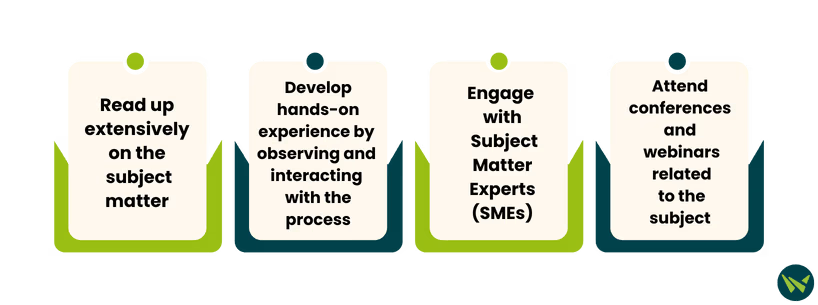
As such, utilizing the knowledge of the project itself can really help smooth things out as it helps in planning more effectively.
Other than core knowledge, the most important skills a person can learn in project management are ‘soft’ skills that are all about communicating well with other people.
Listening
Perhaps one of the most underrated, yet most important communication skills is listening. A successful project manager understands that a lot of their work amounts to receiving and sending information. That’s why it’s important for managers to connect with their team members and understand all their problems and needs. To do so, they must actively listen and take their feedback into account.
Proper, mindful listening allows managers to uncover all sorts of subtle issues, risks and even possible opportunities. Without listening and feedback, the project can run into all kinds of unforeseen roadblocks as mistakes are made that could’ve been easily avoided.
In order to listen well, one must:
By following these steps, a project manager can not only avoid all kinds of pitfalls that the project can run into, but also make team members more comfortable, allowing them to feel safe when offering feedback.
Conflict Resolution
Conflicts are an inevitable part of human nature. The same holds true even at work or during the completion of a project—team members can often disagree and clash on many issues. Sometimes, the conflict is external—maybe a stakeholder wants to change something about a project. Either way, there is bound to be conflict.
Fortunately, conflicts do not have to end badly. A good project manager must know how to resolve conflicts by addressing both sides of the parties so that everyone feels heard and understood. By getting everyone on the same page, conflicts can be de-escalated, even completely mitigated so that everyone moves on, thus preventing any harmful events from occurring.
There are certain steps that can make a person better at conflict management. They are:
In addition to interpersonal skills, a good project manager must know how to organize properly to get things done. After all, a properly organized project is far more likely to meet deadlines and can save the team a lot of headaches in the process.
Project Planning
Before starting a project, a project manager must map out all the key steps that are required to finish the project. They can do so by coming up with a project plan, which acts as a blueprint of all the project phases from initialization to completion.
However, even the best laid plans of mice and men often go awry. The same holds true for project plans—even the most carefully drafted plans can’t account for every single variable. Therefore, project managers must always account for any unforeseen consequences that may happen.
Project Scope Control
Project scope defines the work required to complete a project, including its objectives, deliverables, and constraints. Very often, project scope can balloon in size, due to a change in requirements from stakeholders or clients. The result is what’s commonly referred to as ‘scope creep.’
Scope creeps are one of the most common pitfalls that projects often fall into. They also hinder project execution as the team has to now complete more tasks and goals with the same number of resources that were assigned to them when the project had its original scope. This often leads to missed deadlines, lower team morale, and more confusion regarding the project’s original goals.
Thus, in order to avoid scope creep, project managers and stakeholders must keep realistic expectations and stick to their original plan. They can also take additional steps to ensure scope creep doesn’t occur, such as:
Refine Your Essential Project Management Skills And Stay Ahead
While all the skills discussed here are essential for project management, there are a lot more skills that come into play. After all, project management is a complicated discipline that makes use of several skills. However, by focusing and improving on these essential skills, you’ll be able to save yourself a lot of trouble and grief in the future.