Article
What Is Core HR: Functions, Software, Data, And How To Choose The Right System
17 mins read
Last Updated


By Hina Anwar and


Article
17 mins read
Last Updated
By Hina Anwar and
Core HR is the foundation layer within HR software. It is the system of record that holds employee data, employment status, & compliance documentation that the rest of the HR stack depends on. Confusion arises when vendors stretch the term to cover work that belongs to talent, benefits, or payroll modules, and buyers lose track of where core HR ends and adjacent systems begin.
This guide clarifies core HR in practical terms, explains how it differs from HRIS, HCM, and payroll, and discusses how to evaluate and implement the best system for your organization.
Core Human Resources (HR) is a basic system and set of processes for keeping track of employee information, employee lifecycle stages, and workforce compliance. It serves as the primary record of who works for the organization, under what conditions, and how those details change over time. In this sense, core HR serves as the system of record for all employee information.
It correctly answers simple but critical questions such as who the employee is, when they were hired, what role they hold, how they are classified, and whether all the necessary records are up to date. These data points become the basis for all additional HR and payroll systems.
Core HR does not replace talent management, benefits admin, or payroll processing tools. Instead, it provides well-organized and governed data that these systems need to work effectively.
In short, core HR exists to define, govern, and preserve employee data so that all other HR systems function properly and compliantly.
Core HR can be understood via the following three connected levels:
Viewing core HR at these three levels helps businesses effectively evaluate it and avoid structural gaps later on.
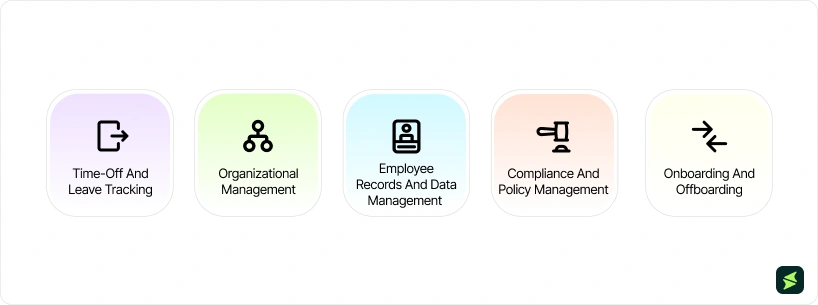
Core HR functions are responsible for keeping employee data accurate, compliant, and usable for the company. They form the operational backbone, which facilitates payroll processing, workforce reporting, and regulatory compliance. These functions include:
Employee records are the foundation of core HR. This module keeps personal details, employment status, job history, compensation changes, and required documentation in a single system of record.
Payroll, benefits, and reporting systems rely on this data to calculate wages, determine eligibility, and generate accurate workforce reports. When records are properly maintained, downstream systems operate on verified information.
When records are scattered across spreadsheets, emails, or payroll notes, data quickly goes out of sync. Reporting becomes unreliable, and compliance audits require manual reconciliation. These inconsistencies usually appear, at first, as payroll errors or reporting discrepancies before developing major compliance concerns.
A centralized employee record system prevents these issues by ensuring every HR process works from the same verified data.
Organizational management is all about how employees are categorized based on their department, role, reporting line, and the assigned cost center. This setup controls how approvals are handled, who has access to the system, and how headcount and cost data are consolidated for leadership and finance reporting.
Having clear hierarchies helps make sure that reports show the actual way things are set up, and that access controls match the roles people currently have.
When organizational data is outdated or inconsistently maintained, approvals slow, reports lose credibility, and leadership’s visibility into headcount and organizational structure is affected. Finance and management teams are usually the first to feel the impact of inaccurate cost and workforce reports. A well-maintained organizational structure helps ensure reporting accuracy, reliable workforce planning, etc.
Time off and leave tracking carry both operational and legal implications. Core HR systems keep track of PTO balances, time off requests, and protected leave, such as FMLA, while adhering to state-specific regulations. This data plays a key role in payroll calculations, accrual tracking, and maintaining compliance requirements. When managed centrally, leave policies are applied the same way for everyone in the workforce.
When leave data is tracked manually or through different platforms, policy enforcement becomes inconsistent, and payroll discrepancies increase. Differences in leave balances can cause mistakes in wage calculations or disputes over earned time off. A centralized core HR system helps enforce leave policies while keeping leave records audit-ready.
Compliance is often where weakness in core HR becomes most visible. This function supports adherence to federal and state requirements by managing employment forms, reporting data, and audit documentation.
This includes records such as I-9 (Employment Eligibility Verification form) and W-4 (IRS Employee's Withholding Certificate) forms, EEOC (US Equal Employment Opportunity Commission) reports, ACA (Affordable Care Act) eligibility tracking, and documentation history.
Core HR helps keep everything organized by centralizing documentation and creating clear audit trails. This makes regulatory reports more efficient and ensures that records are kept securely. When compliance data is spread between different platforms, it can slow down the audit response process and heighten risk levels. Failure in this area could lead to some serious financial and legal issues.
Onboarding and offboarding demand a systematic plan of action, as these transitions affect payroll setup, benefit enrollment or termination, and system access controls. Core HR tracks documentation completion, role assignments, access changes, and exit records during these shifts.
When these steps are handled manually or through disconnected processes and tools, records often become inconsistent, resulting in security gaps and administrative delays. Centralized tracking helps ensure access changes, documentation, and role updates are recorded accurately across systems. Without this visibility, IT, security, and HR teams may struggle to maintain proper access controls and reliable employee records.
When these functions are stable, payroll and compliance run smoothly; when they are not, problems surface first through audits, payroll errors, and reporting gaps.

Employee data does not stay static after hiring; it changes with promotions, compensation changes, transfers, and regulatory updates. Core HR is responsible for organizing and maintaining these data points in a controlled and traceable manner. In this role, core HR does more than move data between tools; it ensures that the data is accurate, consistent, and properly controlled.
Core HR data consists of personal identifiers, employment status, job and compensation histories, work location, classification, and compliance records. As this information evolves throughout an employee’s lifecycle, records must remain historically accurate even as new updates occur.
By maintaining this change history, core HR ensures that connected systems continue to operate with reliable information. Not only is this change history used for operational purposes, but it is also used as proof in court cases and audits.
When employee data is distributed between multiple systems, issues appear very quickly. Leave balances are different from payroll deductions, benefits eligibility is applied inconsistently, and payroll and HR reports stop aligning on job or classification details. Payroll systems, particularly, are made to calculate current pay periods rather than keep track of the complete employment history. They sometimes overwrite previous values, lack detailed change logs, and store limited contextual data, making them unsuitable for storing long-term employee records.
Fragmentation also weakens compliance readiness. During audits, HR teams often have to manually reconstruct records across tools, increasing the risk of missing documentation or reporting errors. It is hard to tell when or who approved changes to historical data when it is overwritten or not synced properly. This raises concerns about the integrity of the data.
With time, more effort is spent correcting data issues than on workforce operations. Centralizing employee data within core HR restores control and lowers downstream risk within the HR tech stack. For organizations, this reduces long-term compliance risk and helps avoid data loss during system changes or migrations.
Category | Primary Focus | Best Fit |
Core HR | Employee data, employment records, and compliance | All businesses |
HRIS | Core HR plus administrative HR tools | Small to medium-sized businesses |
HCM | End-to-end employee lifecycle management | Mid-market and enterprise organizations |
Payroll | Wage calculation, taxes, and payments | Payroll and finance teams |
Confusion about core HR, Human Resources Information System (HRIS), and Human Capital Management (HCM) is one of the most common reasons companies choose the wrong HR system. Even though these terms represent distinct functions within the HR technology framework, they are often used interchangeably.
Each category focuses on a different level of HR responsibility. Core HR focuses on employee data and compliance. HRIS software supplements core HR with administrative tools, while HCM software addresses the entire employee lifecycle, including talent and workforce planning.
Understanding these distinctions helps buyers avoid overlapping tools, paying unnecessary costs, and missing data ownership. It also guides decisions on when a company is ready to transition from one category to the next. Choosing the right category depends less on company size and more on data stability and long-term workforce complexity.
Short answer: Payroll cannot replace core HR. While payroll software systems store employee information, their primary role is to calculate wages, withhold taxes, and generate statutory reports, not manage data governance or employment lifecycle.
Relying on payroll as the primary employee record increases the possibility of incomplete documentation, limited audit trails, and misaligned data across HR systems. Core HR provides the structure on which payroll is based, not the other way around.
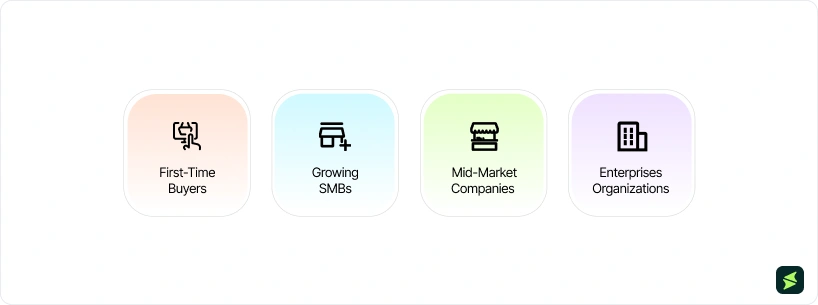
Core HR software becomes necessary when accurate manual handling of employee information is no longer possible. This requirement isn't observed at a single company size, but at various stages based on regulatory exposure, workforce distribution, and system complexity.
As companies expand, operational strain shows in different ways, such as missing records, unreliable reporting, manual compliance tracking, and disconnected payroll and HR platforms. The following sections explain how pressures build for first-time buyers, growing SMBs, mid-market, and enterprises, highlighting how Core HR becomes a structural requirement, rather than a convenience.
Many startups and small companies in the initial stages use spreadsheets or basic payroll tools to keep track of employee information. This strategy may be effective initially, but it will fail when compliance requirements and hiring frequency increase.
At this point, the main issue is not system complexity, but a lack of structure. Founders and office managers usually handle documentation manually, as there is no centralized recordkeeping standard. Missing forms, inconsistent records, and unclear job classifications are usually the first warning signs. HR teams start manually tracking documentation, and payroll corrections become common.
When these issues come up, investing in the best core HR software for small businesses can help first-time buyers establish basic record integrity, standardized documentation workflows, and audit-ready storage before regulatory exposure increases.
As a company grows, its employee data gets more complicated. Multi-state hiring introduces different tax rules, leave laws, and reporting obligations. At this point, the challenge shifts from basic recordkeeping to regulatory coordination in multiple locations. Conflicting headcount reports, manual payroll and HR system reconciliation, and inconsistent leave or classification rule application are all warning signs.
Core HR helps keep records consistent in different areas, makes sure payroll and HR data are aligned, and brings compliance tracking into one place to avoid mixed-up reporting between teams and states.
Mid-market companies deal with different challenges. Processes should be consistent in departments, and core HR needs to work smoothly with payroll, time tracking, and benefits administration. At this point, the risk is more related to system fragmentation and integration instability than missing records.
Without a single records database, HR teams spend more time resolving data issues than managing workforce operations. Audit scheduling becomes resource-intensive, reporting credibility declines, and system migrations become more disruptive when historic data lacks consistency.
Core HR at this level provides integration stability, structured data governance, and standardized reporting definitions in all departments.
For large organizations, core HR is about governance as well as growth. Strict compliance, large headcounts, and complex structures require consistency and control. The issue here is governance risk at scale, not operational strain. Enterprises must manage layered reporting hierarchies, global regulatory variations, and strict access control policies in all regions.
A well-defined core HR system organizes employee data, enforces access controls, and facilitates accurate reporting for all regions and business units. Without this structure, companies may face compliance issues, inconsistencies in global reporting, and increased risk during system changes or regulatory reviews.
Not every core HR feature carries equal weight. Some capabilities contribute to data accuracy, compliance, and system integrity, while others improve usability.
Understanding this difference allows buyers to prioritize structural stability over convenience. An efficient core HR system should prioritize control and audit readiness first, then experience.
These features are significant for upholding compliance and data integrity and should be non-negotiable:
These features improve flexibility and productivity but do not replace core data controls:
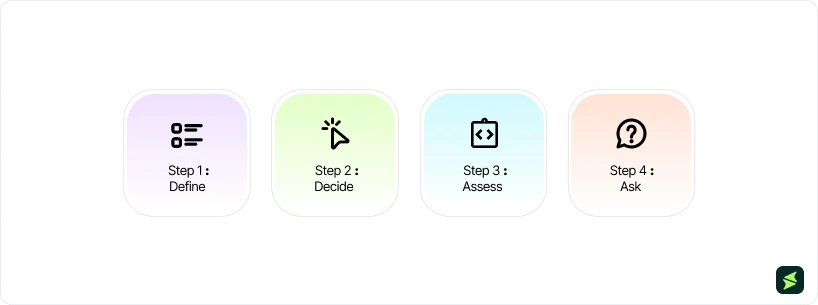
Choosing core HR software is a structural decision, not a feature checklist exercise. The system has to facilitate compliance, scale to meet workforce complexity, and connect smoothly with existing tools.
As an organization expands, it's important to make sure that its operational needs align smoothly with its system capabilities. This approach helps buyers look past the polished demos and marketing hype and gives them a clearer understanding of how the system operates in real-world scenarios.
First off, identify the exact issues that the system needs to address. These mostly refer to issues like compliance risks, data inconsistencies, or limitations in reporting.
The size of the workforce, how often you hire, and where your teams are located also play a crucial role in shaping your data structure and reporting needs. It's important to think about industry and regional regulations right from the start since they play a big role in how we need to manage employee records.
When the requirements aren't transparent, vendors often try to oversell features that actually fail to address the core underlying risks. This is why, before evaluating any Core HR platform, you should clearly outline your pain points and operational limitations.
Some organizations find it beneficial to use a standalone core HR system that integrates smoothly with their current payroll or benefits platforms. This works well when existing systems are stable, and the goal is to centralize employee records without completely replacing them. It provides flexibility, but it’s dependent on reliable integrations and consistent data sync.
Others like to go for a more all-in-one HR suite, using core HR as their starting point. A unified suite saves reconciliation work and improves reporting consistency, but it might require a larger initial investment and limited flexibility if certain modules are underdeveloped.
Choosing the right option depends on your current system maturity, compliance complexity, and long-term technology roadmap. Growth-oriented or multi-location organizations usually benefit from a unified suite, while companies with strong existing payroll systems may lean towards a standalone solution.
Core HR systems rely on having clean and well-structured data to function effectively. That makes migration planning a foundation step, not a technical afterthought. Before going into systems integrations, it's important to clarify which employee records you want to migrate and how that information will be validated before import.
Once the migration scope is clearly defined, integration planning becomes easier. Confirm compatibility with payroll, reporting, benefits, and time tracking tools early in the evaluation process to avoid downstream disruptions.
Many post-implementation issues originate from poor data mapping or unclear ownership of cleanup responsibilities. This is also where vendor accountability is most important. If vendors fail to clearly explain data validation processes, historical record limits, or integration dependencies, these gaps often emerge after go-live, when corrections are more costly and disruptive.
When it comes to vendor assessments, it's important to look beyond just the product features. You need to clarify who actually owns the employee data, how access is managed, and what service commitments come into play.
Implementation support, system availability, and escalation procedures are just as important as functionality. When you're talking to vendors, it's a good idea to ask them about the general timeline for implementations in organizations that are similar to yours. Find out what common delays they had to deal with and understand which responsibilities will be handled by your internal teams compared to what the vendor will take on.
When you're in demos, keep an eye out for some red flags. If you notice a heavy reliance on manual workarounds, unclear audit trails, or vague responses regarding compliance reporting, you should be concerned. Claims of 'easy configuration' or 'minimal setup' often downplay the actual work required to guarantee that core HR data is stable. Clear accountability lowers long-term operational risk.
Organizations rarely replace core HR systems without a valid operational reason. A change is usually required when the current setup can no longer support compliance requirements, reliable reporting, or operational growth.
Some of the early warning signs are mismatched data, frequent manual corrections, and difficulty accessing employee records. These problems get worse over time, increasing risk and operational friction. In many cases, teams deal with these issues until an audit, system failure, or acquisition demands an immediate replacement.
Beyond these visible warning signs, legacy systems incur indirect operational costs. The time spent reconciling records, preparing for audits, or maintaining custom fixes slowly drains HR capacity and increases reliance on manual oversight. Over time, this hidden workload can outweigh the perceived stability of sticking with an outdated platform. What appears stable might be just familiar rather than structurally sound.
Some problems suggest structural limitations rather than temporary inefficiencies, including:
If these issues keep popping up, it usually indicates that the system isn't quite meeting the daily requirements anymore. In many cases, they usually indicate structural limitations rather than temporary inefficiencies. At that point, delaying replacement hardly solves the problem and may increase the chances of missed filings, payroll errors, or audit failures.
While replacing a core HR system can resolve structural issues, it also introduces its own risks that require careful planning. The most common risks are:
Even small mistakes during a core HR migration can disrupt payroll, benefits, and regulatory reporting. Given these risks, it's necessary that you do proper planning and verification. Most failed migrations involve:
These failures are usually caused by organizations underestimating data cleanup, relying only on automated migration, or skipping validation in all connected systems.
When it comes to successful replacements, it's all about focusing on control, verification, and accountability rather than just rushing through the process. When you're going through a system transition, one of the biggest risks you face is the potential loss of historical accuracy or discovering inconsistencies between the systems that are linked together. Running systems in parallel allows teams to verify data accuracy before making a complete switch. This approach is very useful for checking historical records, making sure payroll is aligned, and discussing compliance in real-life situations.
Clear ownership of migration tasks, structured testing, and focused user training also contribute to operational continuity and less disruption. Organizations that approach replacement as a data management project rather than a software switch see fewer post-launch corrections and lower compliance risk.
Implementation timelines vary according to workforce size, data quality, and integration requirements. Smaller companies with clean records normally complete the implementation process in weeks, whereas larger or distributed teams may need several months for testing and verification.
Core HR implementation is not limited to HR alone. Successful deployment usually requires collaboration between multiple operational teams.
While HR teams are in charge of validating employee data, confirming compliance requirements, and establishing access rules, IT or finance teams are responsible for system integrations, security controls, and payroll alignment.
Clear ownership at each stage avoids delays and eliminates post-launch corrections.
Many implementation issues are caused by early-stage decisions, made during the system selection, planning, or data preparation. Here are some common examples:
These issues often emerge after go-live, when resolving them becomes more costly and disruptive.
A successful launch is measured by consistency, not speed. When implemented correctly, core HR fits into the background and supports operations without drawing attention to itself; employee records remain consistent in all systems; compliance documentation is complete, and day-to-day HR processes continue without interruption.
Core HR plays a major role in establishing compliance with US employment regulations. It gathers, stores, updates, and keeps employee data in line with federal and state regulations, while providing systems capable of managing these records reliably.
Instead of manually implementing compliance, core HR systems provide businesses with the structure, documentation, and audit trails they need to meet those requirements. This structure becomes highly valuable during audits, employee disputes, or regulatory investigations, where historical accuracy matters more than intent.
At the federal level, core HR supports recordkeeping and reporting obligations related to employment eligibility, tax documentation, and workforce data. This usually involves keeping up with I-9 and W-4 records, helping out with EEOC reporting, and monitoring employee classifications so that they meet benefit eligibility and ACA compliance.
When it comes to audits or regulatory inquiries, having accurate timestamps, a clear change history, and proper document retention is necessary. Auditors do not just check if the records are there; they also look at whether everything was completed on time, updated accurately, and kept for the right amount of time.
Informal recordkeeping methods, like spreadsheets or email-based documentation, often fall short in such scenarios because they lack consistent timestamps, approval history, and access controls. Core HR ensures that federal compliance records are accurate, auditable, and consistently maintained.
State and local regulations introduce additional layers of responsibility. Leave entitlements, record retention durations, and reporting regulations differ by jurisdiction and usually rely on the employee's work location.
Core HR systems deal with this complexity by utilizing standardized data structures and integrating location-specific regulations into employee records. Without centralized controls, organizations might end up applying the wrong regulations to the wrong employees, which can be a real challenge, especially in multi-state or remote work environments.
Compliance relies on maintaining accurate historical employee data over time. Core HR systems create a verifiable audit trail by keeping track of employment history, document changes, and access logs.
This capability allows organizations to efficiently deal with audits without having to rebuild records from various platforms or depending on informal documentation. In audit situations, being able to track when data was modified, who approved it, and which version was active can be just as valuable as the data itself.
When records are centralized and traceable, compliance reviews become structured verification processes instead of last-minute data recovery efforts. This investigation timeline reduces compliance exposure and allows HR and payroll teams to provide supporting operations quickly when requested by the auditors.
Core HR software is increasingly evolving from a focus on basic operations toward reducing organizational risk and enabling strategic workforce management. Modern platforms provide clean data structures, secure access controls, and clear audit trails, which are now considered standards rather than differentiators. This dependability lays the foundation for future advances in automation, analytics, and workforce decision-making.
When we talk about automation in core HR, we refer to predictable, rule-based tasks that can be simplified for efficiency. These workflows are expected to grow in the coming years, allowing routine processes like approvals, status changes, onboarding steps, and document handling to operate with minimal manual intervention. Structured automation will continue to reduce manual workloads while helping organizations avoid common data entry errors and compliance oversights.
Companies are utilizing core HR data to improve their workforce analysis and planning efforts. Moving forward, more organizations will rely on this data to identify trends in headcount changes, turnover patterns, and compliance exposure earlier in the decision-making process. The effectiveness of these insights will depend on maintaining complete, consistent, and historically accurate data, turning Core HR into a critical platform for strategic decision-making.
Employee self-service features are expected to develop even further as organizations try to reduce administrative workloads. Employees are already using these tools to update personal information, access documents, and track requests. Further improvements will most likely focus on deeper workflow integration, clearer approval tracking, and more transparent record updates, allowing organizations to maintain accurate, audit-ready data with less HR intervention.
With HR tools becoming increasingly interconnected, core HR will continue taking a more significant governance role within the HR tech ecosystems. Access to management, data ownership policies, and integration controls will likely become more standardized. Core HR platforms might also stand out based on how effectively they maintain data integrity across connected systems, rather than just the number of standalone features they offer.
Core HR should be viewed as a reliable system for employee data and compliance management solution, rather than just a productivity tool. Its true value lies in reducing organizational risk and providing operational stability across HR, payroll, and connected systems.
Before selecting a core HR platform, companies should analyze whether their current setup consistently delivers accurate, governed, and auditable records. Repeated issues in data handling or reporting are signs that the current setup is no longer sustainable, and that risk is increasing.
The right core HR system takes care of this risk by maintaining structured data, preserving historical records, and delivering audit-ready reporting. While evaluating your options, long-term governance, control, strategic value, and long-term stability should take priority over surface-level features or short-term convenience.
In practice, investing in core HR at the right time is not an optimization decision. It is a preventive measure that maintains compliance, reduces downstream operational strain, and provides a strong foundation for workforce growth.