


Building a software discovery platform is harder than it looks, especially in a market that is already crowded and dominated by well-funded players.
When we started Software Finder, there was no open space waiting to be claimed. The category was saturated, buyer trust was fragile, and most growth stories followed a familiar pattern: early traction, aggressive optimization, and eventual plateau. We knew from the outset that if we moved fast by cutting corners, the market would correct us just as quickly.
Over the last six years, our growth hasn’t come from isolated spikes or opportunistic wins. It has come from a series of long-term decisions about relevance, discipline, and how much complexity we were willing to take on before the business demanded it.
The 2024–2025 period made those decisions visible globally, but they were shaped well before that window.
We learned quickly that software discovery doesn’t break because traffic is hard to acquire. It breaks when relevance starts slipping and trust begins to erode under pressure. Once that happens, growth may look impressive for a while, but it becomes unstable.
This piece is a reflection on what actually mattered as we expanded: how decisions were sequenced, why durability beat speed, and why designing for trust early turned out to be the compounding advantage.
If there’s one takeaway, it’s this: in hostile markets, growth comes less from moving fast, and more from designing a business that holds up as we scale.
When we look back at how Software Finder matured, the most important factor wasn’t what we did but when we chose to do it.
At first, we were deeply invested in doing things in the right order. Before thinking about scale or monetization, we focused on understanding how buyers actually evaluate software instead of optimizing for easy wins.
Only after that foundation was in place did growth start to take off.
Since 2020, Software Finder has delivered year-over-year revenue growth of more than 100 percent each year. The 2024–2025 period made that trajectory especially visible, with approximately 113 percent growth in 2024 followed by roughly 110 percent in 2025.
What matters to me about those numbers isn’t just the momentum, but the fact that relevance, trust, and growth moved together. That meant we didn’t have to rebuild the foundation once scale became real.
For most software discovery platforms, search is treated like a growth channel. Publish more, rank more, monetize earlier. Traffic becomes the goal.
We didn’t see it that way. Pretty quickly, we understood that search rewards speed in the short term, but it punishes loss of relevance over time. You can grow traffic quickly by expanding scope, adding more categories, and chasing loosely related queries. But once pages stop matching what buyers actually need, trust thins out faster than most teams expect.
At Software Finder, we entered the market aware of that risk.
To us, search was never a way to acquire users. It was the product.
Many of our established peers built huge search visibility well before we entered the market. They expanded quickly, covered a broad set of categories, and reached scale early. What became harder over time was sustaining that visibility as scope widened and buyer intent became more diffuse. As categories multiplied, relevance was more difficult to maintain consistently, volatility increased, and recovery slowed relative to the initial rise.
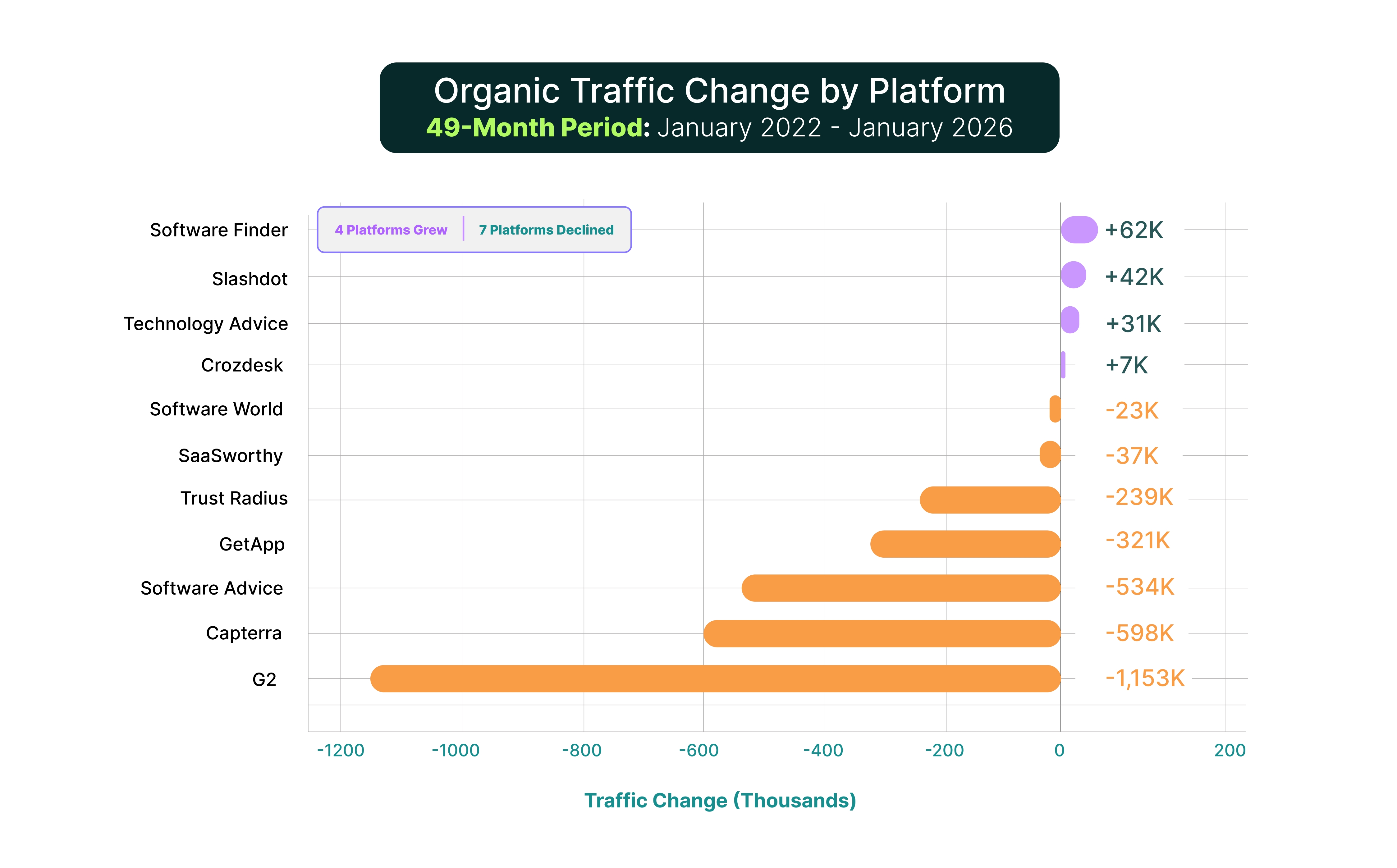
For many buyers, their first interaction with Software Finder happened through search. That meant every page had to stand on its own. We knew that ranking didn’t matter if the content didn’t hold up once someone started reading. Traffic didn’t help if intent was unclear.
That belief guided our expansion.
We didn’t add categories because they looked large or attractive on paper. We added them once we felt confident we could explain them properly, compare options responsibly, and stay useful to buyers beyond the first click. If we couldn’t do that, we waited.
We also avoided shortcuts. We didn’t rely on tactics that produced fast wins but weakened trust in the long run. If a page ranked but didn’t actually help a buyer make sense of their options, we treated that as a problem to fix, not a result to celebrate.
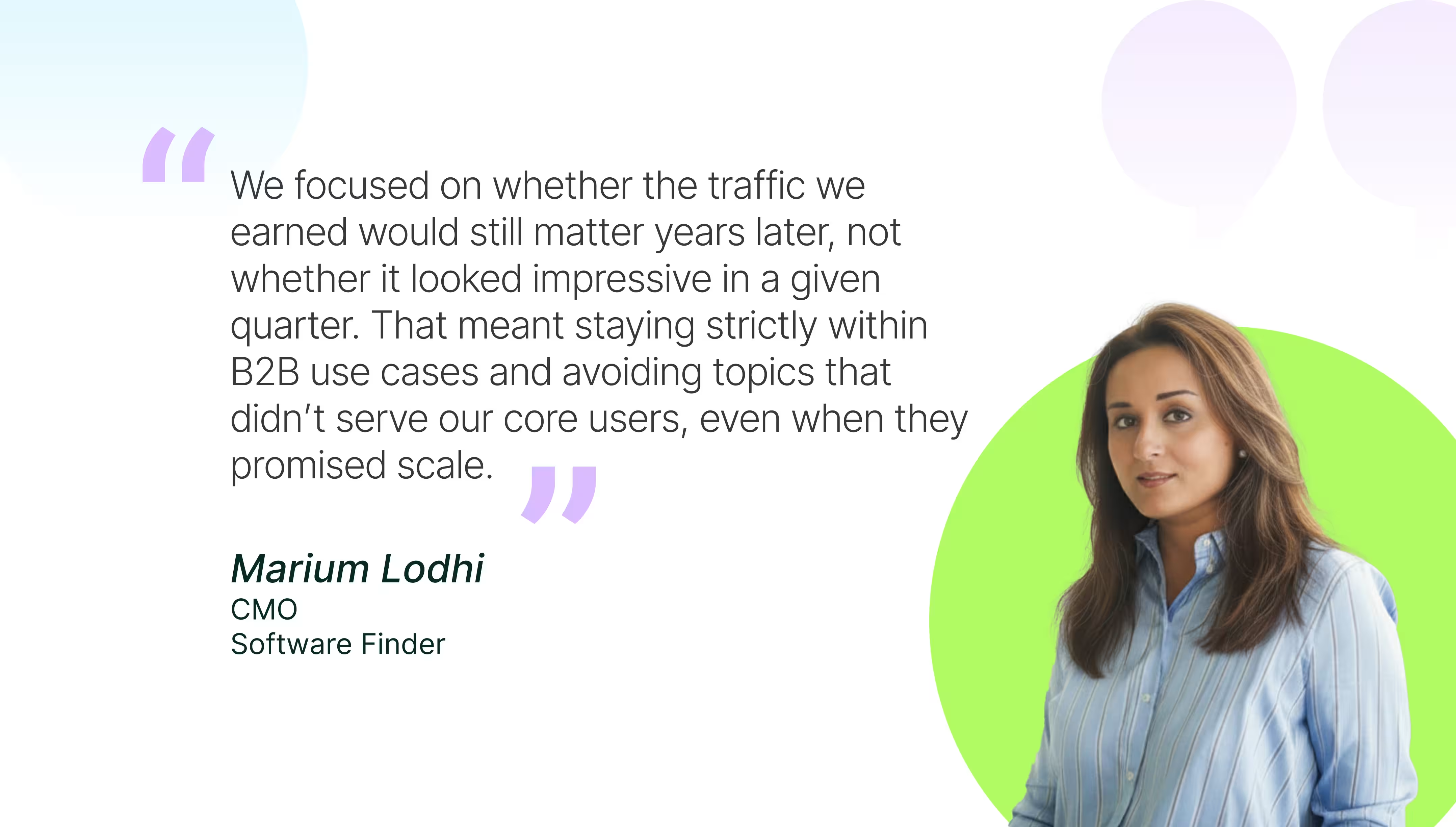
That long-term lens shaped how our search team thought about every decision. Our CMO, Marium Lodhi, summarizes this discipline well:
Over time, the outcome of that approach became clear.
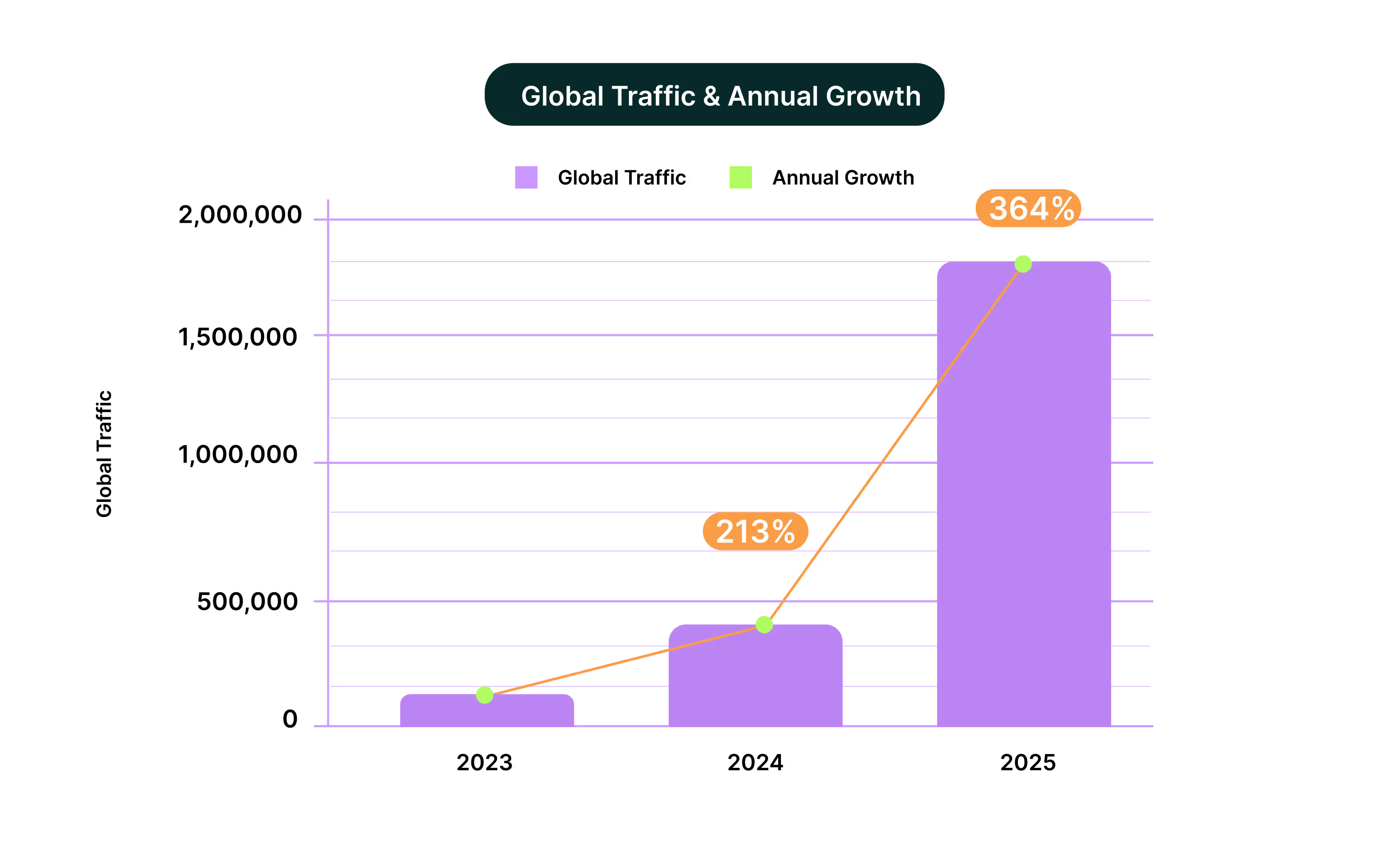
Growth was slower in the start, but it was steadier. As coverage widened, relevance held its ground. As traffic increased, our conversion stayed high because the trust was already there. Search compounded strategically with every shift in the ecosystem.
At the start, ad-hoc coordination works. Small teams move fast because everyone knows everything. But that approach breaks once growth stops being linear.
As Software Finder grew, the risk stopped being speed and became friction. The fastest way to slow the company down would have been to pull everything back to the center and try to manage it myself.
Instead of tightening control as complexity increased, we did the opposite. We pushed responsibility outward. We built teams that owned their decisions, clarified what success looked like, and trusted people closest to the work to run it.
Since 2019, we’ve grown from 10 people to over 330. That kind of growth only works if ownership scales with it. If it doesn’t, founders become the bottleneck and the company pays for it later.
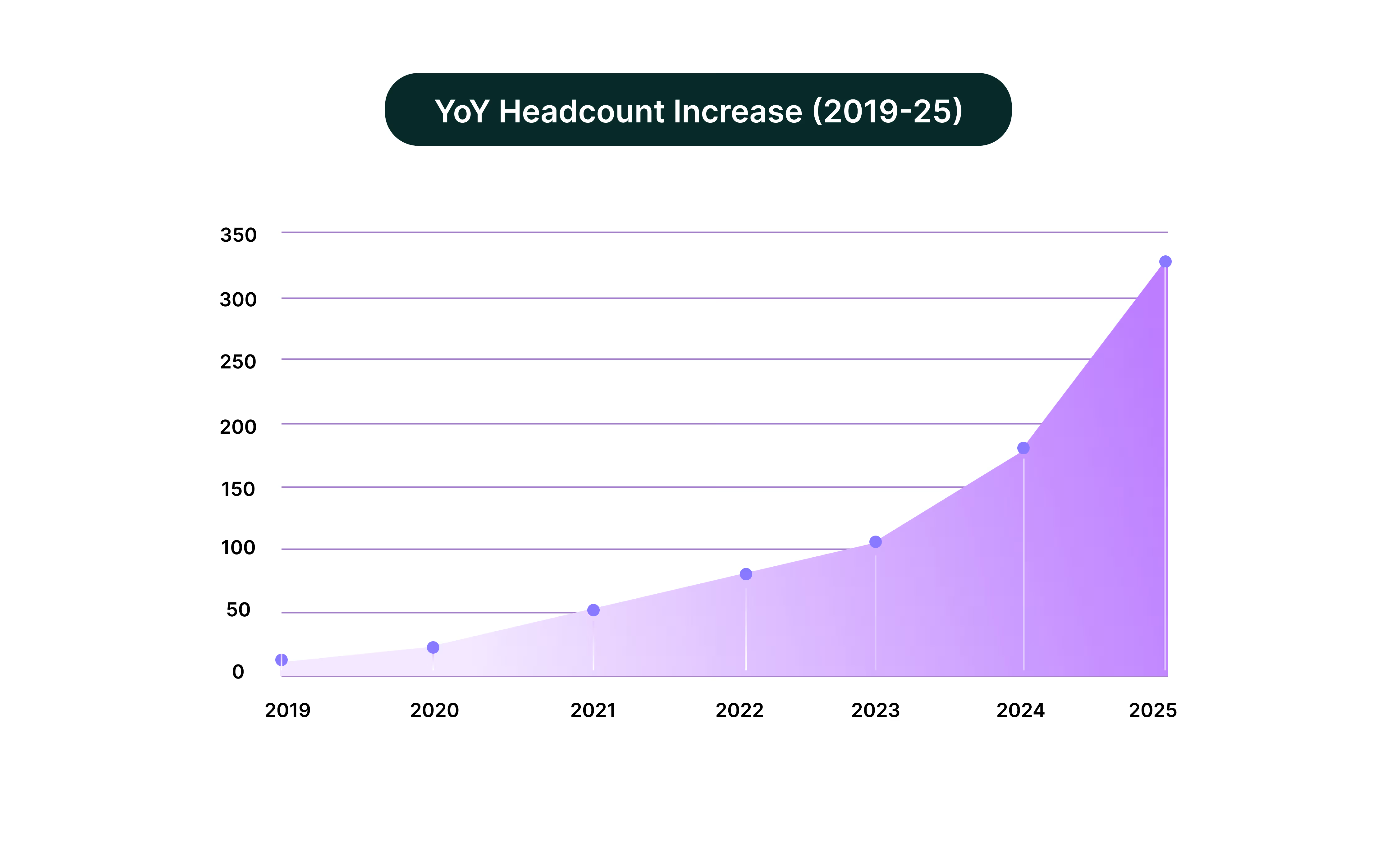
How Departments Formed (and Why Timing Mattered)
We didn’t create departments because a chart said we should. Functions took shape first through real needs: overlapping responsibilities, recurring decisions, and growing risk exposure. Only once those patterns became consistent did we put formal structure around them.
In 2025 alone, we introduced five new departments: Product, Growth, AI, Legal, and Branding & PR. Each reflected a real shift in what the business required: product depth, market engagement, automation capability, regulatory readiness, and external credibility.
Putting those roles in place helped teams move in parallel without waiting on constant approvals and reduced decision friction making accountability clearer. As different parts of the business scaled at the same time, alignment at the leadership level became just as important.
As Shane Elahi, our COO, put it:
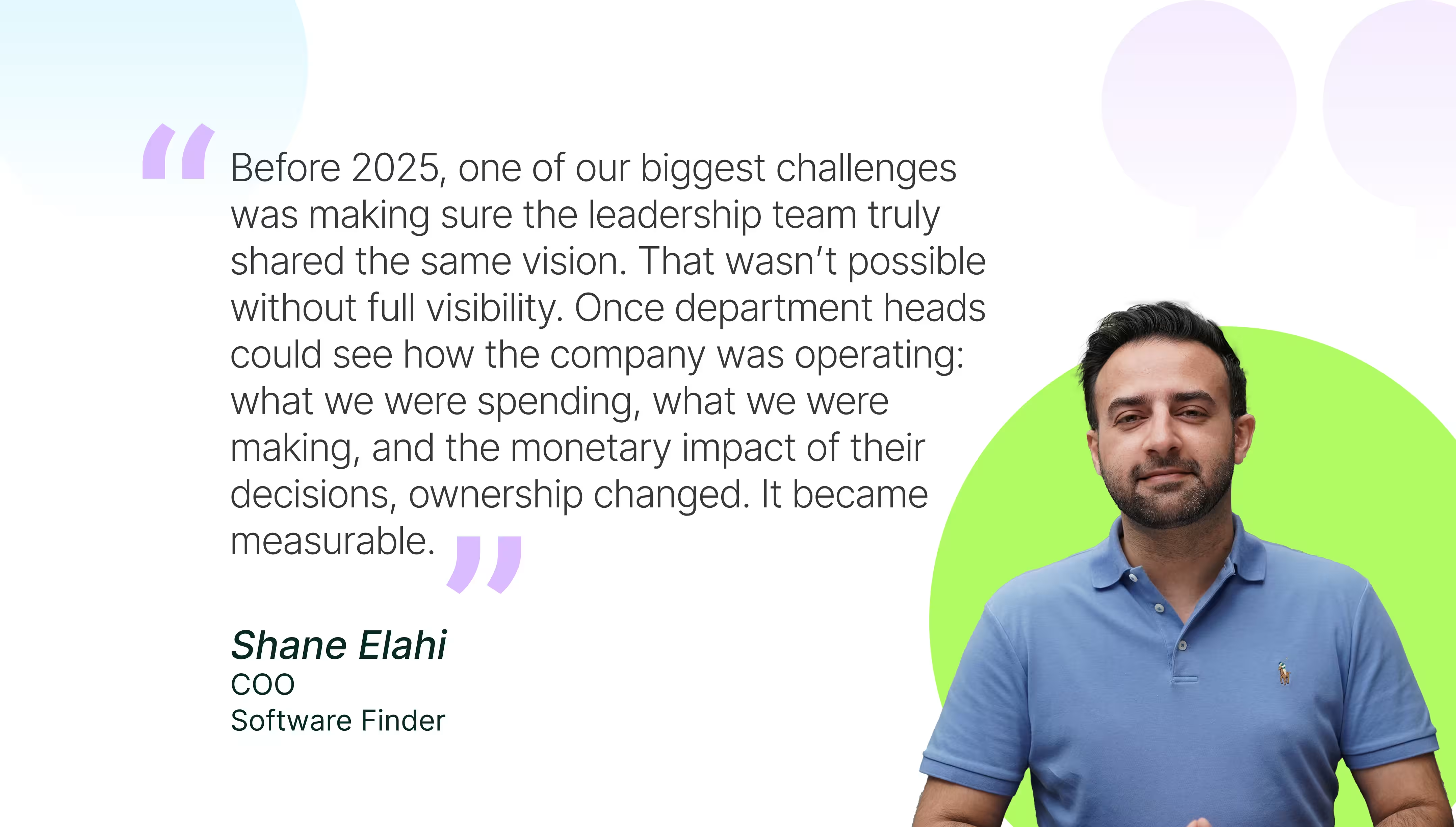
That transparency changed the dynamic. Leaders weren’t just managing teams; they could see the financial consequences of decisions across the company. That’s when ownership really started to scale.
Why We Invested in Learning & Development
Another thing we prioritized was treating learning as part of how the company operates, not something that gets added later to fix gaps.
People improve through experience, but without shared standards, growth becomes uneven. Some teams level up quickly. Others stall. Over time, that variance creates friction you can’t fix reactively, which is why we invested in structured learning and progression.
Sahrish Adnan, our VP of Learning & Development, captured this well when she said:
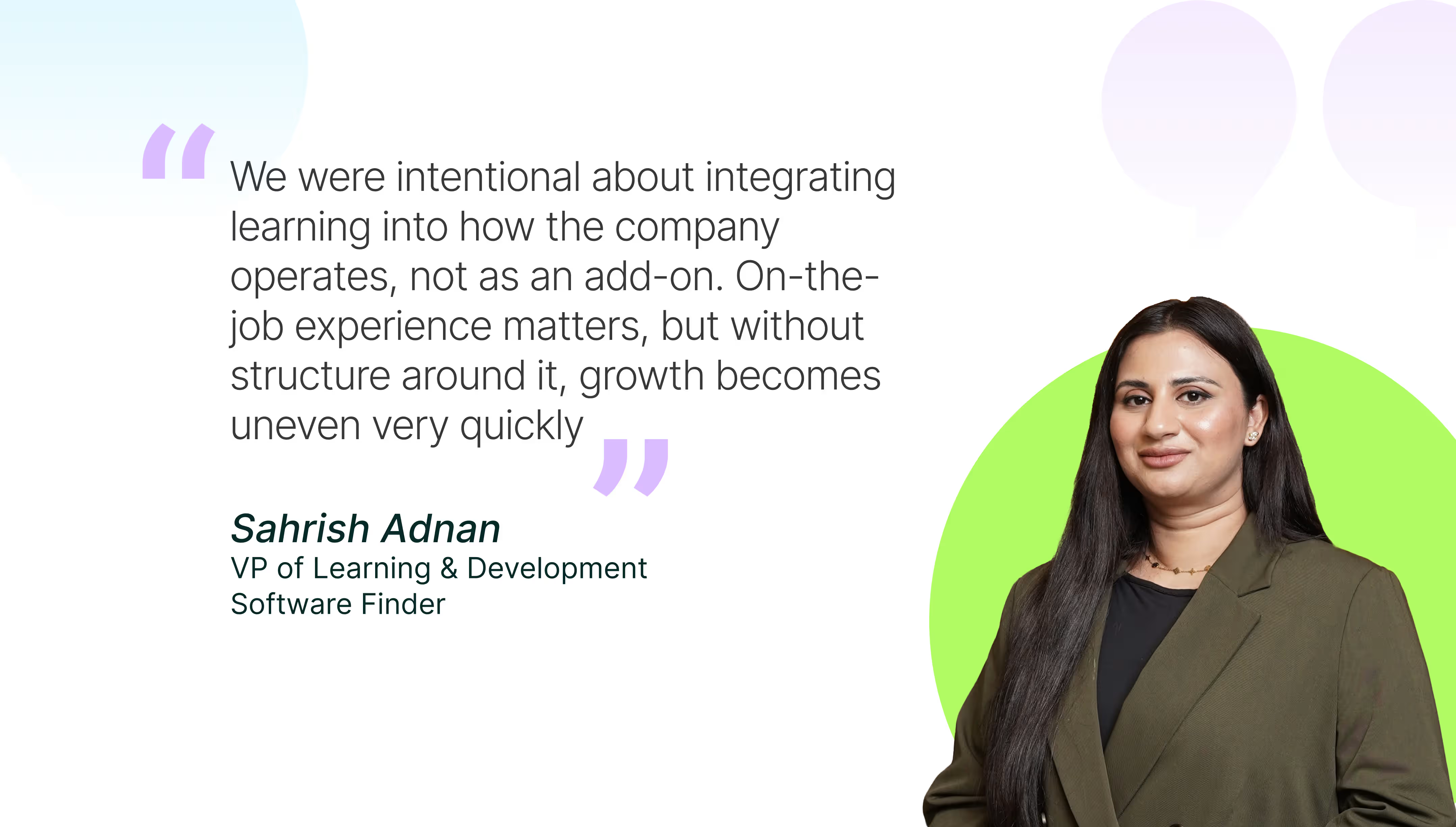
Most of our leadership today developed inside that system rather than being brought in to replace it. I’m incredibly proud of that, because that kind of continuity is what actually sustains our culture as we scale.
How We Used AI Without Breaking Ownership
When AI started becoming mainstream, a lot of companies treated it like a hack that could replace people, compress teams, or accelerate output overnight.
For us, AI was about reducing drag, not removing responsibility. The question wasn’t “what can we automate away,” but “what work is slowing our best people down for no good reason.”
Most scaling companies struggle because too much time gets eaten up by repetitive, preparatory work - formatting, structuring, rechecking, stitching things together before the real thinking even begins.
That’s where we applied AI.
We used it to absorb the mechanical parts of execution so teams could spend more time on judgment, context, and decision-making; the things you can’t automate without losing quality.
Just as important was how AI entered the organization.
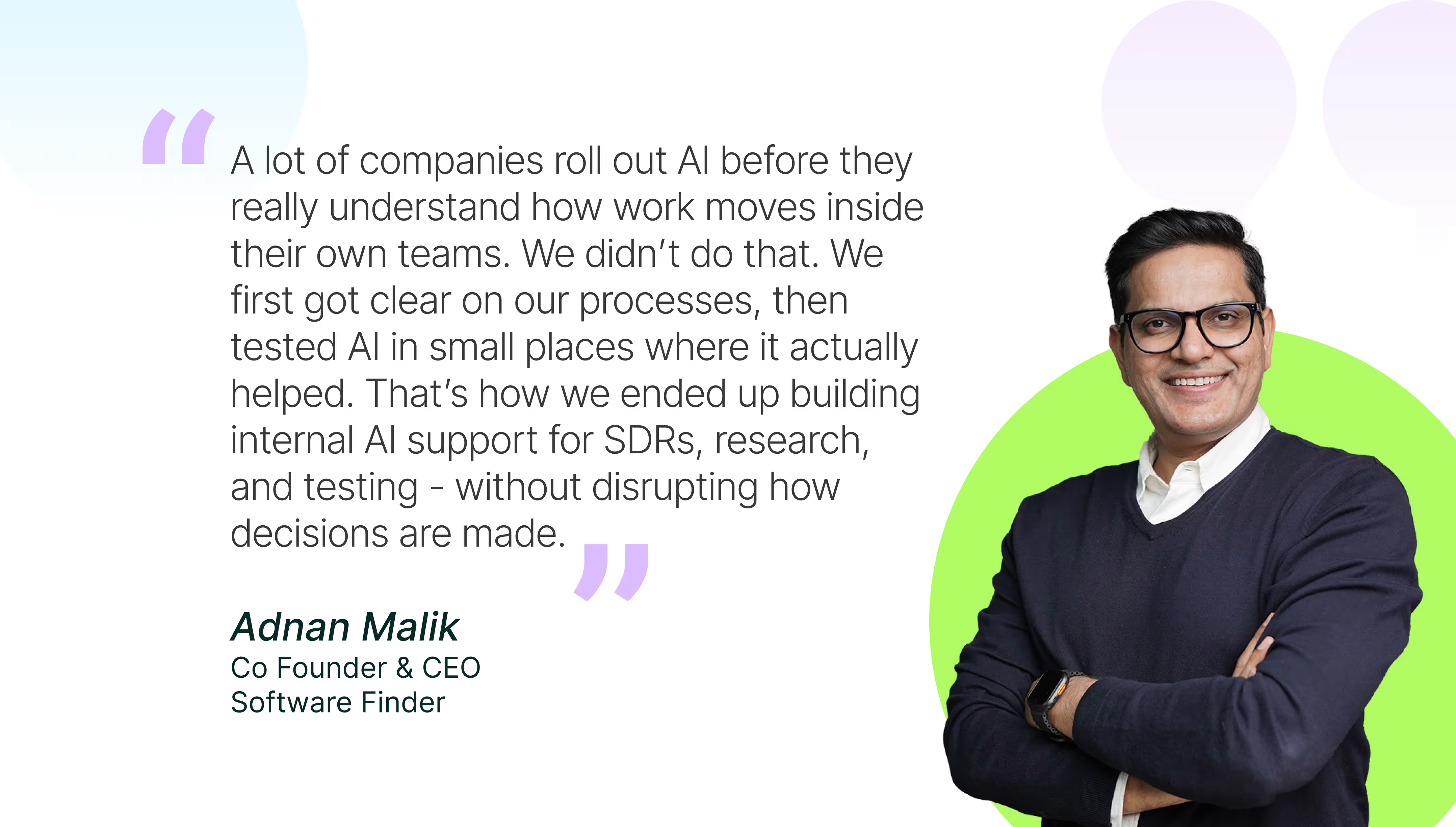
We didn’t roll it out as a top-down mandate or a centralized toolset. Teams adopted it inside their own workflows, where they understood the constraints best. That kept ownership intact and meant the tools were actually welcomed rather than just tolerated.
I’ve said this internally more than once, because it shapes how we think about growth:
Operating across regulated software categories forces a simple reality on you very quickly: credibility doesn’t come easy.
Buyers don't assume you understand their world just because you show up in search results, and vendors won't engage unless they’re sure you grasp the constraints they live with every day. If you're active across multiple industries, that challenge only gets harder.
We knew that for Software Finder to last, we couldn’t treat trust as something that just happens on its own. We had to build it deliberately, making sure it was strong enough to hold up in all situations.
Why Research Became Non-Negotiable
Software market keeps evolving. Without a way to keep up with those shifts, we wouldn't have stayed relevant for long. That’s why research became embedded into how Software Finder actually functions.
We treated market research as a way to stay honest with ourselves about what we truly understood and where our assumptions needed updating. We started with HR, expanded into Medical, and continued exploring broader themes like data security, AI adoption, and compliance because those questions cut across every category we serve.
What mattered to me wasn’t the reports themselves, but the impact they forced on our thinking. Research helped us revisit category definitions and rethink how buyer intent shows up at different stages. Internally, it sharpened judgment. Externally, it changed how buyers and vendors engaged with the platform.
Why Webinars Became a Listening Channel
Research helps, but it’s not enough. We needed to hear from operators directly. Webinars became the easiest way to hear directly from people responsible for deploying, governing, and living with software after purchase.
Across Medical, HR, LMS, PM, Payroll, and Marketing, we spoke with founders, CISOs, product leaders, and functional heads about what actually breaks during implementation, where compliance becomes restrictive, and how evaluation criteria change once tools move into production.
Those conversations consistently surfaced details that don’t show up in reports: adoption friction, internal resistance, regulatory exposure, and the trade-offs buyers make under pressure.
This exposure taught us exactly how expectations shift depending on who is buying. It grounded our work in real-world experience rather than theory, and it helped ensure the platform reflected real decision-making; not simplified comparisons of complex systems.
Why We Take Security Seriously
Security has always been part of how I think about building Software Finder. If we were going to operate in environments where decisions affect people, data, and real outcomes, then how we handle information couldn’t be an afterthought or a future fix. It had to be built into the platform itself.
That’s why Software Finder is SOC 2 Type I certified.
Establishing these controls reflects how the platform has matured. It brings structure to practices that were already expected internally and makes them explicit as the business moves into more complex operating conditions.
As a bootstrapped, multi-founder company, we didn’t start with a complex revenue framework. We started with what we could execute well. And, over time, as the product matured and the team’s capabilities expanded, new revenue streams became possible.
I’ve always been careful about letting one revenue model run the business. When that happens, it starts influencing decisions it shouldn’t.
So, we built monetization across different parts of Software Finder, each aligned to a distinct use case:
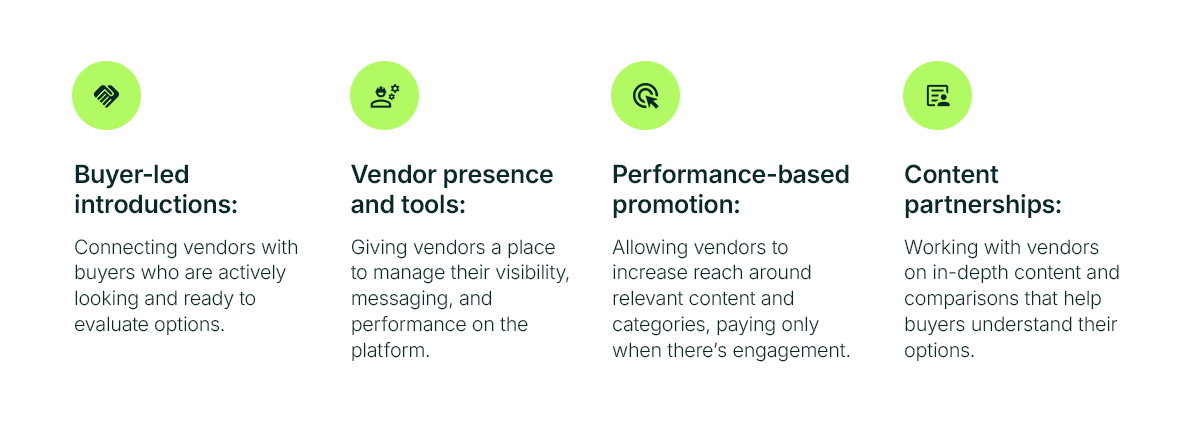
Because monetization is spread across these layers, no single stream is pushed beyond what it’s meant to do. Pressure in one area doesn’t spill into product decisions elsewhere. As buyer behavior changes and categories evolve, the platform can adapt without having to rebuild how it makes money.
When I look back at the last few years, what matters to me isn’t just that Software Finder scaled. It’s that growth didn’t slow once things became harder.
Early growth is easier. The numbers are smaller and momentum does more of the work. Sustained growth is different. Each year requires sharper judgment and clearer priorities to keep adding real value. That’s the phase we’re in now.
Software Finder is no longer just a software marketplace. We’re not in the business of listing tools. We’re building a software research and discovery platform that helps buyers understand their options before they commit to them.
The market around us is changing. Large platforms have consolidated, concentrating distribution in fewer hands. For vendors, that often means higher costs and less control over how they’re presented. For buyers, it means more noise around what is actually credible.
We don’t plan to respond to that by becoming louder. We plan to become clearer.
As we scale, our level of service has to scale with it. That’s why we’ve built out a dedicated Client Advocacy team to work more closely with vendors after they join the platform. It’s why we introduced the Software Finder Awards to recognize performance based on outcomes and credibility, not just spend. And it’s why we continue expanding editor-reviewed product coverage instead of automating everything for speed.
We build for users first, and that focus has allowed the platform to remain credible across how discovery actually works today. Search is still a product for us, but buyers now move between Google, product pages, expert content, and AI-assisted research. Information only carries across those surfaces if it’s clear, structured, and consistent. That standard has guided how we publish from the beginning, and it’s why our work continues to hold up across all of them.
Our focus remains the same: preserve intent, maintain clarity, and scale in a way that holds up under scrutiny.
That is the position we’re building from.