


Last Updated
Overview
Cast AI helps businesses slash cloud bills and automate Kubernetes management with real-time cost optimization and performance improvements. Although the initial setup process can be a bit complex, its powerful automation ensures efficient resource allocation and provides a reliable solution for companies seeking to maximize their cloud investment.
Be the first one to leave a review!
No review found

Starting Price
Custom
Cast AI Specifications
- Automation
- Predictive Capabilities
- Smart Data Discovery
- Self-Service Dashboards
Cast AI Features
Automated Kubernetes Cluster Optimization
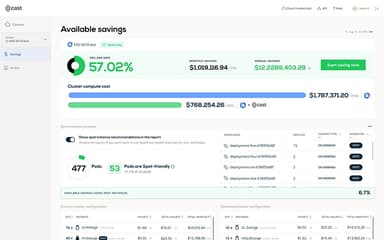
This feature improves cost efficiency by dynamically allocating compute resources, scaling workloads up or down with zero downtime. It maximizes savings with Spot Instance automation, advanced bin-packing, pod mutations, and live migration, ensuring optimal utilization while keeping critical applications stable and uninterrupted.
Autonomous Kubernetes Workload Optimization
Users can run workloads at peak performance with automatic rightsizing that continuously adjusts CPU and memory allocations. It prevents overprovisioning and downtime, integrates seamlessly with Kubernetes-native autoscalers, and supports live pod resizing. This ensures performance stability, workload adaptability, and reduced operational overhead across environments.
Kubernetes Cost Monitoring
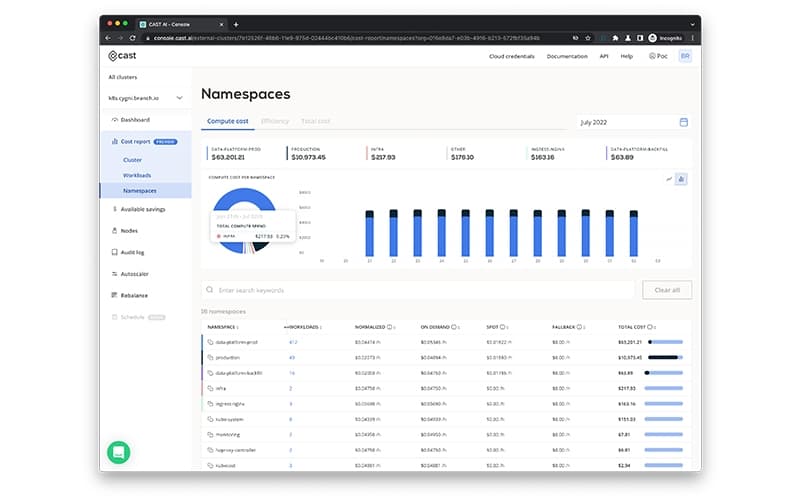
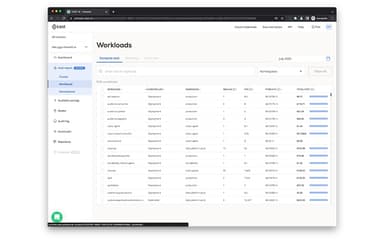
The platform enables real-time visibility into Kubernetes costs, offering detailed breakdowns by namespace, workload, and allocation groups. It helps detect inefficiencies, monitor GPU and network usage, simulate potential savings, and identify anomalies, providing teams with actionable insights for smarter, cost-conscious cloud resource management.
LLM Optimization For AIOps
This feature allows organizations to deploy cost-efficient large language models within Kubernetes clusters. It routes queries to the most optimal LLM, provides consolidated cost reports, and enables model benchmarking. Businesses benefit from reduced expenses, improved performance, and complete control over AI-driven workloads.
Autonomous Database Optimization
Cast AI accelerates query performance by autonomously caching frequently used queries through machine learning. It offers full query visibility, adaptive invalidation, and dynamic TTL configuration without requiring code changes. This ensures faster response times, reduced database strain, and efficient scaling across demanding environments.
Pros And Cons of Cast AI
Pros
Improves workload performance and resource utilization
Provides real-time cost visibility and insights
Flexible scheduling and workload rebalancing are available
Cons
Limited documentation for advanced or custom setups
UI and reporting features could be improved
Cast AI Reviews

No reviews yet!
Be the first to review this product
Frequently Asked Questions
Does Cast AI have a mobile app?
No, Cast AI does not have a mobile app.
What types of pricing plans does Cast AI offer?
Cast AI offers flexible pricing across two categories, i.e., Workload and Infrastructure Optimization category includes a Free option at $0/month, a Growth plan at $1,000/month plus $5/CPU/month, and a customizable Enterprise plan. For Data Optimization, the Free plan is $0/month, while Growth and Enterprise plans both come with custom pricing tailored to business needs. Request a detailed Cast AI cost estimate for your organization.
What language does Cast AI support?
Cast AI primarily supports the English language.
What level of support does Cast AI offer?
Cast AI offers support through email, online form, chatbot, and FAQs.
Does Cast AI offer an API?
Yes, Cast AI offers an API.
What other apps does Cast AI integrate with?
Cast AI integrates with apps like Jira, Prometheus, PostgreSQL, Helm, Grafana, MySQL, and Terraform.
Who are the typical users of Cast AI?
Cast AI features are used by businesses and professionals across diverse industries, including social media, artificial intelligence, financial services, automotive, and technology.