


ePDS
Last Updated
Overview
ePDS brings inventory, order management, along with purchasing, and accounting together for electronic parts distributors in one connected system. Mobile access isn't available yet, though most day-to-day work happens at a desk anyway. Overall, the tool stands out for its single operational record spanning sourcing through fulfillment.
Be the first one to leave a review!
No review found

Starting Price
Custom
ePDS Specifications
- Financial Management
- Inventory Management
- Supply Chain Management
- Manufacturing Management
What Is ePDS?
ePDS - short for Electronic Parts Distribution System - is an ERP platform from Axiom Software built for one industry: electronic parts distribution. Inventory, order processing, purchasing, warehouse operations, and financial reporting all live in the same database. The financial side ties directly to what happens on the floor, so AR, AP, and general ledger entries update as warehouse transactions post. And because custom fields, custom labels, document control, and configurable notifications are all adjustable, the system can be shaped to match how a given distributor actually operates.
What Is ePDS Best For?
Component Quality Assurance is ePDS’ clearest point of separation from a general-purpose ERP. Beyond lot traceability, it also covers non-conformance logging, discrepant material handling, along with testing coordination, and custom inspection checklists. All of these exist inside the same system that receives, stocks, as well as ships the parts. This matters most for distributors selling into defense, aerospace, or industrial OEM accounts, where a buyer's inspection standards are often contractual.
How Much Does ePDS Cost?
Investment in ePDS typically starts at $2,000/user. Actual cost, however, may differ based on organizational size, features selected, and deployment scope.
Beyond the subscription, additional costs may include:
- Implementation And Setup: Roughly $10,000–$50,000+ or more for multi-location deployments
- Data Migration And Configuration: Organizations should budget $5,000–$25,000+ based on the data (historical, product, inventory, or more)
- Customization And Integration Work: Can cost around $5,000–$30,000+, based on how complex the integration is
- Add-on Modules (Tax, Shipping, EDI, RF Warehouse, API): Typically ranges from $1,000–$10,000+ per module/add-on
Disclaimer: Pricing references are based on publicly available third-party information and industry benchmarks. Actual costs may vary.
ePDS Integrations
ePDS connects to multiple third-party platforms, including:
- Avalara software
- FedEx Ship Manager
- UPS Worldship
- DHL Easyship
- Orbweaver
How Does ePDS Work?
Log in (or set up your account with Axiom) and follow these steps:
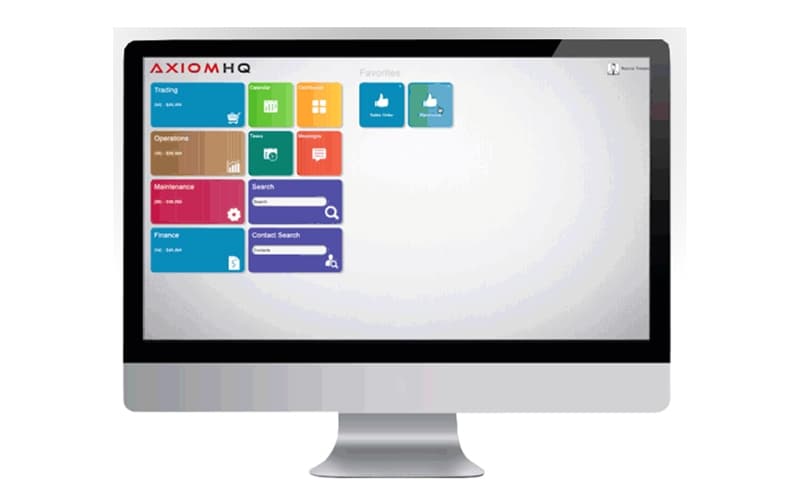
- Pin the actions, reports, and tools you use most to your dashboard
- Move opportunities through the Opportunity Tracker, from requirements to an order
- Submit RFQs to multiple vendors at once via Product Sourcing
- Pull from web search, order history, and line cards in the same pass
- Receive inventory and run inspections through Component Quality Assurance
- Log lot numbers and flag non-conforming material as it comes in
- Process sales and purchase orders through Action Panels
- Handle transfers, drop shipments, lot buys, and physical counts in Operations
- Track AR, AP, and general ledger activity as transactions post
- Run financial reports (trial balance, balance sheet, P&L) from Accounting
Who Is ePDS For?
ePDS software caters to the needs of the following sectors and industries:
- Electronics
- Aerospace
- Manufacturing
- Automotive
- Telecommunications
- Defense
ePDS Use Cases
Our analysis of ePDS has helped us narrow down a few scenarios where it fits particularly well:
Distributors That Source From Multiple Vendors Under Time Pressure
When an order needs to go out fast and requires pulling from several suppliers at once, sourcing speed is what decides whether it ships on time. This is where ePDS can help. Its Product Sourcing tools submit RFQs to multiple vendors simultaneously. It pulls from the search history, line cards, along with the live web results in one step. In turn, the gap between an incoming requirement and a confirmed PO, the stage where most fulfillment delays start is shortened.
Operations That Need Warehouse And ERP Data In One Place
Disconnected warehouse and ERP systems mean manual reconciliation at every shift change and every period close. This is where the RF Warehouse add-on – by ePDS – can help. It ties barcode terminals directly into the ERP. In turn, the tool syncs receiving, put-away, picking, manifesting, and physical counts back to the same database that drives order processing and financial reporting.
Distributors That Need Both EDI and Trading Partner Connectivity
Distributors that have to exchange purchase orders, invoices, alongside shipping notices with large customers or vendors might be required to support EDI. This is where AxiomHQ/eData add-on (by ePDS) provides a standard interface for EDI transactions between trading partners and connectivity through RosettaNet. In turn, document exchange runs through the ERP directly.
Distributors That Want to Give Customers A Self-Service Ordering Channel
Routing every order through a sales rep doesn't scale. Someone still has to enter it, confirm it, and follow up with the buyer. The AxiomHQ/Web add-on lets customers place sales orders directly from the distributor's website, and the order lands in ePDS directly. This helps most with repeat orders from established accounts.
Is ePDS Right For You?
ePDS is built for electronic parts distributors that want trading, operations, along with finance, all in one system. It supports multi-location operations, such as warehouse management, multi-currency accounting, multi-level profit centers, and configurable workflows within sites. Role-based access, custom fields, and document control let the system get configured around how a distributor actually runs.
Still not sure about ePDS? Contact our support team at (661) 384-7070 for further guidance.
ePDS Features
Inventory Management
This feature tracks stock within locations with tools for adjustments, offers, as well as exception handling, and export. Lot buys and consignments sit alongside standard stock, and physical counts are supported for period-end reconciliation. This ensures a singular record of what's on hand instead of cross-checking spreadsheets against the system.
Order Processing
Sales and purchase orders run through Action Panels that surface customer history and current pricing at entry. It covers the full cycle (requirements, orders, contracts, along with the forecasts, commissions) and connects to shipment processing. It ensures that one record follows an order from entry to delivery.
Vendor Management
Purchasing covers RFQ and sourcing, PO entry, a PO generator, as well as vendor rating, and vendor expedite tracking. RFQs go out to multiple vendors at once based on set criteria, all while pulling from the order history, line cards, as well as web search. Vendor scores and expedite status live in the same system that processes the resulting orders.
Financial Tracking
AR, AP, and general accounting run inside the ERP, so financial records update as operational transactions post. It also covers budgets and forecasts, fixed assets, along with the multi-level profit centers. In addition, it includes multiple currencies, flexible period close, as well as checkbook reconciliation. Standard reports (trial balance, balance sheet, P&L) come from the same operational data.
Pros And Cons of ePDS
Pros
Provides accurate inventory tracking of different locations
Simplifies sales and purchase order processing
Supports efficient vendor management and sourcing
Cons
Requires careful verification of entered data
May require dashboard customization for specific workflows
ePDS Reviews

No reviews yet!
Be the first to review this product
Frequently Asked Questions
What other apps does ePDS integrate with?
Integration is supported with the following tools: Avalara, FedEx Ship Manager, UPS WorldShip, DHL Easyship, and Orbweaver.
How much does ePDS cost?
ePDS pricing is estimated at $2,000/user. But final cost may vary depending on factors like features, deployment mode, and size of the organization. Get in touch with us for a personalized ePDS cost estimate.
What language does ePDS support?
The software is primarily offered in English.
Who are the typical users of ePDS?
Typical users include businesses in the electronics, aerospace, manufacturing, automotive, telecommunications, and defense sectors.
What level of support does ePDS offer?
Support is offered via email, phone, and online form.
Does ePDS offer an API?
Yes, ePDS provides API access.
Does ePDS have a mobile app?
No, ePDS does not offer a mobile app.