


Enverus
Last Updated
Overview
Enverus provides energy companies with procurement, trading and risk, and asset evaluation tools. Its focus on upstream oil and gas may limit its suitability for some midstream and downstream operations. However, it helps operators manage procurement spending and make informed asset decisions through one platform.
Enverus Specifications
- Financial Management
- Inventory Management
- Supply Chain Management
- Business Intelligence
What Is Enverus?
Enverus is enterprise software built for the energy industry, covering oil and gas, power, and renewables. Its 'Source to Pay' module automates procurement from purchase order to invoice, while 'MarketView' supports commodity trading and risk management. PRISM helps teams forecast production, evaluate asset economics, and combine their own data with Enverus models. Enverus ONE connects these workflows across land management, finance, operations, trading, and power.
What Is Enverus Best For?
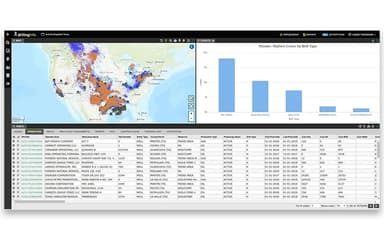
The platform stands out for its 'Fusion Connect' feature, which brings a company’s internal data directly into PRISM. Users can map, visualize, and screen project sites by combining internal records with Enverus data in one view. They can also run well performance and type curve analysis alongside Enverus analytics to compare internal forecasts against market benchmarks. This shared view helps multiple teams work from the same data set.
How Much Does Enverus Cost?
Enverus pricing is estimated to range between $2,000-$10,000/month for smaller teams with limited product access and $10,000-$50,000+/month for mid-market and enterprise deployments, based on industry benchmarks for energy intelligence, commodity analytics, and oil and gas software.
In addition to the base subscription costs, organizations should account for the following expenses:
- Implementation And Configuration: $5,000–$25,000 for smaller deployments; $25,000–$100,000+ for complex enterprise implementations
- Data Integration And Migration: $5,000–$30,000 for connecting internal operational, financial, or market data; $30,000–$100,000+ for complex data environments
- Training And Onboarding: $1,000–$20,000
- API And Custom Integrations: $5,000–$25,000 for standard integration projects; $25,000–$75,000+ for custom API development and multi-system connectivity
- Additional Data Sets And Modules: $5,000–$50,000+/year, depending on the scope of additional market data, analytics products, and specialized workflows
Disclaimer: Pricing references are based on publicly available third-party information and industry benchmarks. Actual costs may vary.
Enverus Integrations
Information about third-party integrations has not been specified by the vendor.
How Does Enverus Work?
Here's how you can access the platform and its features:
- Log in to your company’s Enverus account, set up with Enverus during onboarding
- Connect your own data to the platform through Fusion Connect
- Screen assets or project sites using mapping and filtering on the combined data
- Run forecasts, economics, and type curve analysis on the wells you’re evaluating
- Compare your own numbers against Enverus analytics and inventory models
- Process field tickets and invoices in Source to Pay, and track spend against budget
- Share the results with multiple teams in the same platform
Who Is Enverus For?
The platform serves a wide range of industries and sectors, especially the following businesses:
- Oil and gas operators
- Financial institutions and investors
- Energy traders and analysts
- Oilfield services companies
Enverus Use Cases
Based on our analysis of Enverus's current tools and offerings, we have identified the following key business scenarios where it is well suited:
Power Traders Managing Grid Constraints
Electricity prices can vary across grid locations when transmission constraints limit power flow, making it difficult for traders to predict market prices and manage exposure. Enverus helps trading teams analyze congestion patterns, evaluate forecast scenarios, and assess potential transmission outages to make more informed decisions about day-ahead and real-time trades.
Solar and Battery Developers Evaluating Project Feasibility
Renewable energy developers must determine whether a proposed site is suitable, how to design the project, and whether grid connection requirements could affect its timeline or financial viability. The platform helps developers evaluate solar and battery project designs and assess interconnection scenarios, allowing them to identify potential risks before committing significant capital.
Energy Investors Identifying Long-Term Opportunities
Investors evaluating power markets need to understand how demand, market conditions, and project development may change over time before deciding where to allocate capital. Enverus helps them assess long-term market scenarios and track power projects to identify emerging opportunities and evaluate investments against expected market developments.
Utilities And Asset Managers Planning Grid Infrastructure
Utilities and asset managers must anticipate changes in electricity demand and grid conditions while determining where infrastructure upgrades or new connections may be needed. Enverus supports these decisions through power market forecasts and grid modeling, helping teams evaluate system requirements, assess interconnection requests, and plan infrastructure investments with greater visibility into potential constraints.
Is Enverus Right For You?
Enverus makes sense if your energy business wants spend, risk, and asset decisions handled in one platform. A finance team processing field tickets, a trading desk managing risk, a developer designing a solar plant, and an operator screening acquisitions could each use a different module. It is built only for the energy sector and is not a general-purpose ERP, so teams outside oil and gas, power, and renewables will find little to use.
On compliance, Enverus says it is SOC 2 compliant, and its MarketView trading and risk product holds SOC 1 Type 1 certification, which covers internal controls relevant to financial reporting. RatedPower, its solar design product, reports SOC 1 and SOC 2 Type II compliance, offers multi factor authentication, and shares its audit reports on request.
Enverus customer stories feature companies such as Jonah Energy, Tower Rock Oil & Gas, ShearFRAC, and Helmerich & Payne. Tower Rock pairs PRISM with EnergyLink to automate revenue delivery alongside its deal screening.
Still doubtful if Enverus is the right fit for you? Connect with us at (661) 384-7070 for further guidance.
Enverus Features
Enverus ONE Workflows
Enverus ONE offers prebuilt AI workflows for tasks across land, finance, operations, trading, and power. Inventory Evaluation Flow runs inventory economics across multiple price scenarios. Deal Screener Flow turns deal teasers into structured summaries. AFE Evaluation lets non-op teams upload AFEs, benchmark costs, derive EURs, and review consent, sell, or non-consent options. Enverus ONE lists role-based access controls and audit trails.
Instant Analyst
Enverus features 'Instant Analyst' that answers plain language questions using Enverus data and research. In the trading platform, it also helps users build formulas and work with market data without leaving the screen.
Power Grid Analytics And Forecasting
This feature monitors generation in real time for ERCOT, SPP, MISO, and PJM and tracks transmission constraints as they bind. It breaks congestion down to the nodal level. Users can compare several forecast scenarios and simulate transmission outages.
Source To Pay
Source to Pay covers procurement from sourcing through payment on one platform. It handles bids from suppliers, price agreements, purchase orders, inventory and transfers, field tickets, and invoices. Price validation and invoice approvals can be automated, and spend analytics show spending against budget. Users can track expenses against project budgets before invoices arrive.
Pros And Cons of Enverus
Pros
Real time drilling activity data helps operators make faster field decisions
Analytics cover the full upstream workflow without third party add-ons
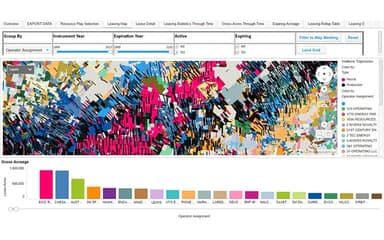
Land and mineral rights tracking saves acquisition teams research time
Production forecasting stands out against general purpose BI tools
Workflows are built for energy, so they feel native instead of adapted
Cons
Midstream and downstream users get thinner coverage
Data freshness varies by region and asset type
Limited mobile functionality
Enverus Reviews
Total 2 reviews
2
All reviews are from verified customers
Rating Distribution
5
Stars0%
4
Stars0%
3
Stars50%
2
Stars0%
1
Stars50%
Share your experience
Oil & Energy, 51-100 employees
More than a year
“Fees appeared out of nowhere”
Pros
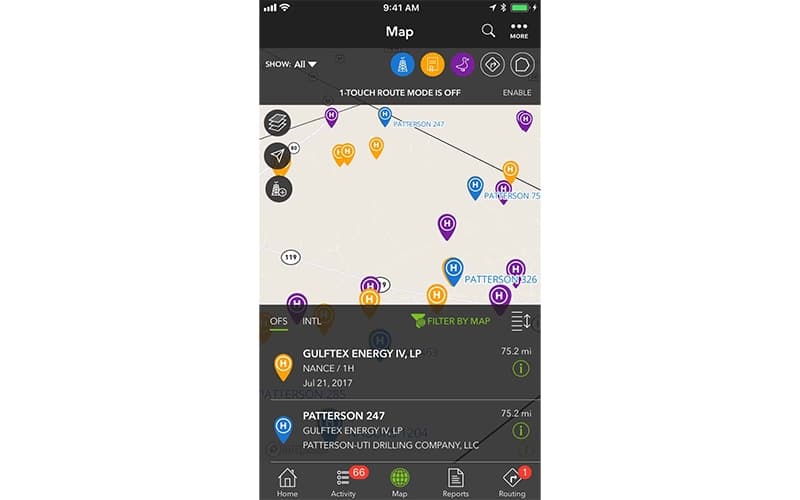
One useful part is being able to track rig locations in the northeastern United States.
Cons
They raised the annual subscription price without notifying me and when I tried to cancel because it was far too expensive for how little I use it, I was told there is a 90-day cancellation policy. That policy was never sent to me directly and apparently you're just supposed to find it somewhere on their page.
Rating Distribution
Ease of use
3
Value for money
3
Customer Support
3
Functionality
9
Oil & Energy, 1-10 employees
Less than a year
“Reports show costs climbing weekly”
Pros
I've only really used the weekly rig report which originally came through a Rig Data subscription.
Cons
The price keeps going up but for what I use it for, there hasn't been any added value.
Rating Distribution
Ease of use
7
Value for money
5
Customer Support
7
Functionality
7
Frequently Asked Questions
What types of energy work does Enverus support?
It supports oil and gas asset screening, production forecasting, and well economics. It also covers power trading and grid analysis, utility interconnection studies, solar and battery plant design, and procurement and invoice processing for field operations.
How does Enverus compare to alternatives?
Teams often compare Enverus software with Wood Mackenzie and Rystad Energy. Enverus pairs its data and models with workflow tools for trading, procurement, and project design, so a team can move from analysis to execution without switching providers.
Can you bring your own data into Enverus?
Yes. Fusion Connect loads a company’s own data into PRISM, where it can be mapped and compared against Enverus analytics and models. This helps teams check internal forecasts without rebuilding them in spreadsheets.
What customer support is available?
Enverus provides support via resources, phone, email, live chat, and contact form.
Does Enverus offer an API?
Yes. The Enverus Developer API pulls datasets such as production, completions, and rig activity into a company’s own systems. Access depends on the subscription.