


Last Updated
Overview
Oracle Database is a data management system designed for scalability, performance, and security. While its setup and configuration can be complex for smaller teams, its auditing, encryption, and access control features support organizations in maintaining compliance and safeguarding critical business data.
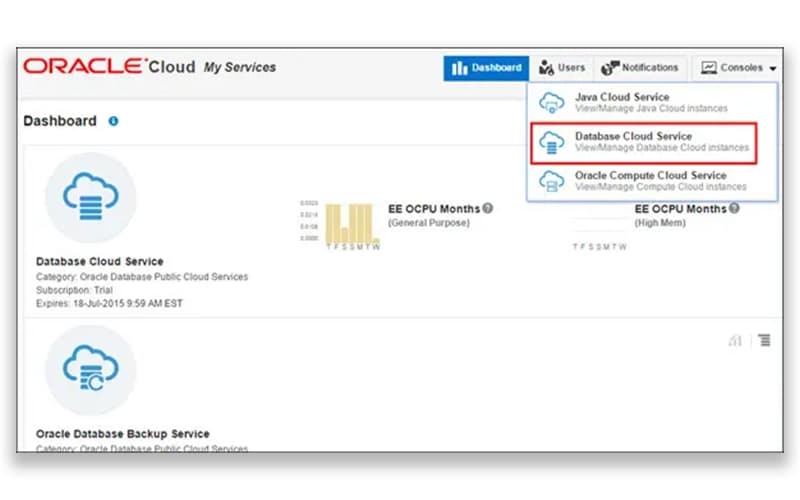
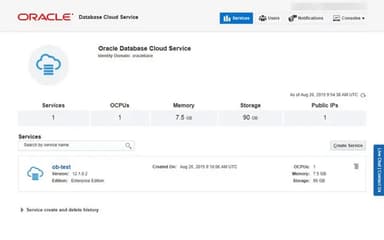
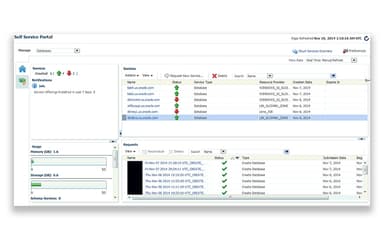
Oracle Database Specifications
- Audit Management
- Regulatory Compliance Tracking
- Version Control and Change Tracking
- Policy and Document Management
Oracle Database Features
Artificial Intelligence And Machine Learning
Oracle Database enhances AI-driven capabilities with its AI Vector Search feature, allowing users to perform similarity searches using large language models. It supports retrieval-augmented generation (RAG) for contextually accurate responses by integrating private business data securely, eliminating the need for multiple data management systems.
Data Sovereignty And Data Residency
The platform addresses data sovereignty challenges through Oracle globally distributed database, which stores information across multiple locations while maintaining a unified view. RAFT replication ensures high availability and zero data loss, supporting compliance with data residency regulations and simplifying global-scale deployment and administration.
Database Manageability
Oracle Database streamlines enterprise-wide management through a unified dashboard that consolidates monitoring across on-premises, Oracle Cloud, and third-party environments. This integration reduces administrative workload, improves operational consistency, and enhances performance and availability, allowing database administrators to manage complex infrastructures efficiently from a single control point.
Database Security
The software delivers multi-layered protection through encryption, data masking, and privileged access controls. Security features such as auditing and activity monitoring help identify vulnerabilities, reduce the risk of breaches, and support regulatory compliance, ensuring that critical data assets remain secure across all Oracle Database environments.
Performance And Scalability
Oracle Database ensures optimized performance and scalability for enterprise workloads through advanced low-latency and high-throughput capabilities. Its architecture supports real-time analytics, transaction processing, and large-scale deployments, making it suitable for mission-critical operations that demand consistent reliability and responsiveness across distributed data environments.
Pros And Cons of Oracle Database
Pros
High performance and scalability for large workloads
Strong security with encryption, auditing, access controls
Unified enterprise management across environments
Cons
Architecture is complex, making management more challenging
Duplicate record issues were occasionally reported by users
Oracle Database Reviews
Total 36 reviews
4.4
All reviews are from verified customers
Rating Distribution
5
Stars53%
4
Stars36%
3
Stars11%
2
Stars0%
1
Stars0%
Share your experience
Kenidra Stinnett
Computer & Network Security, 500+ employees
Less than 6 months
“Wide range of useful functions”
Pros
It came with a lot of useful functions that were simple to work with and the security features were a big plus. I especially appreciated the YubiKey support and biometric login because they made access feel much more secure.
Cons
If the login credentials were entered incorrectly, the account would get locked. As an employee, that meant I had to go through the process of getting my account reset.
Rating Distribution
Ease of use
10
Value for money
9
Customer Support
10
Functionality
10
Julia H
Hospital & Health Care, 500+ employees
More than a year
“Superb electronic filing system”
Pros
What I appreciate most about it is that it works as an electronic filing system and gives me one central place to store different documents.
Cons
When it comes to project management, it doesn't feel very user friendly. That said, I do appreciate having all my payslips in one place and updating personal information is simple.
Rating Distribution
Ease of use
6
Value for money
5
Customer Support
6
Functionality
5
Juan Chavez
Airlines/Aviation, 51-100 employees
Less than a year
“Incredible support”
Pros
Using it has been a very positive experience especially because it's so simple to work with and the customer support has been excellent whenever needed.
Cons
At a large company scale, the part I liked least about it was having to handle such a massive volume of data.
Rating Distribution
Ease of use
10
Value for money
9
Customer Support
10
Functionality
9
Frequently Asked Questions
Does Oracle Database have a mobile app?
No, Oracle Database does not offer a dedicated mobile app.
What level of support does Oracle Database offer?
Oracle provides a tiered Lifetime Support Policy, which includes Premier Support (comprehensive updates and 24/7 assistance), Extended Support (optional extension), and Sustaining Support (access to existing fixes and the knowledge base).
What other apps does Oracle Database integrate with?
Oracle Database software enables integration with a variety of platforms and systems, including Salesforce, Workday, Snowflake, SAP, and Shopify, allowing seamless connectivity across business applications.
Who are the typical users of Oracle Database?
Oracle Database features are used by database administrators, IT teams, data engineers, and enterprise application developers across finance, healthcare, telecommunications, retail, and technology sectors.
What language does Oracle Database support?
Oracle Database software is primarily available in English, Spanish, French, German, Japanese, Korean, Portuguese, Italian, Dutch, Russian, and both Simplified and Traditional Chinese, among other languages.
What types of pricing plans does Oracle Database offer?
Oracle Database provides flexible pricing structured around unique business demands. Get a detailed Oracle Database cost breakdown to make an informed decision.
Does Oracle Database offer an API?
Yes, Oracle Database offers an API.