

Comparison
ADP Vantage Vs Workforce Now: Choosing the Right HR And Payroll Platform
8 mins read
Last Updated


By Azeem Farooqi and


The accuracy and compliance of payroll is harder to sustain when the number of headcounts increases, and teams are distributed across locations. The presence of more pay groups, policies, and reporting requirements increases the probability of error and rework/cycle. As a solution for this, organizations need to adopt centralized, enterprise-grade payroll and HCM platforms. This ensures compliance rules are enforced and provides visibility across all locations and pay structures to standardize processes.
ADP Workforce Now and ADP Vantage HCM (Legacy) both offer centralized HR and payroll management, although they are designed to accommodate different levels of organizational complexity. This ADP Vantage Vs ADP Workforce Now guide highlights what each platform manages to shortlist the correct option depending on the size of the workforce, structure, and stage of growth.
Note: ADP Vantage HCM is no longer being offered and is not available to new customers.
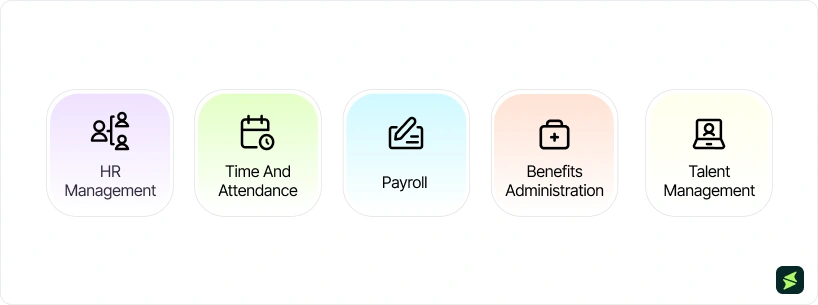
Comparison factor | ADP Vantage | ADP Workforce Now |
Best fit | Large enterprises with complex workforce structures | Mid-sized orgs standardizing HR and payroll |
Typical employee range | Often 1,000+ employees | Often, 50 to 1,000 employees |
Org structure | Multi-entity, business units, complex hierarchies | Simpler structures, fewer approval layers |
HR capabilities | Enterprise HR governance and controls | Central HR operations in one system |
Payroll capabilities | Designed for many pay groups and complex policies | Strong payroll for mid-market complexity |
Time and attendance | Built for large hourly workforces across sites | Integrated time-to-payroll solution for mid-market organizations |
Benefits administration | Better fit for complex eligibility and enrollment volumes | Streamlined enrollment tied to payroll deductions |
Talent management | Supports enterprise programs and workforce planning | Covers core talent needs inside the suite |
Primary decision driver | Complexity, governance, reporting burden | Speed, standardization, operational simplicity |
ADP Vantage HCM is an enterprise-level HR and payroll system created by ADP, designed to support organizations with large workforces (usually consisting of 1,000 or more employees). It provides a single set of modules from core HR recordkeeping and benefits management to talent management, time tracking, and advanced payroll.
Companies that have expanded the scope of simple HR systems require a platform to manage complex workforce frameworks, multi-state achievement, and intensive compliance necessities. Vantage (Legacy), with its cloud-based architecture (also with the option of on-premises deployment), suits the requirements of such organizations. It focuses on scale, as it can handle high volumes of HR operations without inaccuracy.
Best Fit When
- You manage multiple business units or complex approval hierarchies
- Payroll includes many pay groups, policies, or jurisdictions
- Compliance reporting and audit readiness are recurring requirements
- A large hourly workforce needs consistent time rules across sites
- HR needs enterprise controls for access, workflows, and governance
Unique Features Of ADP Vantage
- Scalable Multi-State Payroll: Capable of running multiple high-volume payrolls simultaneously across various pay groups and states, ensuring compliance and consistency for large, dispersed teams
- Advanced Analytics And Reporting: Offers extensive pre-built reports and ad-hoc reporting tools, delivering deep workforce insights and compliance reporting (e.g., EEO, OFCCP) needed by enterprise HR
- Integrated Talent And RPO Support: Includes a comprehensive talent management suite (recruiting, performance, succession) and can integrate with ADP’s Recruitment Process Outsourcing (RPO) services to support high-volume hiring needs
- Enterprise Compliance And Security: Provides robust compliance management for large employers - from complex tax withholding rules to programs like Affordable Care Act (ACA), Consolidated Omnibus Budget Reconciliation Act (COBRA), and background check integrations - all with enterprise-grade security and controls
- Flexible Architecture: Built on an open, modular architecture that can be configured for complex organizational hierarchies
Pros And Cons Of ADP Vantage
Pros:
- Migration tools help map Year-To-Date (YTD) taxes during payroll transitions
- Employee self-service supports tax withholding and benefit setup
- Employee self-service and quick reporting capabilities enhance overall efficiency
Cons:
- Quarterly tax notices may need manual cleanup
- Implementation gaps can delay go-live and disrupt payroll cycles
ADP Workforce Now (WFN) is the all-in-one HR solution by ADP that is aimed at mid-sized companies (preferably 50 to 1,000 employees involved). It integrates central HR functionalities, such as employee record management, payroll processing, benefit enrollment, time tracking, and talent management, into a single cloud-based system.
WFN is designed with a focus on usability and efficiency. The system is available to HR teams and employees through a web portal or a mobile app (self-service) when updating personal information, accessing pay stubs, or making time-off requests.
Companies often opt for WFN when they choose to get rid of manual HR work (spreadsheets or individual niche systems) and need to be compliant as they grow. In brief, ADP Workforce Now can fit organizations that need a holistic, yet easy-to-use, HR suite to coordinate employees’ operations with the growth of the company.
Best Fit When
- You are standardizing HR and payroll across a growing upper SMB workforce
- You want an integrated time-to-payroll to reduce payroll prep effort
- HR needs employee self-service to reduce tickets and manual updates
- You prefer packaged workflows and quicker rollout over deep configuration
Unique Features Of ADP Workforce Now
- ADP Assist™: Gives real-time insights and answers with AI chat and is available 24/7
- Unified HR And Payroll Platform: Provides a single database for HR, payroll, time, benefits, and talent, reducing duplicate data entry and integrating workflows
- Employee Self-Service And Mobile Access: Offers an intuitive self-service portal and mobile app that empower employees to handle tasks like checking pay statements, enrolling in benefits, and clocking in time
- Built-In Compliance Tools: Includes compliance safeguards such as automated tax filing, error alerts, and regulatory reporting (ACA)
- Modular Add-Ons Via ADP Marketplace: Connects with ADP’s Marketplace, allowing users to extend WFN with third-party apps (for things like advanced recruiting, learning management, etc.) as needed
Pros And Cons Of ADP Workforce Now
Pros:
- Time tracking reduces payroll prep effort each pay cycle
- Centralized workforce data improves visibility across payroll and HR
- Vacation balances stay clear, reducing PTO disputes
Cons:
- Recruitment evaluation lacks advanced screening and candidate grading tools
- Report customization is limited, and the interface may feel tricky
ADP Vantage Pricing
Based on industry estimates, ADP Vantage pricing starts at approximately $30/employee/month for small businesses up to 50 employees. Whereas, for companies having more than 1,000 employees, the starting price goes as low as $20/employee/month.
Disclaimer: The pricing has been sourced from third-party websites and is subject to change.
ADP Workforce Now Pricing
ADP Workforce Now has a custom and subscription-based pricing model, with a starting price of $19/employee/month. Pricing is based on a personalized quote for three plans, each of which is offered separately according to the HR, payroll, and workforce management requirements of the organization. The plans include:
- Select
- Plus
- Premium
Disclaimer: The pricing has been sourced from third-party websites and is subject to change.
ADP Vantage and ADP Workforce Now are designed to serve distinctly different environments. ADP Vantage works efficiently for businesses that need high-level payroll management, complicated compliance handling, and are able to manage a high number of employees. ADP Workforce Now, on the other hand, is more appropriate in the case of mid-sized companies seeking a unified HR and payroll system with the focus on usability and operational efficiency. The choice of the appropriate platform is based on workforce size, complexity of the system, and future growth strategies.