
Article
Comparing The Top Software Review Platforms In 2026
35 mins read
Last Updated

Writer


Article
35 mins read
Last Updated
Writer
Most people pick a review site the same way they pick a search engine: they go with whatever they already know. But not all review platforms are built for the same buyer, the same budget, or the same decision. Some are designed for enterprise IT teams evaluating infrastructure. Others are built for small businesses, comparing SaaS tools.
Using the wrong platform doesn't just waste time; it actively distorts your shortlist. The sites below represent the most relevant options available today, mapped against what actually matters when making a software decision.
Site | Primary Audience | Industry Specificity | Publishes Reports | Guides or Reviews | Best For |
G2 | SMB / Mid-Market / Enterprise | Low, broad | Yes, Grid Reports | Both | High-volume B2B peer validation |
Capterra | SMB / Mid-Market | Low, broad | No | Both | Wide-net software discovery |
TrustRadius | Mid-Market / Enterprise | Medium | Yes, TrustMaps | Both | Verified enterprise reviews |
Software Finder
| SMB / Mid-Market | Medium,incl. healthcare | Yes, whitepapers & reports | Both + consulting | Full buyer decision-support |
PeerSpot | Enterprise | High, IT & security | Yes | Reviews only | Enterprise IT evaluation |
Software Advice | SMB | Low, broad | No | Both | Advisor-assisted selection |
GetApp | SMB / Mid-Market | Low, SaaS focus | No | Reviews only | SaaS & integration compatibility |
PCMag | SMB / Consumer | Low, broad tech | No | Both | Expert-tested editorial verdicts |
FinancesOnline | SMB | Medium, finance & HR | No | Both | Financial & HR comparisons |
TechnologyAdvice | SMB / Mid-Market | Medium | Yes, research reports | Both | Buyer education & guides |
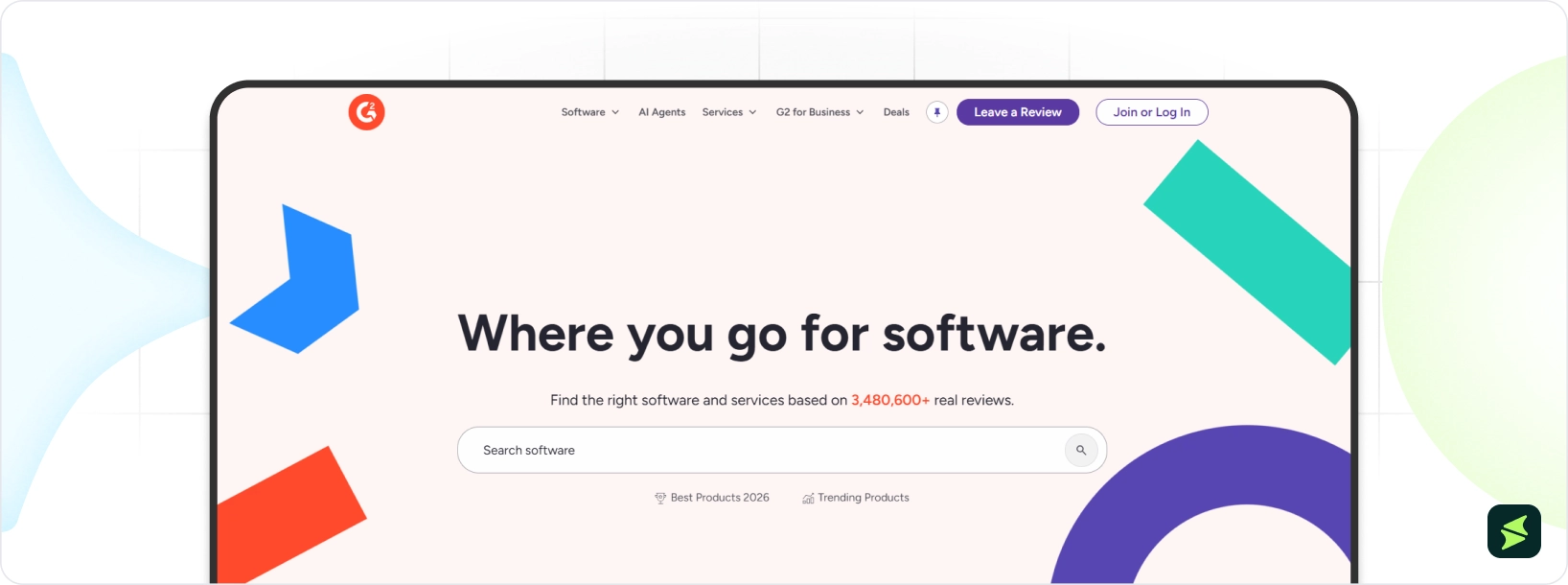
Founded in 2012 and headquartered in Chicago, G2 has grown into one of the most recognized names in B2B software discovery. The platform operates on a straightforward but powerful premise: let real users speak for the products. With over 2 million verified reviews spanning more than 2,000 software categories, G2 has become the dominant starting point for most software buying decisions.
G2 structures each product listing around six core tabs:
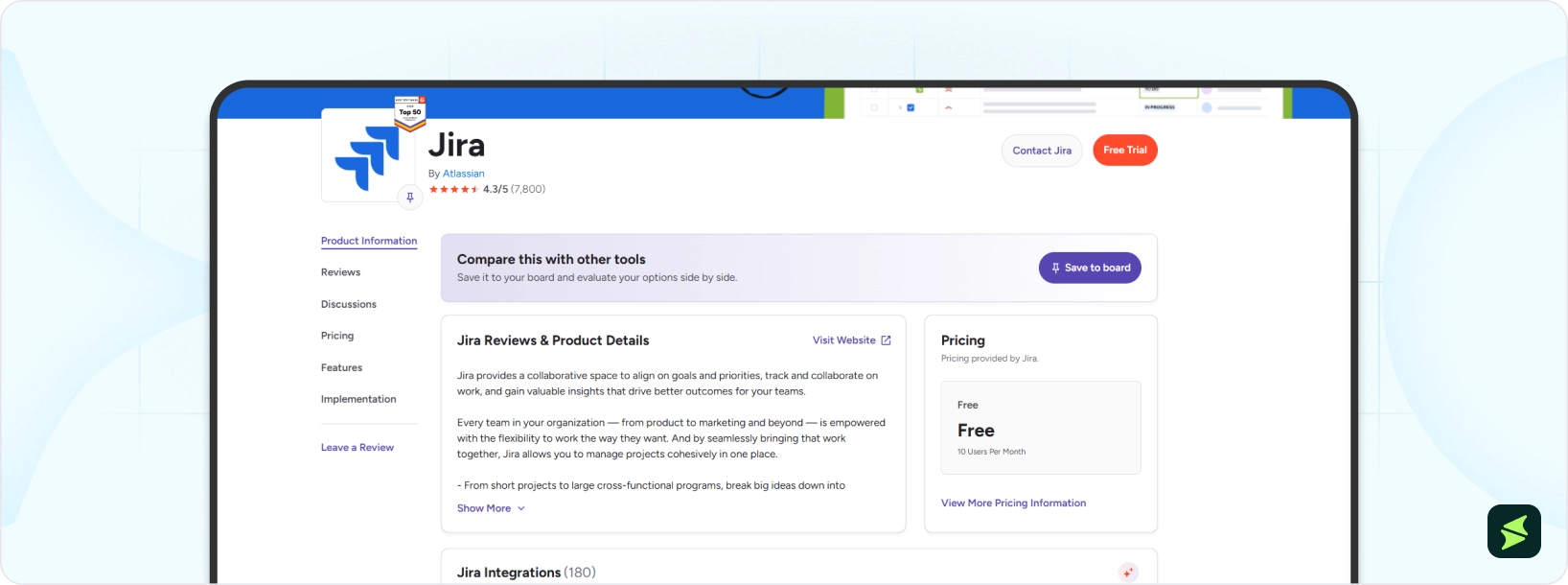
Reviews are broken down beyond a simple star rating; buyers can see sliding scale scores for ease of setup, ROI, and time to implement. The platform also groups reviewer feedback into themed pros and cons, highlights popular mentions as clickable topic filters, and even displays the source of each review, whether it was organically submitted or G2-invited. That level of transparency is harder to find than you'd think.
What makes G2 genuinely valuable, especially for B2B buyers, is the combination of review volume and searchability. You can filter reviews by company size, industry, and region, or search for a specific keyword within reviews themselves.
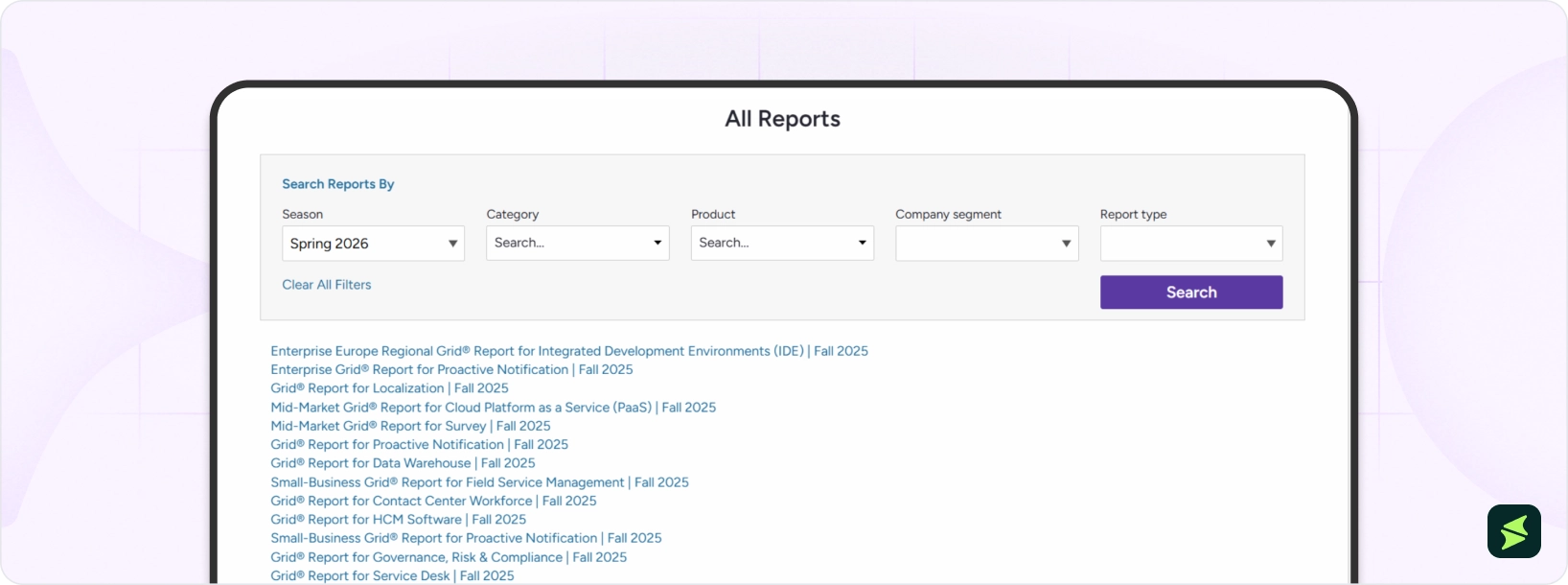
This feature cuts research time meaningfully; instead of reading 200 reviews, hoping someone mentions customer support, you can just search for it. G2 also publishes quarterly grid reports that rank products by satisfaction and market presence, which carry real weight in vendor evaluations and shortlisting conversations.
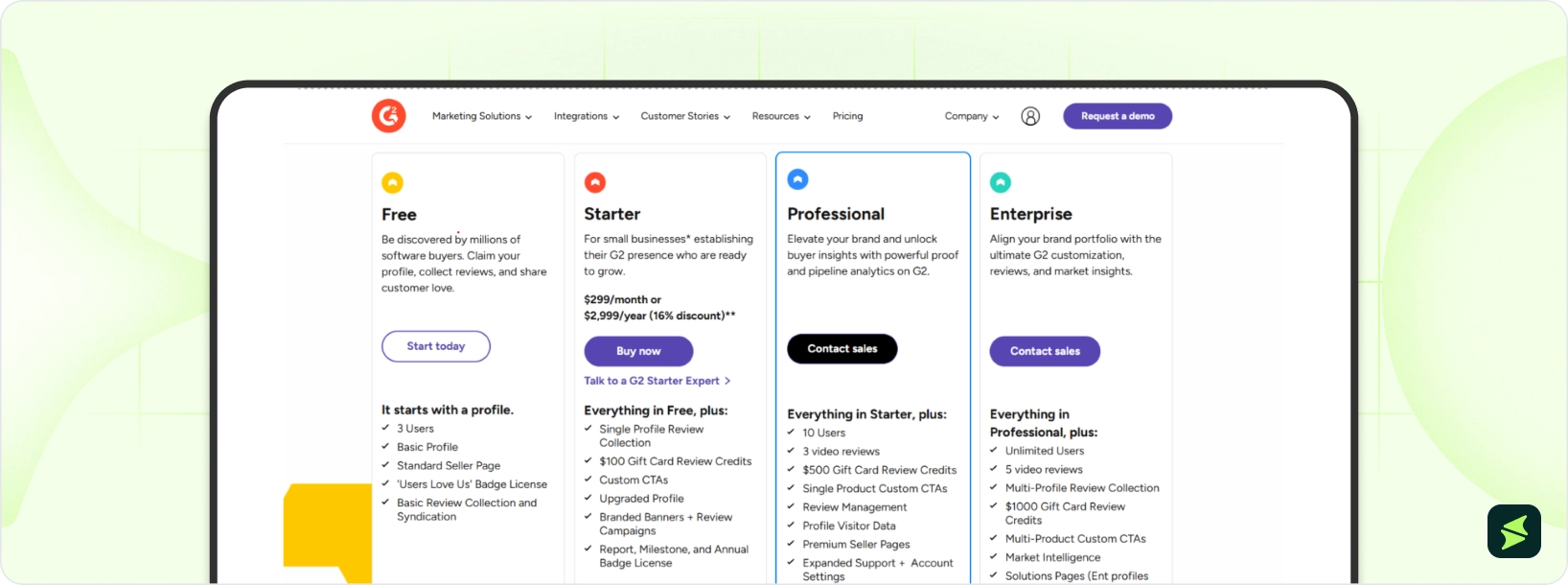
G2 is the right first stop for most B2B software evaluations. That said, it's worth noting two things: full review access requires a free account, and vendors can pay for different plans to avail various perks, including gift card review credits.
Use the grid reports as a directional signal, not a final verdict. If you're a vendor, G2's review volume drives vendor selection conversations. Competitors with higher review counts gain a credibility advantage early in buyer evaluations, which is why establishing presence here matters for visibility.
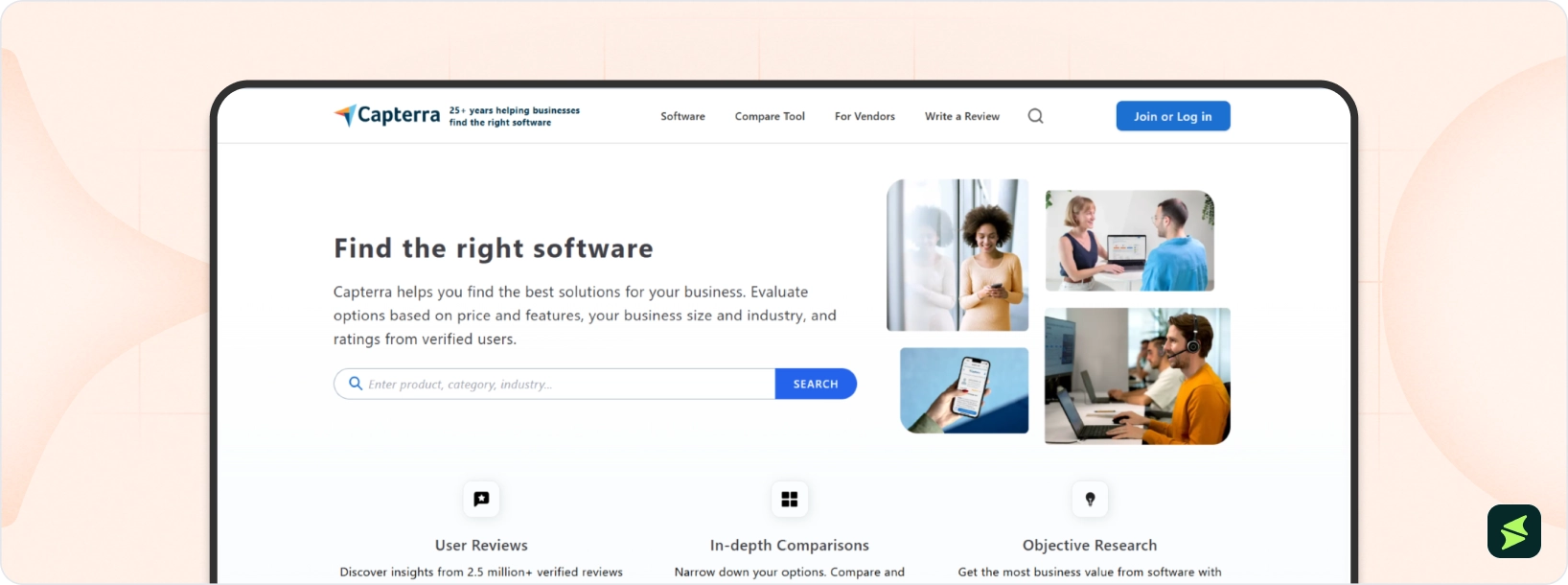
If G2 is where B2B buyers go to dig deep, Capterra is where they go to get oriented. Launched in 1999, Capterra was acquired by Gartner in 2015 and then by G2 in January 2026. Despite the ownership changes, its core function - broad software discovery - remains its strength.
The platform lists over 100,000 software products across nearly 900 categories, making it one of the broadest databases of its kind. For buyers who are still early in their search and those who aren't sure what they're even looking for yet, Capterra is often the most logical place to start.
Capterra's product pages follow a clean, accessible format with the following important sections in a review:
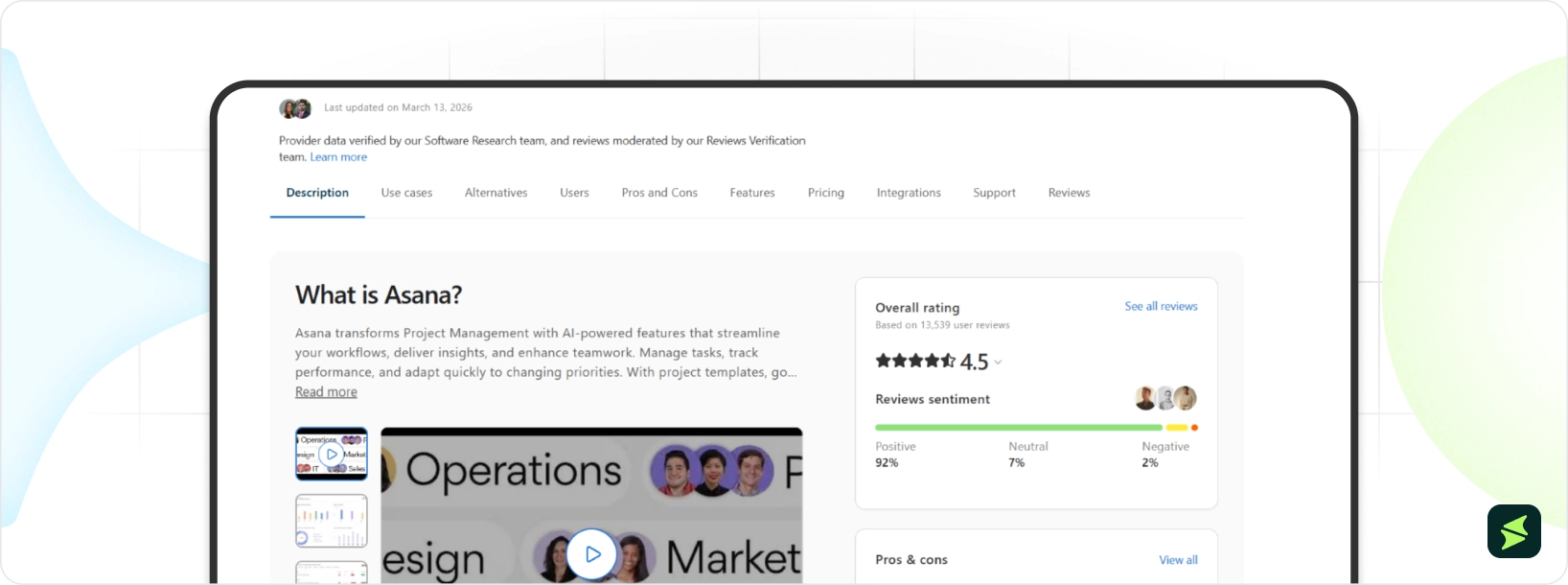
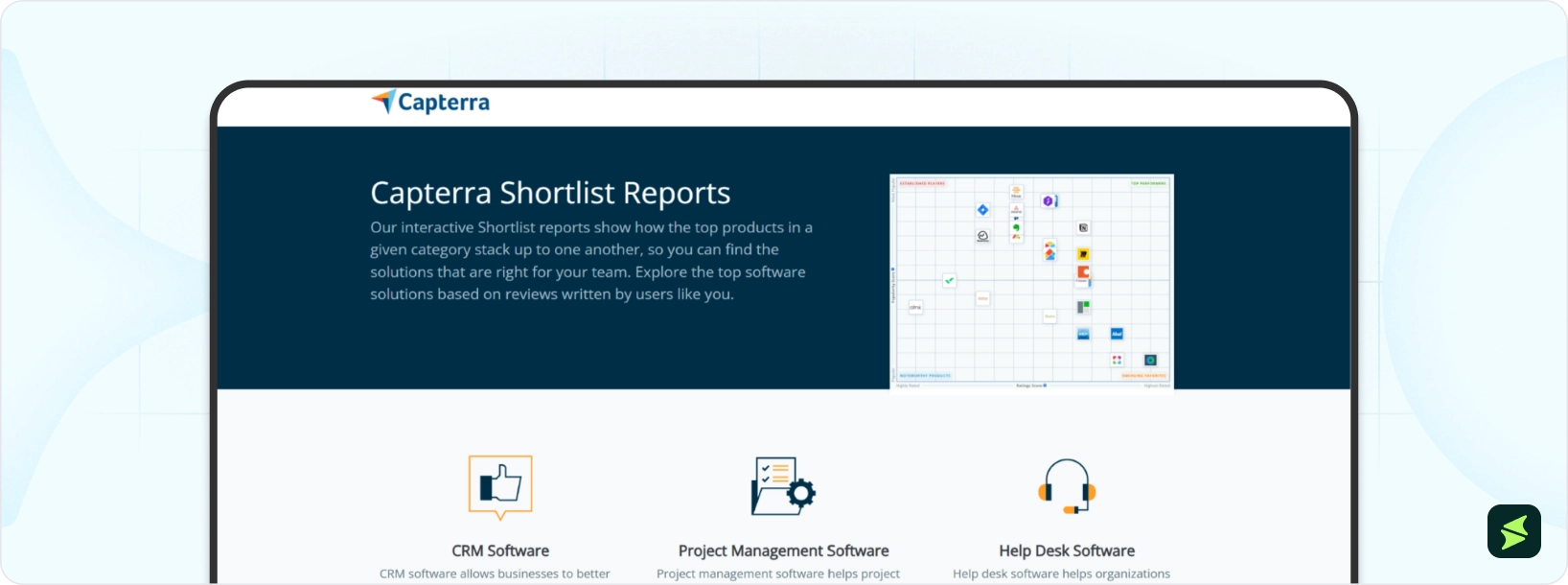
One of its more practical features is the side-by-side comparison tool, which lets you stack up to four products against each other on features, pricing, and review scores simultaneously. Capterra also publishes shortlist reports, curated rankings within specific software categories based on user reviews and web search popularity, which can be a useful starting filter when a category has hundreds of options.
Capterra's strength is accessibility for buyers. The interface is easy enough that even non-technical buyers can navigate it comfortably, which matters when purchasing decisions involve finance leads, operations managers, or executives who aren't living in software tools every day.
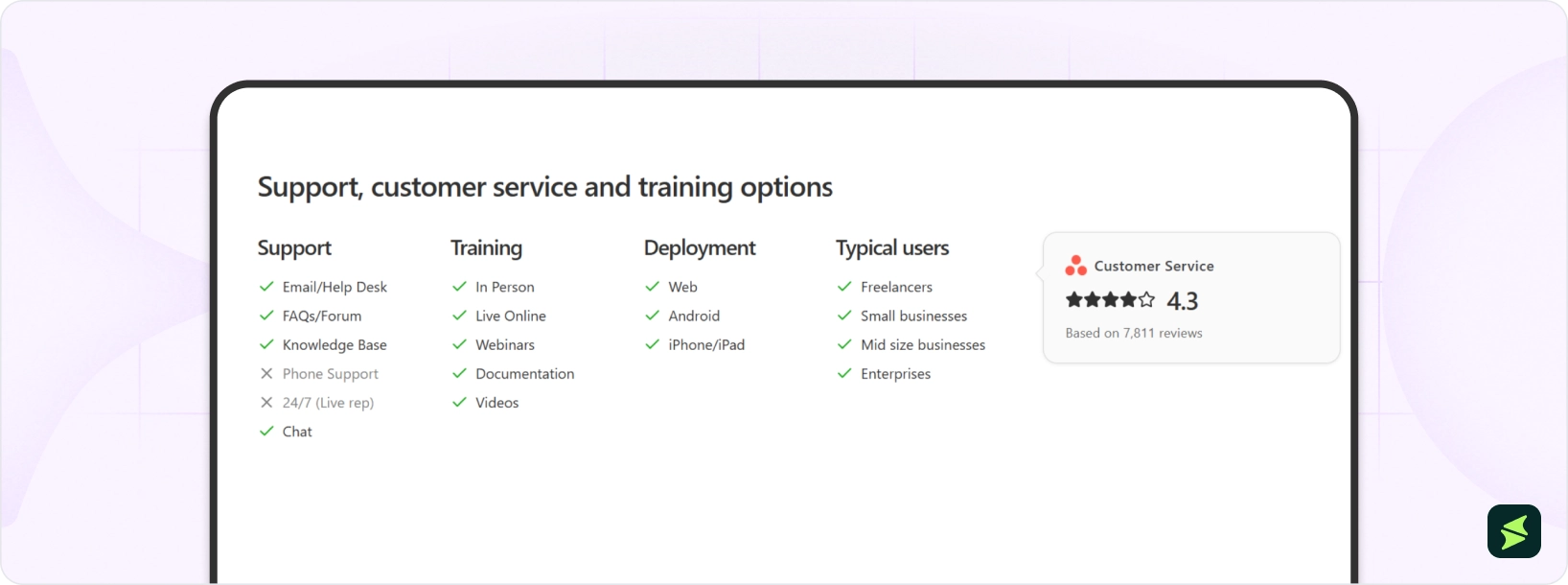
The category taxonomy is also notably granular; rather than lumping everything under broad labels, Capterra breaks software into specific use-case buckets and also provides detailed support and training options for buyers to know.
Capterra works best as a discovery and shortlisting tool rather than a deep-evaluation resource. The review volume is strong, but the experience of reading through them doesn't offer the same filtering depth that G2 does. Treat Capterra as a wide-angle lens: excellent for orientation, but pair it with a more specialized platform before making a final call.
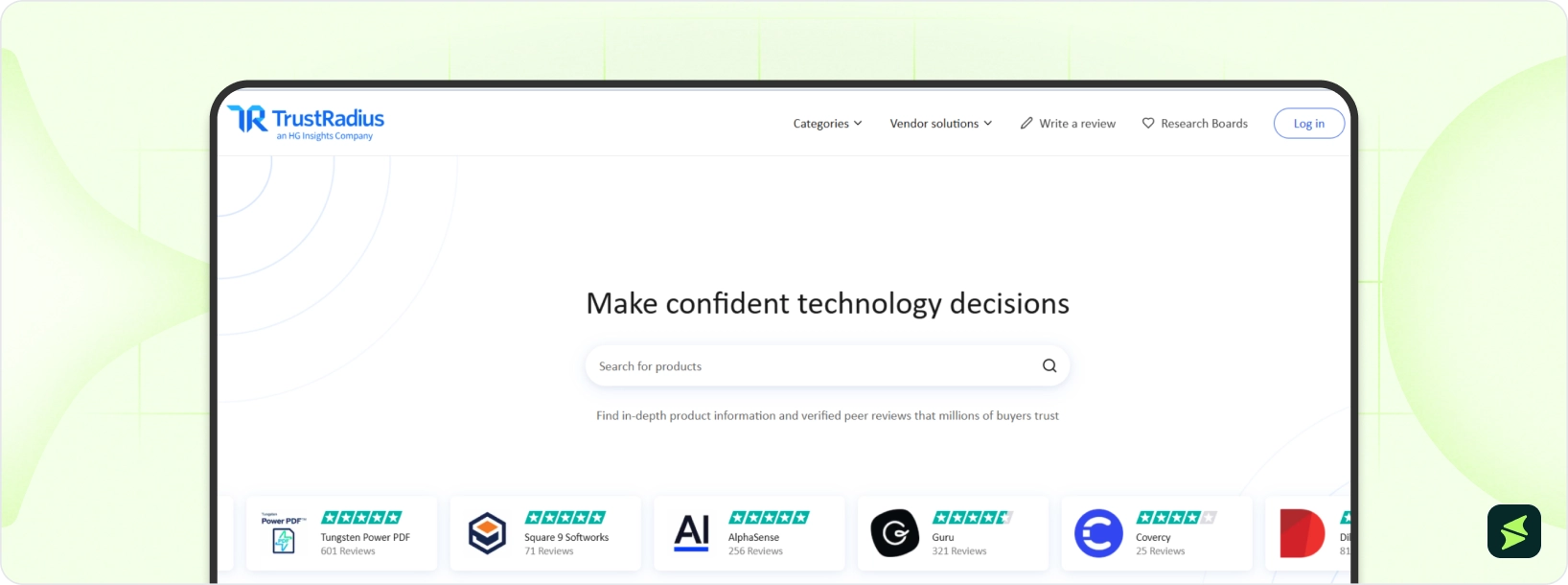
TrustRadius occupies a distinct lane in the software review space, and it's done so deliberately. Founded in 2012 and headquartered in Austin, Texas, the platform was built with a specific buyer profile in mind: mid-market and enterprise teams evaluating infrastructure, security, or mission-critical tools where wrong vendor selection impacts entire workflows. That focus shapes everything about how TrustRadius collects, presents, and gates its review content.
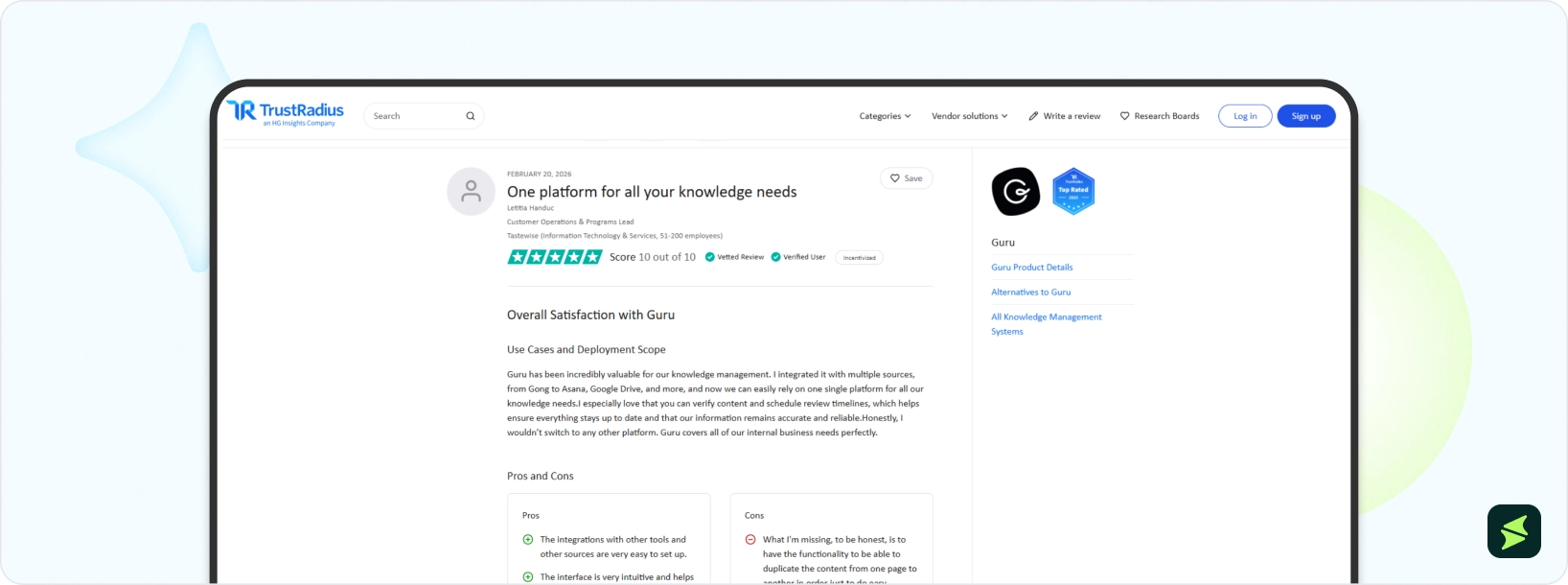
Where other platforms accept short-form ratings and brief comments, TrustRadius actively encourages long-form, structured reviews. Reviewers are prompted to answer specific questions about use case, implementation experience, ROI, and what they'd change, resulting in reviews that often run several hundred words.
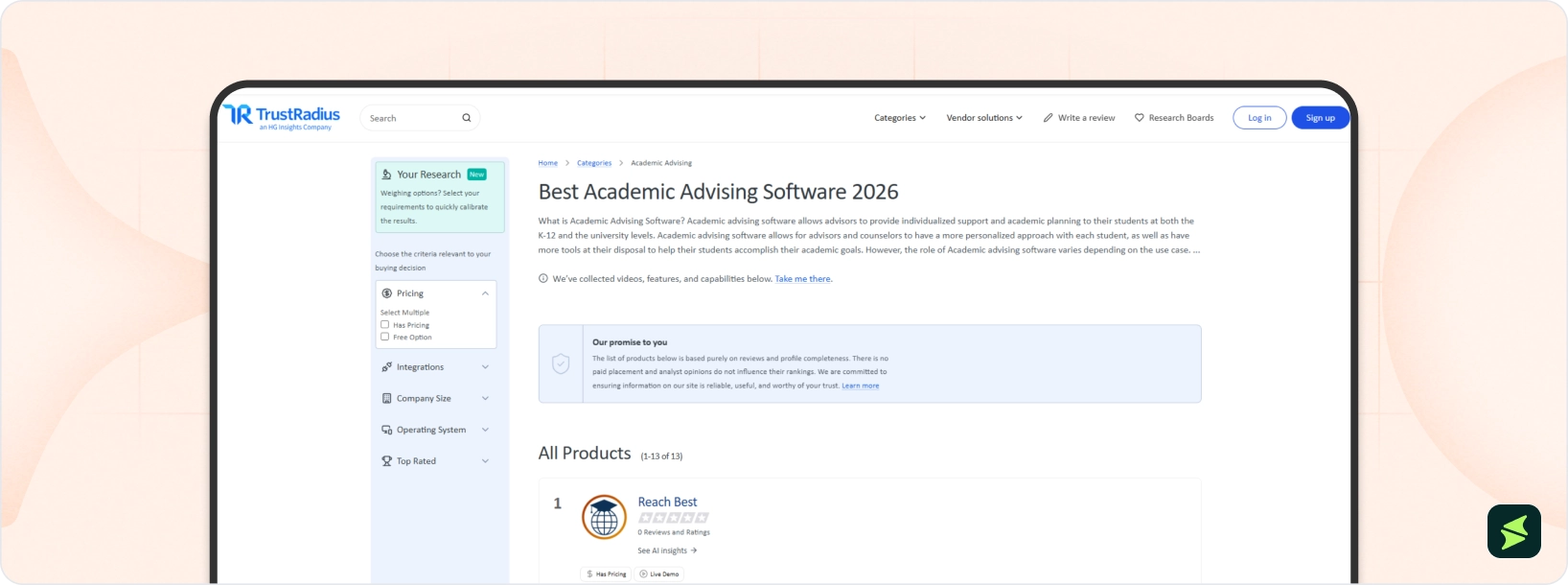
Additionally, TrustRadius publishes TrustMaps, quadrant-style visual reports that plot products by user satisfaction and research frequency, giving buyers a quick, at-a-glance positioning tool for competitive categories.
The no-anonymous-reviews policy is the single most defining characteristic of TrustRadius, and it's worth pausing on. Most review platforms allow some degree of anonymity, which, however well-intentioned, creates room for unverifiable or incentivized submissions. TrustRadius's LinkedIn-linked authentication raises the accountability bar considerably.
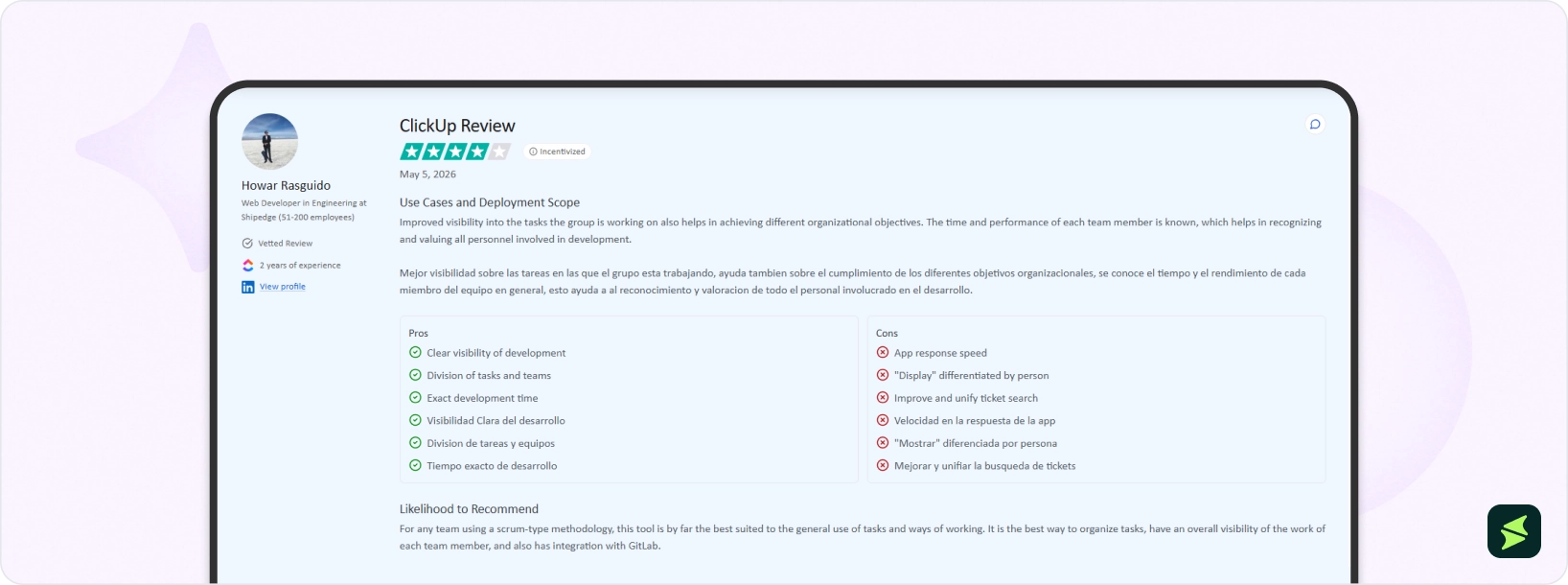
For enterprise buyers who are evaluating tools that will touch critical workflows or large teams, that added layer of credibility genuinely matters. The depth of the reviews reflects it too; you're far more likely to find a nuanced discussion of edge cases, integration challenges, or support quality here than on platforms where a three-sentence review is considered complete.
TrustRadius is the platform I'd point out enterprise buyers toward when the evaluation is serious and the shortlist is already narrowed down. When you need to pressure-test a vendor decision with substantive peer experience, the review quality here is consistently above average.
One thing to keep in mind: TrustRadius has shifted portions of its detailed review content behind a gated experience for vendors, which has drawn some criticism from the buyer community. As a buyer, you'll still get meaningful access, but the platform monetization model is worth being aware of as context.
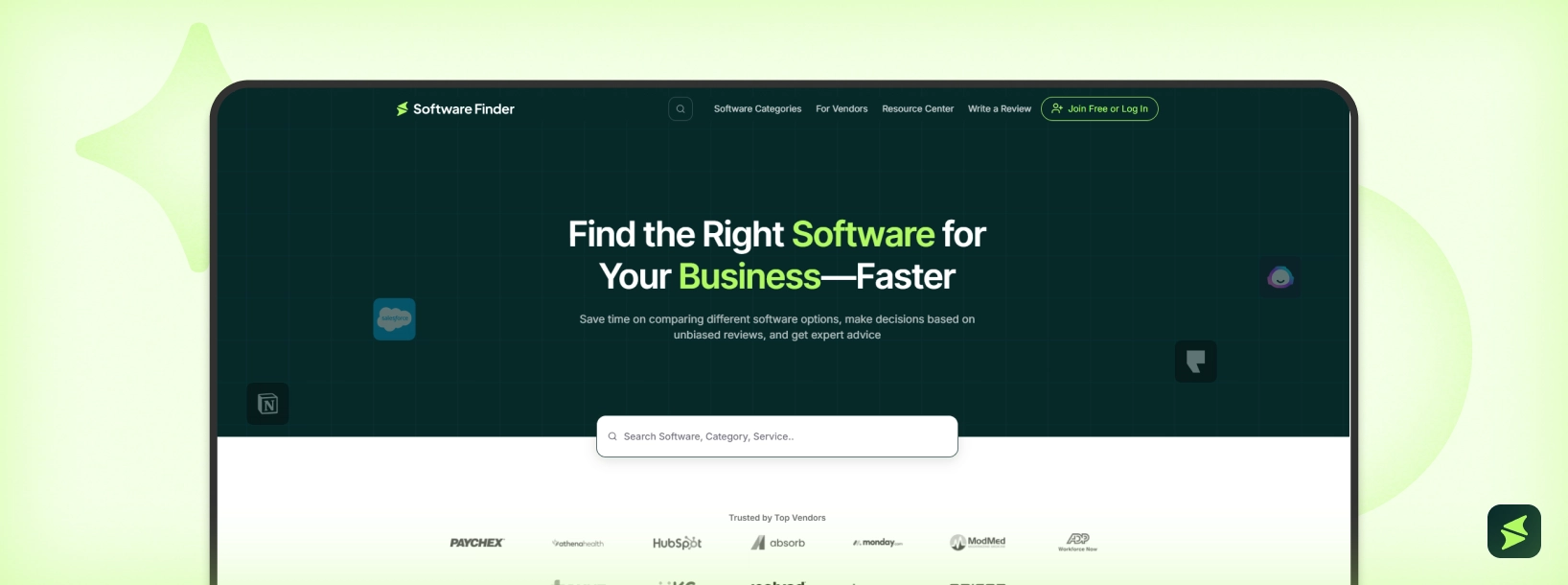
Founded in 2018 as a bootstrapped company, Software Finder has built something that goes noticeably beyond the standard review format, pairing human expert insight with AI to make the software buying process less of a slog. The platform covers categories spanning medical, HR, accounting, CRM, project management, field services, and legal practice management, among others.
Software Finder's approach is less ‘here are the reviews, good luck’ and more ‘let's get you to the right answer.’ The platform is built around the idea that buyers shouldn't have to do all the heavy lifting themselves, and that shows how the product experience is structured. Its niche is SMB decision-makers in the consideration or decision stages.
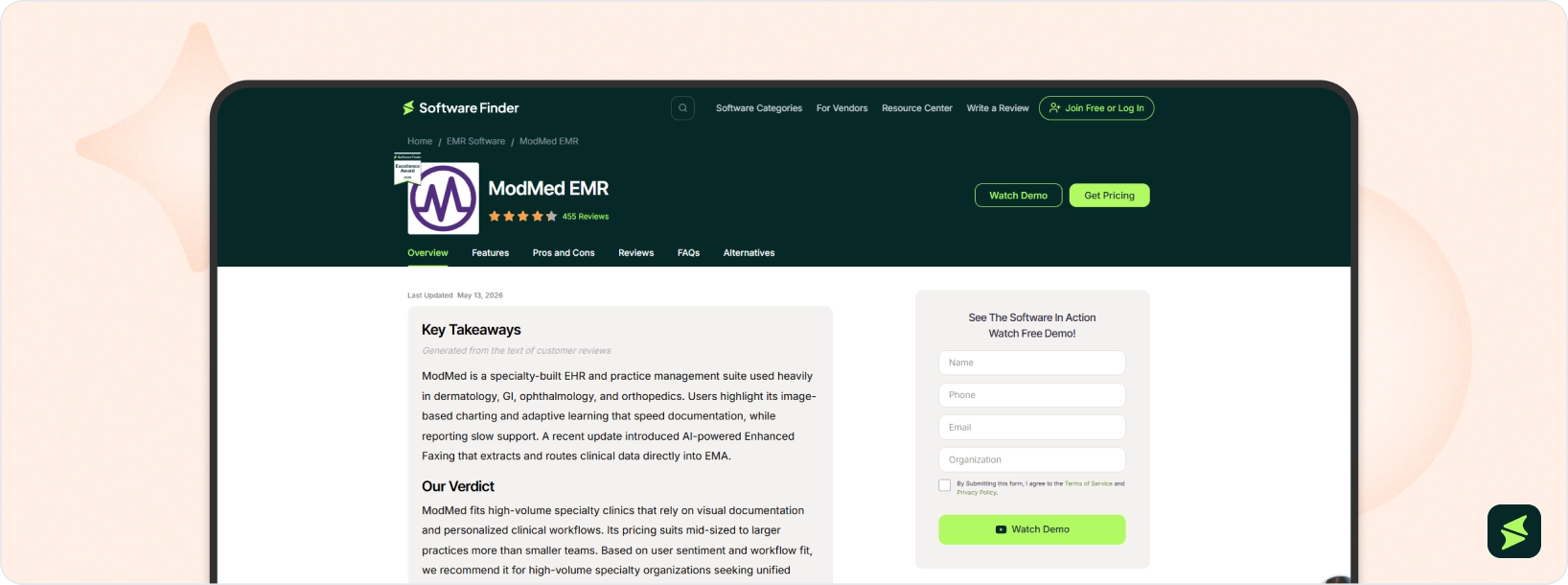
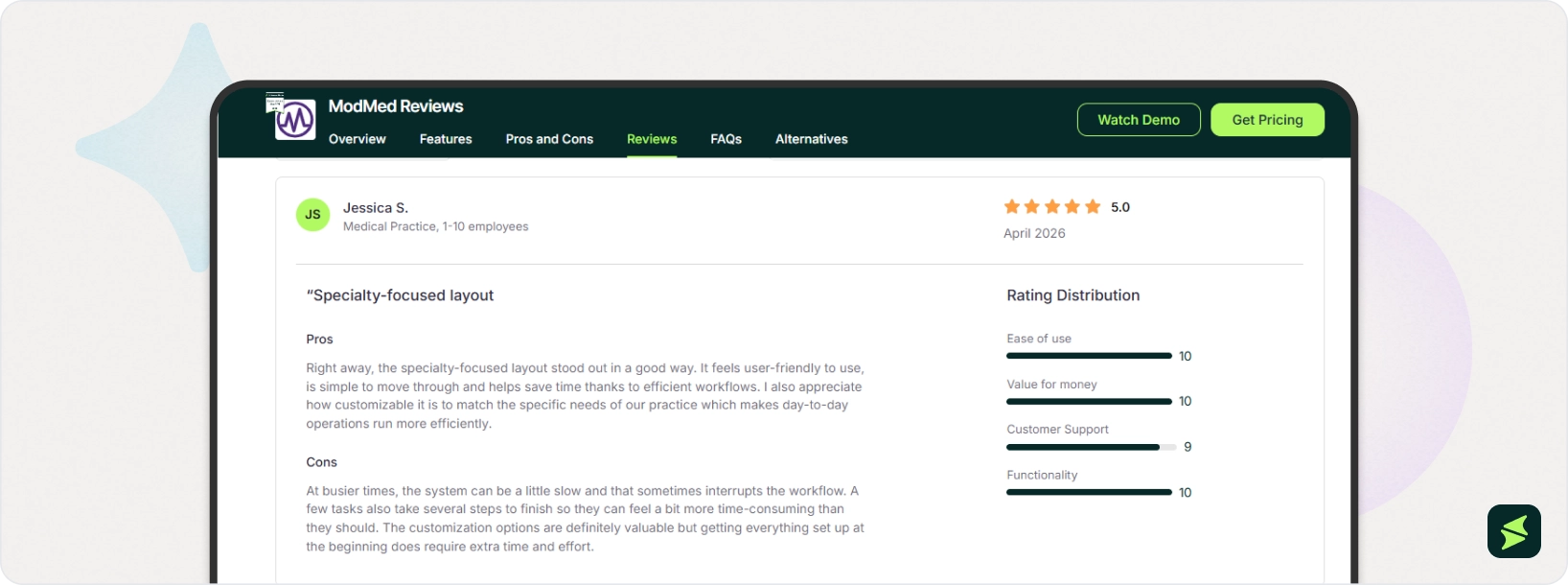
Buyers can answer a few quick questions and receive a personalized software recommendation tailored to their needs. Each software listing comes with a dedicated reviews page paired with a full overview covering top features, specifications, integrations, and more, so everything a buyer needs is in one place rather than scattered across tabs. No login is required to read reviews, which is a meaningful differentiator; any buyer can access full review content freely, without creating an account or hitting a paywall.
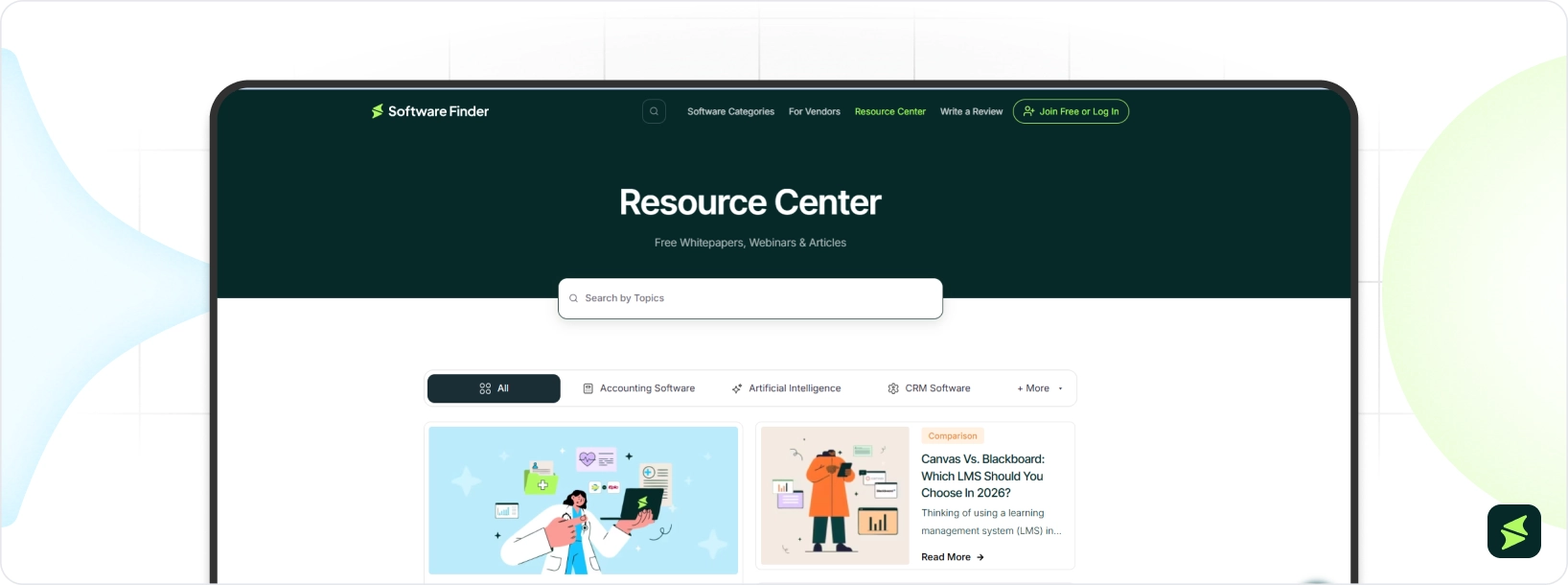
The site also features an extensive resource center that goes well beyond reviews, including whitepapers, pricing guides, market intelligence reports, and webinars hosted with industry experts. Pricing guides break down the cost landscape for specific software categories, helping buyers understand what's reasonable to pay. User sentiment analysis surfaces patterns across reviews, giving buyers a quick read on how real users feel about a product beyond just star ratings.
On the research side, Software Finder has been actively publishing in-depth category reports. The recently updated Medical Software Market Intelligence Report, published in March 2026, evaluates platforms based on real-world performance in clinical settings, drawing on industry research and insights from healthcare professionals. The report focuses on operational fit, scalability, and integration within existing healthcare technology ecosystems. Software Finder offers the kind of structured, expert-led content that earns trust rather than just traffic.
Where most platforms stop at aggregating opinions, Software Finder has invested in building an actual decision-support layer around them. That distinction matters more than it might seem at first glance, especially now that independent voices in this space are becoming harder to find.
The website provides buyers with a full decision-making toolkit, from unbiased software reviews and curated best-of-category lists to in-depth pricing guides. What I think is another genuine highlight: for buyers who want to go deeper, there are whitepapers, webinars with industry experts, and access to human consultants who can help navigate the final decision.
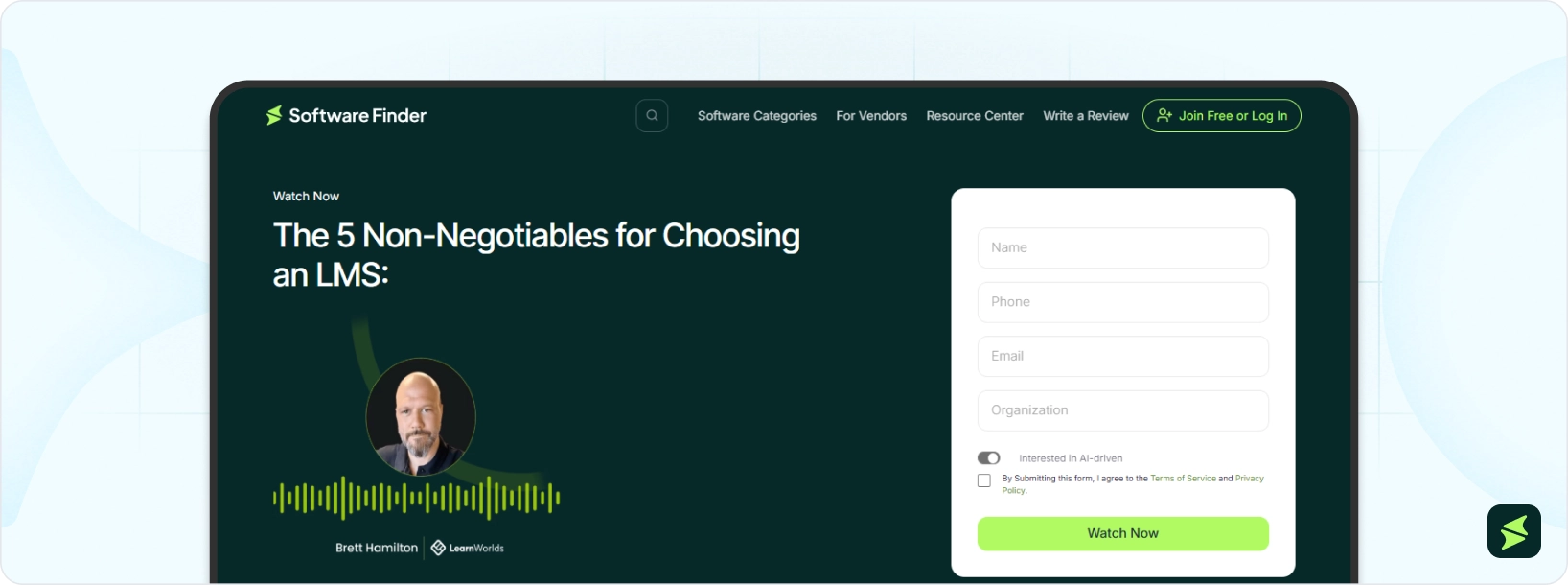
Software Finder has also invested in original proprietary research, their 2026 SaaS security report, built on analysis of thousands of buyer-vendor interactions, surfaces how trust and security posture are now reshaping purchase decisions in ways the standard review format doesn't capture. That commitment to original research sets it apart from directories that simply aggregate user ratings.
Software Finder stands out for offering far more than just reviews. With personalized recommendations, pricing guides, market intelligence reports, and webinars with industry experts, it's one of the more complete research destinations for software buyers available right now.
I also appreciate that every piece of content is reviewed by a field expert. As indicated on each content piece, it adds a layer of authenticity and credibility that most review platforms simply don't offer.
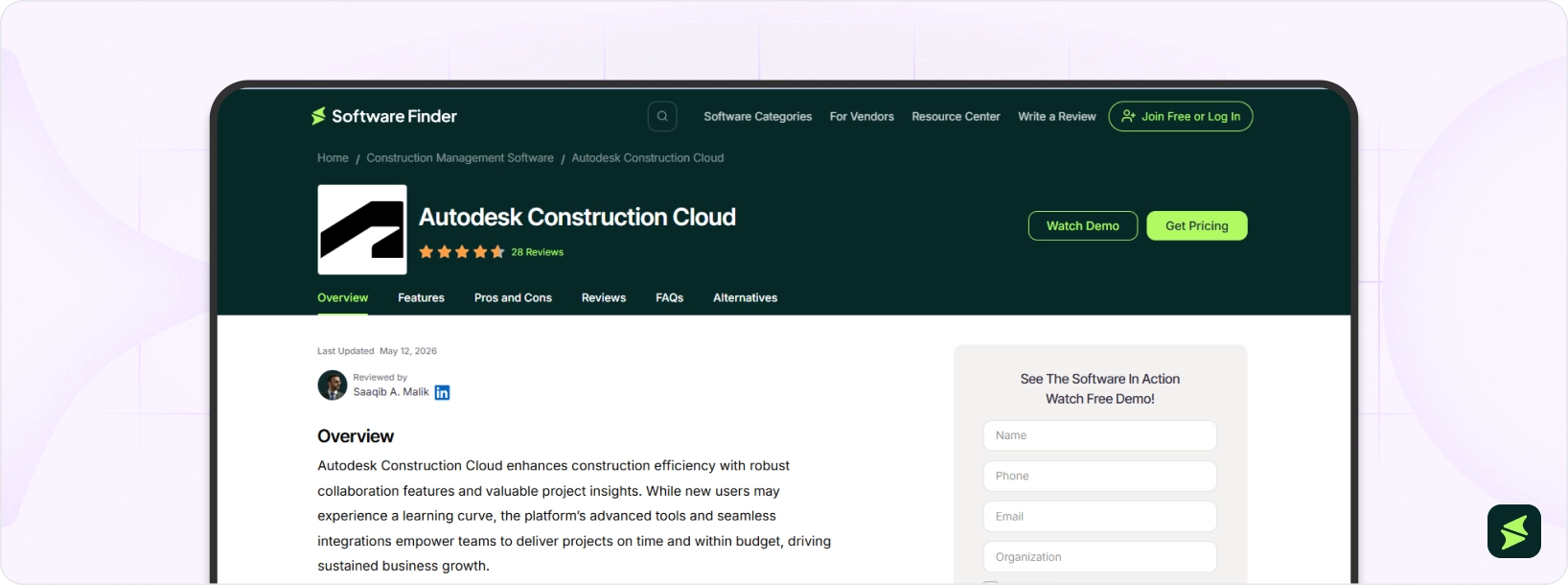
What genuinely separates Software Finder from the rest of this list isn't the review count or the category breadth; it's the human work sitting behind the platform. The whitepapers go deep on market dynamics that a star rating will never surface.
The webinars bring in actual industry experts, not just aggregated opinions. The buyer guides are written and reviewed by practitioners who understand the category they're covering. That combination, structured research, expert-led content, and consulting access, reflects a platform that has thought seriously about what buyers actually need to make a confident decision, rather than simply giving them more data to wade through.
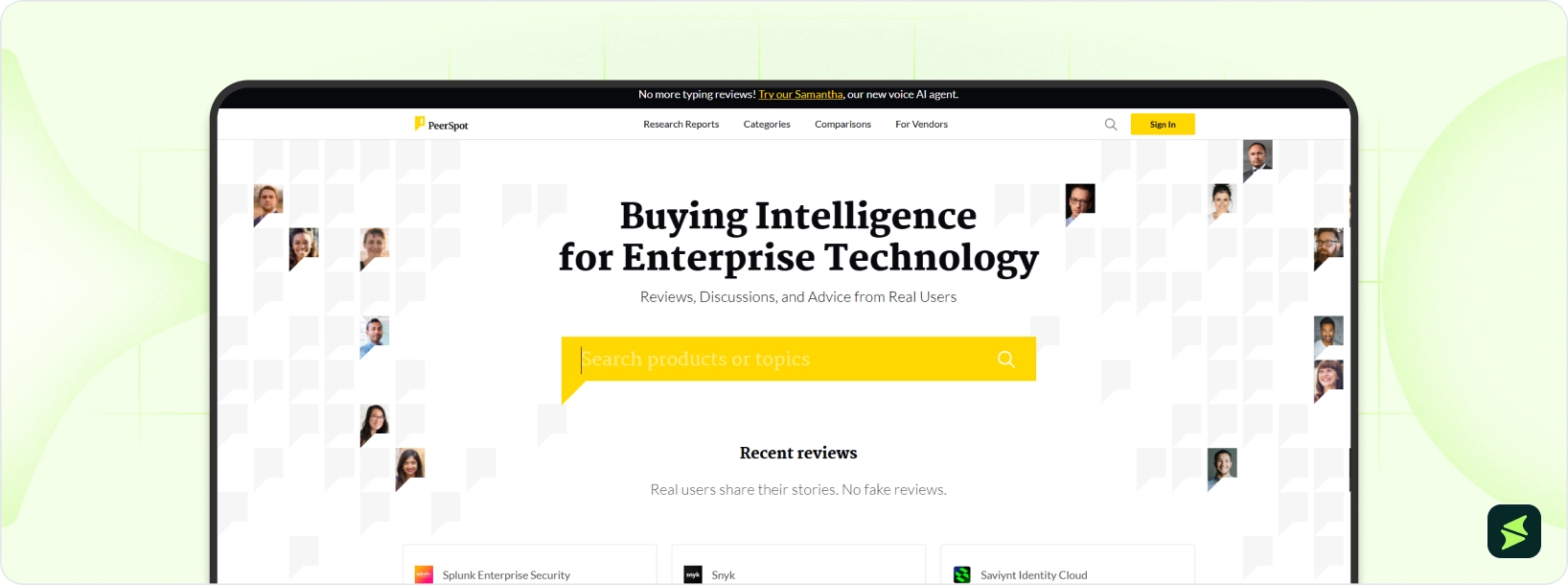
Founded in 2012 and rebranded in 2022, PeerSpot was built from the ground up for one specific audience: enterprise IT and technology professionals evaluating complex, high-investment solutions. If TrustRadius leans mid-market to enterprise, PeerSpot goes a step further. This is a platform that focuses exclusively on enterprise IT infrastructure, security, and cloud platforms.
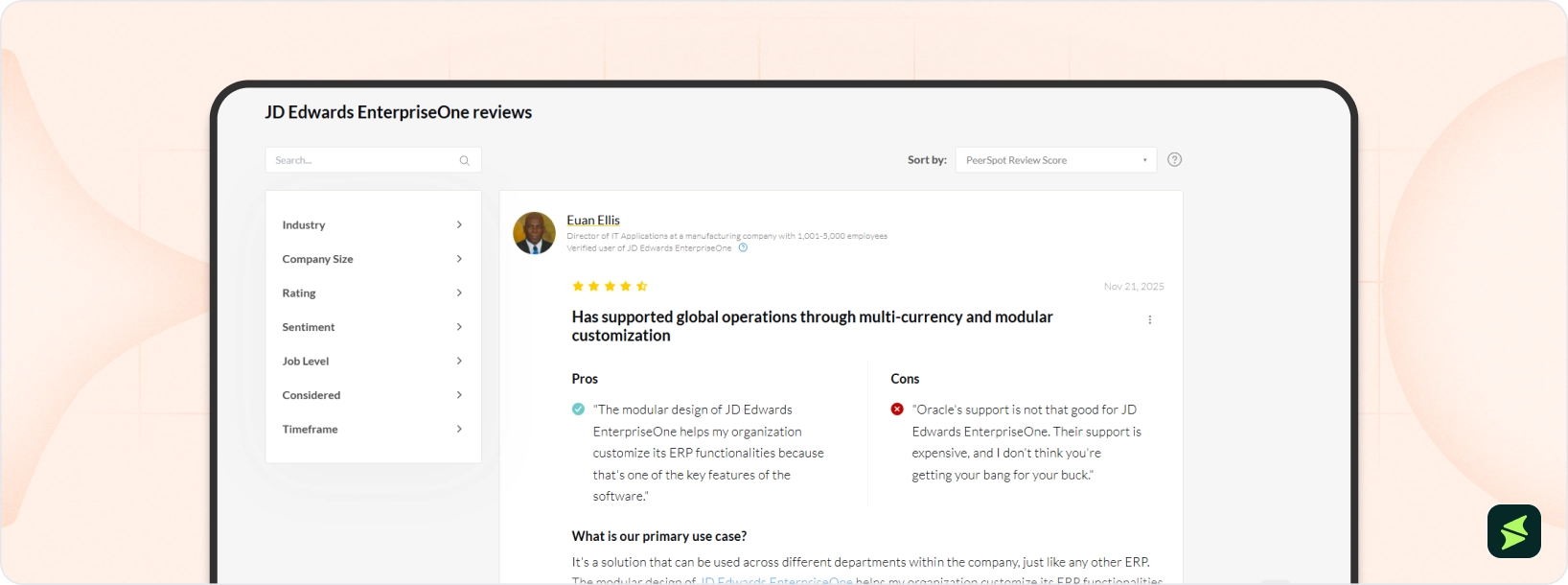
PeerSpot specializes in categories that other review platforms treat as secondary, cybersecurity, network infrastructure, cloud platforms, DevOps tooling, and enterprise software at scale. Reviews on the platform are notably detailed, often structured around real deployment scenarios, technical specifications, and implementation timelines.
The platform also features a peer reports section where vendors can generate reports within a few clicks. From buyers' guides to ROI reports and even comparison reports to beat your competitor, the website allows vendors to make an impact with useful and credible insights.
The peer-matching feature alone sets PeerSpot apart from most platforms on this list. Reading a review captures a snapshot of one person's experience. Direct peer access lets you ask follow-up questions, understand edge cases, and validate whether their deployment scenario matches yours.

For enterprise IT teams evaluating something like a SIEM solution, a zero-trust security platform, or a large-scale cloud migration tool, that kind of direct peer access can shorten evaluation cycles and surface deal-breaking details that no written review would capture. The review quality also reflects the platform's focus; contributors tend to be practitioners, architects, IT managers, security engineers, rather than general business users.
PeerSpot is a highly specialized resource and should be treated as such. If you're evaluating enterprise-grade infrastructure, security, or cloud technology, it belongs to your research stack. The review depth and peer access features are genuinely valuable at that level of decision-making.
However, if you're shopping for CRM software, project management tools, or general SaaS products, you'll find the catalog thin and the audience mismatch noticeable. Think of PeerSpot as a specialist consultant rather than a general directory, narrow in scope, but exceptionally credible within that scope.

Software Advice has been around since 2005, making it one of the older names in the software discovery space. Software Advice has carved out a distinct positioning: it's built less around self-serve browsing and more around guided, human-assisted software selection.
Acquired by Gartner in 2014 and later by G2, it operates under the same Gartner Digital Markets umbrella. Data sharing unifies reviews across Capterra, Software Advice, and GetApp, amplifying credibility, vendor visibility, and buyer insights via aggregated data.
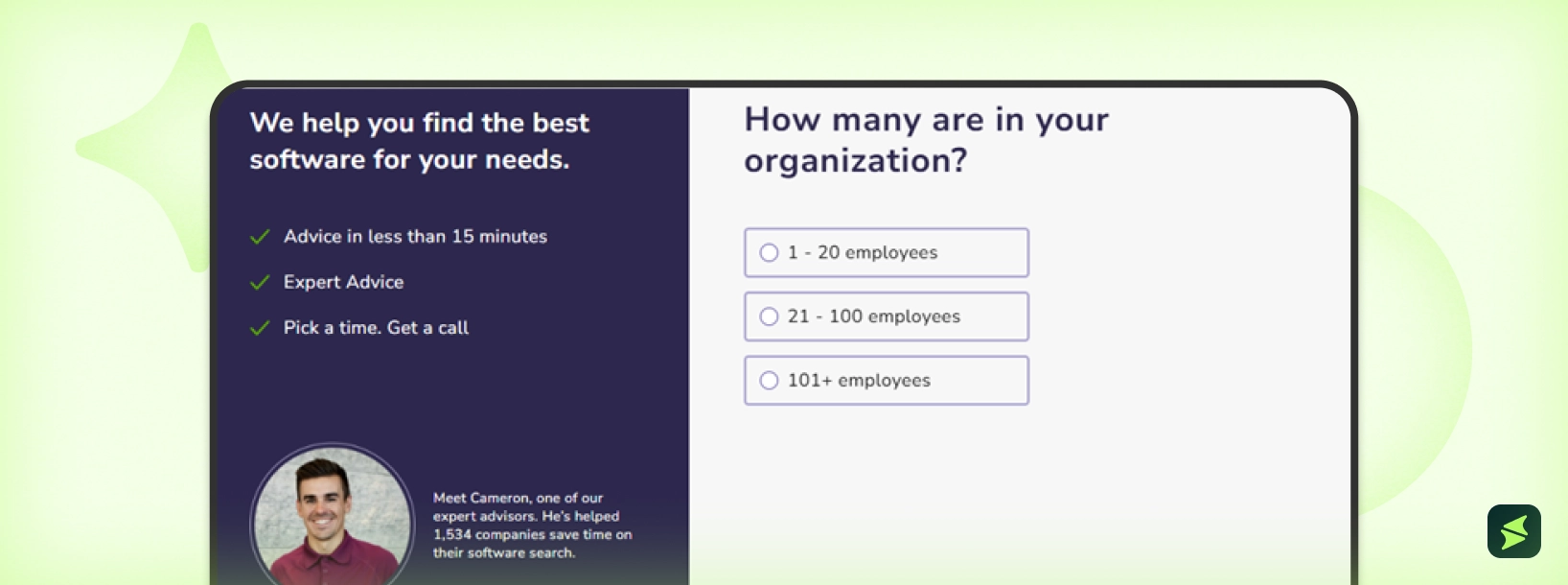
Software Advice leans heavily into a concierge-style experience. Rather than expecting buyers to filter through hundreds of listings independently, the platform offers free one-on-one consultations with advisors who help narrow down options based on budget, team size, and specific feature requirements.
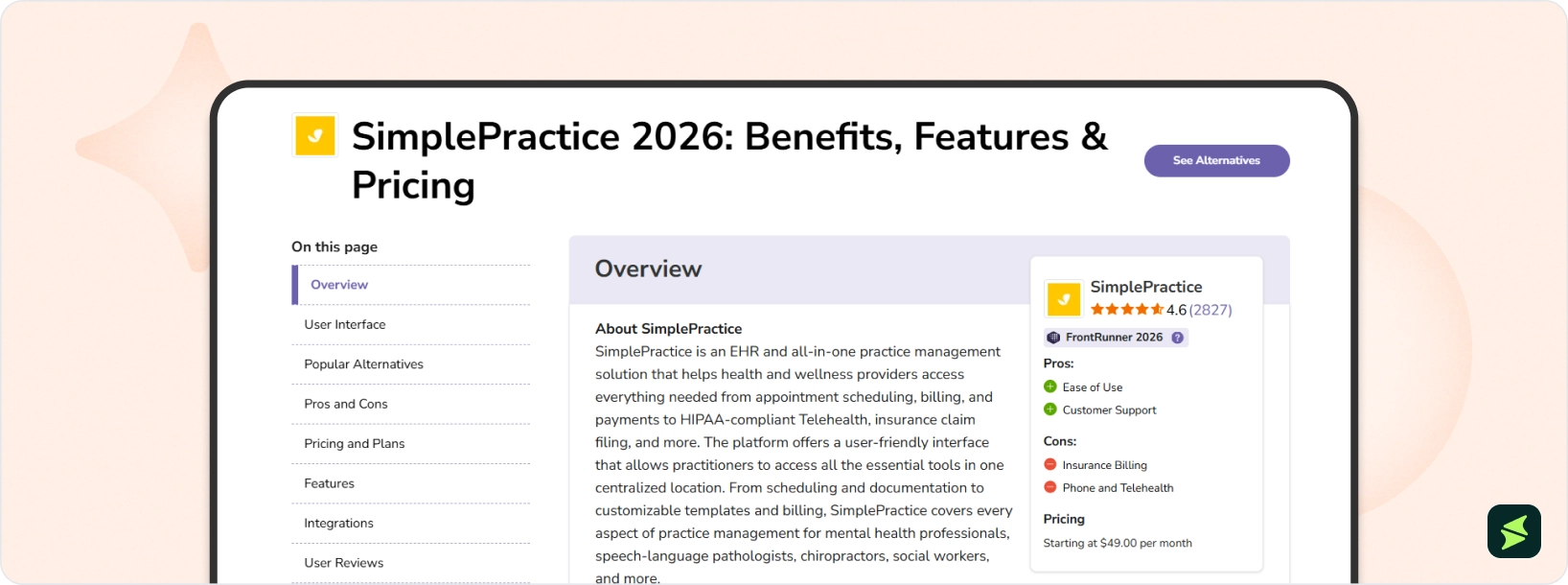
Product listings follow a familiar format, with important sections such as:
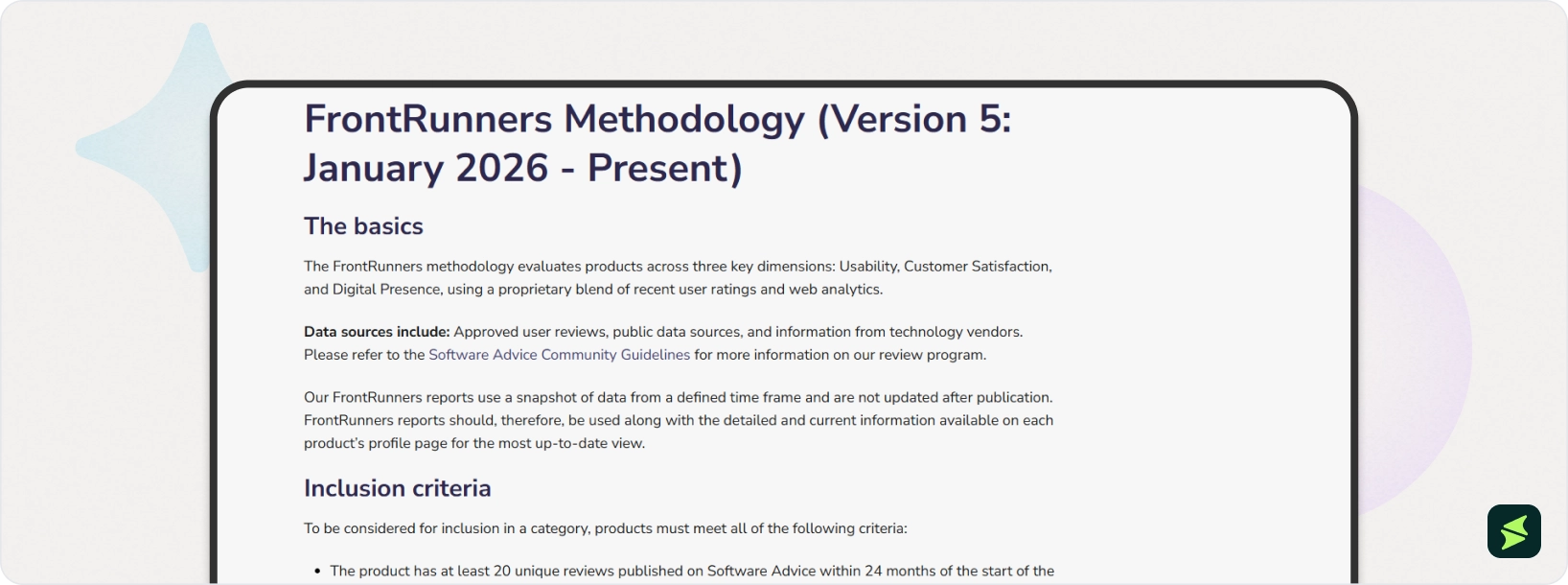
But the real differentiator is the advisory layer sitting on top of that catalog. The platform also publishes FrontRunners reports, a quadrant-style ranking within specific software categories that plots products by usability and customer satisfaction scores, giving buyers a quick comparative snapshot before they dive deeper.
The advisor consultation model is what makes Software Advice genuinely different in practice. For buyers who find self-serve research exhausting, particularly those evaluating software for the first time or operating in a category with dozens of credible options, having a human on the other end of the process is a meaningful value-add.
It's worth being clear-eyed about what that interaction is, though: advisors are working from the same vendor catalog that pays for placement on the platform, so the recommendations aren't entirely neutral. That said, for buyers who want a structured starting point with a real conversation rather than an algorithm, it's a useful resource.
Software Advice works best for buyers who want a guided entry point into an unfamiliar software category, particularly SMBs that don't have a dedicated IT or procurement function to run the evaluation internally. The consultation features reduce the research burden, and the FrontRunners reports offer a reasonable at-a-glance benchmark for competitive categories. That said, it's important to go in with clear expectations: this is not an independent research platform.
The shared Gartner database and the advisor-led recommendations all operate within a commercially structured environment. Use it as a starting accelerator, not a final authority, and cross-reference what you find here against a platform with stricter review of independence before closing out your shortlist.

GetApp rounds out the Gartner Digital Markets trio, alongside Capterra and Software Advice, and that lineage is the single most important thing to understand before evaluating it on its own merits. Launched in 2010 and acquired by Gartner in 2015, and later acquired by G2 from Gartner, GetApp was originally built for small business buyers navigating the then-emerging world of cloud-based software.
That origin still shapes its positioning today: the platform skews toward SaaS-first buyers, emphasizes integrations and app connectivity, and presents itself as a discovery tool for teams that live and work in cloud ecosystems.
GetApp offers the following main sections when you open a software reviews page:
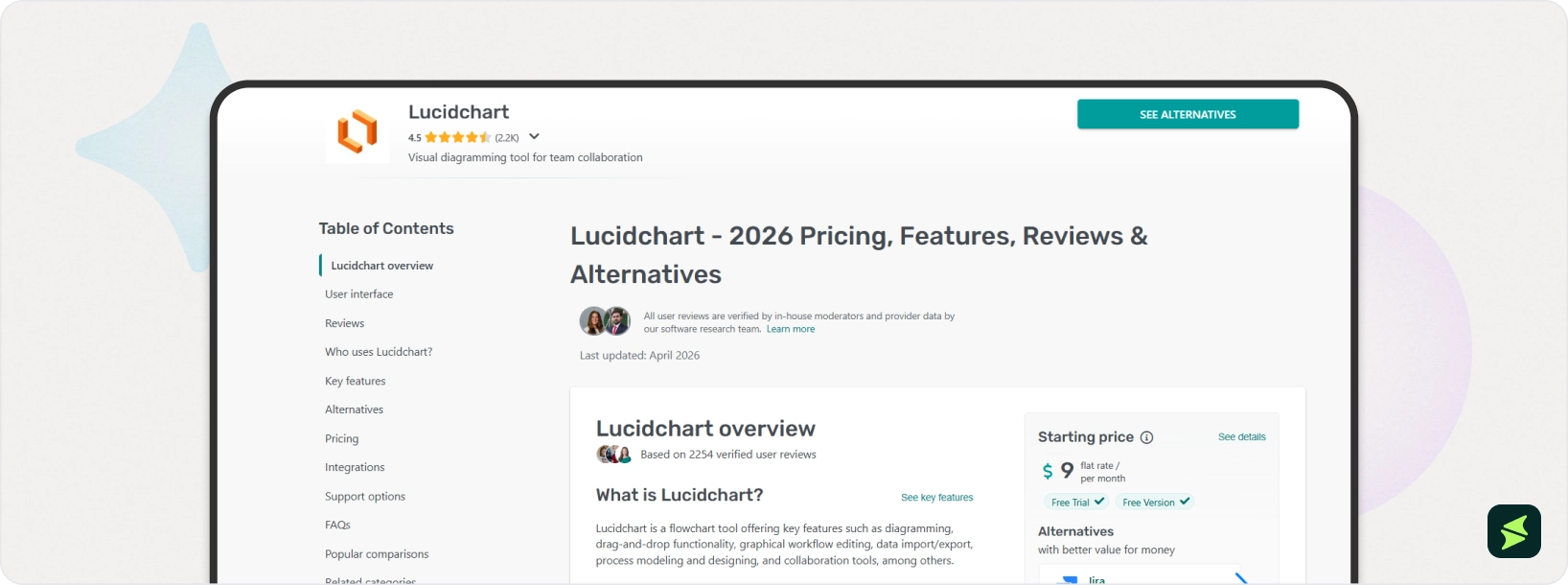
Look a little closer, and the SaaS-specific framing becomes more apparent. Each listing prominently features an integrations tab that maps out which tools a product connects with natively, which is genuinely useful for buyers who are building or maintaining a software stack and need to know what plays well together.
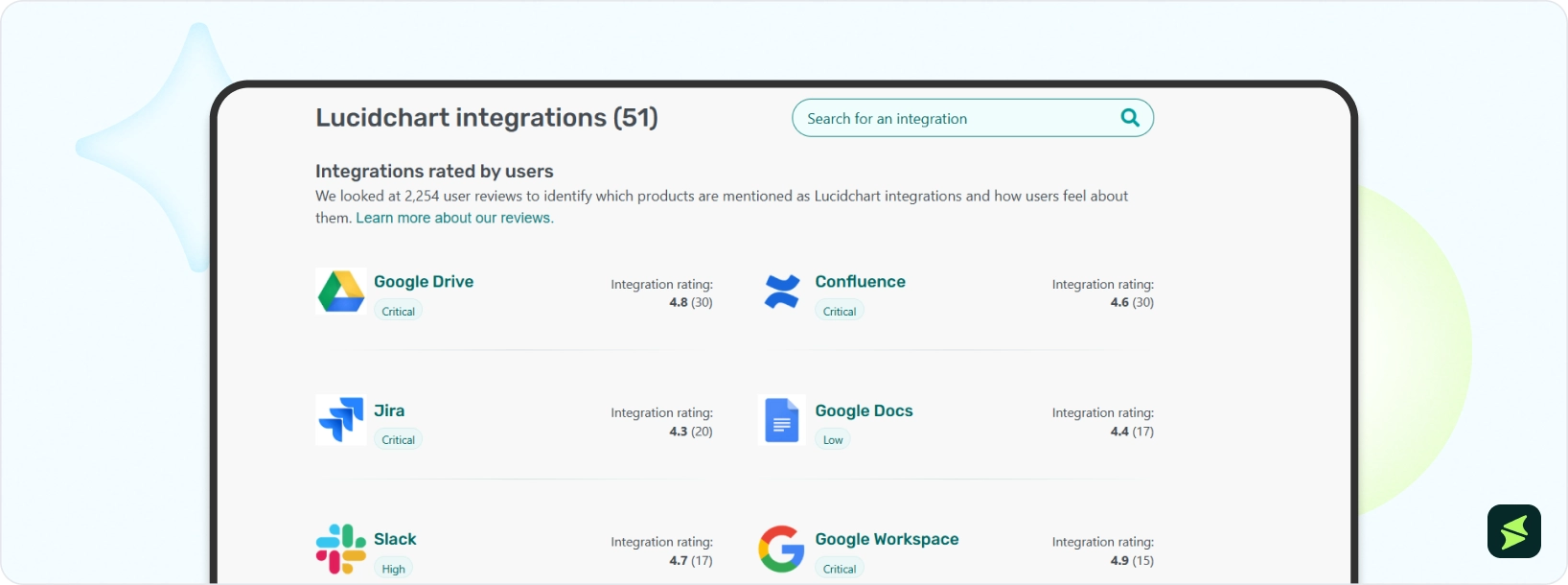
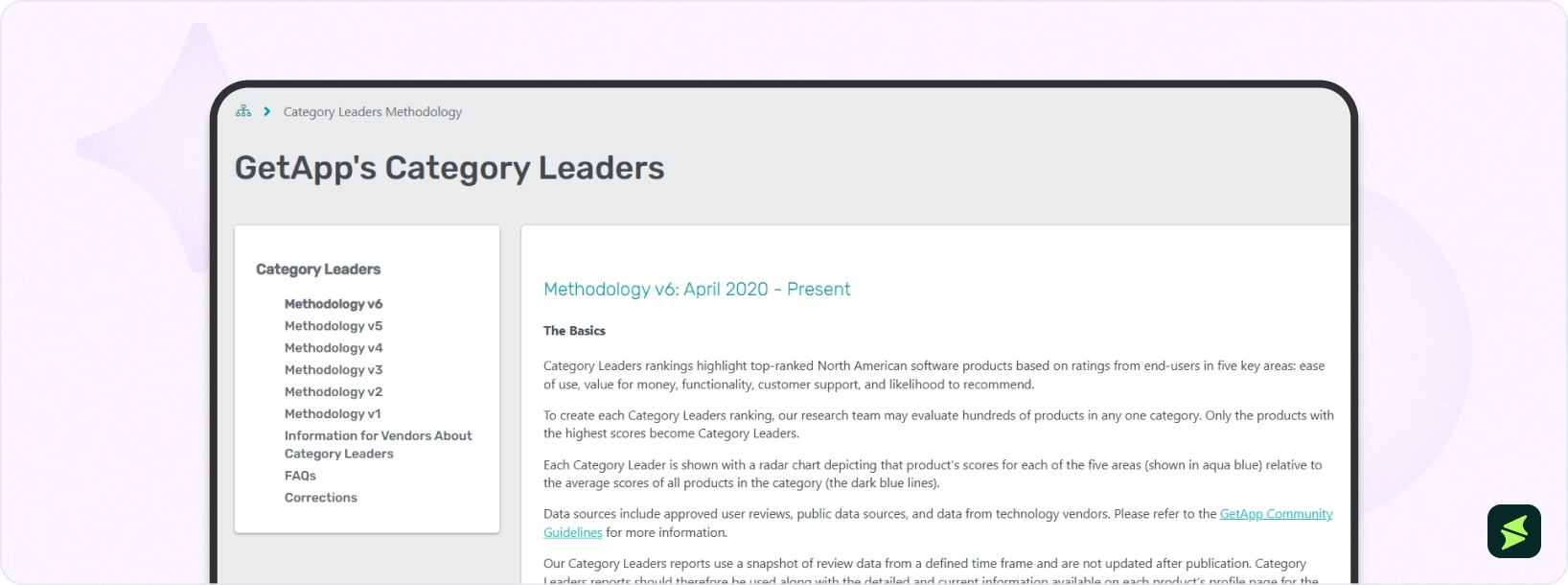
GetApp also publishes Category Leaders reports; quarterly rankings within software categories scored on user reviews, security, and market presence, that provide a structured benchmark for buyers shortlisting options in competitive spaces.
For buyers whose primary concern is software compatibility, whether a new tool will slot cleanly into an existing stack of apps, GetApp's integrations-forward design is a practical advantage over platforms that treat connectivity as an afterthought.
GetApp skews toward buyers evaluating software for integration into existing workflows, so reviews tend to engage with specifics like API reliability, webhook behavior, and stack compatibility rather than surface-level impressions.
GetApp is a solid resource for cloud-first and SaaS-heavy buying decisions, particularly when integration compatibility is a priority in the evaluation. The Category Leaders reports offer a reasonable directional shortlist, and the integrations tab saves meaningful research time in the middle stages of an evaluation. GetApp's lens is SaaS and integrations; use it for that specific angle and move on.
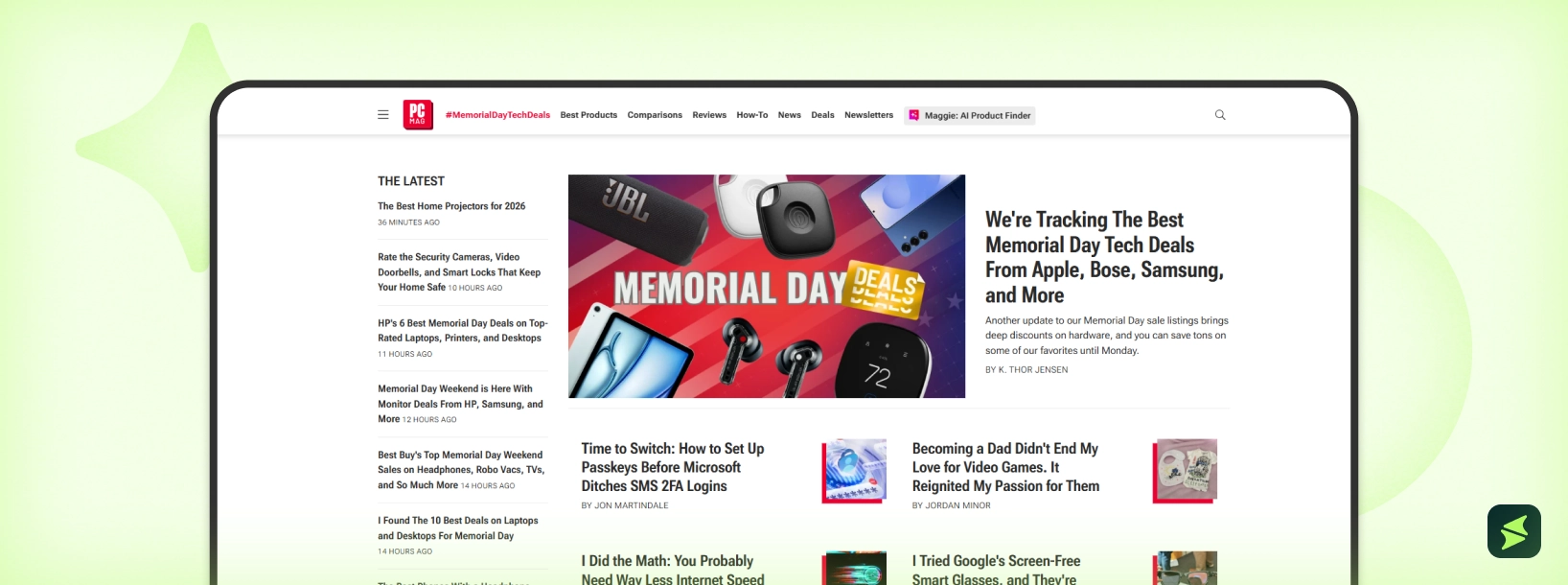
PCMag deals with something entirely different from everything else on this list. It's editorial journalism, not peer aggregation. Founded in 1982 as a print publication and evolving into one of the most recognized technology media brands on the internet, PCMag brings an editorial journalism model to software evaluation rather than a user-generated review model.
PCMag's credibility rests on the quality and independence of its in-house testing and analysis. It's less a review marketplace and more of a trusted technology publication that happens to cover software extensively.
PCMag's software coverage is built around hands-on, expert-tested reviews written by staff editors and analysts who actually use the products they evaluate. Each review follows a structured format, covering features, performance, interface, pricing, and competitive alternatives, and concludes with a clear verdict and a numerical score out of five.
The platform also publishes curated best of lists within specific software categories, which rank products based on editorial testing rather than user vote counts or advertising spend. For buyers who want a professional editorial opinion rather than a crowd-sourced consensus, these lists are a reliable reference point.
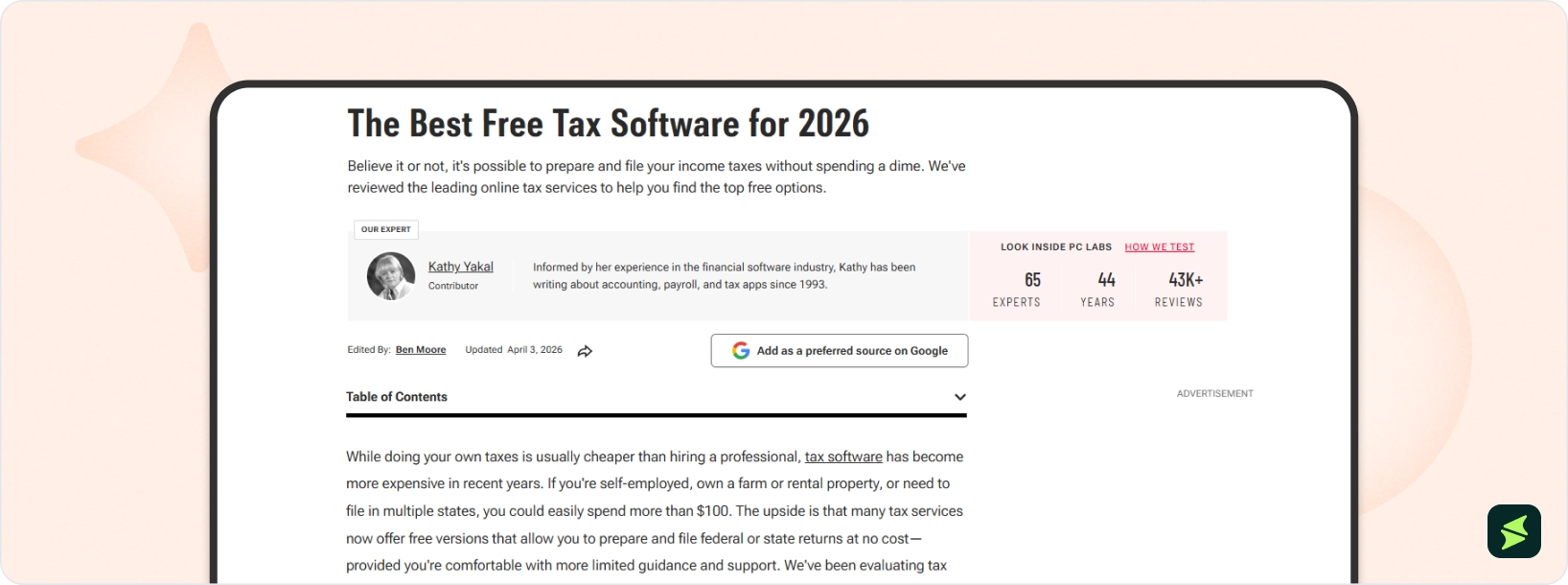
The editorial independence model gives PCMag a credibility profile that user-generated platforms can't fully replicate. A reviewer at PCMag isn't a customer who was nudged to leave feedback via a post-purchase email; they're a technology professional who has benchmarked the product against its competitors and is accountable to an editorial standard. Buyers can also find awards on the website to see which software names made it to the list and why.
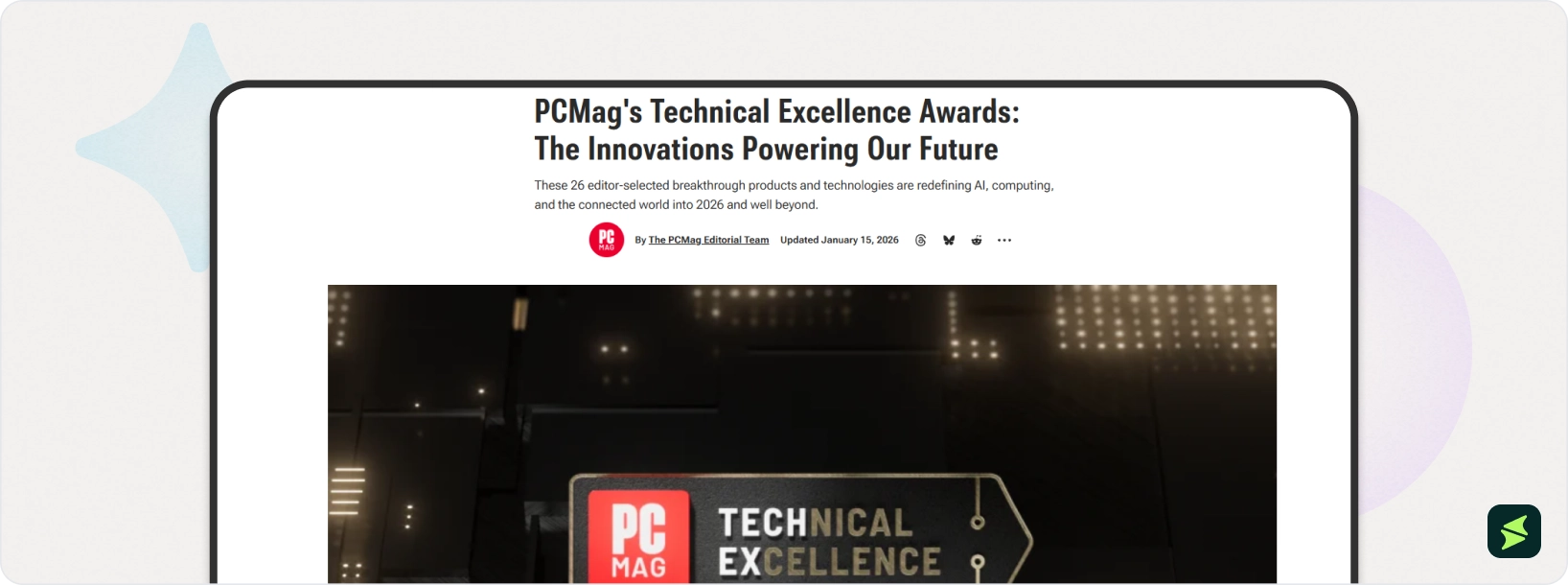
For software categories where the technical nuance is high, security tools, productivity suites, creative software, or developer platforms, that expertise translates into review content that goes meaningfully deeper than what most peer review aggregators surface. PCMag also maintains clear editorial and advertising separation, which is disclosed transparently on the site.
PCMag belongs in your research stack as an expert editorial counterweight to the crowd-sourced platforms, not as a replacement for them. The hands-on reviews are thorough and technically credible, and the best of lists are a reliable shortlisting tool when you want a professional opinion rather than a popularity contest.
Where it falls short is volume and recency in niche categories; PCMag's editorial team can only cover so many products, and if you're evaluating a specialized vertical tool, you may find the coverage thin or dated. The sweet spot is mainstream, broadly adopted software, productivity, security, collaboration, and business operations, where PCMag's editorial depth is at its most useful.
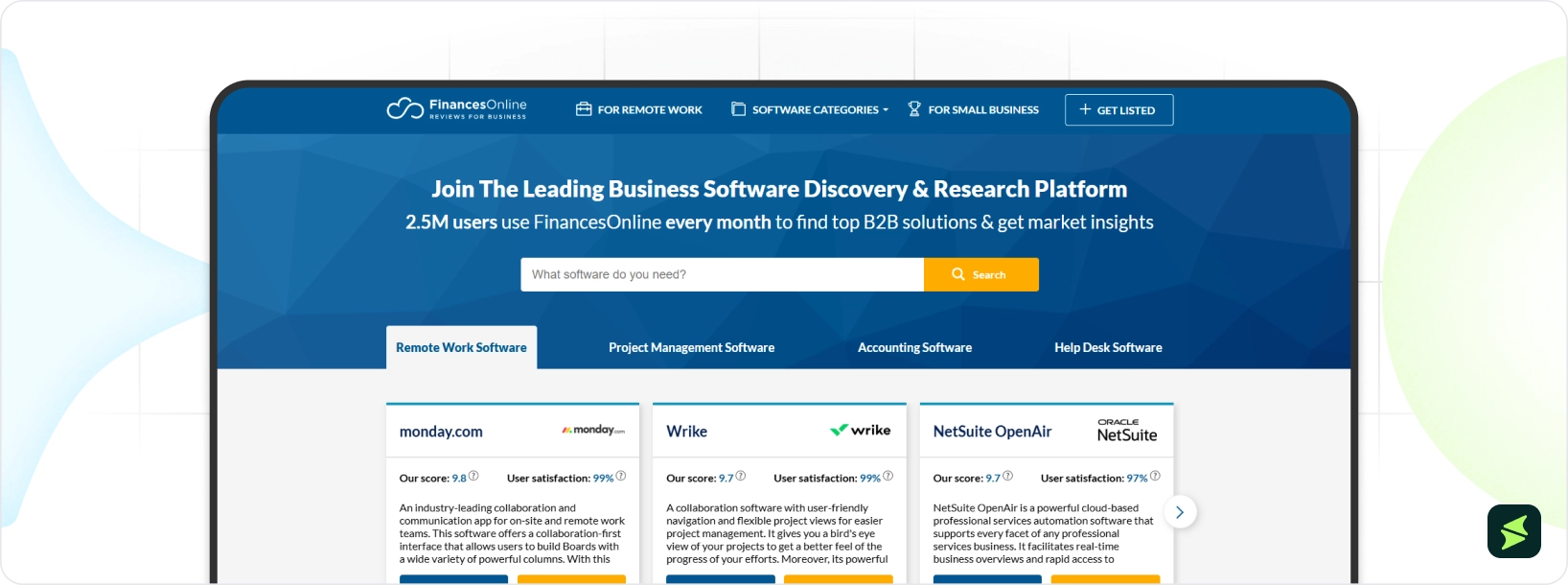
FinancesOnline doesn't carry the same brand recognition as G2 or Capterra, but it has quietly built a substantial presence in the software review space, particularly among SMB buyers researching financial, HR, and business management tools.
Founded in 2011 and headquartered in Europe, the platform has grown into one of the larger independent software review directories, listing over 5,000 products across dozens of categories. It occupies an interesting middle ground: more editorially structured than a pure user-generated platform.
FinancesOnline structures its product pages around a combination of expert-written analysis and aggregated user reviews, giving each listing a dual-layered perspective. The platform assigns products a SmartScore. It is a proprietary composite rating that factors in user satisfaction, functionality, collaboration features, and customer support quality. Moreover, a separate user satisfaction score is derived from actual reviewer feedback.
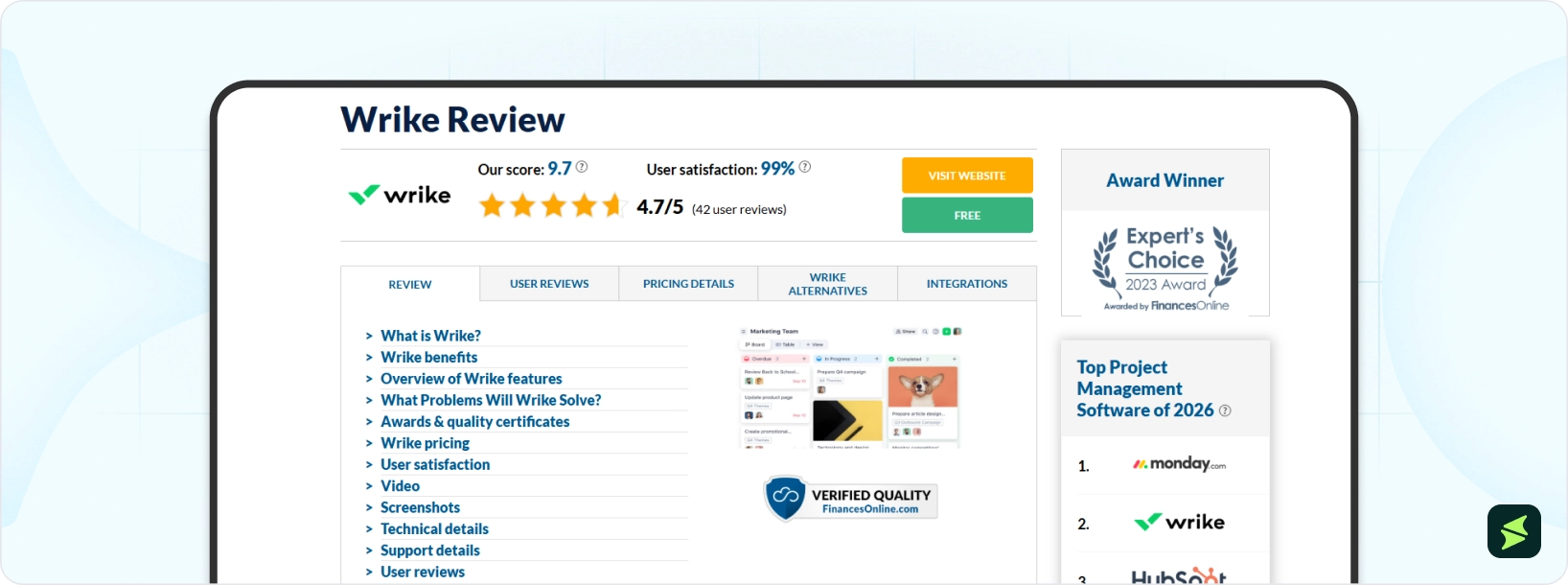
This two-score system gives buyers a quick way to identify whether a product's expert assessment and real-world user experience are aligned or diverging, which is a more nuanced signal than a single star rating. FinancesOnline also publishes detailed category comparisons and maintains a Supreme Software Award and Great User Experience Award system that recognizes top-performing products within their verticals.
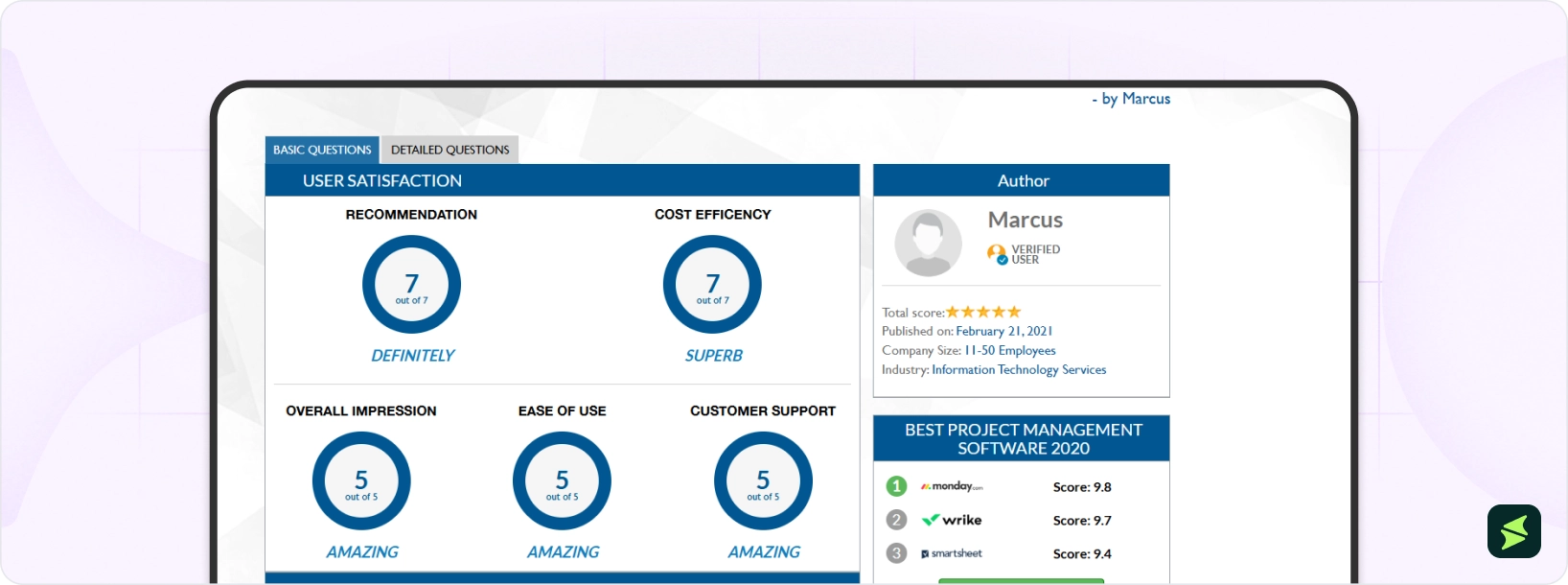
By separating the expert assessment from the user satisfaction score, FinancesOnline makes it easier to spot products that review well technically but frustrate users in practice, or conversely, products that have passionate user bases despite modest feature sets.
For buyers who want a more analytical entry point into a category comparison, dual-score framing is a genuinely useful lens. The platform's coverage of financial and accounting software in particular tends to be more thorough than what generalist platforms offer.
FinancesOnline is worth consulting when you're evaluating business management, financial, or HR software and want something beyond a raw user rating to orient your comparison. The SmartScore framework adds an analytical structure that most platforms lack, and the expert-written overviews provide useful context for buyers who are newer to a particular software category.
Some listings are rich and current; others haven't been meaningfully updated in some time. Treat it as a strong supplementary source rather than a primary research destination, and cross-reference anything you find here against a higher-volume platform before drawing firm conclusions.
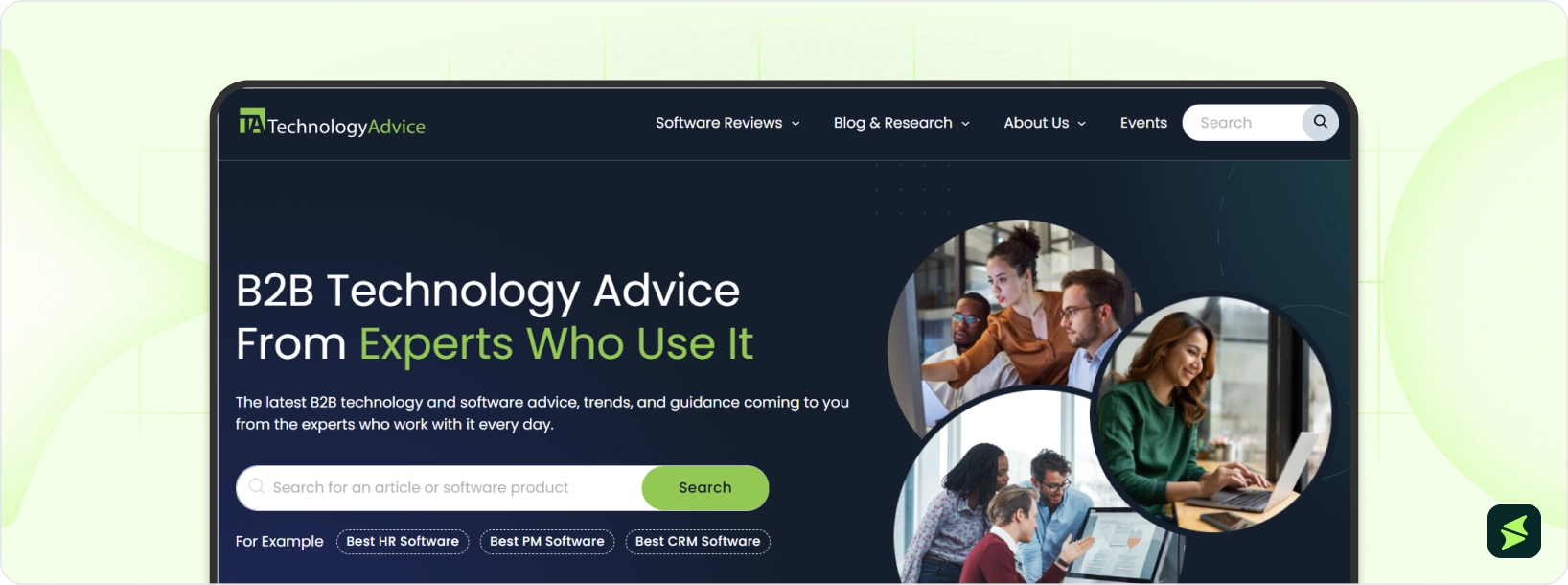
TechnologyAdvice occupies a lane that's easy to overlook but worth understanding, particularly for buyers who are still early in their evaluation and aren't sure where to begin. Founded in 2006 and headquartered in Nashville, Tennessee, the platform operates as a hybrid between a software review directory and a B2B media company.
It publishes editorial content, produces original research, and maintains a software catalog, but its core business model is built around buyer-vendor matching, connecting companies actively researching software with vendors looking for qualified leads. That dual role shapes the experience in ways buyers should be aware of going in.
TechnologyAdvice product listings follow a clean, accessible format, category overviews, product summaries, feature breakdowns, and user reviews, but the platform's real depth lies in its editorial content layer. The site publishes extensively across technology categories: buyer guides, product comparisons, industry trend reports, best-of articles, and how-to content written by in-house editors and subject matter contributors.
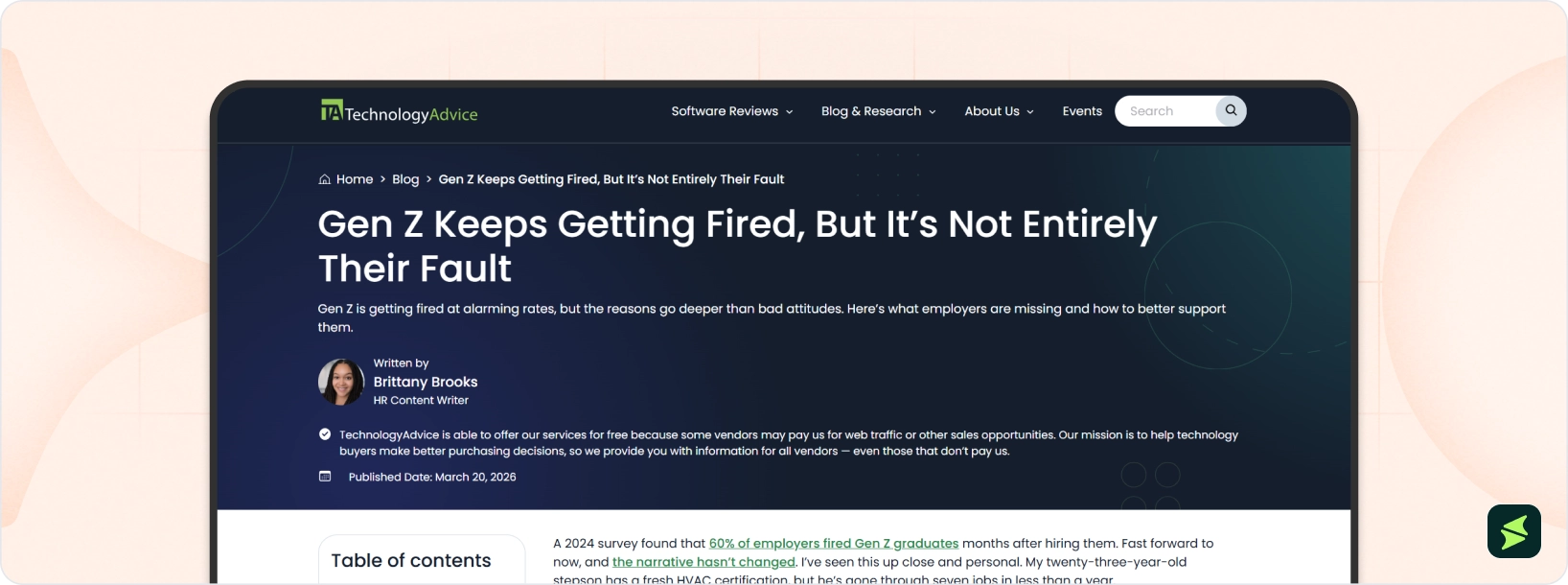
This makes TechnologyAdvice function as much as a research publication as a review directory. The platform also operates a lead generation matching service for vendors, where buyers who submit inquiries are connected with relevant software providers, a model that's common in this space but worth understanding as part of the overall picture.
What makes TechnologyAdvice more useful than its profile might suggest is the quality and breadth of its editorial output. The buyer's guides in particular tend to be well-researched and category-specific, covering not just which products exist but how to think through the evaluation process itself, what features matter, what questions to ask vendors, and what implementation challenges to anticipate.
For a first-time buyer in an unfamiliar category, that kind of structured guidance has real value. The platform covers a wide range of technology verticals, including HR, marketing, sales, IT management, and cybersecurity, with enough editorial depth in each to serve as a credible orientation resource.
TechnologyAdvice is most valuable as an educational and orientation resource rather than a deep review platform. If you're entering a new software category and want structured guidance on how to evaluate your options before you start reading individual product reviews, the editorial content here is genuinely worth your time.
The buyer guides are thorough, the category coverage is broad, and the writing reflects a level of research investment that goes beyond what most directories produce. Where it falls short is review depth and volume; the user-generated review base isn't as robust as others, which limits its usefulness as a peer validation tool at the later stages of an evaluation. Use TechnologyAdvice to get oriented and educated early, then move to a higher-volume platform when you're ready to pressure-test your shortlist against real user experience.
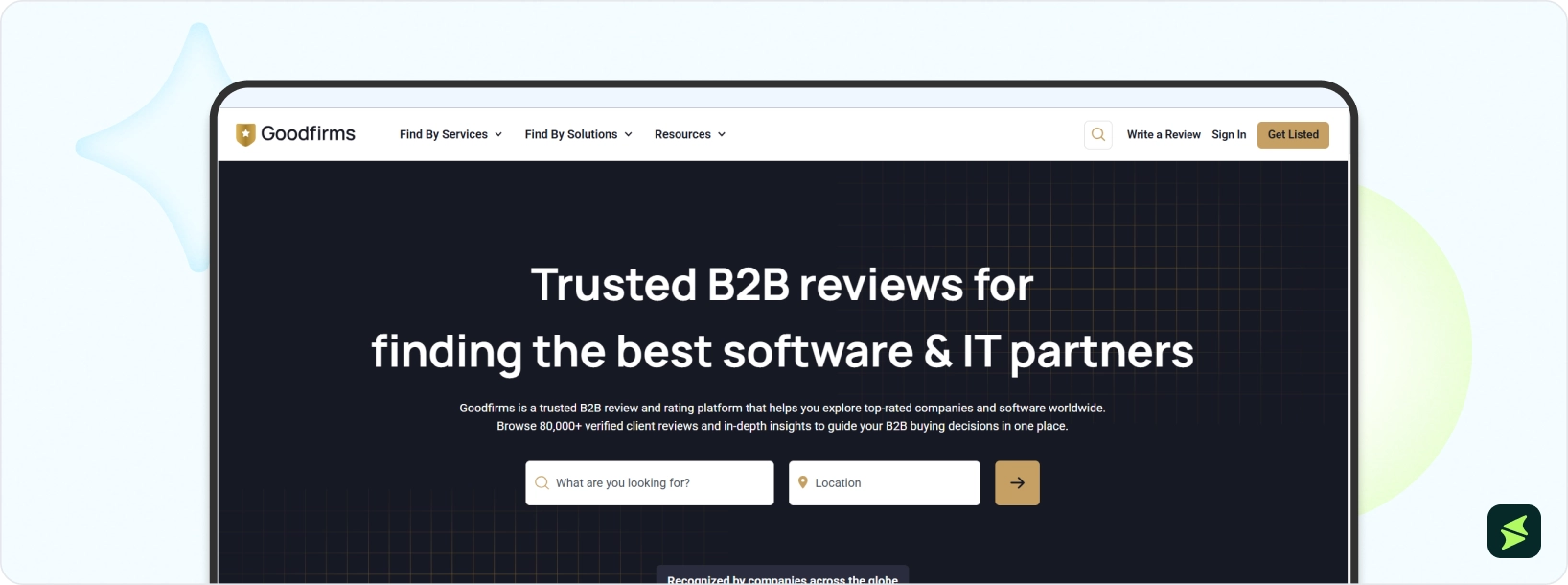
GoodFirms sits in a distinct corner of the software review landscape, one that most buyers stumble across rather than seek out deliberately, but find genuinely useful when they do. Founded in 2014 and headquartered in Washington, D.C., GoodFirms was built around a specific gap in the market: credible, research-backed evaluations of software companies and IT service providers for buyers.
That dual focus, software, and the agencies or development firms that build and implement it, give GoodFirms a profile that few other platforms on this list can match.
GoodFirms structures its listings around two parallel catalogs: software products and service companies, covering development agencies, IT consultancies, digital marketing firms, and outsourcing providers alongside the tools they build or implement. Each software listing includes:
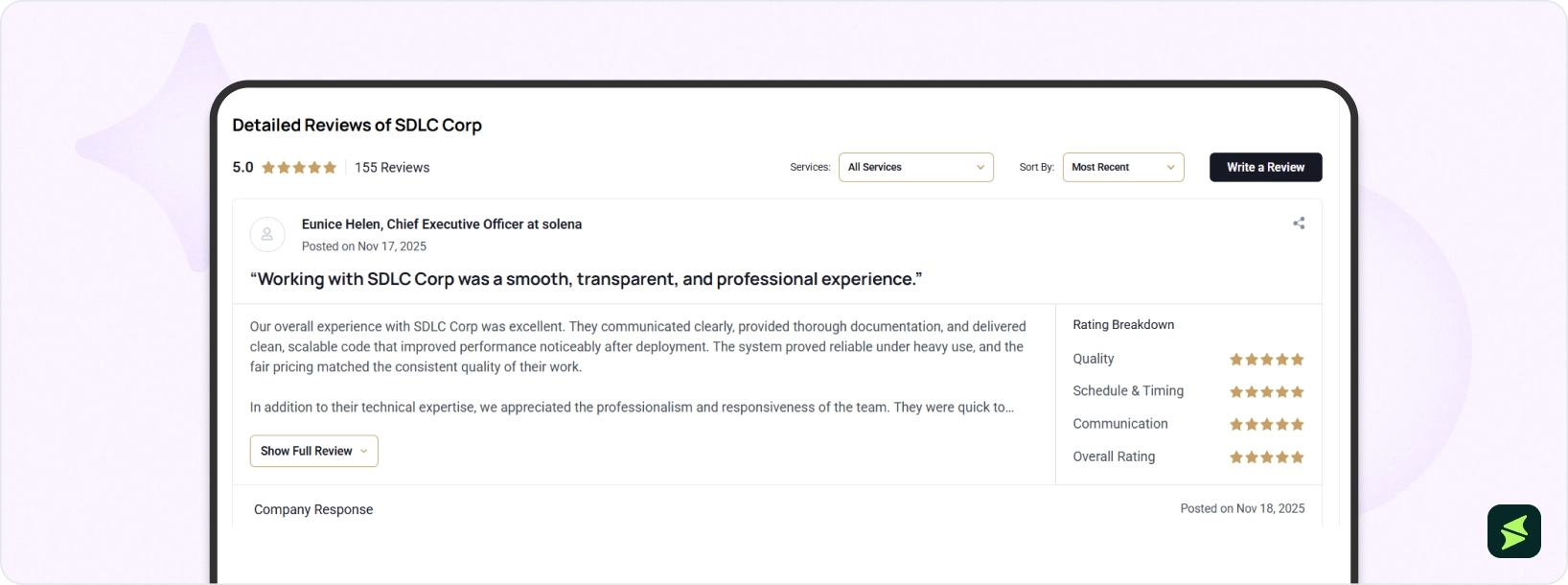
A GoodFirms Score factors in research quality, market presence, and client feedback.
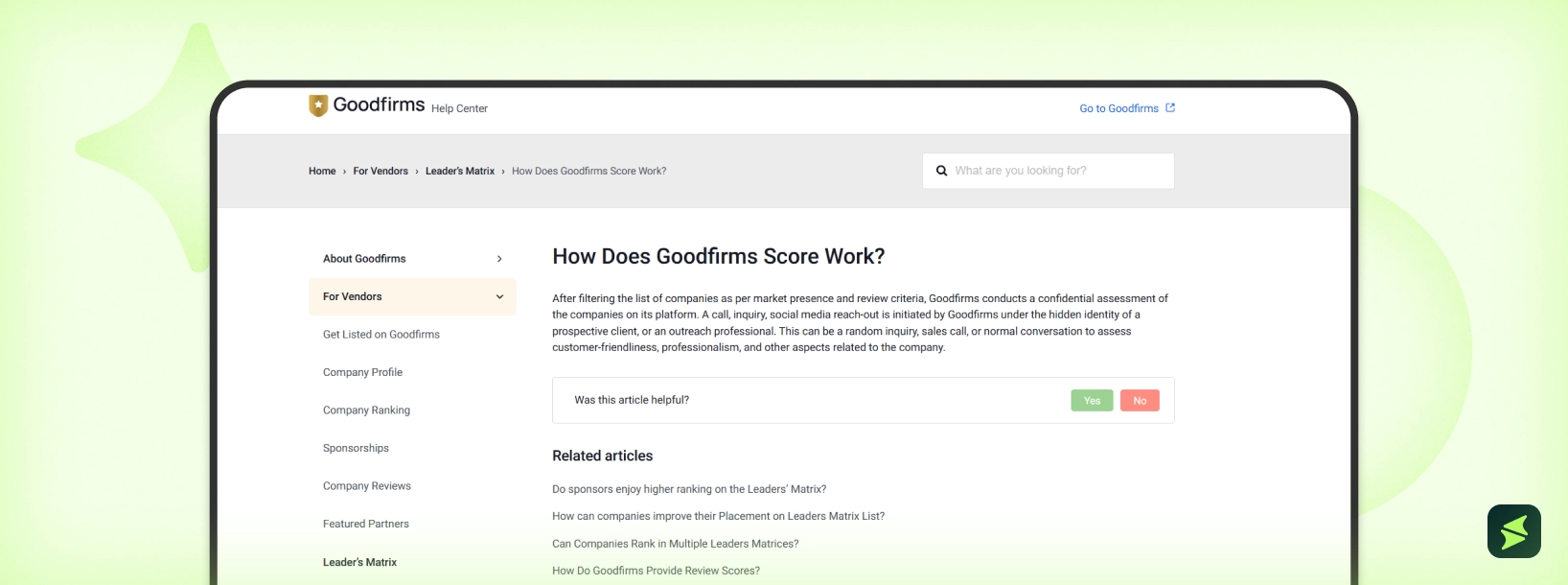
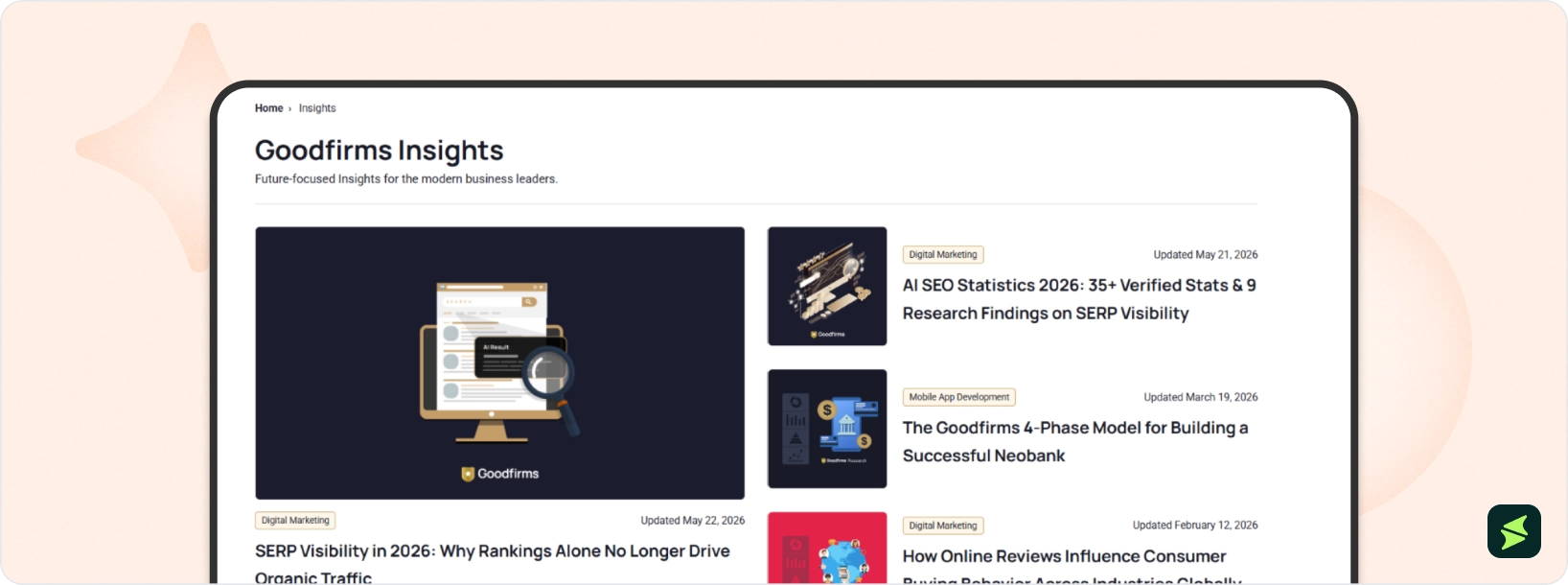
Beyond individual listings, the platform publishes original research reports covering technology adoption trends, software buying behavior, and industry benchmarks, content that goes meaningfully beyond what a standard review directory produces and positions GoodFirms as a research resource as much as a discovery tool.
The service provider catalog is what genuinely differentiates GoodFirms from every other platform on this list. Most platforms focus exclusively on software products because most software decisions and implementation partner decisions are separate processes. GoodFirms recognizes that a significant portion of software buyers also need implementation partners, development resources, or consulting support to make a purchase decision work in practice.
That broader scope makes it particularly valuable for enterprise buyers and organizations to evaluate complex software deployments where vendor selection and implementation partner selection happen simultaneously. The research reports add another credibility layer, covering topics like remote work software adoption, cybersecurity trends, and SaaS buying patterns with a level of analytical rigor that most directories don't attempt.
GoodFirms is an underutilized resource that rewards buyers who take the time to explore it properly. For organizations evaluating software that requires significant implementation work, ERP systems, custom development platforms, enterprise CRMs, or complex infrastructure tools, the ability to evaluate both the product and potential implementation partners in the same place is a meaningful time saver. The research reports are also worth bookmarking independently; they surface data-driven insights on technology adoption and buying behavior that are useful context for anyone making or justifying a software investment.
The main limitation is the review volume. The user-generated review base is smaller than the major platforms, and coverage in niche categories can be uneven. Treat GoodFirms as a specialist resource for complex, high-investment evaluations rather than a general-purpose discovery tool, and its value becomes much clearer.
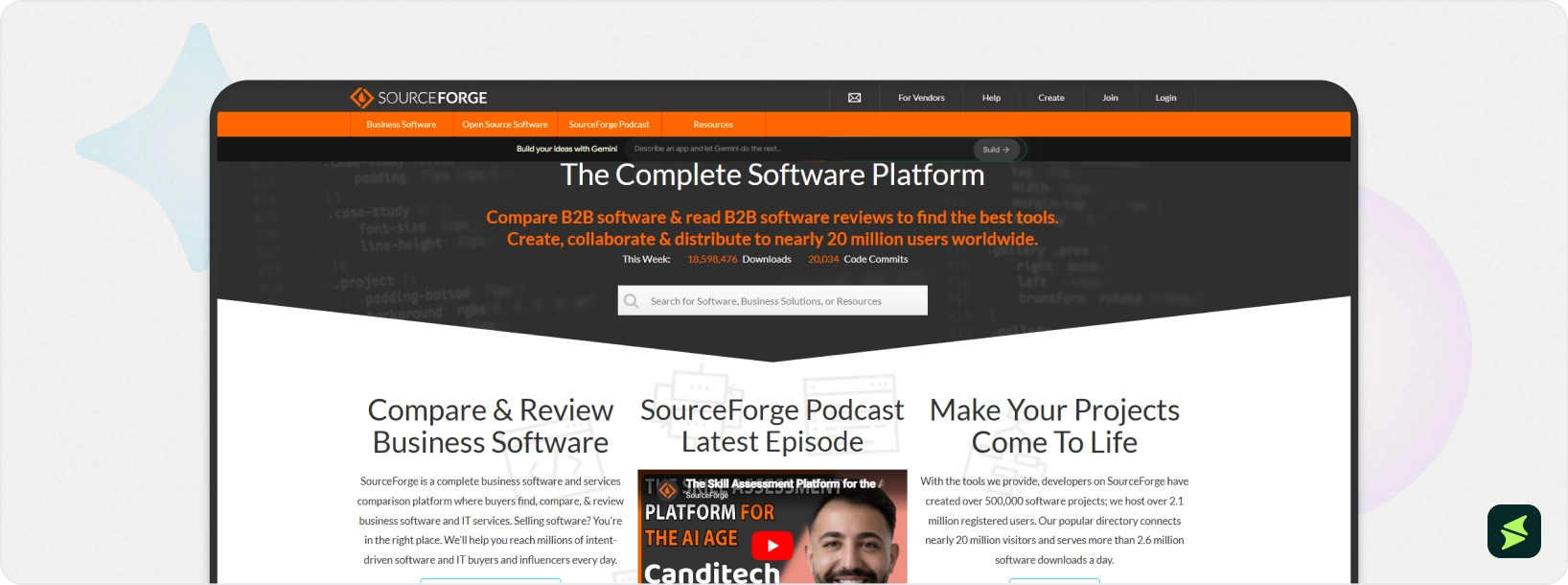
SourceForge is the oldest platform on this list by a considerable margin, and its history is inseparable from how the software world itself has evolved. Founded in 1999, SourceForge was originally built as a repository and collaboration hub for open-source software development, a place where developers could host, share, and contribute to projects before GitHub existed and before the ‘software review site’ was even a recognized category.
That origin story still defines its identity today: SourceForge remains deeply rooted in the open-source and developer community, and that heritage gives it a credibility profile in those circles that no other platform on this list can claim.
SourceForge hosts over 500,000 open-source projects and has accumulated a substantial library of user reviews across both free and commercial software. Product listings include:
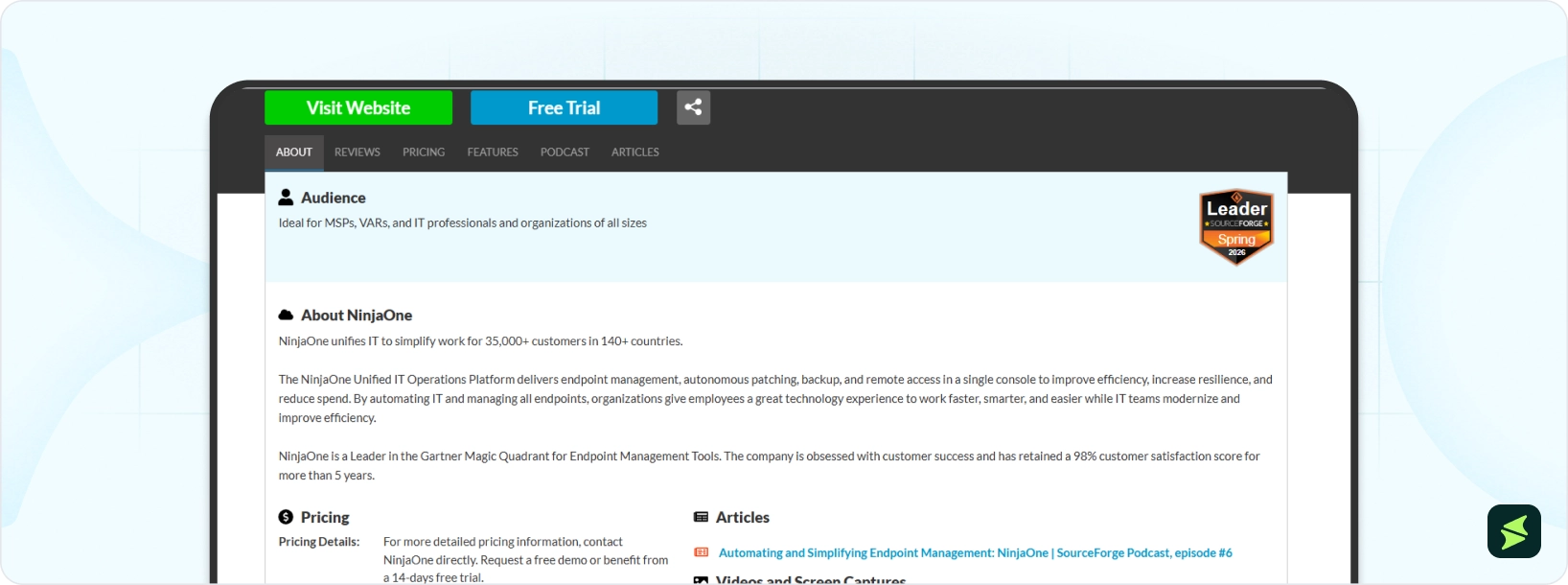
The platform also features a compare tool that lets buyers stack products side by side across features and user scores, and publishes curated best of category lists that surface top-rated products within specific software verticals. For open-source projects specifically, SourceForge remains one of the most comprehensive discovery and evaluation resources available anywhere.
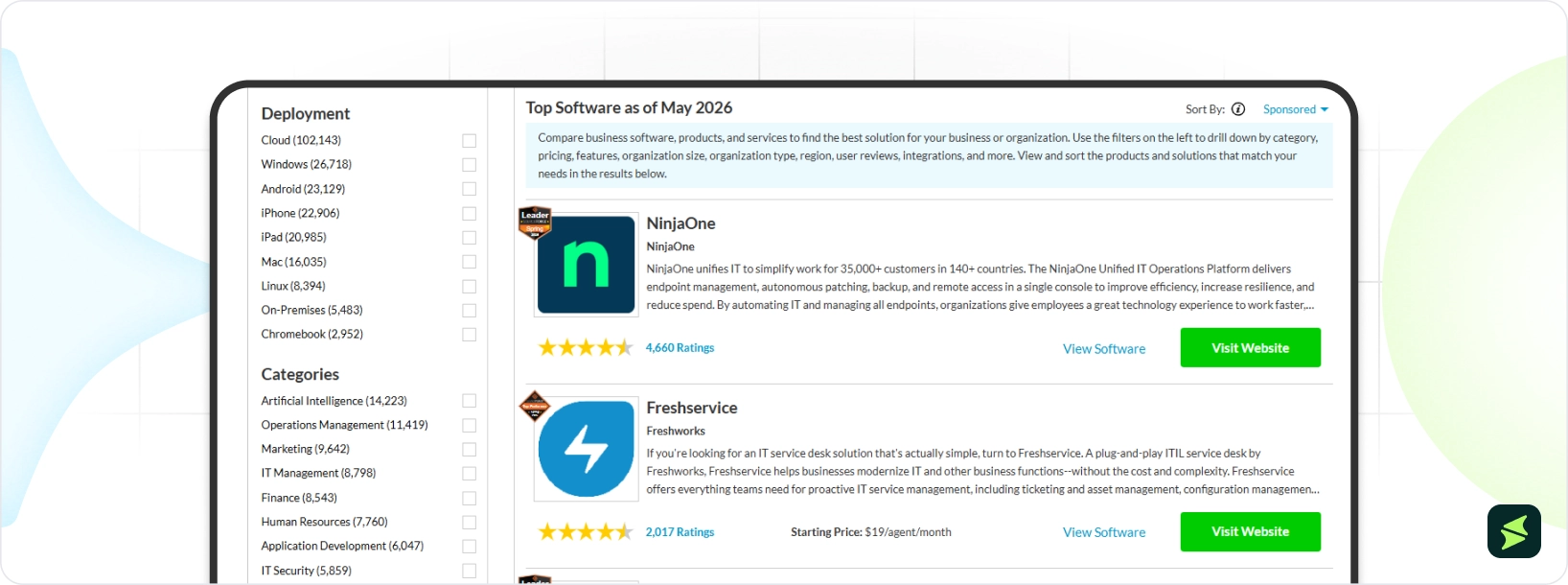
The depth of open-source coverage is the defining characteristic that sets SourceForge apart from every other platform on this list. For IT teams, developers, and technically sophisticated buyers who want to evaluate open-source alternatives alongside commercial products, or who are specifically looking to build on open-source infrastructure. The software reviews page is an in-depth guide where readers can learn about various important functions.
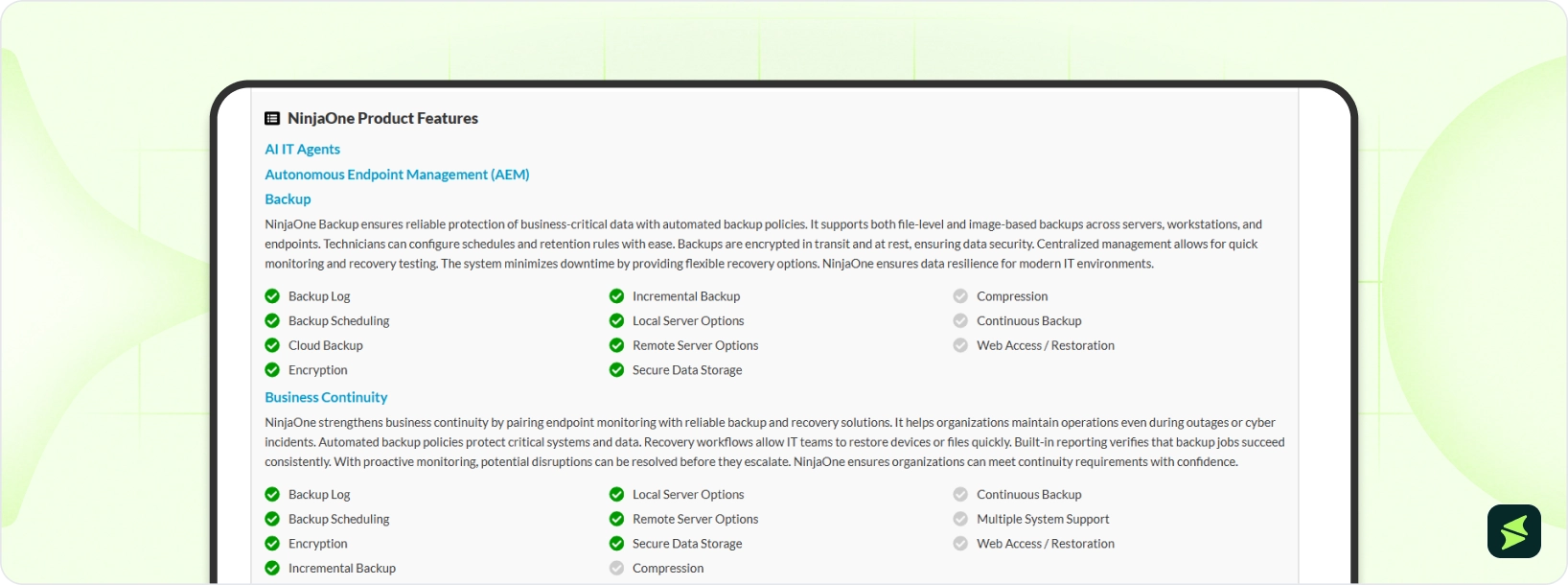
The download statistics add a transparency dimension that's rare in the review space. Rather than relying purely on user sentiment, buyers can assess how actively a project is being maintained and how widely it has been adopted in practice.
SourceForge is an essential stop for technically oriented buyers evaluating open-source or developer-facing tools, and a genuinely useful supplementary resource for anyone who wants to understand the open-source landscape alongside their commercial shortlist. The review volume for mainstream business software is lower than that of the major platforms, and the interface reflects its age in ways that can feel dated.
But for the right buyer profile, developers, IT architects, open-source advocates, or organizations with strong in-house technical capacity, SourceForge carries a community credibility that no amount of design polish can manufacture. If open-source is on the table as a serious option in your evaluation, this platform belongs to your research stack without question.
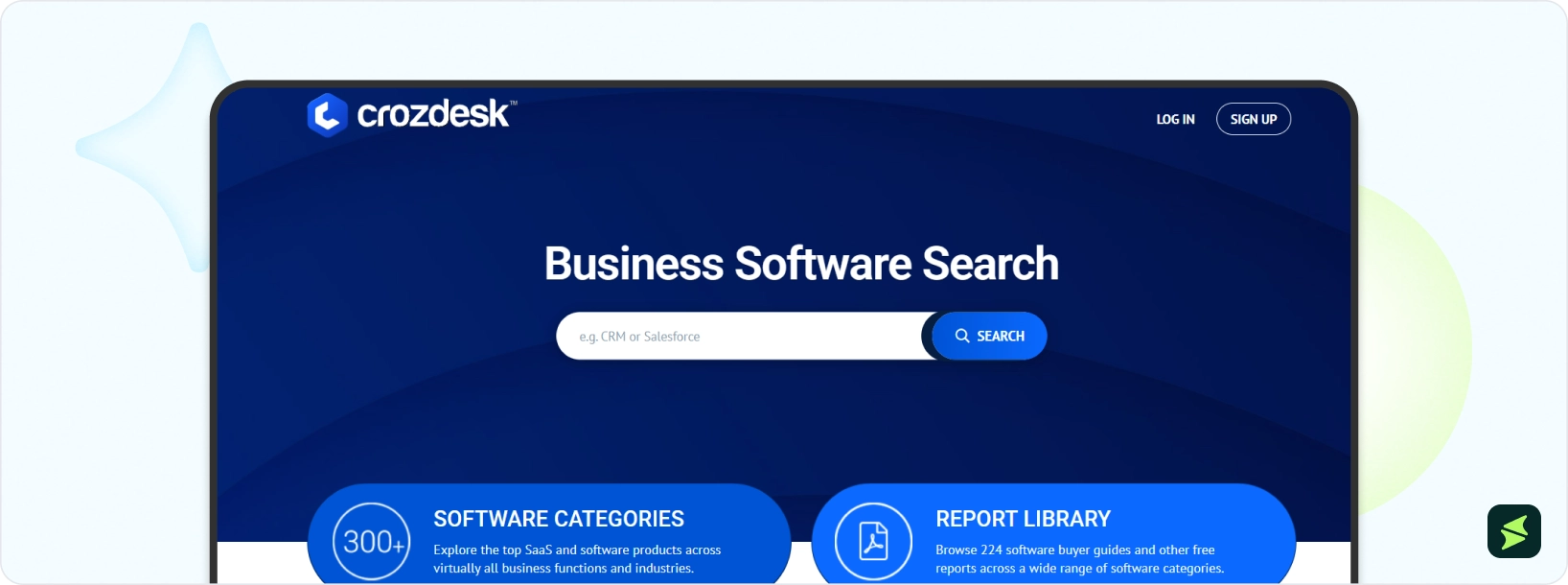
Crozdesk is one of the less prominently discussed platforms on this list, but it has built something genuinely thoughtful for buyers who want more analytical structure in their software search. Founded in 2013 and headquartered in London, Crozdesk positions itself as an intelligent software discovery platform, one that leans into data-driven matching and comparative analysis rather than simply presenting a catalog of listings and leaving buyers to figure it out.
It's a smaller platform by traffic and review volume, but the product experience reflects a level of design intentionality that larger, more established directories have been slow to match.
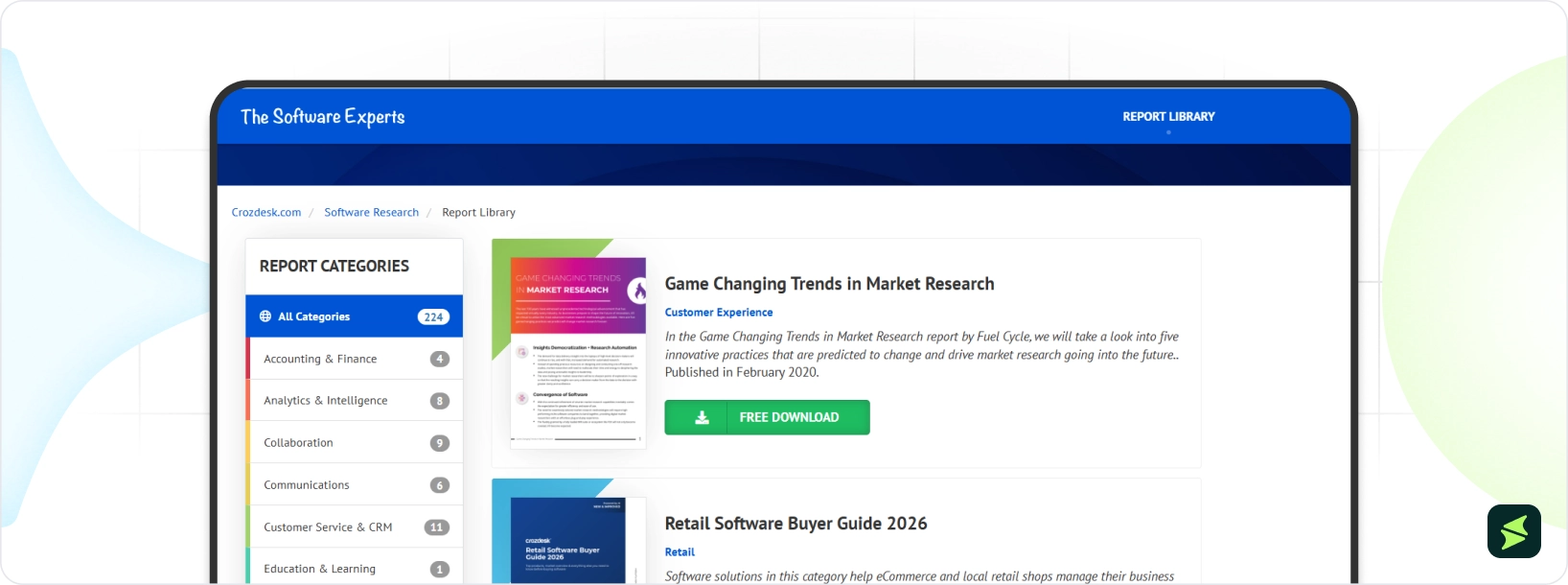
Buyers get access to expert reviews, side-by-side comparisons, and AI-powered recommendations across hundreds of software categories, all for free. The platform's report library adds further depth, offering over 200 downloadable buyer guides and whitepapers written by senior software analysts, covering everything from market overviews to ranked product lists.
Vendors, meanwhile, can list their products at no cost and gain visibility through Crozdesk's annual Software Awards, Market Radars, and buyer guide inclusions, making it a two-sided platform where discovery and credibility go hand in hand.
The guided discovery model is where Crozdesk earns its differentiation. Most review platforms are built around the assumption that buyers already know what they're looking for; they just need help comparing options within a defined category. Crozdesk takes a step back from that assumption and tries to help buyers define the right category and criteria before they start comparing.
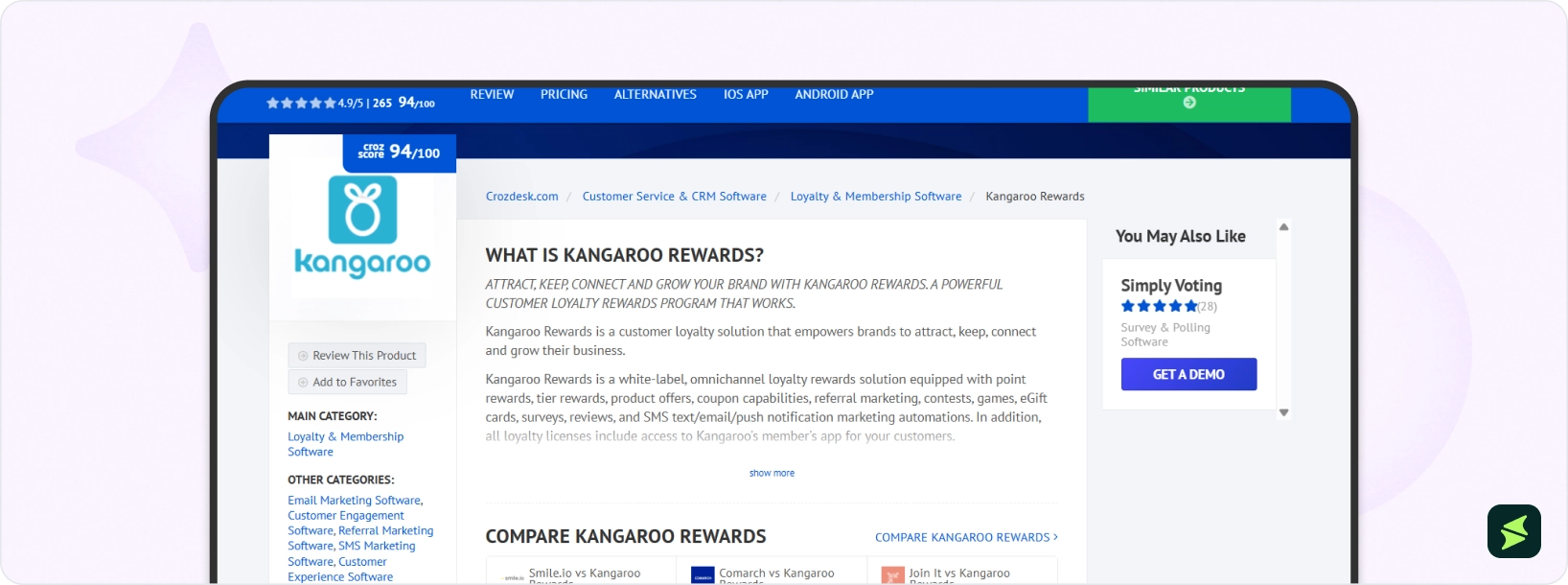
For SMB buyers in particular, teams without a dedicated procurement function or IT department running the evaluation, that guided structure reduces the cognitive load of software research considerably.
Crozdesk is a platform that punches above its weight for early-stage software discovery, particularly for buyers who benefit from a more guided, structured research experience. The Finder tool is genuinely well-designed; the Crozscore adds useful comparative context, and the overall experience feels more considered than many larger directories that have grown without meaningfully rethinking their core buyer journey.
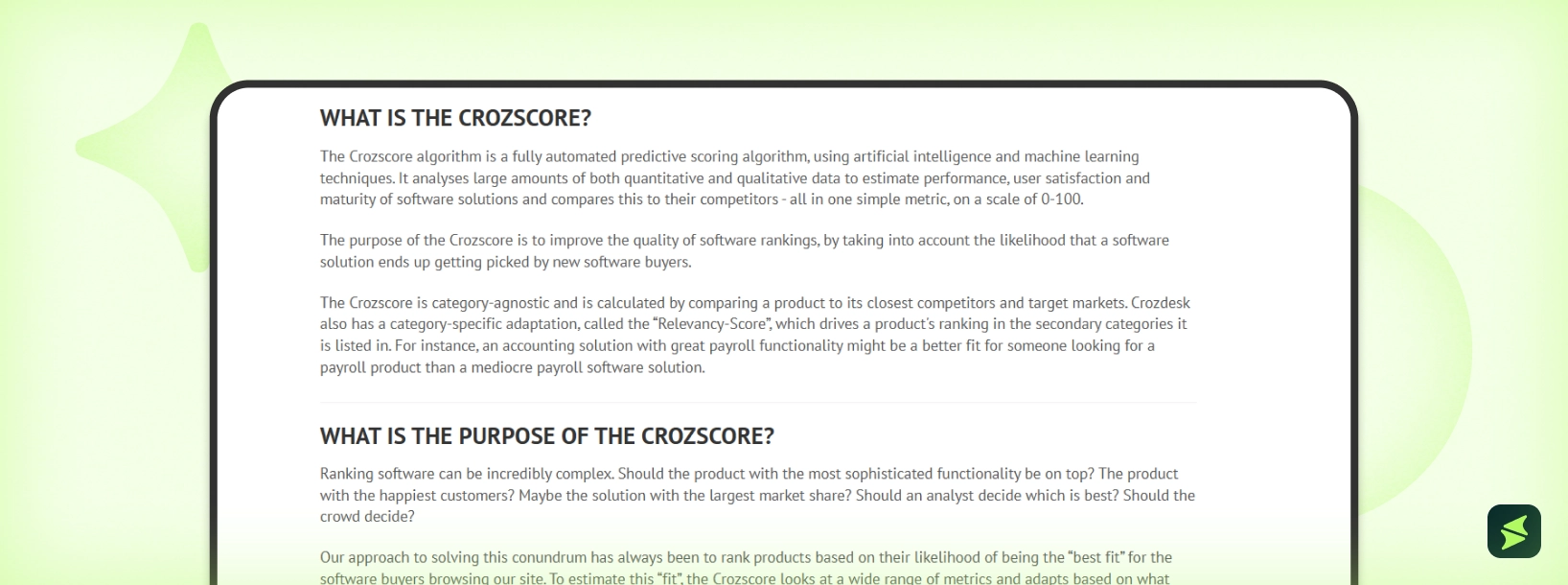
The main constraint is scale; review volume is modest compared to the major platforms, and vendor coverage in niche or highly specialized categories can be inconsistent. Where Crozdesk works best is a smart starting point for category orientation and initial shortlisting, after which buyers should move to a higher-volume platform.
Top Ten Reviews is editorial-first like PCMag, but with a fundamentally different approach; instead of in-depth technical reviews, it publishes ranked lists with clear verdicts designed for speed and decisiveness. Founded in 2003 and operating under the Future plc media umbrella, the same publishing group behind Tom's Guide and TechRadar, Top Ten Reviews brings a consumer journalism sensibility to software evaluation.
The name is straightforward about the format: best picks, head-to-head comparisons, and clear verdicts. For buyers who want a fast, editorially curated answer rather than hours of self-directed research, that directness has genuine appeal.
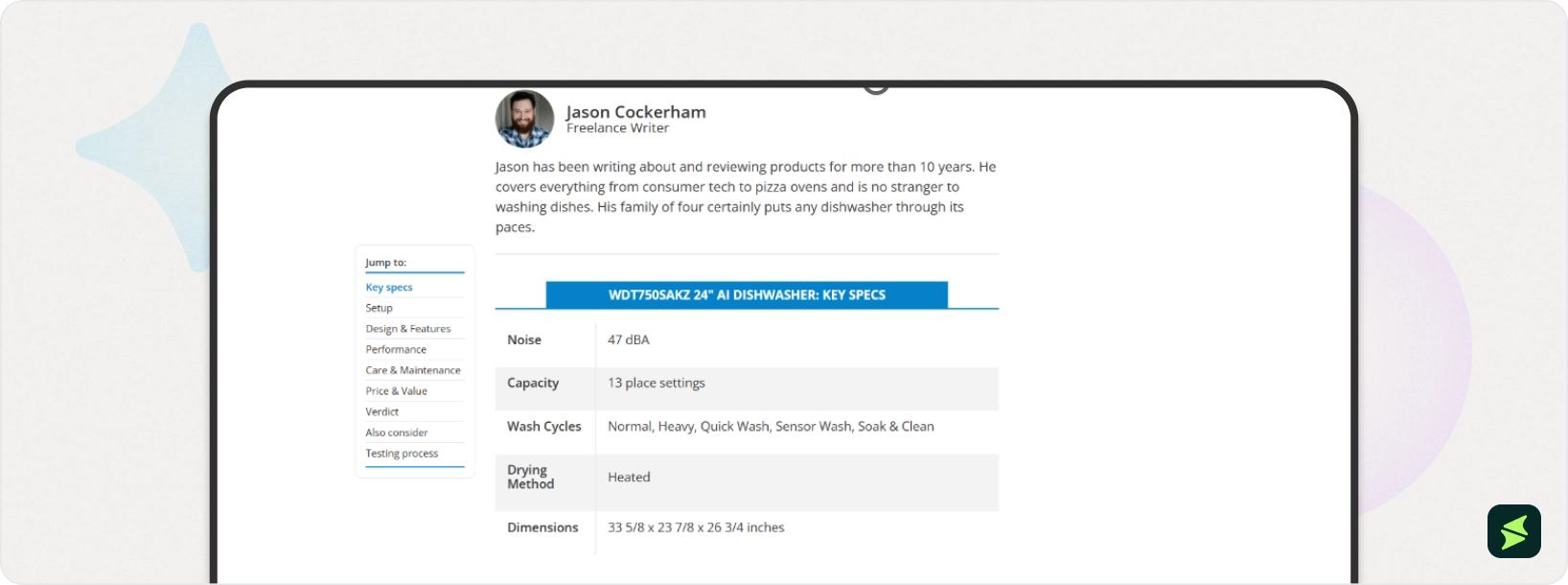
Top Ten Reviews publishes ranked category lists built around hands-on expert testing, with each entry covering:
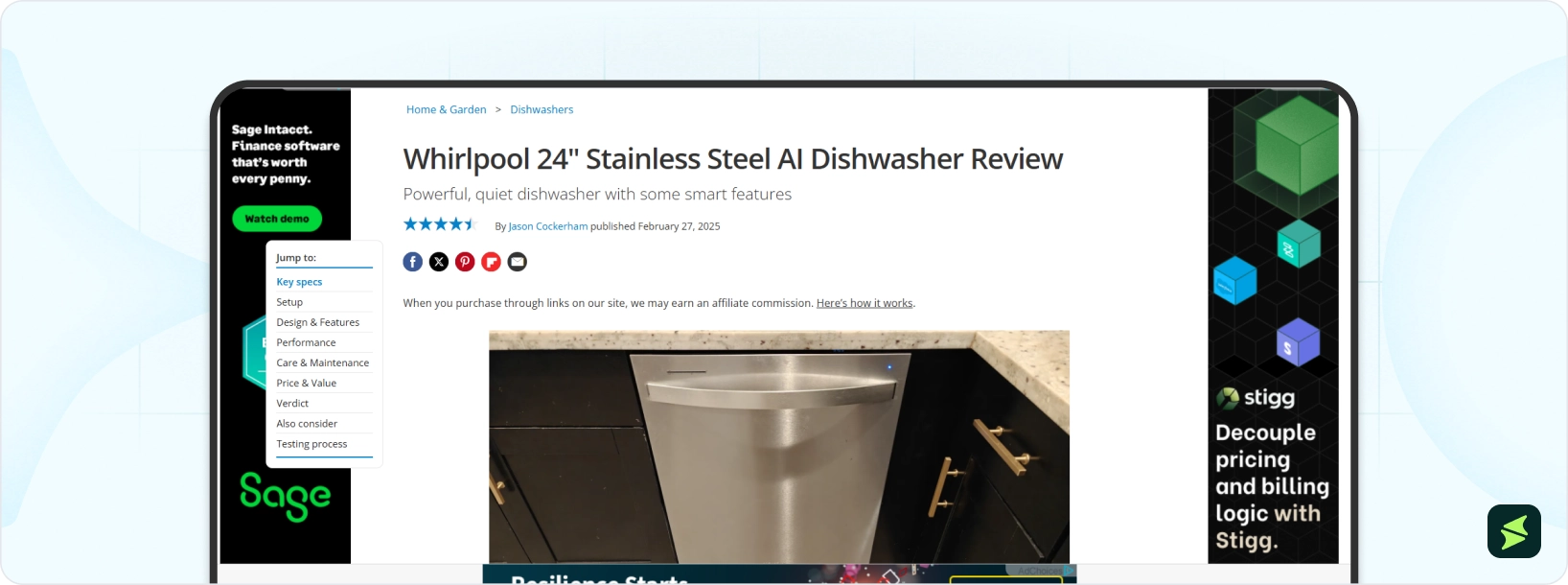
The editorial format is deliberately accessible; reviews are written for a general business audience rather than a technically specialized one, which makes the content easy to consume for buyers who aren't deep domain experts.
The platform covers a broad range of software categories, including business tools, security software, tax and accounting products, and consumer applications, with each category list updated periodically to reflect new entrants and product changes.
Where Top Ten Reviews earns its place in a research stack is in the clarity and speed of its editorial verdicts. The ranked list format forces a level of decisiveness that aggregated review platforms deliberately avoid. Instead of presenting fifty options with marginally different star ratings and leaving the decision to the buyer, Top Ten Reviews makes a call.
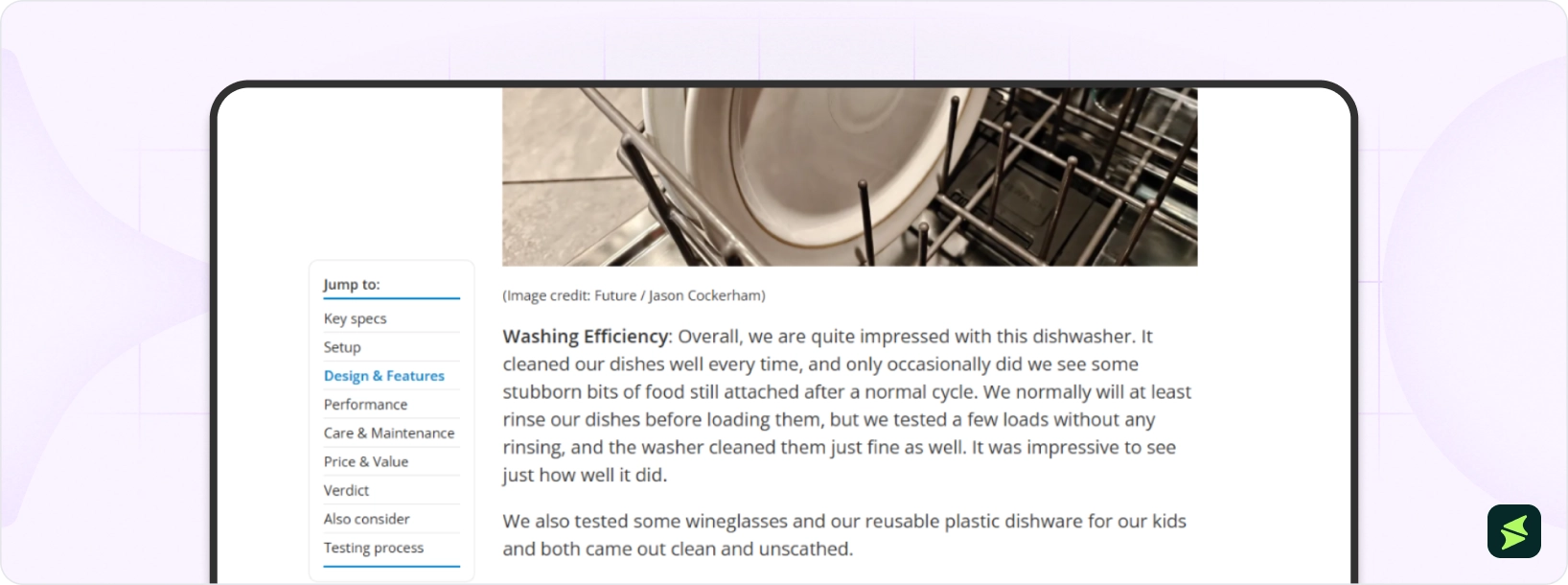
It prioritizes consumer-friendly, ranked top 10 lists with decisive verdicts on value-for-money across broad categories, ideal for quick consumer decisions. The consumer-friendly writing style also makes it one of the more approachable platforms for non-technical decision-makers who need to get up to speed quickly.
Top Ten Reviews is best understood as a fast-lane editorial resource rather than a comprehensive research destination. The ranked lists are well-constructed, and the expert testing adds a credibility layer that pure user-aggregation platforms can't replicate, but the depth of coverage/product is thinner than that of others.
It works particularly well for buyers evaluating mainstream, widely adopted software categories, business suites, security tools, and accounting software, where the editorial team has invested meaningfully in testing. For niche, enterprise-grade, or highly specialized tools, the coverage thins out quickly. Think of it as a reliable shortlisting accelerator for common software categories, best used in combination with a peer review platform for final validation.

SoftwareSuggest closes out the main list as one of the more globally minded platforms in the software review space, and one that deserves more attention than it typically gets in Western market conversations.
Founded in 2014 and headquartered in India, SoftwareSuggest has built a substantial presence across Asian, Middle Eastern, and emerging markets while maintaining meaningful coverage of globally adopted software products.
It operates as a hybrid discovery and advisory platform, part review directory, part guided recommendation engine, and has grown to list over 50,000 software products across more than 700 categories.
SoftwareSuggest structures its experience around a combination of user reviews, expert-written product summaries, and a guided recommendation engine that helps buyers filter options based on industry, business size, budget, and feature priorities. Product listings include:
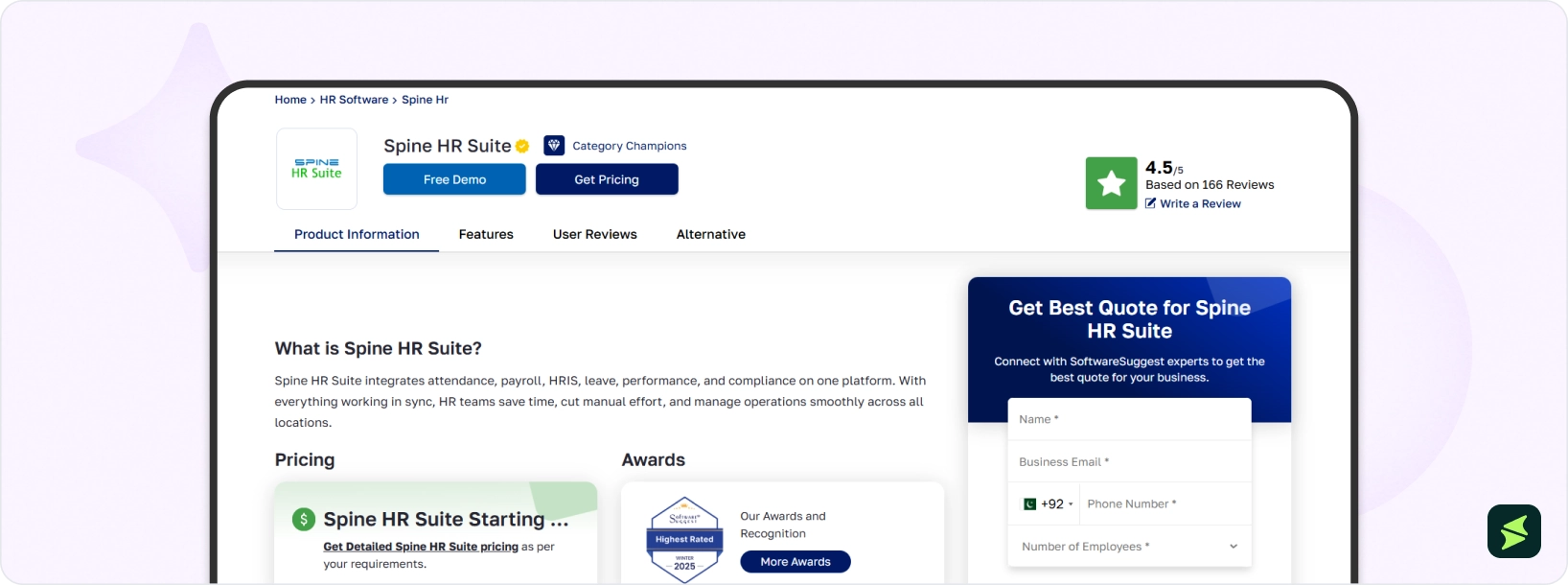
The platform also offers a free consultation service, similar in model to Software Advice and Software Finder, where buyers can speak with advisors to help narrow their shortlist. Category coverage spans business software broadly, with particular depth in ERP, accounting, HR, CRM, and project management tools relevant to SMB and mid-market buyers across diverse geographies. Moreover, the platform also covers Awards for buyers to test which software is perfect.
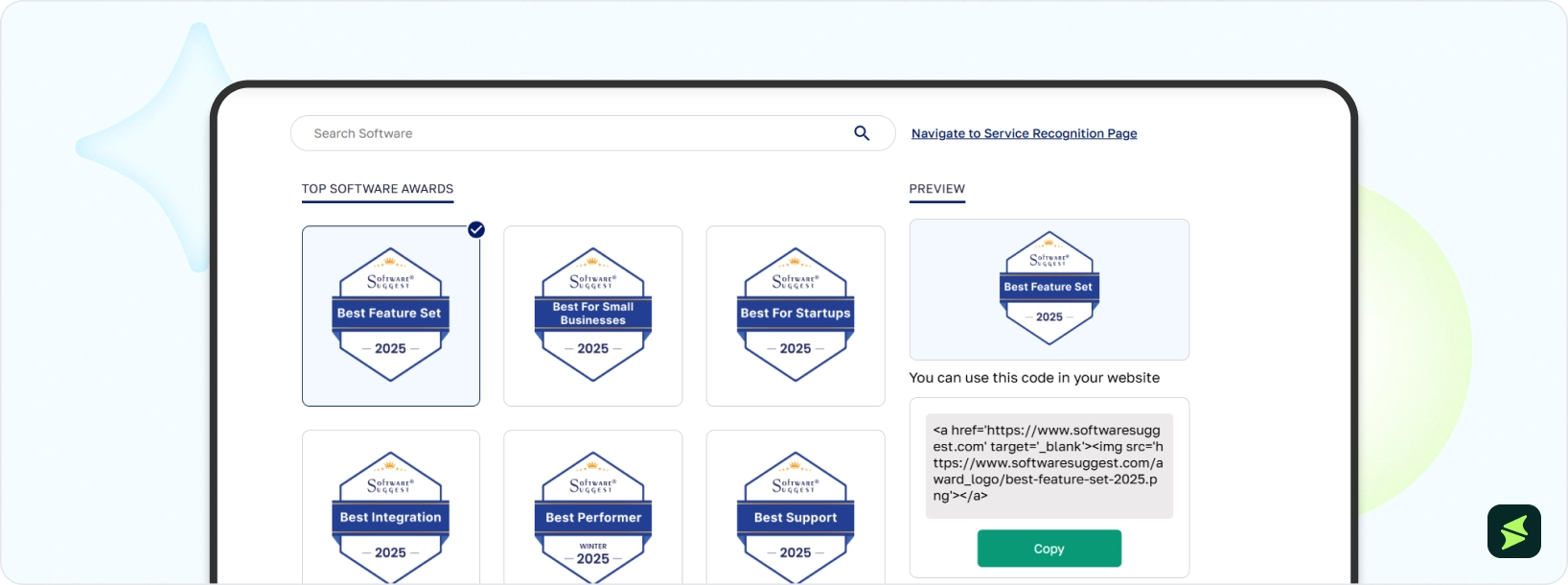
The geographic diversity of SoftwareSuggest's reviewer base is its most underappreciated asset. Most platforms on this list draw the overwhelming majority of their reviews from North American and Western European users.
This creates a subtle but real bias in how products are evaluated, particularly around pricing expectations, support responsiveness across time zones, localization quality, and compliance with non-US regulatory frameworks.
Additionally, the platform is also providing readers with interviews as part of its Expert Interview Series. Readers get insights from industry experts and founders. Not only do they get to make better decisions, but they also learn how industry leaders are using certain software to their advantage.
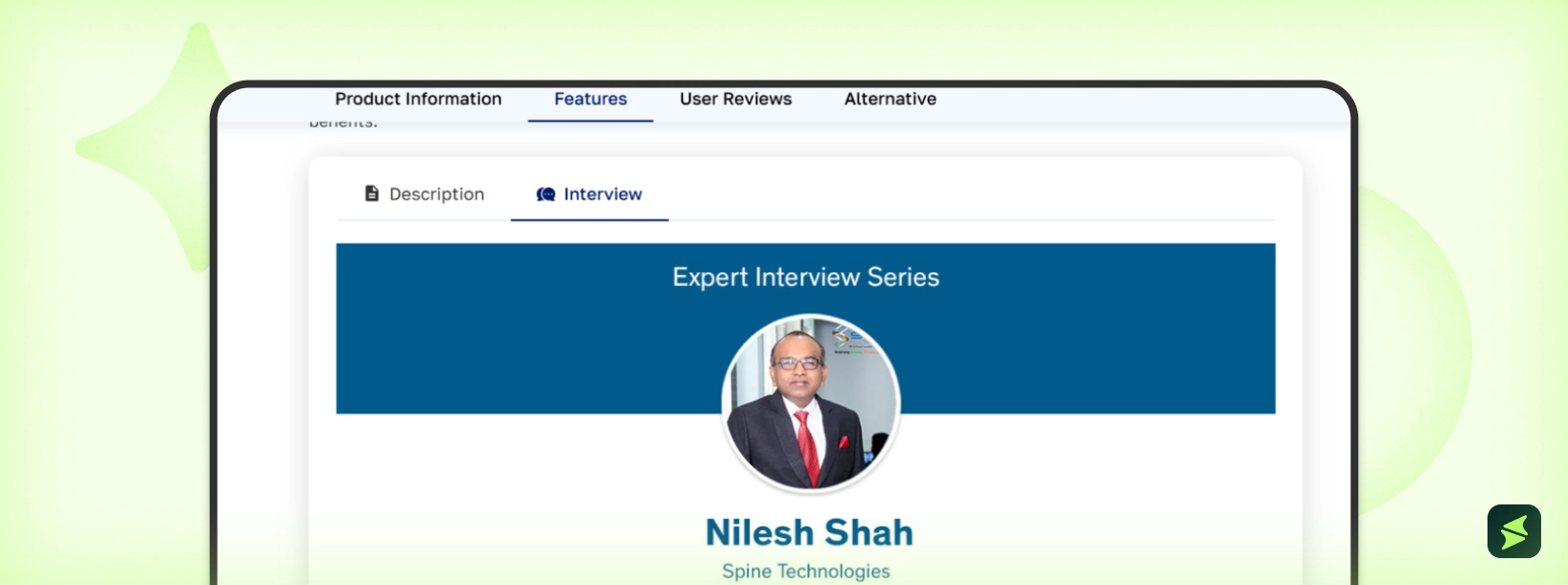
SoftwareSuggest is a platform that rewards buyers who look beyond the usual Western-centric review ecosystem. For organizations with regional diversity in their teams or buyer base, the geographic spread of their review data adds a genuine signal. The expert interview series and consultation service also make it accessible for buyers who want a more assisted research experience rather than pure self-serve browsing.
The main limitation is brand recognition. In North American and European enterprise contexts, SoftwareSuggest carries less credibility weight than the major platforms, and review volume for some categories reflects that. Use it as a strong supplementary source for global software evaluations, and as a primary resource when you're buying context extends meaningfully beyond North America and Western Europe.
The software market has never been more crowded. There are thousands of tools competing for attention across every business category imaginable, and the gap between a good purchase decision and a poor one can cost an organization months of lost productivity and significant budget. Software review websites exist to close that gap, and they do it in three meaningful ways.
The most immediate value a review platform provides is structure. Rather than building a comparison framework from the ground up, buyers can walk into a category page and immediately see how the leading products stack across features, pricing, and user satisfaction. That comparative scaffolding saves significant research time and ensures that the evaluation is built around the criteria that actually matter to other buyers in similar situations, not just the criteria a vendor marketing team chose to highlight.
No product demo or sales conversation will tell you what happens six months after implementation. Review platforms surface what happens after implementation: integration challenges, support responsiveness, and where products fall short of vendor claims. That kind of lived experience is difficult to access through any other research channel, and for high-stakes purchases, it's often the most valuable input a buyer can find.
Review platforms organize software around how buyers think about their problems, not how vendors think about their products. A buyer looking for a tool to manage field service operations doesn't want to wade through a generic business software catalog; they want a category built around their specific use case, pre-filtered for relevance. The best review platforms do exactly that, structuring their taxonomy around buyer intent rather than vendor positioning, which eliminates irrelevant options upfront and focuses research on products built for your specific use case.
There's a tendency in software research to treat review platforms like a checklist; the more you consult, the more thorough you're being. That logic is understandable, but it doesn't hold up in practice.
Consulting ten platforms doesn't give you ten independent perspectives; in many cases, it gives you the same data repackaged across different interfaces. The G2 Quartet is a perfect illustration of that problem. Four platforms, one database. The more useful mental model is to think about what stage of the buying process you're in and match the platform to that stage.
Early in an evaluation, when the goal is orientation and category education, platforms like Capterra, TechnologyAdvice, and Crozdesk earn their place. They're built for discovery, broad catalogs, accessible interfaces, and enough structure to help a buyer who doesn't yet know what they don't know to get their bearings quickly.
In the middle of an evaluation, when you have a shortlist and need to pressure-test it against real peer experience, G2 and TrustRadius are where serious research happens. The review depth, filtering capabilities, and verification standards on both platforms make them the most reliable sources of peer validation available. TrustRadius earns the edge for enterprise evaluations where review quality matters more than review volume.
At the later stages, when technical credibility and editorial independence matter, PCMag and Top Ten Reviews offer a professional cross-reference that crowd-sourced platforms can't replicate. And for organizations evaluating complex deployments where implementation partners are part of the equation, GoodFirms belongs in the conversation.
Start with Capterra or Crozdesk for initial orientation, then move to G2 or TrustRadius to pressure-test your shortlist against real peer experience. Add Software Finder early for pricing guides, whitepapers, and expert buying guidance that go beyond standard reviews. Match the platform to your research stage; don't use all of them at once.
Prioritize G2 for review volume, TrustRadius for enterprise credibility, and establish a presence on Software Finder early; vendors can create a free account. Its growing buyer audience, expert-reviewed content, and original research reports make it a valuable and underutilized visibility channel worth investing in before the competition does.
It's worth noting that Software Finder does not accept payment to rank vendors higher or manufacture category winners, a distinction that's rarer in this industry than it should be:
Platform | Category | Review Source | Best For |
G2 | SaaS & B2B | User Generated | High-volume peer validation for B2B software |
TrustRadius | SaaS & B2B | User Generated | Verified, in-depth reviews for enterprise buyers |
SaaSworthy | SaaS & B2B | Aggregated | Aggregated SaaS scores across multiple platforms |
SaaS Genius | SaaS & B2B | User Generated | Lightweight early-stage SaaS discovery |
PeerSpot (formerly IT Central Station) | Enterprise & IT | User Generated | Enterprise IT, security & infrastructure evaluation |
GoodFirms | Enterprise & IT | Mixed | Complex deployments requiring implementation partners |
Capterra | General Business | User Generated | Broad software discovery across all business categories |
Software Advice | General Business | Mixed | Guided, advisor-assisted software selection for SMBs |
GetApp | General Business | User Generated | SaaS stack compatibility & integration-first buyers |
Software Finder | General Business | Mixed | Full decision-support: reviews, guides, whitepapers & consulting |
SoftwareSuggest | General Business | Mixed | Global & emerging market software evaluations |
FinancesOnline | General Business | Mixed | SMB financial, HR & business management tools |
Trustpilot | General Business | User Generated | Vendor reputation & customer service sentiment |
PCMag | Expert Editorial | Expert Tested | Hands-on, staff-tested reviews with editorial independence |
Top Ten Reviews | Expert Editorial | Expert Tested | Fast ranked lists for mainstream software categories |
TechnologyAdvice | Expert Editorial | Mixed | Buyer's guides & category education for early-stage research |
SourceForge | Discovery & Open Source | User Generated | Open-source project discovery & developer-facing tools |
Crozdesk | Discovery & Open Source | Mixed | Guided software matching for early-stage SMB buyers |
Product Hunt | Discovery & Open Source | User Generated | Emerging & newly launched software tools gaining traction |
Serchen | Directories & Aggregators | Aggregated | Cloud & SaaS directory with aggregated social signals |
CrowdTrust | Directories & Aggregators | User Generated | Community-driven, incentive-free verified business reviews |