




Companies should align a payroll provider change with their accounting cycles to minimize disruptions. Payroll is complex, so switching at a convenient point helps avoid errors and late filings. For example, starting a switch on January 1st lets a firm begin the year with fresh data and a clear budget cycle.
This article covers why businesses switch and the ideal timing. It also covers urgent situations that force a mid-year change, the risks of poor timing, and steps to plan a smooth transition.
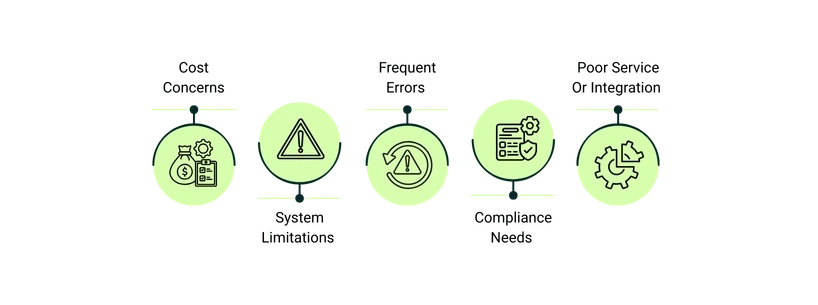
Businesses switch payroll providers for clear reasons related to cost, compliance, and growth. Common reasons include:
- Cost concerns: High fees or hidden costs can prompt a change. New providers often offer lower prices or more predictable billing.
- System limitations: An outdated or rigid system cannot scale with growth.
- Frequent errors: Persistent underpayments, missed benefits, or tax mistakes erode trust and can incur fines.
- Compliance needs: Changing tax rules or regulations may require a system with up-to-date compliance support.
- Poor service or integration: Slow customer support, lack of HR integration, or rigid workflows can drive change.
Beginning Of The Year
It is generally the case that starting on January 1 is the best option, since payroll and taxes reset for the year as well. Businesses get to reset their data and align the new payroll system with the annual budget and plans. For example, when a company switches on January 1, the new system has to complete all the previous year's pay periods, which translates to only one year for the new system, which makes W-2 or year-end reporting easier.
Start Of A Quarter
If a calendar year change is not possible, the next-best option is the start of a fiscal quarter, i.e., April 1, July 1, October 1. A quarter-start is a natural breakpoint for many businesses. Switching at the beginning of a quarter means that quarterly reports or filings draw data from a single system, which ensures consistent reporting and reduces mid-cycle discrepancies. In addition, quarterly budgets or forecasts can be updated alongside the payroll change.
Waiting for an optimal date is not always possible, and urgent situations make a mid-year switch necessary. A company facing major payroll errors or compliance issues must address those immediately rather than delay.
Experts note that mid-year moves are more complex but still achievable with accurate data transfer. This typically requires importing all year-to-date pay and tax data, especially when a quarterly tax deadline is near.
Likewise, a sudden acquisition, merger, or reorganization can force a mid-cycle change. These urgent situations require fast action, and firms often choose early summer months when business is slower, though they must still reconcile calendars and data.

Switching providers at an inopportune time can create risks such as:
- Tax and reporting errors: Changing in the middle of a pay period or quarter can lead to duplicated or missing withholdings.
- Missed deadlines: Poor timing may force rushed filings. For example, a mid-year switch ahead of a quarterly return requires rapid data preparation to avoid late filings.
- Operational overload: If a company switches during its busiest payroll season (such as December or January), staff may be overstretched, which increases the chance of mistakes.
- Data discrepancies: Any conversion carries risk. Without a clean cutoff, partial transfers may omit pay history or benefit records. Experts advise running a parallel payroll to catch discrepancies before going live.
- Employee impact: Confusion can arise if personal pay data is entered incorrectly during a rushed transition. Clear communication helps prevent issues and ensures employees retain access to pay information.
A successful payroll switch requires clear planning. Key steps include:
- Staff and supervisors should determine shortcomings and assess integrations and features that the system in use currently lacks.
- Service quality and scalability alongside the necessary features should be used to narrow down potential candidates. Comparison of available demos and reviews can assist.
- Finance teams need to select a firm switch date that is to be an easy transition point.
- Teams need to collect and thoroughly review all payroll information, including employee data, year-to-date earnings, deductions, and banking details.
- A parallel run helps identify issues that can be significant, such as underpayments or excessive withholding of taxes on net pay, before going live.
- Orientation about new workflows needs to be provided to HR and finance teams.
Each step reduces risks. Aligning the timeline with pay dates reduces the chance of missed payments, and running parallel payrolls helps identify configuration errors early.
Picking the perfect moment and thorough planning are essential when making arrangements for a payroll transition. When making the change, look for a breakpoint: the beginning of a year, a quarter, or a fiscal cycle to avoid excess paperwork and avoid tax issues. Still, urgent business needs may dictate a mid-year change.
Regardless of the timing, having a structured and detailed transition plan that includes defined roles, contingencies, and checks for balance, will provide everyone involved with smooth migrations and operational continuity.