


PrognoCIS and AdvancedMD both cover the core functions of an EHR, but they are not interchangeable once implementation, billing, AI, and integration needs enter the picture. And getting that choice wrong carries a cost. According to KLAS Research’s EHR Implementations 2025 report, 75% of those dissatisfied with their EHR implementation continued to report low satisfaction with the system two or more years later.
That makes this a decision worth slowing down on. This comparison looks at how PrognoCIS and AdvancedMD differ across those areas and where the trade-offs matter.
PrognoCIS EHR is a platform from Bizmatics, offered cloud-hosted or installed on a practice's own server. Founded in 2002, Bizmatics joined Harris Computer in 2021, an operating group of Constellation Software.
The system combines EHR, practice management, billing, patient portal, telemedicine, and payments in one database. That gives practices access to clinical and administrative functions without having to piece together separate systems.
PrognoCIS supports a wide range of specialties, including pain medicine, occupational medicine, family practice, internal medicine, cardiology, urgent care, OB-GYN, and multi-specialty groups. It also provides specialty-specific templates and workflows, which means practices can tailor documentation and day-to-day processes to the type of care they provide.
AdvancedMD began as a web-based billing and practice management software in 1999 and the EHR arrived in 2006. Francisco Partners acquired the company from Global Payments in late 2024. That billing-first history is still reflected in the platform's emphasis on billing and practice-management workflows.
The software also serves a wide range of practices, from single-provider offices to large groups and billing companies. That range may appeal to practices that expect to grow and want a platform that can support more complex operations over time.
Specialty coverage follows the same broad approach, with dedicated solutions for mental health, pediatrics, family practice, physical therapy, and more.
Feature | PrognoCIS | AdvancedMD |
|---|---|---|
E-Signature | Dedicated. PrognoSign is offered as a separate e-signature product within the PrognoCIS ecosystem. | Bundled. E-signatures are built into the fax workflow for documents such as referral letters and incoming forms. |
Electronic Fax | Dedicated. PrognoFAX is offered as a separate product line. | Dedicated. Electronic faxing has its own integrated dashboard and workflow. |
Payment Processing | Natively embedded. PrognoPay is built into PrognoCIS workflows and powered by Global Payments. | Integrated. AdvancedMD processes payments through OpenEdge, now Global Payments Integrated. |
Medical Credentialing | In-house. Bizmatics offers medical credentialing as its own service. | Outsourced. AdvancedMD directs practices to third-party credentialing providers. |
Reputation Management | Not listed. PrognoCIS does not currently list a comparable reputation-management tool. | Native. AdvancedReputation automates post-visit surveys and can direct positive feedback toward Google reviews. |
CRM Integration | Not listed. PrognoCIS does not list pre-built CRM integrations. | Supported. AdvancedMD lists integrations with CRM platforms including Salesforce and Zoho. |
Employer Portal | Native. PrognoCIS offers an employer portal connected to its occupational medicine workflows. | Not listed. AdvancedMD does not list an employer-facing portal. |
Patient Photo Capture | Not listed. PrognoCIS does not identify an equivalent patient-photo workflow. | Native. AdvancedMD can capture a patient photo once and make it available across the EHR and practice management system. |
PrognoCIS and AdvancedMD both support customizable clinical documentation and specialty-specific templates, but the customization works a little differently in each system.
PrognoCIS supports over 25 specialties with templates that can be adjusted to match a practice’s documentation needs and workflow. AdvancedMD also provides customizable note and sub-note templates, with a library of specialty-specific options and tools for creating or modifying notes. A practice that wants ready-made specialty content can start with PrognoCIS. A practice that already knows how it wants its notes structured may get more value from AdvancedMD's note designer.
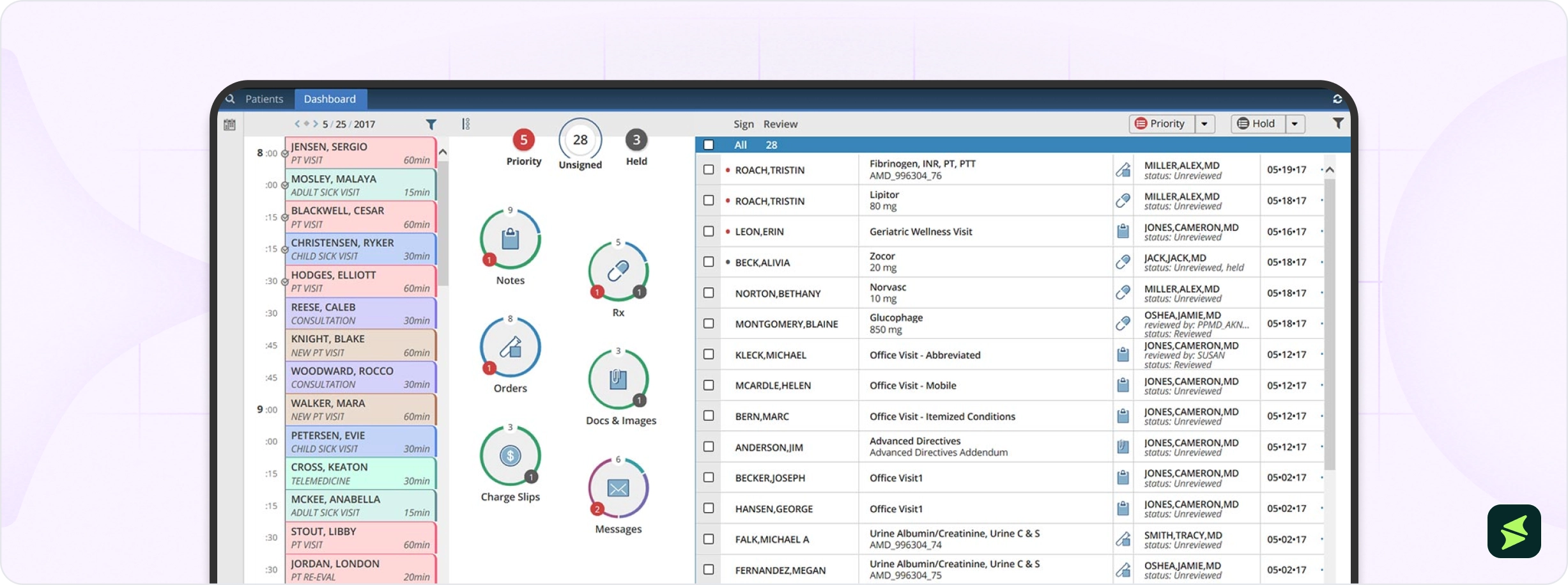
The chart layout of the two platforms differs too. PrognoCIS keeps documents in one filterable list, so a provider searches rather than clicks through folders. AdvancedMD organizes charts into Patient Cards and Task Donuts (a dashboard built to show what needs attention at a glance).
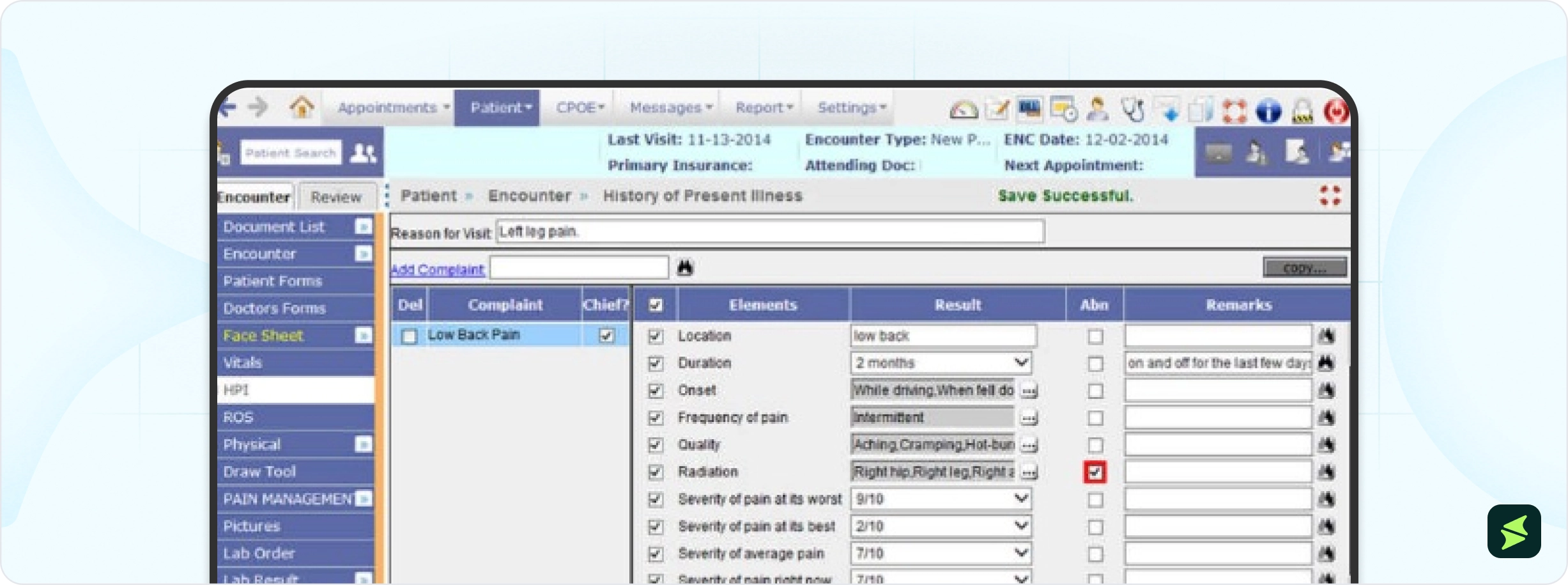
PrognoCIS and AdvancedMD both cover the core patient-facing functions, including portals, digital forms, appointment scheduling, reminders, messaging, payments, prescription requests, and telehealth. The more useful distinction for a practice is how much of that interaction can happen without staff stepping in.
AdvancedMD sends automatic reminders in English or Spanish and includes a link that remains valid even when the appointment time changes. PrognoCIS sends reminders by email or text but does not offer the same language-based customization. That gives AdvancedMD an advantage for practices with Spanish-speaking patient volume, particularly those trying to reduce reminder-related calls and rescheduling work at the front desk.
PrognoCIS gives patients more ways to handle things themselves. PrognoPay, added in May 2026, accepts payments by secure text link, email link, Apple Pay, or Google Pay. Its ProCheckIn feature lets patients complete and sign intake forms from home and then mark themselves arrived at the clinic. AdvancedMD focuses more on automating front-desk tasks. Patients can photograph an insurance card during scheduling or check-in, and AI extracts the details for staff to confirm.
Medical scheduling is one of the areas where the differences between these platforms become most visible.
PrognoCIS uses drag-and-drop scheduling with consolidated views that show up to seven providers or seven locations at a time. AdvancedMD adds a Schedule Snapshot that shows daily appointment counts by provider, resource, or location on one screen.
Registration and intake follow a similar split. AdvancedMD assigns intake forms automatically based on the appointment type, so what a patient receives is decided by the reason for the visit rather than by a staff member picking from a list.
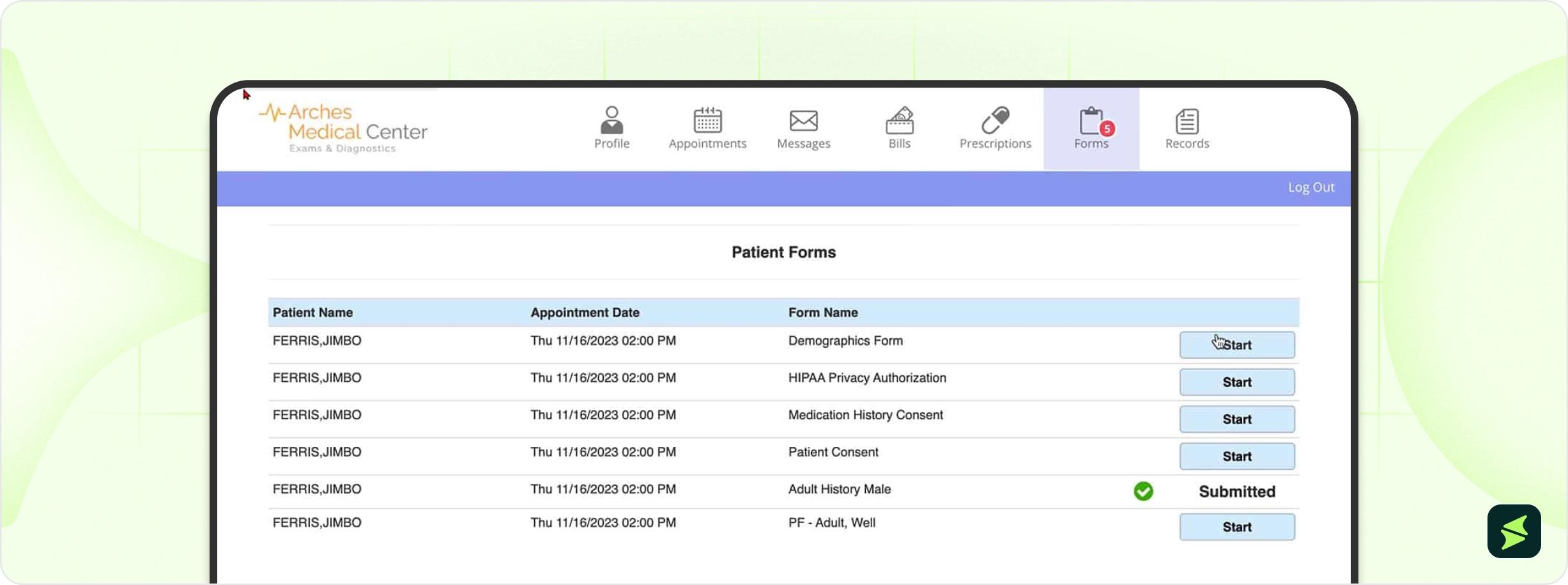
PrognoCIS handles registration through ProCheckIn, where patients enter their own details on a tablet at the clinic and confirm their arrival instead of queueing at the desk. Forms can also be completed from home before the appointment.
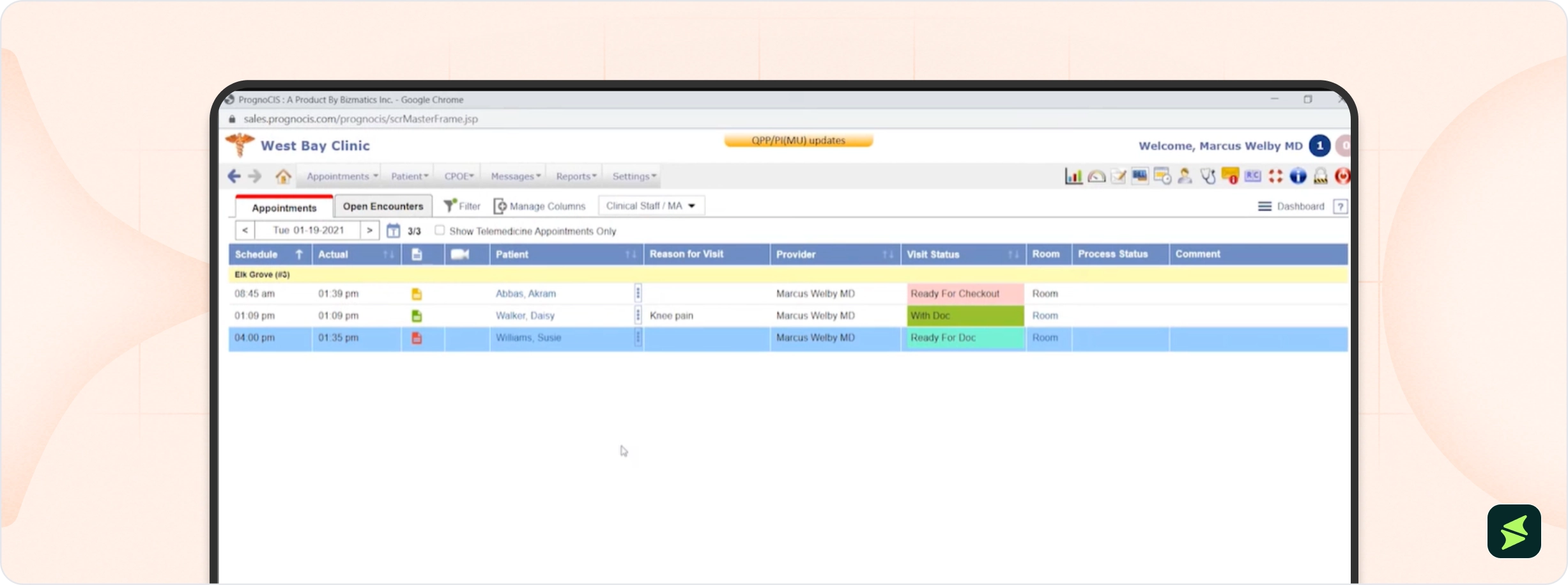
PrognoCIS also includes a dedicated referral management tool within its platform, so practices can manage referrals as they move through the intake process. AdvancedMD takes a different approach through ReferralMD, a separate solution that adds referral tracking, scheduling, intake, and communication capabilities. The main difference is whether referral management is handled within the core EHR or through a separate solution.
Both PrognoCIS and AdvancedMD provide tools to catch revenue cycle management and billing issues before they affect the claims process.
PrognoCIS supports real-time eligibility verification and a claim scrubber with a customizable rules engine, which makes it easier for practices to define checks around their own billing requirements. AdvancedMD also verifies eligibility and scrubs claims before submission but puts more of the process into automated validation and centralized claims management. The main distinction is in how much each platform lets practices shape their billing rules versus how much of the claims workflow is built into a centralized, automated process.
The difference becomes clearer once claims move into follow-up. AdvancedMD organizes rejected or unpaid claims through worklists and provides automated remittance processing. This gives billing staff a structured queue for resolving outstanding items. PrognoCIS focuses on tracking claims and identifying patterns behind delayed payments, such as a particular insurer or claim type
In practical terms, AdvancedMD is better suited to billing teams that want the system to organize their daily follow-up workload. As for PrognoCIS, it gives practices more visibility into why claims are failing and where billing rules may need to be adjusted.
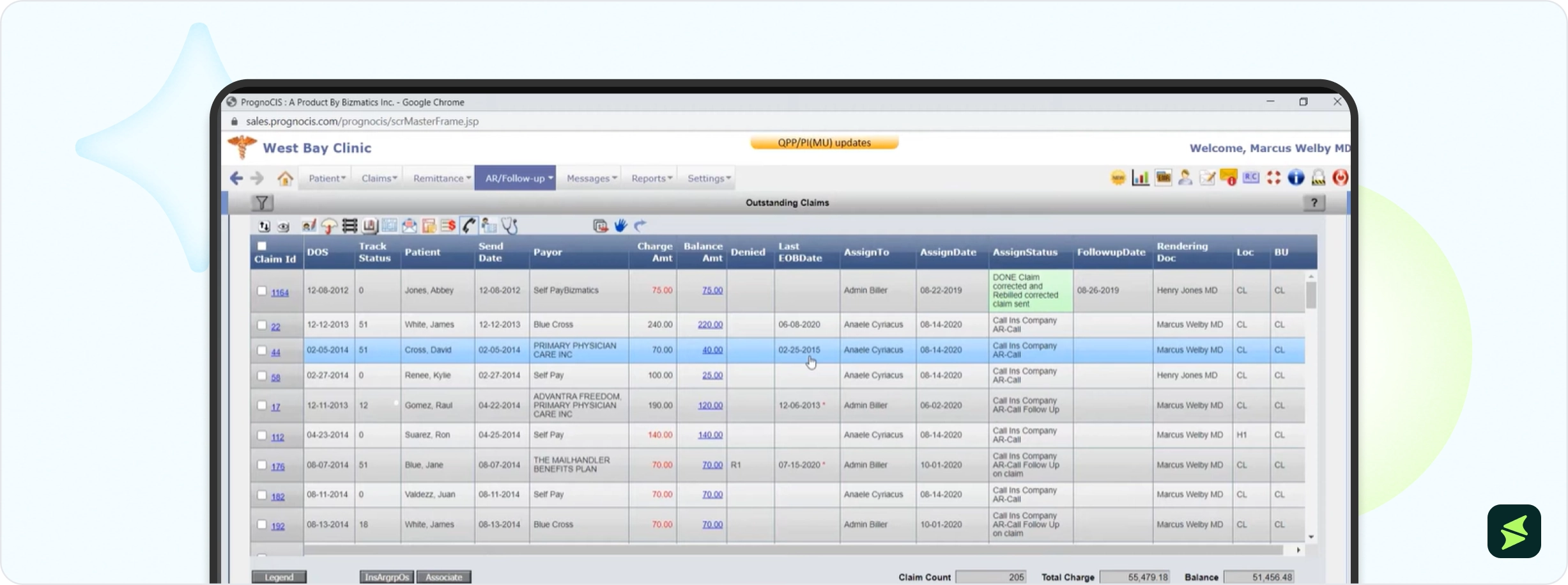
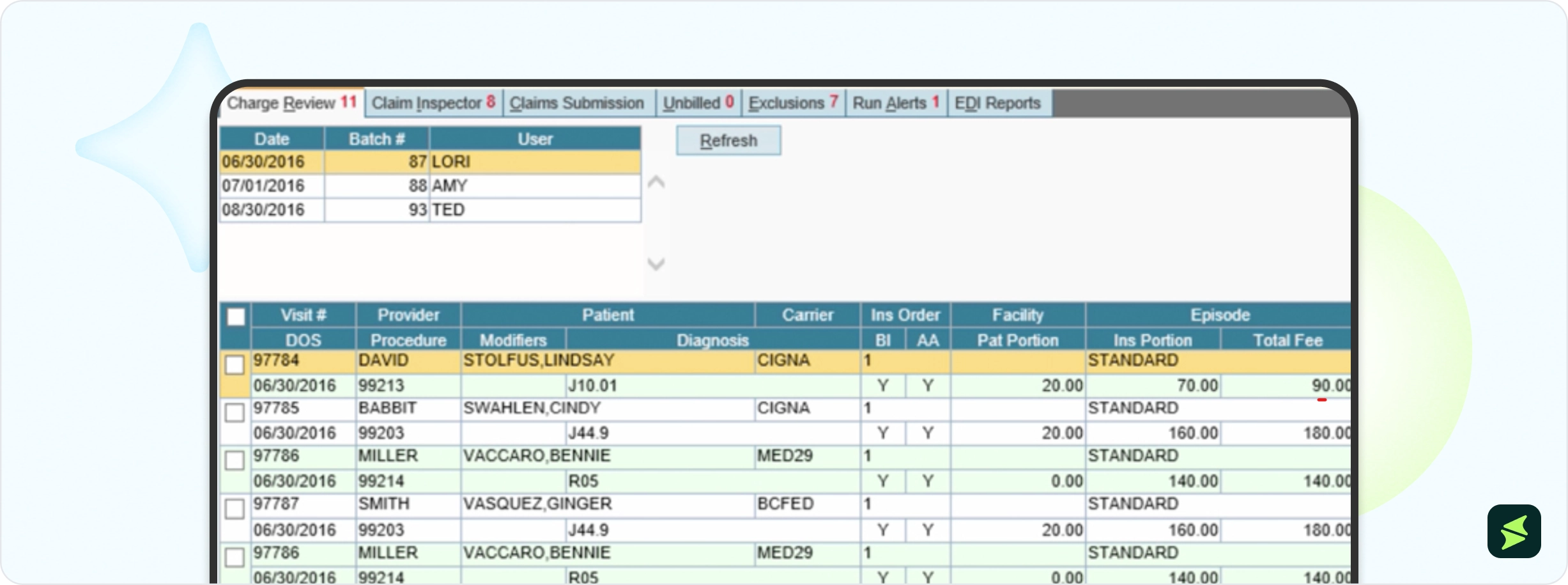
PrognoCIS and AdvancedMD take different approaches to billing services. PrognoCIS offers dedicated billing teams that work within its integrated EHR and practice management system. The service covers claims, payment posting, denial follow-up, and A/R for practices using PrognoCIS.
AdvancedMD also offers managed RCM services for practices, but it supports independent medical billing companies through its AdvancedBiller program. These companies can use AdvancedMD's platform to manage billing across multiple clients and practices from a centralized system.

PrognoCIS connects with labs, radiology systems, and health information exchanges through its EHR interfaces. AdvancedMD covers the same ground through its Open API, which it positions around HIE and CIE interconnection, plus a partner marketplace listing more than 1,400 integrations.
Both platforms publish FHIR documentation. PrognoCIS and AdvancedMD both hold ONC 2015 Edition Cures Update certification, which requires a FHIR API for patient and population services and publicly accessible API documentation.
The difference is in how the two platforms handle integrations. AdvancedMD's Open API supports data exchange for tasks such as searching records, adding patients, scheduling, and creating charges and payments. It also supports built-in CRM integrations with platforms such as Salesforce and Zoho.
PrognoCIS supports API integrations for functions such as appointment imports, charge exports, and patient and insurance data exchange. It also builds custom integrations and conducts feasibility studies for new integration requests. Practices can use existing APIs or work with PrognoCIS on a custom connection.

PrognoCIS assigns a dedicated team of specialists to guide implementation and data transfer. The vendor states this team includes certified PMPs with an average tenure of 15+ years. AdvancedMD assigns a dedicated data conversion specialist to oversee migration from the previous system. PrognoCIS's team-based model is suitable for practices that need more hands-on guidance across the transition, while AdvancedMD's single point of contact suits practices that prefer one specialist owning the migration end to end.
Both vendors provide personalized training rather than leaving practices to self-service resources alone.
PrognoCIS's project managers lead training as part of the same onboarding that handles data migration, which keeps training and migration under one continuous process rather than separate tracks. AdvancedMD's consultants build a training plan around a practice's own schedule and learning style, typically a mix of live sessions with on-demand resources.
Then there is the question of how long that transition takes. PrognoCIS generally puts its implementation window at six to eight weeks. AdvancedMD’s software onboarding typically takes about 90 days, covering configuration, training, and workflow setup. Still, neither timeline should be treated as a guaranteed go-live date. Practice size, setup requirements, data migration, and the work required from the practice itself can all affect the schedule.

PrognoCIS extends the assigned-contact model beyond onboarding, moving practices to a dedicated customer success manager once they are live. AdvancedMD’s dedicated consultants play a similarly hands-on role, but only through implementation, guiding practices and tailoring training to their schedule during that window specifically.
On response time, PrognoCIS states an average of 24 hours: same-day for tickets submitted in the morning and the next business day for those submitted later. AdvancedMD states a one-business-day target only for its Essential tier, which is online-submission only. Its Professional and EHR tiers add phone and live chat during business hours but do not state a numeric response-time target.
What neither vendor states is how support holds up once an account is no longer new, which is where reviews provide a useful reality check.
PrognoCIS users often praise the personal attention and quick follow-up from assigned staff, although some report slower responses and inconsistent follow-up. AdvancedMD receives similarly mixed feedback. Some reviewers describe patient, hands-on troubleshooting, while others report long waits or being passed between departments.
Taken together, the reviews do not point to a consistently better support experience from either vendor. They do, however, suggest that the quality of the assigned-contact model can depend heavily on the issue and the representative handling it.
Moreover, PrognoCIS maintains a public knowledge base for routine questions, while assigned staff remain available when documentation is not enough. AdvancedMD provides a dedicated support line for current clients and lets practices formally log and track cases. That distinction becomes more relevant as support needs grow.
A practice that is comfortable resolving straightforward questions independently can make good use of PrognoCIS's self-service resources. A larger or multi-location practice managing several issues at once may place more value on AdvancedMD's formal case-tracking process.

PrognoCIS and AdvancedMD are both EHRs with AI functionalities, but they use it in different places.
PrognoCIS's own AI suite, PrognoAI, includes three tools: Scribe, a five-visit health summary, and an embedded AI chat assistant for clinical and coding questions. AdvancedMD built its AI into a feature called the AI Clinical Assistant, which uses ambient listening to draft the note directly. The same transcript also generates suggested chart items, patient issues, medical histories, allergies, medications, and lab orders.
Both tools produce something for the provider to review and approve rather than writing into the chart unsupervised.
The more useful distinction is where each platform puts its AI. PrognoAI stays close to the chart, handling documentation, history review, and coding questions. AdvancedMD reaches further into practice management with Narrative Insights, which reads dashboard data and explains performance changes in plain language. PrognoCIS does not currently offer a comparable use case.
Language support is the other clear difference. PrognoAI Scribe supports real-time translation across 54 languages, while AdvancedMD's AI Clinical Assistant does not publish a supported-language count for comparison. Both now offer mobile capture through their respective apps. PrognoAI offers it through the PrognoCIS app, while AdvancedMD added its Clinical Assistant to mobile in its June 2026 release.
How Do PrognoCIS And AdvancedMD Handle Data Security?

Security looks fairly similar at first glance, but the details matter more once a practice considers where its data lives and how easily it can regain control of it.
PrognoCIS and AdvancedMD both hold ONC Health IT 2015 Edition Cures Update certification through Drummond Group, with PrognoCIS earning certification in 2022 and AdvancedMD in January 2023. That certification requires a standardized way to export a patient's full electronic health information, so both platforms give practices a defined way to get their data out.
Where they differ is infrastructure. AdvancedMD runs exclusively on Amazon Web Services. PrognoCIS is also AWS-hosted for most practices but can be installed on a practice's own local server, an option that matters to practices that want direct control over where the application and data live.
PrognoCIS and AdvancedMD both state HIPAA and HITECH compliance. PrognoCIS also states SOC 2 Type II compliance, with detailed audit trails, user access logs, and real-time breach alerts. AdvancedMD has dedicated security and privacy officers, a cross-department compliance committee, documented policies, and mandatory employee HIPAA training. Its broader security program generally aligns with ISO 27001. Both conduct annual risk assessments and regular penetration testing, and both offer multi-factor authentication at no extra cost.
How Do PrognoCIS And AdvancedMD Compare On Pricing?

PrognoCIS Pricing
According to PrognoCIS, the platform ranges from $300 to $550/provider/month, with implementation starting at $2,550. The final cost may vary depending on practice size, provider count, and the features included.
That makes the starting cost relatively easy to understand, although the range itself is broad enough that a practice still needs a quote to know where it will land. The implementation fee, on the other hand, is stated separately and upfront.
Disclaimer: The pricing is subject to change.
AdvancedMD Pricing
AdvancedMD takes a more specialty-specific and configurable approach to pricing. Its pricing for medical specialties ranges from $429 to $1,070/provider/month. The pricing for other specialties is as follows:
- Mental health: $130 to $399/provider/month
- Physical medicine: $399/provider/month
- Addiction medicine: $399/provider/month
- MedSpa: $278/provider/month
Revenue cycle management is priced separately at 4% to 8% of collections and its billing services cost $229-$1,070/provider/month.
Disclaimer: The pricing is subject to change.
Which Offers Better Pricing Value?
PrognoCIS gives practices a single provider-based range for its core platform. AdvancedMD has lower starting prices for some specialties, particularly mental health. Which one costs less depends on the type of practice.
For a small mental health practice, AdvancedMD's $130 starting price creates a lower entry point. For general medical practices, PrognoCIS starts lower, at $300 against AdvancedMD's $429. Larger or multi-specialty practices, however, should compare actual quotes rather than the published starting rates, since provider count, specialty, selected services, implementation, and RCM can change the total cost considerably.
Bottom Line: AdvancedMD has a lower starting price for mental health and MedSpa practices, while PrognoCIS starts lower for general medical specialties. The better value depends on what the practice needs beyond the base subscription.
What Do Practitioners Say After Using PrognoCIS And AdvancedMD?

PrognoCIS and AdvancedMD can both handle core needs, but the day-to-day experience can differ once you start using them.
PrognoCIS: Easy To Learn, Not Always Fast To Use
PrognoCIS is relatively straightforward to learn, but that does not always translate into the quickest workflow. In a Student Doctor Network discussion, a physician who had used the platform described it as straightforward while also calling it somewhat ‘clunky’ and ‘click-heavy.’ That suggests the system may be easy enough to understand without necessarily being the fastest way to complete every task.
That fits the rest of what this piece has found about PrognoCIS. Its customization and specialty workflows give practices room to shape the system around their processes, but practices with highly streamlined workflows may notice the extra navigation involved.
AdvancedMD: More Depth, More To Learn
AdvancedMD can feel quite different depending on how much of the platform a practice actually uses.
In a Reddit discussion among therapists, one user said the system became easier to work with after they got used to it, while another found its many features made the interface feel cluttered. These comments point to two different issues: familiarity and feature density. More time with the system can address the first, but not necessarily the second.
The pattern suggests that AdvancedMD's depth may be more valuable to practices with dedicated administrative or technical staff, while smaller teams may feel the weight of features they do not need.
PrognoCIS Vs AdvancedMD - Which One Is Better?

The better choice changes once you weigh each platform against the realities of a particular practice. A small mental health clinic has different priorities from a multi-specialty group with an internal IT team, just as a practice focused on AI documentation has different needs from one that wants AI to analyze its operational data.
The scenarios below show where the differences between PrognoCIS and AdvancedMD are most likely to matter when choosing between them.
Practice Profile | Better Fit | Why |
|---|---|---|
A multi-specialty group with 6 to 12 providers that wants to retain on-premise deployment and needs hands-on implementation support | PrognoCIS | PrognoCIS supports on-premise installation alongside its cloud option, so the group can keep its server on site, and it assigns a dedicated team to handle implementation and data transfer. |
A medical billing company that manages billing for multiple practices | AdvancedMD | Its separate billing-services tier is designed for businesses that manage billing for multiple clients. This makes the platform a better match for billing companies already working within that model. |
A 2- to 3-provider mental health practice that wants to try an EHR before committing | AdvancedMD | AdvancedMD Now gives eligible 1- to 3-provider mental health practices a low-risk way to evaluate the system before paying for it. |
An occupational medicine practice managing injured-worker cases and employer relationships | PrognoCIS | Its occupational medicine offering includes dedicated content and an employer portal, giving this specialty-specific workflow more direct support within the platform. |
A practice with internal IT staff that wants to keep its server on-site | PrognoCIS | It offers both cloud-based and server-based deployment, including an on-premise model, while AdvancedMD is cloud-only. |
A practice that wants to actively track and manage its online reputation across patient reviews | AdvancedMD | AdvancedReputation automates post-visit surveys and routes positive feedback toward Google reviews, a tool PrognoCIS does not currently have. |
A practice that wants AI to analyze scheduling, reporting, and operational data | AdvancedMD | Its Narrative Insights capability extends AI beyond the clinical chart by analyzing dashboard data and explaining performance changes in plain language. |
A practice where multilingual communication is most important during the clinical encounter | PrognoCIS | PrognoAI Scribe supports real-time translation across 54 languages while documenting the visit, making it particularly relevant to multilingual patient encounters. |
A practice that relies heavily on multilingual appointment reminders and scheduling communication | AdvancedMD | Its automated appointment reminders can be sent in English or Spanish based on the patient's language preference, giving it an advantage when multilingual communication extends beyond the visit itself. |
A practice that wants to estimate its core software and implementation costs before signing | PrognoCIS | Its pricing range and separate implementation fee provide a starting point, while AdvancedMD's pricing varies by specialty, services, and selected modules. |
Which EHR Is The Better Fit For Your Practice?

Before choosing an EHR, identify which of the differences in this comparison actually matter to your practice.
If you are considering on-premises deployment, ask PrognoCIS to demonstrate how its server-based setup works with the existing IT environment. If your practice has developers, test AdvancedMD’s API resources against a real integration requirement. For multilingual practices, compare PrognoCIS’s 54-language Scribe translation with AdvancedMD’s English/Spanish appointment reminders. Get exact pricing quotes based on your specialty, provider count, implementation, and services.
A feature that exists is not the same as a feature that works well day to day. Have the people who will actually use the EHR complete a full note, find a patient chart, make a scheduling change, and resolve a billing task during the demo. Extra clicks that seem minor during a demo can become a daily cost when repeated hundreds of times. This gives you a decision based on your practice's priorities and actual costs.