




For civil contractors, the bidding process is often a high-stakes environment where a single error or a missed resource can cause project margins to plummet. The challenge is balancing the need for better cost analysis with a detailed estimation solution that allows contractors to manage construction expenses and resources accurately.
Heavy civil estimating solutions address these hurdles by automating unit-price and lump-sum bidding and offering a standardized estimation process for construction workflows. Among these, The Construction Link Inc. (TCLI) and Heavy Construction Systems Specialists (HCSS) are unique solutions designed for infrastructure projects. While HCSS is an enterprise-level system, TCLI stands as a more specialized solution with greater accessibility.
However, the existence of these solutions begs the question: which estimation software best fits the needs of your crew? Our TCLI vs HCSS guide answers exactly that by exploring how each solution supports construction firms in securing and managing more profitable work.
Feature | TCLI | HCSS |
Ease Of Use | Specially designed easy-to-use interface with integrated solutions for bidding, tracking, and payments | Detailed system with different modules for estimation, project tracking, and reporting, which takes longer to master |
DOT Integration | Designed by a DOT contractor with seamless two-way data transfer into and out of DOT electronic bidding applications | Standard DOT integrations with direct imports from state DOT websites |
Error Detection | Specialized Check Bid feature scans for missing markups and temporary pricing | Error alerts and detailed review checklists to manage calculation or classification errors |
Ecosystem Depth | Specialized ecosystem with Field Link and Billing Link for a streamlined bid-to-pay workflow | Larger ecosystem to manage the heavy construction life cycle from estimation to operations |
Deployment | Cloud and On-premise deployment options | Primarily based on the HCSS cloud |
Project Tracking | Field Link connects estimations to actual projects with electronic timesheets | Offers construction management software to connect field and office workflows |
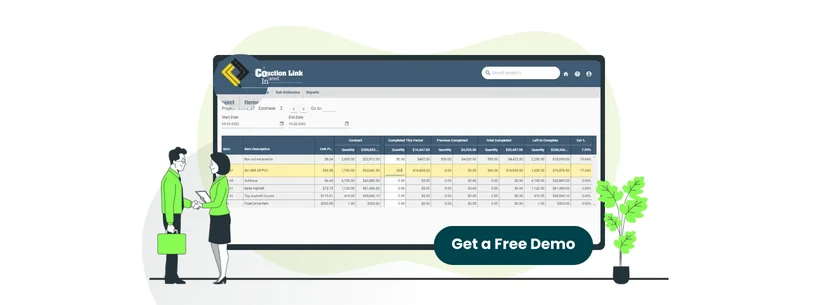
TCLI is a specialized civil estimating and bidding software designed specifically for unit price and lump-sum bidding. Unlike general construction management tools, the platform offers ‘Estimating Link’, a purpose-built tool to handle smarter bidding workflows that can produce professional proposals and project reports. The platform comes with a ‘Bid Sheet’ dashboard, allowing users to add details like project overhead and material cost to generate the best possible bid based on desired profit.
The software works as an estimator, allowing users to track everything from fuel cost to last-minute changes. It allows contractors to break down projects into specific bid items and further drill down into the underlying resources, such as labor, owned or rental equipment, materials, and subcontractors.
Unique Features Of TCLI
- Sub-Item Assistant Feature: This feature offers a specialized tracking system that acts almost like a second set of eyes, allowing contractors to create multiple sub-level items within a project. The assistant allows users to modify, divide, and track different sections of a project with ease
- Shared License Pool: Unlike competitors that charge for each individual user added, TCLI allows teams to share a pool of licenses, toggling between users as needed. Users can utilize the ‘User Management Link’ to control who has access at any given time
- Move Money: The platform allows contractors to move their money around actively, while taking advantage of overruns and underruns. Users can use the software to add or deduct values from their estimate in real time
TCLI Pros And Cons
Pros | Cons |
Intuitive interface allows for immediate project bidding speed Seamlessly integrates with state DOT electronic bidding systems Check Bid feature catches critical errors before submission | Lacks deeper customization features for bid proposals Tree view can appear dated, and returning bids to items can be complicated |

HCSS is an enterprise-level estimating and bidding solution designed to optimize construction workflows, from bidding to project completion. The platform allows users to execute faster bids by eliminating manual entry and breaking down complex cost statements. It serves as a comprehensive construction management solution by connecting office workflows to field operations.
The platform is built to handle a construction project from every angle, allowing contractors to track real-time job progress with automated reports and data management dashboards. It helps firms create detailed crew assemblies and multi-phase analysis to allocate the right crew and equipment to each jobsite.
Unique Features Of HCSS
- HeavyBid Estimation Software: The platform offers a HeavyBid feature to track bidding opportunities based on details like historical bidding data. This allows users to generate the most accurate and professional looking proposals faster
- HCSS Safety: Users receive alerts on what to submit and when, with notifications on field-specific safety protocols. The platform offers training and certification tracking features that help manage team proficiencies, with toolbox management meetings to discuss daily safety
- HeavyJob: This feature gives its users a progress tracker that allows them to view estimator notes and mark out over-budget items to create custom reports for better management
HCSS Pros And Cons
Pros | Cons |
Offers a greater number of features that cover the entire construction workflow The platform improves project efficiency by supporting various workflows Better platform organization improves overall experience | Platform lacks customization ability within incidents and inspections HCSS Cloud is prone to constant timeouts and reloads |


TCLI uses a customized subscription pricing model starting at $166/user/month. It does not tier its features; when you buy the software, you get all the advanced calculators, DOT interfaces, and reporting tools included in a bottom-line custom quote without any hoops to jump through.
HCSS pricing is customized based on project size and requirements. The final price may change based on user count and the specific tools needed. Many of the more advanced features, like quote management, might be limited to a higher, more expensive, personally tailored plan.

Both TCLI and HCSS are good estimation options for the civil construction industry, as they both cater to different operational scales. TCLI stands out as the apparent winner for contractors who are looking for a solution that offers efficiency and simplicity, excelling in its immediate implementation and user-friendly error detection that ensures accuracy.
HCSS, on the other hand, also has its merits, being a tested and comprehensive enterprise-grade solution with an expansive ecosystem of features and offerings. However, its high complexity comes with a steeper learning curve, which might not suit the needs of users seeking a faster, more streamlined bidding process.
In the end, choosing between the two solutions comes down to the unique requirements of your estimating teams. If you need a powerful, agile tool that offers a faster ‘Bid-Track-Get Paid' cycle with minimal overhead, TCLI is your best bet. HCSS is considerable if you require an all-encompassing enterprise-level solution for a large-scale organization.