

Comparison
Westlaw Edge Vs Precision: Features, Pricing, And Research Tools Compared
8 mins read
Last Updated


By Laiba Laeeq and



Comparing Westlaw Edge and Westlaw Precision isn’t about choosing a one-size-fits-all-winner. It is about understanding which version of Westlaw better fits the way your legal team researches, validates authority, and uses AI as part of day-to-day work. Both are built on Thomson Reuters’ legal research ecosystem, but are positioned differently.
This guide compares Westlaw Edge vs Precision across key buying factors, including feature depth, pricing, research experience, customer support, and usability, to help you make a confident choice.
Westlaw Edge is Thomson Reuters’ advanced legal research platform built to speed up traditional research workflows with AI-enhanced tools layered onto core Westlaw content. Its public features set centers on AI-Assisted Research, Litigation Analytics, KeyCite Overruling Risk, and WestSearch Plus, alongside broad access to primary law, secondary sources, and 24/7 reference attorney support.

Westlaw Precision AI, now Westlaw Advantage, was introduced by Thomson Reuters as a newer generation of Westlaw research, focused on helping lawyers find narrower, more context-specific results promptly. In late 2023, Precision was further enhanced with generative AI through AI-Assisted Research, a retrieval-augmented feature that produces synthesized answers linked to Westlaw authority.
Features | Westlaw Edge | Westlaw Precision |
AI-Assisted Research | ✓ | ✓ |
KeyCite Citation Analysis | ✓ | ✓ |
Regulations Comparison Tools | ✓ | ✓ |
Deep Research / Multi-Step AI Workflows | ✗ | ✓ |
Document Analysis | ✓ | ✓ |
Reference Attorney | ✓ | ✗ |
Next Gen Legal Research | ✗ | ✓ |
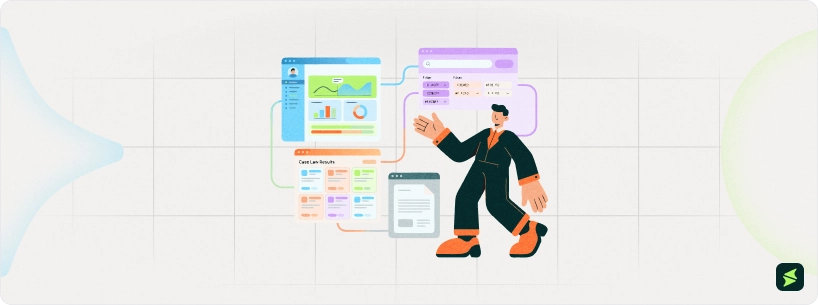
Westlaw Edge has a more traditional legal research interface. Its training path is built around signing in, starting research, checking plan content, and then using specific features such as AI-Assisted Research, Quick Check, and other research functions. This gives Westlaw Edge a more traditional research flow, with users moving from search to results and then into separate analysis tools. However, some users note that the interface can feel complicated.
Westlaw Precision feels more guided from the front end. Its training content puts homepage navigation and Deep Research much closer to the center of the experience, and Thomson Reuters also offers an optional customizable homepage. That makes the interface feel centered on AI-led workflows, rather than traditional legal search followed by separate tools. Many users report that Precision’s interface is well-structured and organizes sub-tabs into well-defined categories, making it easy to locate cases for legal research.
Westlaw Edge pricing starts at $132/month for its Westlaw Edge Single State Primary Law plan. Additional pricing tiers of the software include:
- Westlaw Edge All States Primary Law - $208/month
- Westlaw Edge All States and Federal Primary Law - $255.20/month
- Westlaw Edge AI Assisted Research - $328.00/month
Disclaimer: The pricing is subject to change.
Westlaw Advantage pricing starts at $492.00/month for all states and federal, offering features like editorial enhancements, industry-leading content, and deep research. Additionally, it also offers a Westlaw Advantage, Business plan for $1,352.80/month.
Disclaimer: The pricing is subject to change.
Value For Money
Westlaw Edge holds a value-for-money score of 8/10. Its plans start lower than Westlaw Advantage, which makes it a more accessible option on paper, especially for firms that do not need the newest AI-led workflow. Westlaw Precision earns a value-for-money score of 9/10, which is slightly stronger than Westlaw Edge
Beyond user sentiment, the difference in value comes down to what each platform unlocks at its base tier versus what requires additional investment.
Westlaw Edge delivers strong core research capabilities, including KeyCite citation analysis, litigation analytics, and tools like Quick Check. However, AI-Assisted Research is not included in the standard Westlaw Edge plan and is typically offered as a separate module.
Westlaw Precision, on the other hand, takes a more bundled approach. AI-Assisted Research is integrated into its primary offering, alongside newer capabilities like deep research and a litigation document analyzer. While this reduces reliance on separate modules, it also means the entry price is higher, and firms may end up paying for advanced AI features even if their usage is limited.
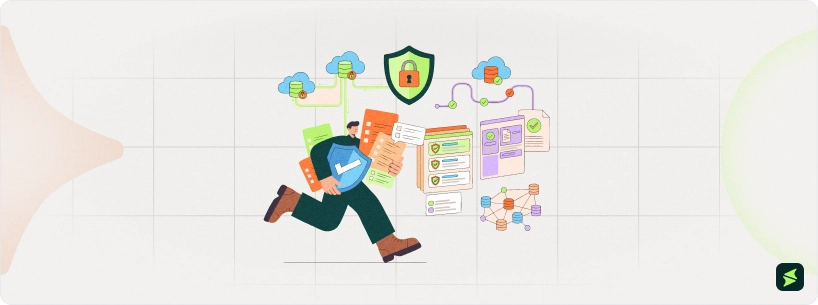
Because Westlaw Edge and Westlaw Precision are both part of the Westlaw platform, their compliance and security posture is defined at the broader rather than at the individual product tier.
The platform maintains a structured privacy and data protection program designed to align with the General Data Protection Regulation (GDPR). This includes clearly defined processes for how personal data is collected, processed, stored, and secured across its products.
At the operational level, both Westlaw Edge and Westlaw Precision operate within a controlled environment that includes standard enterprise safeguards such as restricted data access, secure infrastructure, and protections against unauthorized use.
Scalability in almost all leading legal software for research comes down to three things: how well the platform handles growing research workloads, how deeply it connects to a firm's existing tools, and whether that integration holds up as team size and caseload increase.
Handling Growing Research Volume And Complexity
Westlaw Edge scales by improving efficiency within traditional research workflows. Tools like KeyCite, Litigation Analytics, and Quick Check help validate authority and reduce risk, but the process remains largely user-driven, so scaling depends on researcher productivity.
Westlaw Precision scales by reducing manual effort as complexity increases. Features like Deep Research, and Litigation Document Analyzer enable faster movement from query to structured analysis, making it better suited for multi-step and high-volume research.
Integration With Firm Systems And Workflows
Westlaw Edge scales primarily through its API layer. Through Thomson Reuters Legal Data APIs, firms can integrate Litigation Analytics and Practical Law content directly into internal systems and workflows. This lets firms combine Westlaw’s legal intelligence with internal matter data, client histories, and business development records in one connected platform.
Westlaw Precision is more scalable when the focus shifts beyond traditional search into the end-to-end legal research workflow. Its newer workflow adds tools such as AI-Assisted Research, Precision Research, Claims Explorer, Litigation Document Analyzer, and Deep Research, which are built for more complex, multi-step legal analysis with less manual effort.
CoCounsel And Generative AI Capabilities
A key difference between the two platforms is how deeply generative AI is integrated into the research experience.
Westlaw Edge offers limited access to generative AI compared to Precision. While it includes AI-Assisted Research and other AI-enhanced tools, access to broader CoCounsel capabilities may depend on additional modules or newer product tiers rather than being fully integrated into the base experience.
Westlaw Precision includes the full CoCounsel suite, which brings agentic AI capabilities into legal workflows. It uses a federated search approach, allowing AI to access and analyze documents across repositories without requiring pre-indexing or data migration. This enables faster deployment and supports data privacy, as content can be queried and summarized in place rather than being centrally restructured.
Because Westlaw Edge and Westlaw Precision are both part of the Westlaw platform, the customer service structure is broadly the same across both. That support includes customer service for billing and account help, technical support, product help resources, and training materials.
However, Westlaw Edge has a slight advantage as it offers access to bar-admitted Reference Attorneys for research support, which can be a meaningful support layer for legal research questions beyond basic technical help.
User feedback also reflects positively on Westlaw’s overall support experience, with many highlighting responsiveness and reliability across both products. However, the availability of Reference Attorney support gives Westlaw Edge a small but meaningful edge in this category.
Beyond core research tools, the difference between Westlaw Edge and Precision becomes clearer in how each platform extends research into deeper analysis and workflow support.
Westlaw Edge adds depth to traditional research through tools that improve speed, comparison, and search precision. Its WestSearch Plus engine uses AI to surface the most relevant answers at the top of results, reducing time spent navigating long result lists. It also includes Statutes Compare and Regulations Compare, which allows users to instantly identify changes between versions of legal text and understand how laws have evolved without manual review. These tools are designed to strengthen the reliability of research rather than fundamentally change how research is conducted.
Westlaw Precision builds on this foundation with features that move beyond search into structured legal analysis. It includes all the functionality of Westlaw Edge, along with integrated AI-Assisted Research, and adds tools that support deeper, more advanced workflows.
Tools like Claims Explorer help identify and validate legal claims early in a matter, while AI-powered summaries provide concise overviews of legal issues and proceedings to accelerate understanding. Combined with capabilities like Deep Research and Litigation Document Analyzer, these features support more advanced, multi-step analysis with less manual effort.
Many users value Westlaw Edge for its strength in core legal research. Reviewers consistently highlight its search accuracy and the confidence it provides when working through legal issues.
One user noted that it “has the best search algorithm in the legal research industry,” while others emphasize how tools like KeyCite help ensure they have “covered all bases.” This reliability is a major reason why many firms continue to rely on it for day-to-day research.
Nevertheless, some users point out that the platform’s ability to verify whether a source has been overturned isn’t as reliable or efficient as some competing tools. Additionally, some users report occasional issues with handling multiple tabs, which can disrupt workflow during more complex research tasks.
In contrast, users highlight how intuitive and user-friendly Westlaw Precision is, often emphasizing that even complex legal research feels simple and manageable. Many appreciate the clean, thoughtfully designed layout, noting that key information—especially in case summaries, is presented clearly. The inclusion of helpful secondary sources is also frequently mentioned as a major advantage, saving time and reducing effort during research.
Use Case | Which Is Better | Why It Fits |
Citation Verification | Westlaw Edge | KeyCite Overruling Risk flags cases relying on implicitly undermined authority, reducing the risk of citing compromised precedent in filings |
Deep Multi-Step Legal Research | Westlaw Precision | Designed for more complex workflows, including deeper analysis of legal issues and structured research outputs |
Comparing Laws And Regulations | Westlaw Edge | Statutes Compare and Regulations Compare allow direct version-to-version comparison of legal text |
Litigation Strategy And Case Insights | Westlaw Edge | Litigation Analytics surfaces judge behavior and motion outcomes, supporting case preparation and client expectation management |
Brief Analysis And Document Review | Westlaw Precision | Litigation Document Analyzer reviews full documents, detects misstatements, and suggests counterarguments |
The right choice comes down to where your firm spends most of its research time and what you need the platform to do beyond case law search.
Westlaw Edge is built around a more established research workflow, with strong tools for case law validation, litigation analytics, and regulatory comparison. It is a reliable option for firms that want proven research capabilities without shifting too far into newer AI-led workflows.
Westlaw Precision is designed for teams that need more structured, in-depth research. It extends the same Westlaw foundation with more targeted filtering, document analysis, and AI-supported research tools that help move from search to analysis with less manual effort.