
Article
What Is HRMS Software? A Complete Guide for Businesses
3 mins read
Last Updated


By Azeem Farooqi and


Article
3 mins read
Last Updated
By Azeem Farooqi and

A Human Resource Management System (HRMS) is software that assists companies in managing their daily HR activities, such as payroll, attendance, recruitment, and performance tracking. It stores all information organized in one place and minimizes errors while simplifying the process of decision making by having the right data.
Several teams continue to use spreadsheets or isolated tools instead of dedicated HR software, thus creating messy and demanding HR work. An HRMS unites all your activities on a single platform, and therefore, you can deal with payroll, compliance, and employee records without duplication and confusion.
However, technology alone isn’t the full answer. What's more important is how it's being used. With your HR data, onboarding, and performance tracking running all in one system, HR stops being a routine job and starts producing real business outcomes.
HR terms often sound similar in many ways, yet each system is involved in the management of people and processes. Knowledge of their differences will enable you to make the correct decision about the one that fits your organization.
System | Main Focus | Key Functions | Best For |
HRIS | Employee data management | Handles employee records, payroll, benefits, and compliance |
|
HRMS | Process automation | Automates recruitment, onboarding, performance tracking, payroll, and attendance |
|
HCM | Strategic workforce planning | Focuses on talent development, analytics, and long-term workforce growth |
|
In short, a Human Resource Information System (HRIS) primarily stores and manages employee information. An HRMS builds on HRIS capabilities by automating broader HR processes. Human Capital Management (HCM) goes a step further, focusing on strategic planning, talent development, and optimizing the value of the workforce. Collectively, they represent the entire process of data management to workforce development.
The strength of an HRMS is that every feature enables daily HR efforts to be quicker, easier, and more precise. These tools do not simply help automate processes; they allow the HR teams to concentrate on people, rather than on paperwork.
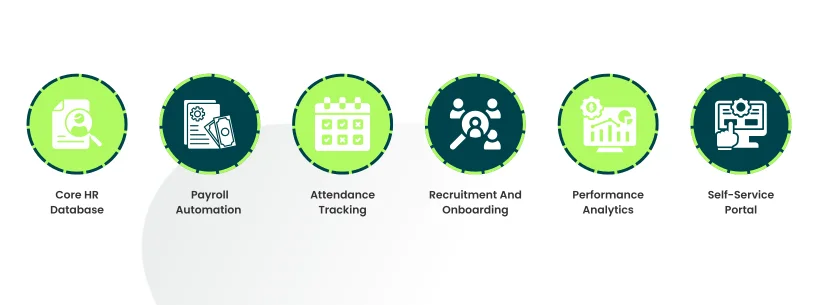
Together, these features form a connected system that drives operational consistency, accountability, and scalable growth.
The greatest benefit of the HRMS software is the fact that it transforms ordinary HR practices into easy to complete, quicker, and dependable processes. It saves resources by automating repetitive work, allowing the teams more time to focus on people and long-term planning.
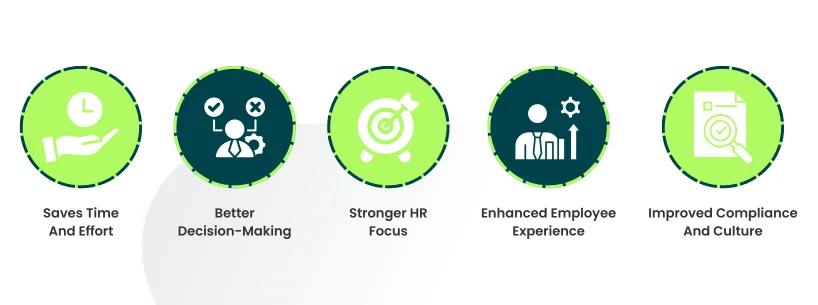
Together, these benefits turn HR operations into a competitive advantage.
HRMS's future is a prediction forecasting system rather than record keeping. Contemporary systems are becoming smarter, faster, and more interconnected with HR.
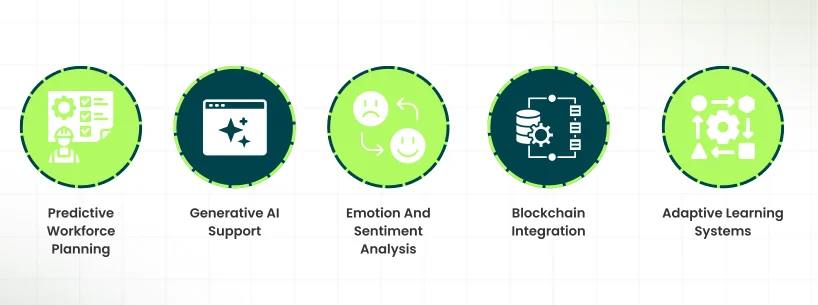
Early adoption of such innovations can help businesses transform HR into something more active, data-oriented, and ready for future work.
HRMS has become necessary for effective and evidence-based workforce management. It assists HR departments in shifting from manual activity to strategic planning. When companies are future planning, the selection of appropriate HRMS is capable of enhancing productivity, compliance, and engagement.
Compare top HRMS solutions to find the best fit for your organization.