


Last Updated
Key Takeaways
Generated from the text of customer reviews
Our Verdict
Alloy Specifications
- Inventory Management
- Order Fulfillment
- Procurement Management
- Logistics & Transportation
What Is Alloy?
Alloy.ai is a cloud-native demand and inventory intelligence platform tailored for consumer brands and retailers. It ingests point of sale (POS), enterprise resource planning (ERP), distributor, and supplier data via 850+ pre-built connectors (flat files, application programming interfaces (APIs), electronic data interchange (EDI)) and normalizes that data by mapping stock keeping units (SKUs), units, and timeframes. The platform also supports seamless export-to-data warehouses, business intelligence (BI), and planning tools. It is Service Organization Control 2 (SOC 2) compliant and aligned with the General Data Protection Regulation (GDPR) and the California Consumer Privacy Act (CCPA), ensuring enterprise-grade security and compliance.
What Is Alloy Best For?
Alloy stands out for its Orchestrated Intelligence approach, where an AI orchestrator evaluates each request and routes it to specialized sub-agents built for different types of analysis, ensuring that simple data queries are handled efficiently while deeper ‘why’ questions are sent to reasoning-focused agents that can investigate root causes. The platform also features smart query routing that distinguishes between quick data pulls and complex analytical tasks, along with contextual memory that preserves conversational awareness so it can interpret references like ‘this issue’ or ‘that retailer’ across multi-step workflows without losing continuity.
How Much Does Alloy Cost?
Alloy.ai pricing starts at $1,531/month for the Alloy.ai Base tier with a 1-year commitment. It offers two other subscription tiers with at least a 1-year commitment:
- Alloy.ai Core: Starts at $2,275/month
- Alloy.ai Pro: Starts at $4,463/month
Along with these subscription prices, users should account for the following additional costs:
- Implementation And Onboarding: $10,000–$150,000+, depending on system complexity and number of integrations
- Data Integration And Engineering Support: $5,000–$50,000+, particularly for multi-source pipelines and real-time syncing requirements
- Custom Analytics And AI Model Configuration: $20,000–$200,000+, for tailored forecasting models, pricing optimization, and merchandising intelligence features
- API Access And Embedded Analytics: $10,000–$100,000+, depending on usage volume and internal system embedding requirements
Users generally view Alloy pricing as premium and best suited for enterprise-level organizations, with many highlighting that while the platform delivers strong value through advanced retail analytics, forecasting, and supply chain visibility, it may feel expensive for smaller teams or mid-sized businesses. Reviewers often note that the investment is justified for large consumer brands due to improved demand planning accuracy, reduced stockouts, and better inventory control across channels. However, some users point out that the lack of transparent, upfront pricing, and the need for a sales-led pricing model can make it difficult to evaluate cost expectations early on, particularly when comparing it to more lightweight analytics solutions.
Disclaimer: Pricing references are based on publicly available third-party information and industry benchmarks. Actual costs may vary.
Alloy Integrations
The platform integrates with numerous software, including:
- Shopify Software
- Microsoft Dynamics SL
- Netsuite
- Sage X3
- Tableau software
- Microsoft Excel Software
How Does Alloy Work?
Log in to Alloy software to access an AI-powered analytics and insights platform that helps teams explore data through natural language and intelligent query handling. Follow the steps below to use its key features:
- Connect your data sources to the platform so Alloy can unify information from across your business systems into a single searchable layer
- Ask questions in plain language to instantly explore data, uncover trends, and get structured insights without manually building reports
- Let the system automatically interpret each query and determine the best way to retrieve or analyze the information based on intent and complexity
- Use guided AI responses to break down complex questions into clearer insights, highlighting patterns, drivers, and relevant context in the data
- Continue conversations naturally as Alloy retains context across follow-up questions, allowing you to refine analysis without restarting from scratch
- View outputs in a structured, readable format that helps teams quickly understand performance trends and make data-driven decisions
Who Is Alloy For?
Alloy.ai caters to many industries and sectors, including:
- Consumer electronics
- Food and beverage
- Home goods
- Home improvement
- Office supplies
- Consumer goods
Alloy Use Cases
Based on our analysis of Alloy’s product capabilities and positioning, we have identified key scenarios where the platform is commonly used by teams to explore data, generate insights, and support faster decision-making through natural language analytics and context-aware analysis:
1. Consumer Electronics Brands Replacing Manual Dashboard Reporting With Self-Serve Insights
Consumer electronics companies often rely on fragmented dashboards to track sales performance across SKUs, regions, and retail channels, which slows down reporting cycles and creates dependency on analysts. Alloy supports this environment by allowing teams to ask questions in plain language and instantly retrieve structured insights from connected data sources, reducing reliance on static dashboards and enabling faster access to performance metrics across product lines.
2. Food and Beverage Teams Investigating Sales Shifts And Demand Fluctuations In Real Time
Food and beverage businesses frequently experience sudden changes in demand due to seasonality, promotions, or supply chain shifts, making it difficult to quickly understand what is driving performance changes. Alloy helps teams analyze these fluctuations by enabling conversational exploration of sales data, allowing users to identify patterns, compare time periods, and uncover contributing factors behind spikes or declines in demand.
3. Home Goods Brands Tracking Product Performance, Trends, And Inventory Signals
Home goods companies manage large and diverse product catalogs where understanding which items are trending or underperforming is critical for inventory planning. Alloy supports this by helping teams explore product-level performance data, detect anomalies, and identify demand trends through natural language queries, enabling quicker decisions around restocking, promotions, and product assortment.
4. Office Supplies Teams Analyzing Customer Behavior And Regional Demand Patterns
Office supplies businesses often serve a wide mix of enterprise and retail customers, making it important to understand purchasing behavior across different segments and regions. Alloy enables teams to investigate customer trends, compare regional performance, and explore multi-layered questions using contextual, follow-up analysis, helping teams refine sales strategies without relying on manual spreadsheet reporting.
Is Alloy Right For You?
If you are a consumer brand seeking real-time visibility into multichannel sales and inventory, Alloy.ai is a strong contender. Its AI and ML analytics, predictive simulations, and supply chain control‑tower design support scalability and security, with enterprise-grade security measures including encryption, secure cloud infrastructure, and strict access controls to protect sensitive retail and supply chain data. Recognized as a leader in retail analytics and demand planning, Alloy.ai is trusted by brands like Crayola, BIC, and Melissa & Doug.
Still exploring whether Alloy.ai fits your needs? Get in touch with our team at (661) 384-7070 — we’re here to help you find the right solution for your business.
Alloy Features
Data Ingestion And Normalization
Connect to hundreds of POS, ERP, and supply chain feeds with pre-built connectors. The platform ingests varied formats like APIs, flat files, EDI, and Excel, then automatically harmonizes product IDs, units of measure, and calendar structures to create a unified dataset.
Omnichannel Revenue Intelligence
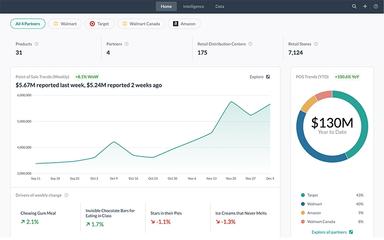
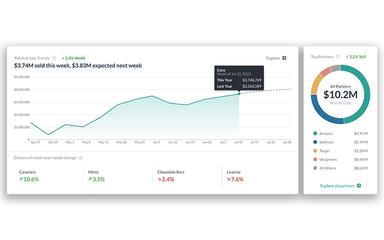
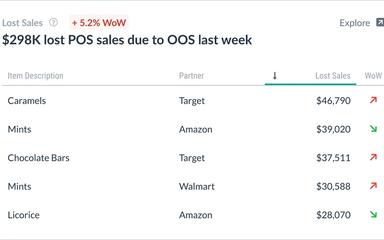
Alloy.ai offers comprehensive retail analytics through hundreds of pre-built CPG-specific dashboards and reports, along with custom reporting options. Users receive real-time alerts for issues like stockouts, phantom inventory, and replenishment needs. The platform allows drilling down to SKU or store-level trends and zooming out for a cross-channel view. Additional tools include POS forecasting at the SKU/store level, sell-through vs. plan tracking, cross-retailer performance scorecards, and promotion performance monitoring from day one.
Artificial Intelligence Capabilities
The solution uses advanced machine learning to deliver precise POS forecasts, intelligent inventory insights, and predictive simulations tailored for consumer brands. Alloy.ai automates data preparation by pulling, cleaning, and normalizing inputs from retailers, ecommerce, distributors, and ERP systems. Its algorithms surface anomalies like sales deviations and prioritize high-impact insights, reducing the need for manual data analysis. Users can simulate future retail scenarios to mitigate risks like stockouts or On-Time In-Full (OTIF) fines and automate replenishment through AI-driven order recommendations and shareable dashboards.
Supply Chain Visibility
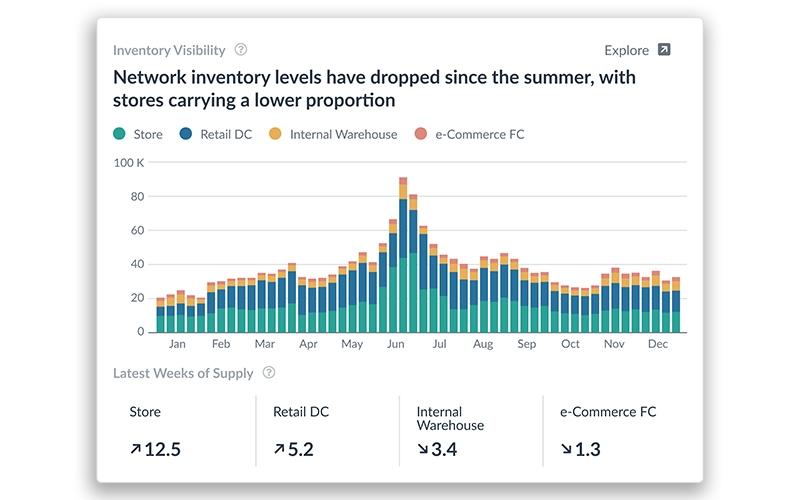
Alloy.ai provides real-time, end-to-end inventory visibility across your own network and your retail and supply chain partners. By integrating ERP and external partner data, the platform helps identify inventory shortages, overstocks, and phantom inventory at specific SKUs or locations. Users can monitor warehouse stock risks, receive alerts to improve fill rates and avoid OTIF fines. It also enables data-driven allocation decisions by pinpointing high-impact stock issues and automates excess inventory tracking by showing weeks of supply without relying on spreadsheets.
Retail And Supply Chain Data Connectors
The platform enables brands to pull daily, normalized sales and inventory data from any source—be it API, EDI, or retailer portal. With hundreds of pre-built integrations, Alloy.ai connects retail, e-commerce, third-party logistics (3PL), ERP, and analytics systems directly to your data warehouse, BI tools, or planning applications. This ensures consistent, high-quality data flows across every function.
Alloy Reviews
Total 11 reviews
4.9
All reviews are from verified customers
Rating Distribution
5
Stars91%
4
Stars9%
3
Stars0%
2
Stars0%
1
Stars0%
Share your experience
Angie W.
Mid Market, 500+ employees
Less than a year
“Able to gain faster insights with this tool”
Pros
Alloy has helped us centralize our data in one place significantly boosting efficiency for our sales, marketing and regulatory teams. Also the implementation was smooth and customer service has gone above and beyond.
Cons
Everything in it has been helpful to me. so no Complaints.
Rating Distribution
Ease of use
10
Value for money
10
Customer Support
10
Functionality
10
Verified User
Retail, 500+ employees
Less than a year
“Proven really valuable”
Pros
The ease of use is simply amazing. Also the speed at which it returns data is impressive. It is very simple to create custom dashboards and the insights are limitless. Plus the graphics are clear and easy to understand.
Cons
I do not have any complaints at the moment. Everything is working perfectly so far.
Rating Distribution
Ease of use
10
Value for money
10
Customer Support
10
Functionality
10
Verified User
Consumer Electronics, 500+ employees
Less than a year
“Able to set it up in no time”
Pros
Getting up and running with Alloy was pretty easy. Plus their ability to handle various data formats was something great. And the team is highly collaborative and consistently provides effective solutions to any issues or queries we encounter.
Cons
We cannot customize facts to match our internal naming conventions and it does not support tracking multiple currencies.
Rating Distribution
Ease of use
10
Value for money
10
Customer Support
10
Functionality
10
Frequently Asked Questions
Does the platform offer an API?
Yes, Alloy.ai provides API access for custom integrations.
What other apps does the software integrate with?
Alloy.ai integrates with Shopify, Microsoft Dynamics, Netsuite, Sage, Tableau, Excel, and more.
Does Alloy.ai have a mobile app?
No, the platform does not offer a dedicated mobile app.
What types of pricing plans does the platform offer?
Alloy price starts at around $1,531/month with the Alloy.ai Base plan for one year. It offers two other subscription tiers, each with a minimum 1-year commitment. The Alloy.ai Core starts at $2,275/month, and the Alloy.ai Pro plan starts at $4,463/month. Contact us for a personalized Alloy cost quote.
Who are the typical users of Alloy.ai?
The software is used by professionals across various industries, including consumer electronics, food and beverage, home goods, home improvement, office supplies, consumer goods, and more.
What level of support does Alloy.ai offer?
The platform offers support via form submission and a dedicated resource center.