


Last Updated
Overview
Stord provides logistics and fulfillment software for managing inventory, orders, and warehouse operations across multiple channels. While inbound receipt processing can take time to close within the system, its network-based fulfillment setup, routing features, and delivery tracking support brands that handle high order volumes.
Be the first one to leave a review!
No review found

Starting Price
Custom
Stord Specifications
- Inventory Management
- Order Fulfillment
- Logistics & Transportation
- Warehouse Management
What Is Stord?
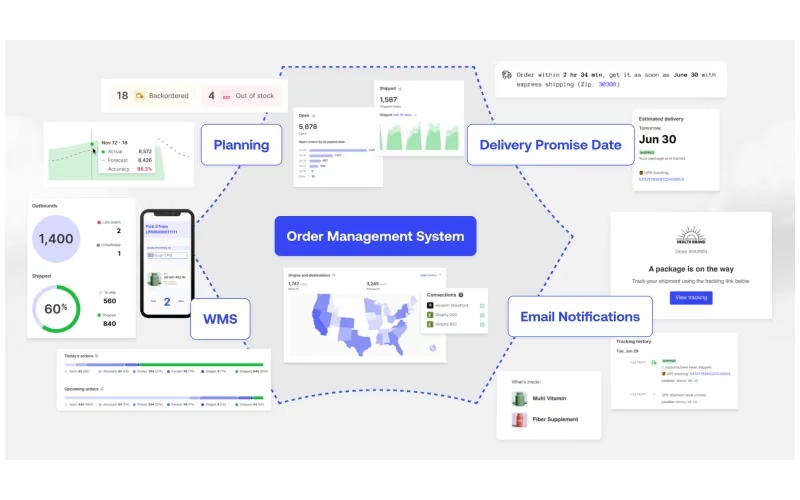
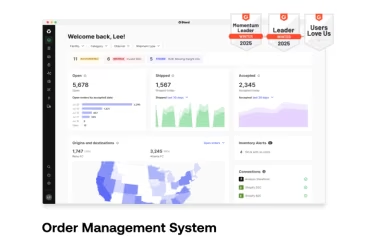
Stord is a cloud-based commerce platform used by high-growth DTC and B2B brands in sectors such as beauty, supplements, and apparel. It brings supply chain systems into one workspace to manage order coordination, warehouse operations, and inventory planning. The software uses AI-based tools to process operational data and provide real-time visibility into stock and order activity. This helps teams keep things under control when fulfillment gets complex and order volumes grow.
What Is Stord Best For?
Stord is best known for its consumer experience layer built on top of commerce operations software. It is particularly known for giving shoppers estimated delivery dates at checkout, branded order tracking pages, and automated post-purchase updates, all within one system. It is a strong fit for brands handling high order volumes, moving away from separate customer communication tools, or selling through multiple channels, where keeping customer updates and order data in one place cuts manual effort and keeps messaging consistent.
How Much Does Stord Cost?
The pricing of Stord is estimated at $2,000 to $15,000+/month, based on industry benchmarks for comparable omnichannel fulfillment and supply chain SaaS platforms. This range is a general budgeting reference. Final costs depend on order and shipment volume, how many warehouse nodes and fulfillment locations are in use, and which software modules the business has activated.
In addition to the base subscription costs, organizations should account for the following expenses:
- Implementation: Typically falls between $5,000–$25,000 for setting up warehouse networks, configuring the system, and onboarding fulfillment locations
- Data Migration: Usually estimated at $2,000–$10,000 for moving product catalogs, past order records, and inventory data from existing ERP or 3PL systems
- Training And Onboarding: Commonly priced at $1,500–$8,000 for training teams on order management, warehouse workflows, and reporting tools
- Integrations: Typically ranges from $3,000–$15,000 for connecting external systems such as Shopify, Amazon, ERP, or EDI platforms
- Customization And Configuration: Often priced in the $2,500–$12,000 range for setting up workflow rules, order routing logic, and customer-facing experience elements
- Premium Support: Usually priced at $500–$3,000/month for additional support services such as faster response times, dedicated account assistance, and ongoing operational help
Disclaimer: Pricing references are based on publicly available third-party information and industry benchmarks. Actual costs may vary.
Stord Integrations
The software supports integration with multiple systems and platforms, such as:
- Shopify software
- Magento
- Oracle NetSuite
- WooCommerce
How Does Stord Work?
Users can log in to Stord’s platform and follow the steps below to manage supply chain and commerce operations:
- Set up access by creating user accounts, assigning roles, and giving team members access based on their responsibilities in operations
- Configure the system by adding product details, warehouse locations, and basic operational rules that guide how orders and inventory are handled
- Import data by bringing in product catalogs, past orders, and stock records from existing systems so teams can work from one place
- Manage incoming orders by viewing new purchases and sending them to the right fulfillment location based on set conditions
- Monitor inventory by checking stock levels in different locations and reviewing how products move as orders are processed
- Track daily operations by reviewing order status, fulfillment progress, and delivery updates through built-in reporting views
Who Is Stord For?
Stord is ideal for a wide range of industries and sectors, including:
- Consumer packaged goods
- Food and beverage
- Health and wellness
- Pet food and supplies
Stord Use Cases
Based on our analysis of user reviews and Stord’s current capabilities, we have identified key scenarios where this platform is a good fit for e-commerce and consumer brands managing fulfillment, operations, and customer experience workflows:
E-Commerce Brands Scaling Fulfillment During High-Volume Demand Periods
E-commerce and consumer brands experiencing rapid order growth frequently face mounting pressure on warehouse capacity, order processing speed, and fulfillment consistency. When order volumes shift during peak seasons or promotional cycles, operational teams can struggle to maintain timely execution without added manual coordination. Stord may be relevant for organizations in this situation, particularly those that need structured handling of high-volume order flow where fulfillment activity must be managed with greater operational control.
Multi-Channel Brands Dealing With Fragmented Commerce And Operational Systems
Brands selling through multiple storefronts, marketplaces, and retail partners commonly work with disconnected systems where order data, inventory records, and fulfillment updates live in separate environments. That separation makes it difficult to maintain consistent operational alignment or a clear view of ongoing commerce activity. Stord could suit organizations looking to reduce fragmentation by working within a more connected operational setup where commerce data is not spread into multiple tools.
Operations Teams Managing Order Disruptions And Fulfillment Exceptions
Operational teams regularly run into situations where orders stall due to issues such as incorrect product information, address errors, or fulfillment holds that require manual review. These disruptions slow down processing and create additional coordination work between teams responsible for order completion. Stord may be relevant for organizations that need a more structured approach to identifying and resolving order exceptions during fulfillment, particularly in environments where timely resolution is important for maintaining workflow continuity.
Warehouse Operations Teams Coordinating Internal Execution And Workflows
Warehouse teams responsible for receiving, picking, packing, and shipping need clear structure around how daily tasks are organized and executed within facilities. Without coordinated workflows, operational steps become harder to track, especially when multiple activities run simultaneously at different stages of fulfillment. Stord could be useful for organizations looking to manage internal warehouse execution in a more organized way, where task flow follows a defined and trackable structure.
Consumer Brands Managing Post-Purchase Communication And Order Updates
Brands focused on customer experience after checkout need consistent communication around order status, delivery progress, and shipment updates. When that information is managed through separate tools or manual processes, it leads to inconsistencies in how customers are informed throughout the order journey. Stord could be worth considering for teams that want to manage post-purchase communication in a more structured way.
Is Stord Right For You?
If you manage a DTC, B2B, or omnichannel brand with complex fulfillment operations, Stord could be the right fit. The platform brings order management, warehouse management, inventory planning, and consumer-facing order experiences into one connected system. It is trusted by brands like Kinship, TULA, NATIVE, and GXVE, and is SOC 2 Type II compliant. Stord also received the 3PL Platform of the Year award from SupplyTech Breakthrough, noting its place in the logistics and commerce technology space for growing brands.
Still doubtful if Stord is the right fit for you? Connect with us at (661) 384-7070 for further guidance.
Stord Features
Order Routing
Stord uses rules-based order routing to determine fulfillment paths based on inventory availability, shipping costs, facility location, and predefined business conditions. Teams can configure routing logic, automate backorder handling, monitor fulfillment center performance, and reassign orders when fulfillment issues come up during processing.
Multichannel Inventory
The software lets brands manage inventory assigned to different sales channels from one centralized environment. Users can reserve stock for specific partners or storefronts, track channel-level availability, create channel-specific product listings, automate shortage responses, and get notified when inventory exceptions need attention.
Expiration Management
Stord tracks expiration and best-by dates at the SKU level to support inventory compliance requirements. Businesses can define retailer-specific rules, receive alerts when those requirements cannot be met, prioritize inventory based on lot information, and maintain detailed visibility into inventory age and status.
Inventory Planning
The platform includes inventory planning tools that pull from historical sales data, seasonal trends, and business inputs to generate SKU-level forecasts. Teams can monitor supply gaps, review replenishment recommendations, check inventory health, and fold planning activities into fulfillment processes without relying on external spreadsheets.
Estimated Delivery Dates
Stord calculates estimated delivery dates using historical shipping performance, inventory availability, customer location, and live order data. It lets users display delivery dates during checkout, support shipping option selection, test different delivery messaging, and manage delivery date settings within the order management environment.
Pros And Cons of Stord
Pros
Helps teams manage warehouse and order operations in one system
Minimizes manual effort in routing orders across facilities
Reduces manual effort in managing inventory across sales channels
Makes it easier for teams to resolve order and fulfillment exceptions quickly
Improves accuracy of estimated delivery date calculations
Cons
Inventory adjustments sometimes lack strong alerts and tracking
Customer support response times may vary
Some third-party integrations may require further improvement for smoother data sync
Stord Reviews

No reviews yet!
Be the first to review this product
Frequently Asked Questions
What other apps does Stord integrate with?
Stord supports integration with platforms such as Oracle NetSuite, Shopify software, WooCommerce, and Magento.
Does Stord offer an API?
Yes, Stord offers an API.
What types of pricing plans does Stord offer?
Stord pricing ranges between $2,000 and $15,000+/month. Get a detailed Stord cost breakdown tailored to your specific requirements.
What language does Stord support?
Stord software primarily supports the English language.
Who are the typical users of Stord?
Stord features are used by organizations across industries, including apparel, beauty, and food.
Does Stord have a mobile app?
No, Stord does not offer a dedicated mobile app.
What level of support does Stord offer?
Stord offers support through phone and email.