

Last Updated
Overview
ProcessUnity provides a cloud-based platform to unify enterprise governance, risk, and compliance processes. While its extensive feature set may be overwhelming for smaller teams, its no-code configuration and hands-free automation greatly streamline risk assessment workflows. Overall, its comprehensive reporting tools support proactive risk management.
Be the first one to leave a review!
No review found

Starting Price
Custom
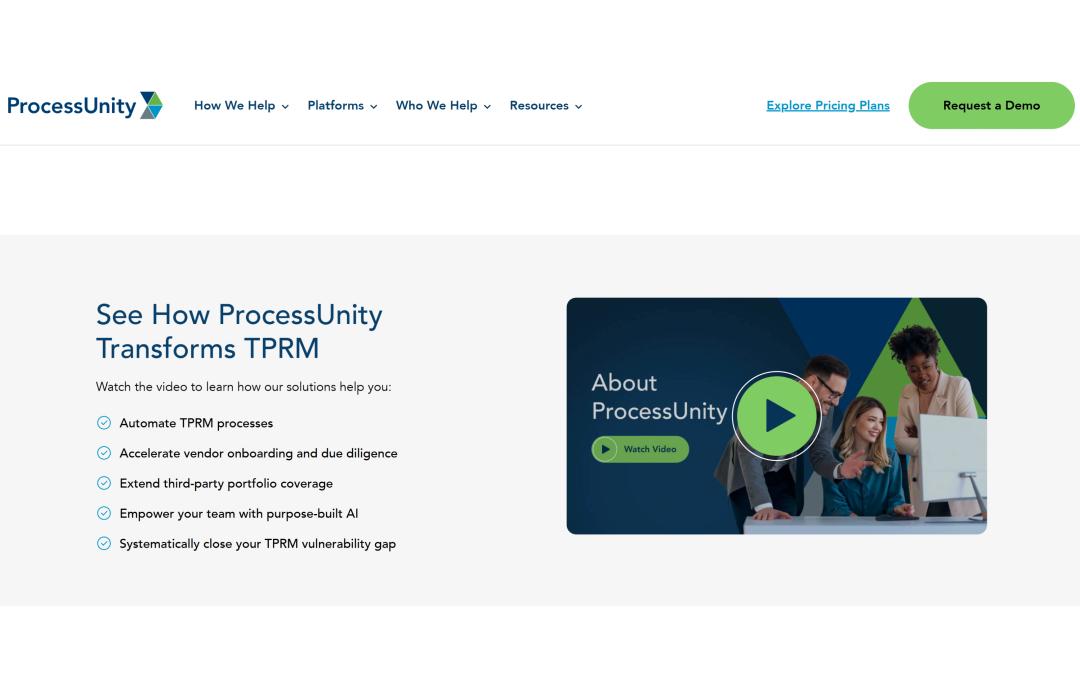
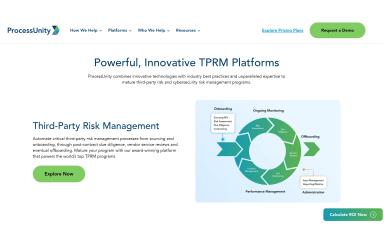
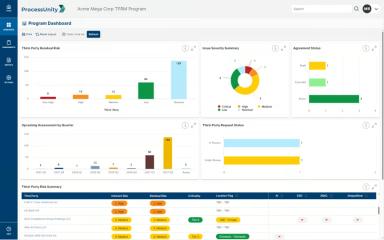
ProcessUnity Specifications
- Risk Assessment And Mitigation
- Regulatory Compliance Tracking
- Regulatory Change Monitoring And Impact Analysis
- Audit Management
What Is ProcessUnity?
ProcessUnity is a cloud-based platform for governance, risk, and compliance management, helping organizations unify and automate enterprise and third-party risk programs. Its Artificial Intelligence (AI) driven analytics reduce risk exposure and accelerate compliance processes. A no-code configuration approach enables teams to quickly customize assessment workflows without IT support, minimizing setup delays. Automated risk and control assessments reduce manual work and highlight critical issues early. Built-in dashboards and reports provide stakeholders with real-time visibility into risk and compliance status.
ProcessUnity Pricing
The software offers a starting price of $25,000 for small and medium-sized businesses. Custom pricing tailored to an organization’s specific needs and preferences is also available.
Additional costs can also apply depending on selected features, integrations, or services. Estimations may fall within these ranges:
- One‑Time Implementation and Setup Fee: $15,000 – $50,000+
- Onboarding And Enablement: $20,000 – $75,000
- Integration Fees: $10,000 – $40,000
- Training And Enablement: $5,000 – $15,000
- Ongoing Support And Maintenance: ~15% – 22% of license cost annually
Disclaimer: The pricing is subject to change.
ProcessUnity Integrations
The platform integrates with several third-party applications and systems, such as:
- Jira software
- Salesforce
- Docusign
- Microsoft SharePoint
- Oracle
- Workday
Who Is ProcessUnity For?
ProcessUnity is well-suited for a wide range of industries and sectors, including:
- Energy and utilities
- Financial services
- Healthcare
- Life sciences
- Manufacturing
- Retail
- Technology
Is ProcessUnity Right For You?
Struggling with manual vendor risk oversight, regulatory mandates, or disconnected risk data? ProcessUnity is for organizations needing centralized, automated risk and compliance management. It excels at third-party risk management, using purpose-built AI to scale assessments and align controls across frameworks. Built for scalability, annual SOC 2 Type 2 and ISO 27001 audits demonstrate its robust security posture.
Still doubtful if ProcessUnity software is the right fit for you? Connect with our customer support staff at (661) 384-7070 for further guidance.
ProcessUnity Features
Vulnerability Alert Monitoring
ProcessUnity features integration of vulnerability advisories from NIST National Vulnerability Database and CISA Known Exploited Vulnerabilities. Automated alerts and severity-based workflows initiate vendor assessments, improving timely exposure awareness across risk management processes for informed decisions.
Third Party Assessment Prioritization
With this feature, the platform prioritizes third-party assessments using inherent risk, geographic, firmographic, and technographic data. Focus on vendors critical to operations and exposed to compromised technology supports efficient risk evaluation for informed prioritization decisions.
Emergency Assessment Initiation And Scoring
The platform generates and distributes threat-specific assessments to relevant third parties via a secure portal. Automated scoring based on preferred responses and one-click executive summaries highlight impacted vendors and response actions for clearer risk prioritization.
Global Regulation Compliance Accelerators
The software offers purpose-built accelerators to support compliance with DORA, APRA, ABAC, and LkSG regulations. Continuous monitoring and reporting capabilities help organizations align third-party risk processes with evolving regulatory requirements for consistent oversight across vendors.
Pros And Cons of ProcessUnity
Pros
Completes workflow customization without any coding needed
Seamlessly automates risk assessment and control tasks
Instantly generates real-time executive-ready reports
Cons
Documentation gaps may hinder user workflows
Feature compatibility can vary across categories
ProcessUnity Reviews

No reviews yet!
Be the first to review this product
Frequently Asked Questions
Does ProcessUnity offer an API?
Yes, ProcessUnity does offer an API.
What level of support does ProcessUnity offer?
The platform provides support via online form and FAQs.
Does ProcessUnity have a mobile app?
No, ProcessUnity does not offer a mobile app.
What types of ProcessUnity price plans are available?
ProcessUnity offers a starting price of $25,000 for small and medium-sized businesses, with custom pricing available based on an organization’s specific needs. Additional costs may apply depending on selected features, integrations, or services. Contact us to request a personalized ProcessUnity cost quote based on your institution's requirements.
What other apps does ProcessUnity integrate with?
The platform integrates with several third-party applications and systems, including Jira, Salesforce, DocuSign, Microsoft SharePoint, Oracle, and Workday.
What language does ProcessUnity support?
The software supports over 30 languages, including English.
Who are the typical users of ProcessUnity?
ProcessUnity is well-suited for a wide range of industries, including energy and utilities, financial services, healthcare, life sciences, manufacturing, retail, and technology.