




Claude and ChatGPT are two of the most widely used AI assistants today, but they are built with different strengths in mind. Claude focuses on handling long, complex tasks and careful reasoning, whereas ChatGPT stands out for its versatility, offering features like image generation and broad integrations with other tools. Both platforms are powerful, but neither is universally better for every workflow.
This guide compares Claude vs ChatGPT across features, capabilities, pricing, and use cases to help you determine which tool best fits how you work.
Claude Starting Price: $17/month Best For: Education, Healthcare, Finance, Life Sciences, Government Mobile App: Android, iOS User Ratings: 3.6 Disclaimer: The pricing is subject to change. | ChatGPT Starting Price: $8/month Best For: Engineering, Finance, Marketing, Data Science Mobile App: Android, iOS User Ratings: 3.9 Disclaimer: The pricing is subject to change. |
Claude Anthropic is the next generation of AI assistant designed for professionals, enterprises, and everyday users. The tool offers various text processing, conversational tasks, and advanced reasoning capabilities. Powered by Model Context Protocol, Claude easily connects with various databases, applications, and tools for relevant responses.
The platform extends AI into workplace tools such as Chrome, Slack, PowerPoint, and Excel. This means users can work directly with files, for example, summarizing spreadsheets, analyzing data, or generating reports. Furthermore, Anthropic offers a dedicated learning hub, which offers courses covering everything from best practices of enterprise deployment to API development guides.
ChatGPT, developed by OpenAI, is a generative AI assistant capable of producing text, images, and voice responses based on user prompts. It stands out for its creativity, multi-modal capabilities, and broad accessibility. With features like custom GPTs and long-term memory, it’s ideal for iterative workflows and everyday queries.
The platform easily connects with various tools, including Airtable, Slack, Google Drive, and SharePoint. Moreover, OpenAI provides extensive learning courses through ‘OpenAI Academy’, which offers free learning courses, official certification programs, employer partnerships, and virtual and in-person community events.
By The Numbers
Metric | Claude | ChatGPT |
Monthly Visits (Feb 2026) | 287.93M | 5.19B |
AI Market Share | 4.5% | 45.3% |
Top Traffic Source | USA (25.44%) | USA (20.31%) |
Source: SEMrush, Demand Sage, February 2026
Features | Claude | ChatGPT |
Image Generation | ✗ | ✓ |
Web Search | ✓ | ✓ |
Video Generation | ✗ | ✗ |
Coding | ✓ | ✓ |
Resume Prior Conversations | ✓ | ✓ |
Voice Generation | ✗ | ✓ |
Cite Sources | ✓ | ✓ |
Custom Plugins | ✓ | ✓ |
Document Upload & Analysis (PDF, Files) | ✓ | ✓ |
Group Chats | ✗ | ✓ |
Study Mode | ✗ | ✓ |
Shopping Research | ✗ | ✓ |
Deep Research | ✓ | ✓ |
File Creation | ✓ | ✓ |
Artifacts | ✓ | ✗ |
Claude’s scalability is influenced by how much information is processed in a single prompt. The newer models, e.g., Claude Opus 4.6, Sonnet 4.5, and Sonnet 4, support 1 million tokens through the API. Older versions support the context window of 200K tokens, which is about 500+ pages of text. This capability makes Claude particularly useful for document-heavy workflows and large analytical tasks.
It scales across organizational sizes, from individuals and small/medium-sized businesses to large enterprises, and can be deployed across teams while maintaining centralized security management. It supports multi-user access that allows businesses to enable SSO and automated user provisioning, so employees can log in using company identity systems.
Regarding deployment, Claude integrates with cloud platforms like Google Cloud Vertex AI and AWS Bedrock, enabling organizations to build and scale AI solutions.
Compared to Claude, ChatGPT’s 4.1 model supports a 1 million token context window. The tool is well-suited for various business sizes, including growing teams, small and mid-sized businesses, and enterprises. This is due to its mature API infrastructure and collaborative workflows.
ChatGPT's enterprise offering also supports large-scale deployment, including domain verification, SSO, an admin console for member management, and analytics dashboard for usage insights to support organization-wide rollout.
Within the workspaces, the admin console allows an administrators to configure role-based access controls and ensure secure sign-in through SSO. The platform has moved towards real-time collaboration features like group chats and shared workspaces.

- For document-heavy analysis and large datasets, Claude scales well due to its large context windows
- ChatGPT scales better with its mature API ecosystem and multi-user workspaces for collaborative environments
Claude maintains simplicity with a clean interface focused on conversations, plus Artifacts for collaborative editing. As it offers a relatively focused set of features, its interface is minimalist: a prompt box, quick-access dropdowns for model and style preferences, and simple file attachment options.
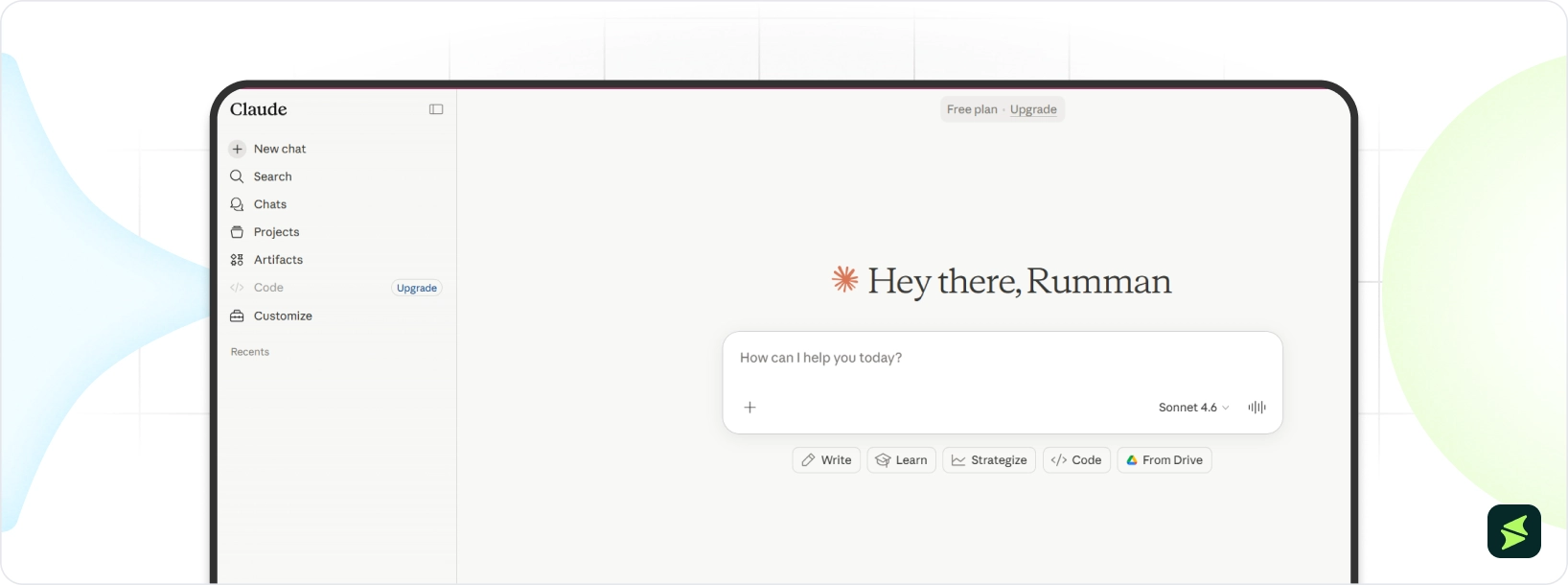
ChatGPT's interface is more well-structured thanks to its feature panel on the right, like Images, Apps, Projects, Codex, and Deep Research, providing an organized layout. Its interface is not much different, though with its larger selection of features, there's a bit more to navigate. It is reliably excellent when dealing with standard queries such as image analysis, logic and reasoning, and text generation.
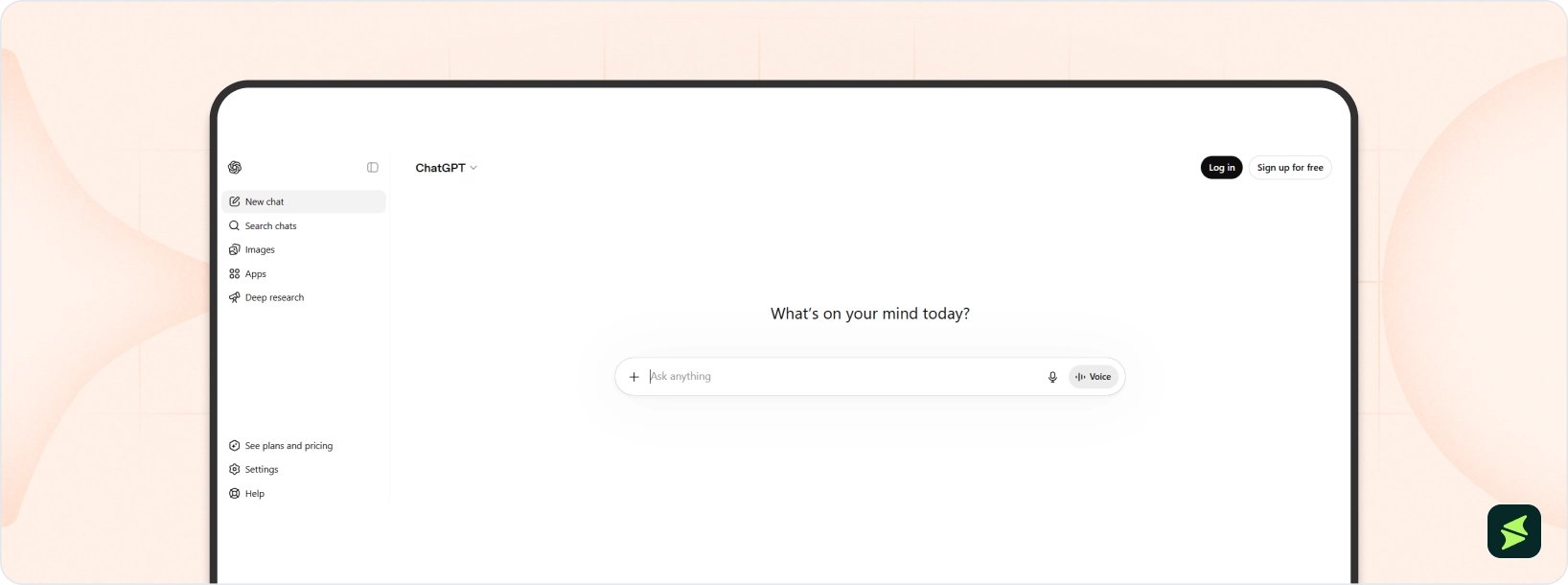
- Claude's intuitive interface delivers the best due to its clean, distraction-free workspace for document analysis
- ChatGPT wins for users who prefer a familiar, Google-search-style interface with sidebar organization
Both tools offer tiered pricing plans across individuals, teams, and businesses, with options that scale based on feature access and usage.
Claude pricing starts at $17/month with its Pro plan for individuals. Further pricing plans include:
- Free - $0
- Max - $100/person/month
For Teams and Enterprises
The pricing starts at $25/month in its Standard seat. Further pricing plans include:
- Premium Seat (Teams) - $125/month
- Enterprise – $20/seat
- Education Plan – Custom pricing
On the other hand, ChatGPT pricing starts at $8/month in its Go plan. The platform also offers further pricing plans for individuals, businesses, and enterprises, which include:
- Free - $0
- Plus - $20/month
- Pro - $200/month
- Business - $30/user/month
- Enterprise – Custom pricing
Disclaimer: The pricing is subject to change.
A key factor to consider is usage limits. Claude’s limit depends on system demand and message length, with stricter limits for Free users and unlimited usage for Pro and Max users. ChatGPT, on the other hand, uses structured message caps that vary by model and plan.
- For research-driven and document-intensive workflows where structured reasoning and extended context matter more than feature variety, Claude delivers strong value for money. In these cases, its capabilities align well with the workload and justify the cost.
- ChatGPT stands out as the affordable choice for most users due to the recently launched ChatGPT Go. It is a low-cost subscription tier providing extra GPT-5 access and higher image, message, and file upload limits. Users who rely on ChatGPT for writing, research, and coding find its subscription cost valuable.
Free Tier Pricing Comparison
Key Aspect | Claude (Free) | ChatGPT (Free) |
Model Access | Sonnet, Haiku | GPT-5.2 |
Usage Limits | Session-based usage limit that resets every 5 hours | Send up to 10 messages with GPT-5.3 every 5 hours |
Capabilities | Basic chat, file upload | Basic chat, image generation, and limited web search |
Claude offers direct support through its live chat option on the website, with a faster response time. However, the mobile app lacks this feature. To help users navigate the issues, the support guide provides a detailed, step-by-step documentation that walks users through the support process. This reduces confusion among users and helps them in figuring out the support options.
Another limitation is that Claude does not offer phone support, and even Max plan users lack access to direct human representatives.
Taking a community-first approach to support, ChatGPT maintains an active user forum where members exchange solutions and troubleshoot issues for prompt responses without waiting for support staff. On both the desktop and mobile app, the chat support button is less intuitive to access, as it is hidden in the settings.
ChatGPT's customer support faces severe criticism from long-term paying users. It provides only standardized pre-written responses that fail to address specific issues, requiring extra effort, even when users report the same problems repeatedly. Similar to Claude, users cannot escalate to phone support or speak with managers regardless of their subscription status.
- Claude wins for website chat speed, as it outperforms with comprehensive documentation and faster response times
- ChatGPT offers better support through its active community forum
Claude maintains HIPAA, International Organization for Standardization (ISO) 27001, ISO 42001, Systems and Organization Controls (SOC) 2 Type I, NIST 800-171, CSA Star, and SOC 2 Type II certifications. This makes it suitable for businesses with strict regulatory and audit requirements.
In contrast, ChatGPT supports compliance with privacy laws, including the GDPR, CCPA, HIPAA, and FERPA. In simple terms, it follows standards for protecting and handling user data. It is ISO 42001, 27001, 27017, 27018, 27701, PCI-DSS, and CSA Star Level 1 certified. These certifications cover data privacy, payment security, and cloud operations.
- Claude is the right choice for businesses handling regulated data, thanks to its HIPAA and NIST 800-171 certifications
- ChatGPT wins for global enterprises needing broader privacy law coverage and payment security
Claude does not use a user’s conversations for training purposes unless they explicitly opt in. Additionally, if the user deletes a conversation, it takes 30 days to remove it from the system. This temporary retention balances privacy with operational needs, allowing backups, error recovery, and ongoing system processes to function without risking data loss. Claude is a strong choice for anyone who wants privacy without manual configuration.
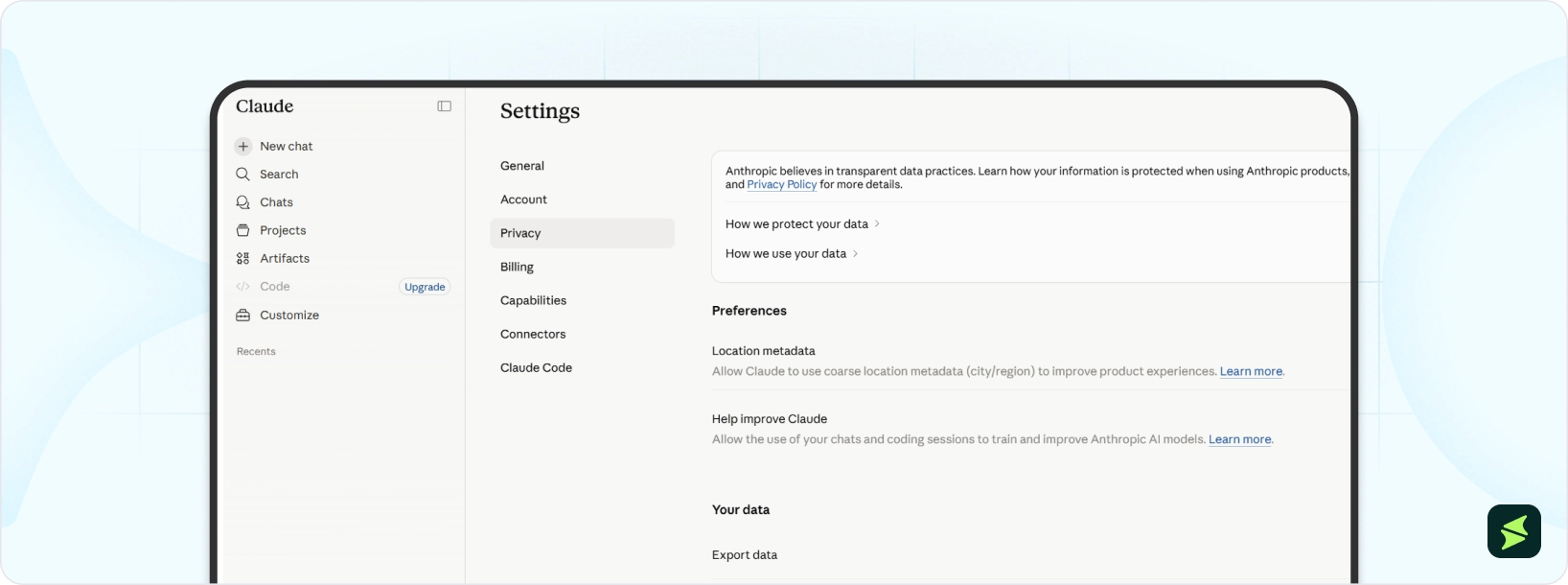
In contrast, ChatGPT does not enable privacy by default and requires users to adjust settings. According to ChatGPT's privacy policy, user conversations are used to train its models. However, opting out requires users to submit a request. This process is not intuitive and discourages some users from opting out.
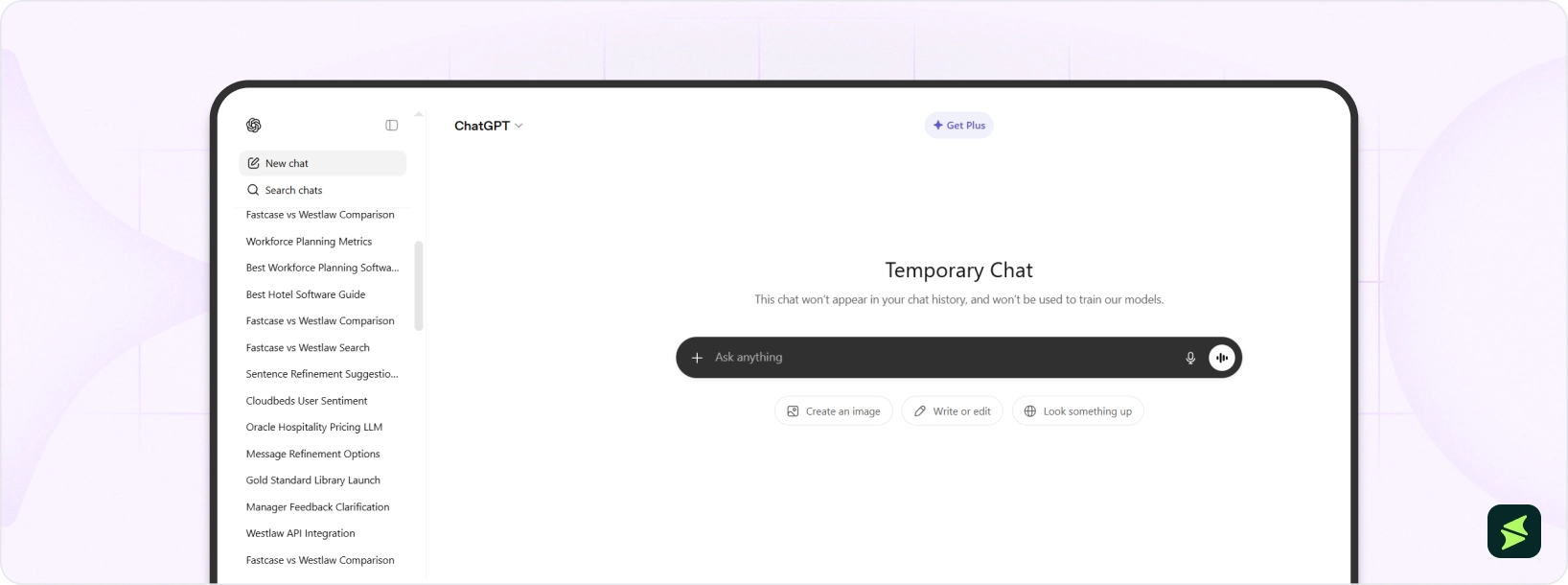
The chat history is saved unless the user deletes it manually. However, ChatGPT offers a temporary chat button that prevents conversations from being saved or used for training purposes. However, users must turn it on every time they need it.
- Claude prioritizes privacy by default without manual configuration
- ChatGPT provides more flexibility through temporary chat and manual privacy settings, but requires active user management
Image Generation
Claude can analyze images but does not offer image or video generation, limiting its multimodal capabilities. In contrast, ChatGPT is more advanced due to its multimodal capabilities. It allows users to generate images, interact through voice, and analyze visual inputs.
Response Time
Regarding output speed, Claude has a 5-10 second response time for more thoughtful, nuanced outputs. However, ChatGPT outperforms due to its faster response time, i.e., 2-3 seconds.
Reasoning
When it comes to AI models, Claude’s Sonnet 4.5 achieves high scores on graduate-level reasoning benchmarks and performs competitively in software engineering tests such as SWE-bench. On the other hand, ChatGPT’s GPT-5.4 Thinking brings the best advances in coding, agentic workflows, and reasoning into a single frontier model.
Claude stands out for its structured reasoning and step-by-step analysis. It provides a more systematic reasoning path. However, ChatGPT performs well in analytical and scientific reasoning. Its reasoning style is more flexible and pattern-based rather than strictly step-by-step.
Hallucination
Like all LLMs, both tools may hallucinate but approach the task differently. Claude tends to slow down and admit when it's uncertain. This cautious approach makes it safer for work when accuracy is critical. On the other hand, ChatGPT prioritizes speed and flexibility. This speed-first stance can result in less precise outputs depending on the use case.
ChatGPT further expands its core capabilities with tools like Prism, a dedicated research workspace that accelerates science writing and collaboration.
- Claude excels at text-heavy analytical work requiring systematic reasoning and extended context
- ChatGPT leads in multimodal capabilities, speed, and flexible pattern-based reasoning
Users appreciate Claude for its empathic conversation and new memory function compared to ChatGPT. Many users praise the tool for its affordable price. One user noted that, ‘The value for money on a pro membership is solid.’
Claude also received strong feedback for its intuitive workflows and simple interface. Users highlight that the platform is easy to use and does not require extensive training. A user said, ‘Claude.ai user interface is very intuitive and flexible’.
However, one of Claude’s major drawbacks is its limited daily usage. A user noted that, ‘Eventually, after having used Claude for a certain amount of time, was blocked by the daily limit.
Reviewers mention that ChatGPT handles large volumes of work and helps businesses scale through deep research, drafting, and refining the structure of articles and social media posts. Many users highlight ChatGPT's simple interface, which is easy to use for beginners. A user noted that, 'The interface is clean and easy to use, and updates like code interpreter and plugin access keep expanding its capabilities.'
However, some users report occasional delays while generating images, particularly during high usage. A user mentioned, ‘AI photo generation sometimes takes time due to multiple users using it.’
What’s The Future Outlook Of Claude And ChatGPT?
The AI landscape is moving at breakneck speed, with both Anthropic and OpenAI pushing development roadmaps.
Future versions of Claude may introduce multi-agent coordination, where it could create and coordinate sub-agents to complete complex tasks. Some developments also point toward multiple agents collaborating through a Git-based system to work in parallel on complex subtasks.
OpenAI continues upgrading the core models with the newest GPT-5.4 generation, which improves reasoning, long-document processing, and coding. Additionally, OpenAI is expanding ChatGPT’s long-term memory capabilities. This could allow the system to remember user preferences, past conversations, and recurring tasks over time.
Looking further ahead, future updates may gradually shift ChatGPT from a chatbot into a personal AI assistant capable of managing everyday digital tasks. This may help manage workflows, coordinate digital tools, conduct research, and automate routine tasks across applications.
Claude Vs ChatGPT For Developers
Claude's developer platform delivers a structured approach to AI integration through multiple deployment paths. It lets users control how Claude responds to each request and automates tasks through built-in tools. This reduces the need to build custom loops. For advanced workflows, Claude has introduced Cowork, designed for knowledge work like creating documents, presentations, spreadsheets, and organizing files. Whereas Claude Code handles coding tasks, e.g., writing code, debugging, running tests, and coordinating multi-file changes.
ChatGPT's developer ecosystem focuses on enhancing the ChatGPT user experience. It allows developers to create mobile applications with custom interfaces that work inside the ChatGPT conversations. OpenAI’s Codex by ChatGPT supports developers during coding tasks. It helps write code, fix errors, and suggest improvements, making development faster and more efficient.
- Claude favors controlled, backend-focused integrations, while ChatGPT empowers developers to create interactive, user-facing AI applications.
Claude Vs ChatGPT: Which Tool Is For Which Task?
Use Case | Better Tool | Why? |
Long Document Analysis | Claude | 200K tokens for context window and strong reasoning |
Coding and Debugging | Claude | More structured output |
Multimodal Capabilities | ChatGPT | Broader capabilities, including text, image, and voice generation |
Privacy-focused Use | Claude | Privacy by default |
Cost-Conscious Users | ChatGPT | Go plan, starting at $8/month |
Spreadsheet Automation | Claude | Excel integration |
Image Generation | ChatGPT | Native DALL-E integration |
Final Verdict: Which Tool Fits Your Needs Better?
As we close this comparison, it’s clear that Claude and ChatGPT each excel in different areas. Claude stands out for deep analytical reasoning, million-token context windows, and privacy-by-default settings. It's an ideal choice for enterprises that handle sensitive data or complex research. However, ChatGPT dominates versatility with superior multi-modal capabilities, productivity tool integration, and faster response times.
Choose Claude for thoughtful, context-rich analysis and compliance-heavy environments; choose ChatGPT for speed, creative content generation, and comprehensive ecosystem integration. If you require further assistance in selecting the right AI tool for your business? Reach out for expert guidance.