


Last Updated
Overview
Metadata automates B2B demand generation to help with precise audience targeting and revenue optimization. While the initial setup can require some expertise, its AI-driven experimentation and the ability to generate pipeline makes it a compelling choice for scaling ad performance.

Metadata Specifications
- Lead Management
- Sales Automation
- Reporting And Analytics
- Performance Tracking
Metadata Features
MetaMatch Targeting Agent
The platform builds specific audiences across social media and Google by connecting personal and business identities. This technology allows for the targeting of exact decision-makers within a business network while they use consumer channels. It reduces financial waste by preventing advertisements from reaching irrelevant or uninterested individuals.
Analyst Agent
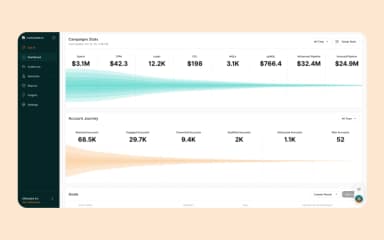
This system converts advertising data into clear insights that contribute to business growth. It identifies performance trends and provides data-driven suggestions on budget allocation to improve the sales pipeline. The feature helps organizations understand which specific campaign elements are responsible for generating the most revenue.
Agentic Campaign Execution
The software performs the technical work of launching and managing advertisements across multiple digital channels simultaneously. This automation replaces manual marketing tasks with a system that focuses on creating measurable income. It allows professional teams to concentrate on high-level strategy while the AI handles the daily operations.
Cross-Channel Optimization
This feature monitors advertising performance and makes immediate changes to budgets and bids for the best possible outcomes. It removes the need for guesswork by adjusting every investment based on real-time success metrics across different platforms. The automated process ensures consistent engagement without the requirement of constant human oversight.
Full-Funnel Revenue Attribution
The platform tracks the path from an initial advertisement to a completed sale to show the actual impact on revenue. It provides enriched data to sales teams to help move prospects through the funnel more effectively. This connection between spending and earnings allows a business to verify the true value of its marketing efforts.
Pros And Cons of Metadata
Pros
Automatic campaign execution for specific audience targeting
High return on investment driven by impressive platform insights
Vast audience building options including intent and technographics
Easy to interpret reporting with clear performance analyses
Cons
Reporting may occasionally experience synchronization delays
Enriched data occasionally requires manual verification for accuracy
Real-time optimizations for active campaigns can be refined
Metadata Reviews
Total 3 reviews
4.7
All reviews are from verified customers
Rating Distribution
5
Stars67%
4
Stars33%
3
Stars0%
2
Stars0%
1
Stars0%
Share your experience
Aditya S.
Writing and Editing, 1-10 employees
Less than 6 months
“Creative targeting gets real results”
Pros
Getting started with it doesn't feel overwhelming even as a beginner. The audience targeting feature is creative, impressive and very accurate too.
Cons
The price is a big hurdle for a new B2B business owner, I mean $60,000 is extremely expensive.
Rating Distribution
Ease of use
10
Value for money
8
Customer Support
10
Functionality
10
Jessica M.
Computer Software, 51-100 employees
Less than a year
“Powerful hub for ad strategy”
Pros
Running our paid campaigns is much more manageable with Metadata because it gives us a broad mix of strategy options and audience insights in one place. We can launch ads across multiple networks from a single platform and monitor performance across our entire paid advertising approach which makes the whole process far more connected and efficient.
Cons
One part that still seems weak is the reporting. Its reporting tool takes far too long to sync with the updates coming from Salesforce which makes that side of the platform less appealing.
Rating Distribution
Ease of use
9
Value for money
9
Customer Support
9
Functionality
8
Kyle M.
Financial Services, 101-500 employees
Less than 6 months
“all in one campaign hub for ads”
Pros
Having different campaign setup options and access to audience data has been really useful and Metadata also gives us one place to launch all of our digital ads across multiple channels. It makes it much simpler to compare performance metrics across our entire paid advertising structure.
Cons
The platform is still evolving so there are a few inefficiencies that need attention. Not being able to edit campaigns after they go live and not having clearer indicators when a campaign runs into errors are small issues on their own but together they can slow down a company's go to market efforts.
Rating Distribution
Ease of use
8
Value for money
8
Customer Support
9
Functionality
9
Frequently Asked Questions
Who are the typical users of Metadata?
Metadata features are designed for businesses in industries and sectors like marketing, education, financial services, cybersecurity, information technology, and sales.
What types of pricing plans does Metadata offer?
Metadata cost breakdown includes four plans: MetaMatch ($295/month/installation), Web Personalization ($24,000/year), Audience Targeting ($24,000/year), and Metadata Base Platform ($60,000/year). Request a customized Metadata price plan for your business today!
What level of support does Metadata offer?
The platform provides support through email and phone.
Does Metadata offer an API?
Yes, the platform provides an API.
What language does Metadata support?
The platform currently supports the English language.
What other apps does Metadata integrate with?
The platform integrates various software and services including Salesforce, HubSpot CRM, Marketo Engage, LinkedIn, and Pardot.
Does Metadata have a mobile app?
Information regarding a dedicated mobile app has not been specified.