Article
Agentic HR: Beyond The Hype — What Works, What Doesn't, And What You Need To Know
15 mins read
Last Updated


By Rohab Tariq Hanjra and


Article
15 mins read
Last Updated
By Rohab Tariq Hanjra and
Software Finder sat down with Josh Rod, Head of Product Marketing at Hibob, to discuss agentic HR and the conversation dominating this space, including AI regulations, risks, best use cases, limitations, and tips to get started with agentic HR. The insights in this piece are drawn directly from that conversation.
Agentic AI has moved beyond boardroom discussions but turning that interest into real business value remains a challenge. According to McKinsey, nearly two-thirds of enterprises worldwide have experimented with AI agents, but fewer than 10% have scaled them to deliver tangible value.
HR leaders reading that number should feel its weight because agentic HR fails for exactly the same reasons. Poor data quality, lack of governance, and deploying agents onto broken processes and calling it transformation.
In the years ahead, the agentic HR divide won’t be between companies that have AI and those that don't but between companies deploying it with a clear strategy and those deploying it on hope alone. This piece is for the HR leaders who want to be in the first category.
Many of us have already seen this term getting thrown around imprecisely by vendors and AI enthusiasts. So, what does Agentic AI HR mean in the simplest and most precise words?
Agentic HR is goal-driven software entities that combine memory, planning, sensing, tooling, and decision-making to achieve specific business objectives.
We’ll make it even more understandable. Unlike generative AI (which responds to your prompts e.g. Claude Anthropic, ChatGPT, etc.) and traditional AI automation (which handles single repetitive tasks e.g. automatically sending a welcome email to a new hire) Agentic HR can complete a multi-step task (e.g. onboarding a new hire) without needing a human to give a prompt at every stage.
It's not a chatbot. It's not a workflow automation tool with conditional logic. It's a system that takes a goal; for example, ‘onboard this new hire’ or ‘resolve this payroll exception’ and figures out the steps, executes them across your systems, handles the surprises, and loops in a human only when the situation actually calls for it.
Catch the full podcast with Josh Rod below:
AI Type | What it Means in HR | How it Works | HR Example | Human Role |
Traditional AI Automation | Rule-based automation of routine HR tasks | Runs on predefined workflows and triggers | Sending onboarding emails, processing leave requests | High — needed when exceptions occur |
Generative AI | Creates HR content and answers from prompts | Generates text, insights, and summaries on request | Writing job descriptions, summarizing interviews | Moderate — prompts and review required |
Agentic AI (Agentic HR) | Goal-driven systems that execute HR processes end-to-end | Plans and performs multi-step actions across systems | End-to-end onboarding or payroll issue resolution | Low — mostly oversight and approvals |
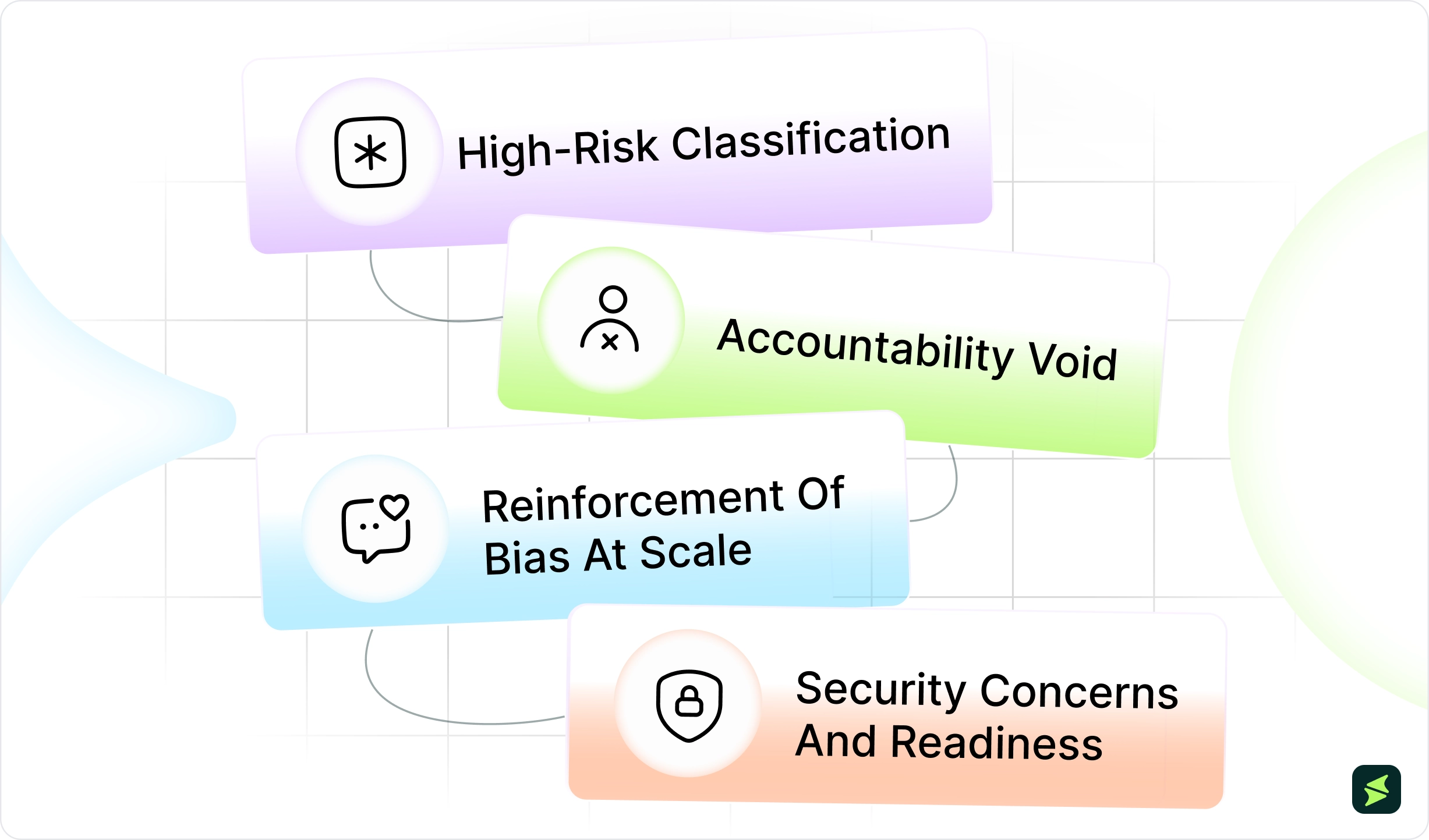
When software buyers deploy autonomous HR agents into an enterprise environment, they can face severe legal, ethical, and operational risks. Any honest evaluation of agentic HR has to include the failure modes, and there are several that deserve your serious attention.
Many vendor decks promise end-to-end autonomous recruiting and automated performance management. What they fail to mention is that this is a regulatory landmine. Under current frameworks like the European AI Act, using fully autonomous AI to make decisions about the employment, promotion, or termination of individuals is outright illegal in many jurisdictions.
During the Software Finder podcast, host Neha Shafqat tackled this topic directly, asking how organizations can audit biased cycles or wrongful terminations driven by AI. Josh explained that true agentic capability must be legally restricted by design:
When an autonomous HR agent executes a flawed workflow, resulting in a wrongful termination, a compliance infraction, or a compromised employee file, who is held responsible? The software vendor will not stand in court for your organization.
As Josh emphasized, while vendors put guardrails and barriers in place, they cannot control how the tools are used behind closed doors. Every employer must own AI ethics and governance because a software system can never absorb legal or corporate liability.
To illustrate this, Josh referenced a foundational axiom of early computer science that remains entirely true today:
Agents do not possess independent ethical judgment; they learn and reason based on the historical data they are given. If your organization's historical hiring, promotion, or compensation decisions contain institutional patterns, whether by gender, ethnicity, geography, or educational background, an agent trained on that data will replicate those disparities. Worse, it will amplify them faster, more quietly, and more consistently than biased humans ever could.
This is why Josh Rod emphasized the importance of always having the humans in the loop:
HR data, including compensation, health benefits, personal details, performance records, is among the most sensitive information an organization holds. Agents that move across systems expand the attack surface significantly.
According to Salesforce's recent State of IT data, around 79% of IT leaders believe AI agents introduce new security risks to their tech infrastructure. 48% don't think their data foundation is ready for agentic HR. 55% don't feel confident about their guardrails.
To further support this, Josh Rod shared an interesting mapping of AI maturity and readiness in companies, drawing from HiBob’s own customer base.
AI Maturity Level | Percentage of Market | Primary Strategic Focus |
Level 1: Foundational Safety | 30% | Evaluating core security readiness, asking: “Is AI safe to use?” |
Level 2: Operational Optimization | 60% | Deploying copilots to do human jobs faster and more effectively. |
Level 3: Agentic Autonomy | 10% | Engineering fully autonomous, multi-step agentic workflows. |
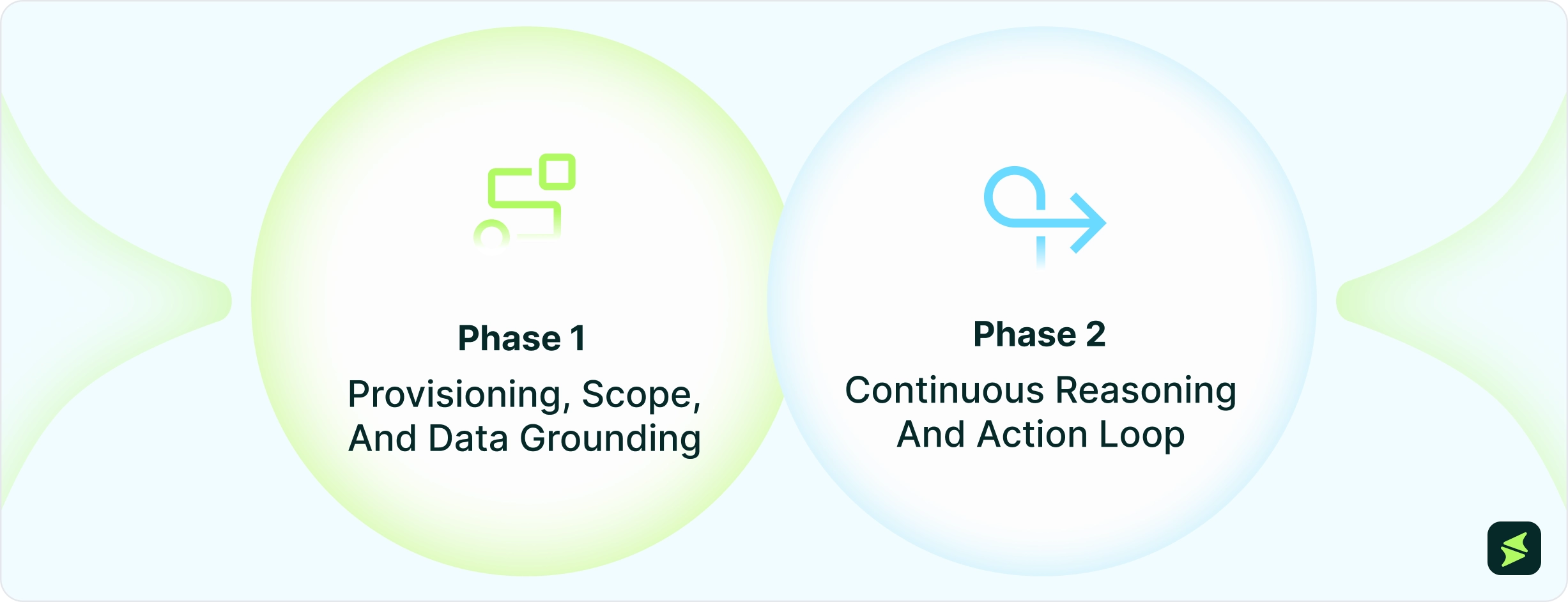
You don't need to be a software engineer to evaluate agentic HR vendors, but you do need to understand the basic structure. This is important, otherwise you can't tell a genuine agentic system from a fancy workflow automation tool with a chatbot on top. True agentic capabilities usually come in two phases.
Before an HR agent can process requests, complete tasks, or interact with staff, it needs to be properly configured. Ask vendors how they handle each of these three layers:
Once configured and live, the agent runs an ongoing, event-driven cycle. When evaluating vendors, look at how they handle each stage of that cycle:
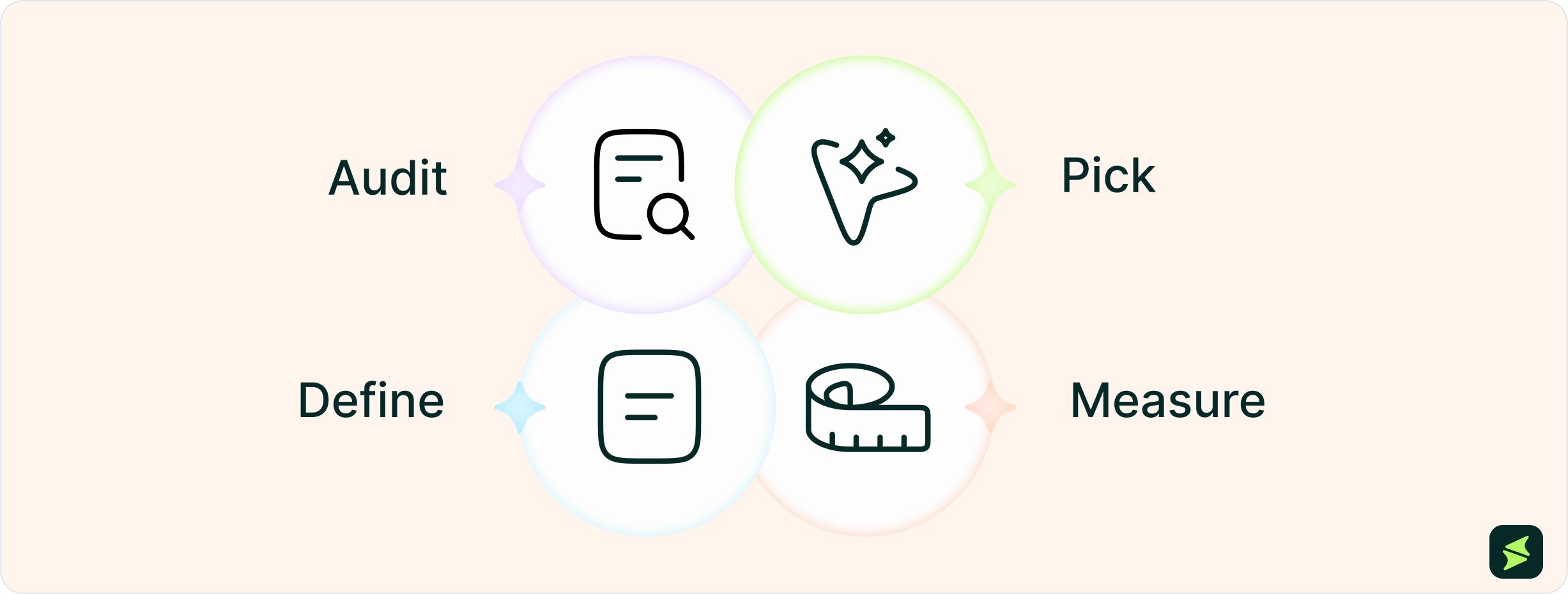
The organizations getting the strongest early results aren't the ones who tried to deploy the most ambitious system first. They're the ones who started small, measured carefully, and scaled only after they had proof that agentic HR was working for them. Here are the steps to focus on:
Agents need clean, integrated Human Resources Information System (HRIS) software data, defined workflows and policies, and a clear skills framework to function. If your data is fragmented across disconnected systems, agents will not be able to automate that mess.
The highest-performing HR agents in 2026 are in three areas: recruitment, onboarding, and Tier 1 employee support. If you pay attention to these areas, you will notice that these have clear inputs, measurable outputs, and limited exposure to consequential decisions. Pick one of these or an operational area similar to these in your company.
Josh gave a concrete example:
Document what the agent can do without asking, what it needs to confirm, and what it can never touch. Put this in writing. Revisit it every quarter as scope expands. AI readiness in HR is a delicate area, and mistakes can be expensive. As Josh puts it:
Before organizations hand more decisions to AI systems, they need a clearer understanding of where autonomy creates value and where it creates risk.
Time-to-hire, new hire time-to-productivity, HR ticket volume, employee satisfaction, measure everything. Establish your baseline first. Agentic sourcing tools can reduce sourcing time by up to 70%, but you need your own numbers to make that case internally before scaling agentic HR in your company.
To avoid the legal and operational risks of agentic AI, it's better to focus on established areas where agentic HR has already been deployed successfully. Here are the top HR workflows where companies truly benefit from agentic HR:
These are the workflows where the Return On Investment (ROI) is clearest and the risk is most contained, the natural starting point for any organization serious about AI assisted HR management.
The anxiety is understandable. If agents handle recruiting coordination, onboarding, self-service, compliance monitoring, and performance tracking, what's left for HR people to do?
More than you might expect and arguably the parts of the job that actually matter. The tasks that remain are the ones that have always required human judgment:
HR's role is shifting from owning discrete processes to building the relationship between human and AI talent. That means setting governance for agents, designing workflows that blend human and automated action, and keeping the employee experience from feeling like it's been handed over to a machine.
Agentic HR isn't a product category. It's a shift in how HR operates. In the next 18 months, we will see a significant change in how work is distributed between humans and machines, how decisions get made, how compliance is maintained, and how the function justifies its existence to the business.
The timing isn't arbitrary either. The conditions are right for agentic HR. Companies are asking HR teams to do more with shrinking budgets. At some point, the math doesn't work without a structural change in how work gets done.
Many enterprise software applications are now working on agentic AI capabilities. This signals that companies will move towards major HRIS platforms with embedded agentic layers to get work done. According to recent Salesforce research, CHROs are projecting 327% growth in agent adoption by 2027. Whether or not that exact number lands, the direction is clear. The question for HR leaders isn't whether to engage with this; it's where to start.
The window to start narrow, learn fast, and govern well is open. The organizations that do those three things in 2026 won't be playing catch-up in 2028.