
Article
Employee Onboarding Best Practices Every HR Team Should Follow
Last Updated


By Ayesha Suleman and


Article
Last Updated
By Ayesha Suleman and
After multiple rounds, i.e. screening, interviewing, and assessments, you've finally found the perfect candidate. But this is just half the battle won. The other half pertains to how they are introduced to the organization from day one. And this is where onboarding comes in.
A well-put onboarding process lays out the foundation for long-term performance and retention. It helps ensure new hires feel engaged, motivated, and aligned with company objectives from day one.
In this guide, we’ll walk you through the employee onboarding best practices that you can personalize for your candidate.
The onboarding process directly influences how new hires perceive the organization from day one, whether they feel a sense of belonging or start looking elsewhere.
Poor onboarding creates confusion and disengagement for new hires, leading to early exits. For an organization, this means starting from the scratch; new job posting, more screenings, interviews, and evaluations. All of this is not only a waste of time and efforts but budget as well.
On the other hand, with a well-structured onboarding process, new hires are more likely to stay at the organizations. It provides them with an opportunity to develop a better understanding on their position and responsibility it entails. Furthermore, they are better positioned to understand the connection between their role and those of their peers/co-workers. All of this results in faster productivity and higher retention rates.
Simply put, new hires who are onboarded effectively are more confident in their roles and require less handholding over time.
To make the onboarding process more structured and easier to implement, follow these onboarding best practices.
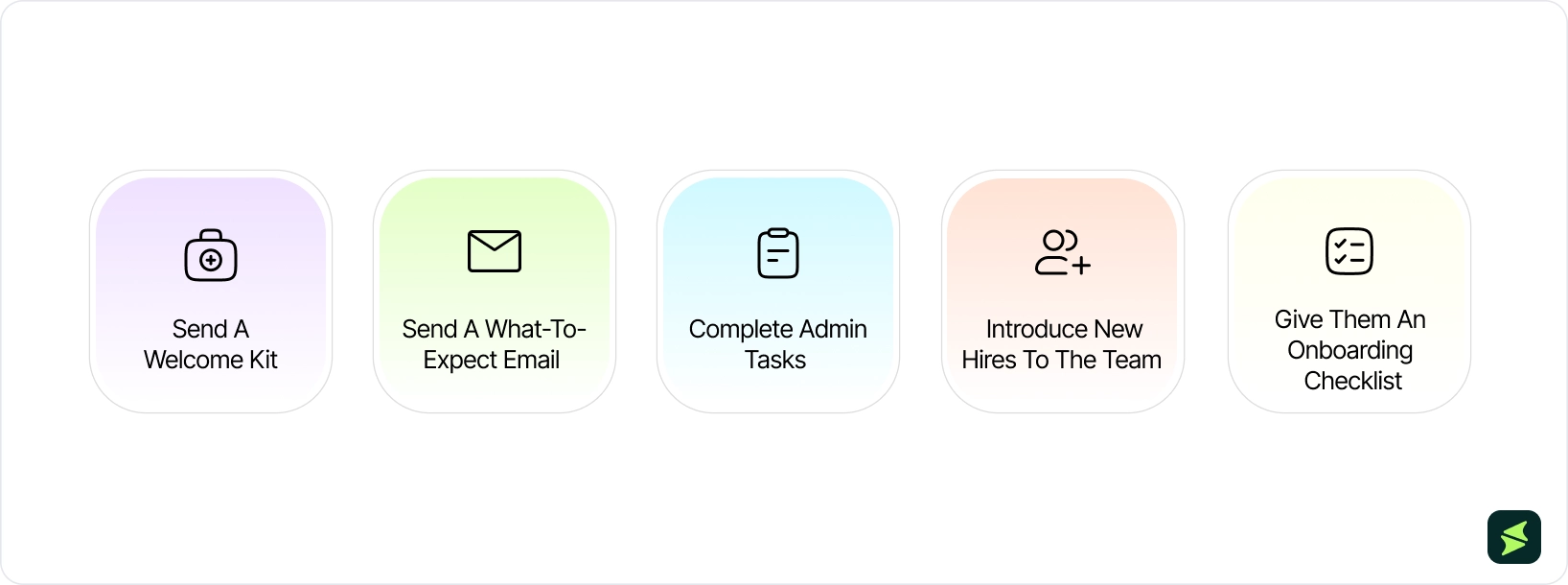
Setting up key elements in advance makes the first day smoother and allows employees to focus on understanding their role instead of dealing with preventable delays.
When basic things like system access, tools, or documentation aren’t ready on day one, the first experience immediately feels disorganized. It is important for the HR team to make sure that the new hire equipment is ready to go on day one. Arrange their laptop, desk space, safety equipment, and system access so employees can begin learning and contributing from the first day without unnecessary delays.
Even if a new hire has years of experience, don't assume they will understand their role and responsibilities from the get go. Since different organizations work in different manners, there could be a disparity in the responsibilities the said position comes with.
Therefore, it is better to clarify the job description, success metrics, and clear objectives to the employee during the onboarding. This helps set them up for success and significantly reduces the risk of early attrition caused by role ambiguity.
A good salary motivates employees to show up, but a great work culture enhances engagement and improves retention. Introducing values, communication style, and team norms upfront helps them adapt faster and work with confidence. Also, arrange a regular follow-up by managers or the HR team to ensure employees' concerns are addressed properly on time.
When new hires are expected to figure things out on their own, they take longer to understand how work actually gets done. This usually leads to hesitation, repeated mistakes, and slow progress. Giving them the right guidance early helps them build confidence, pick things up faster, and contribute more effectively.
New employees often need guidance as they navigate their role and workplace norms. If there is no one to whom new employees can reach out in a time of need, they may feel uncertain, make mistakes, or take longer to become confident contributors.
Onboarding buddies or mentoring programs provide a safe, informal support system where new hires can ask questions freely, gain clarity, and learn faster. This early support helps them adjust more quickly and foster stronger connections within the team.
Training new employees is crucial to give clarity, confidence, and skills to do the job they have been hired for. When onboarding is only focused on training, new hires struggle to apply knowledge. Pairing training with hands-on tasks helps new hires see how work is done in practice.
When support drops after the first few weeks, new hires are left to figure things out while expectations increase. This often leads to mistakes, slower progress, and uneven performance. Continuing guidance through the first 60–90 days helps them stabilize, build confidence, and perform more consistently.
When new hires only interact in formal meetings and task discussions, they may struggle to build relationships and often feel like outsiders. This slows collaboration and reduces confidence in speaking up. Creating informal interactions and team connections helps them feel included earlier, which improves communication and overall employee engagement and retention.

Remote onboarding requires more structure because new hires don’t have immediate access to in-person support. Without clear systems, communication gaps and delays can slow down the onboarding process and affect employee experience.
These practices help maintain clarity, improve onboarding experience, and ensure new hires feel supported even without physical interaction.
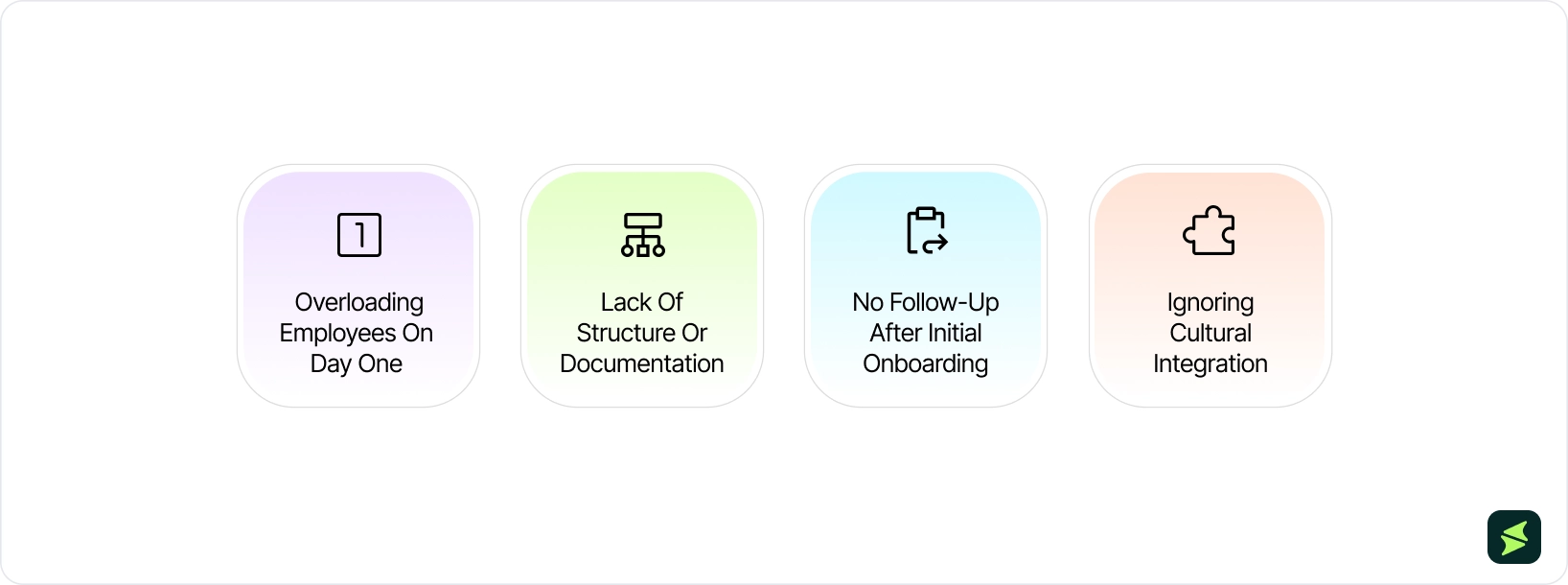
Even well-planned onboarding programs can fail when small, but critical steps are overlooked. These mistakes don’t just slow down the onboarding process; they directly impact employee experience, engagement, and how quickly new hires settle into their role.
Some of the commonly made onboarding mistakes include:
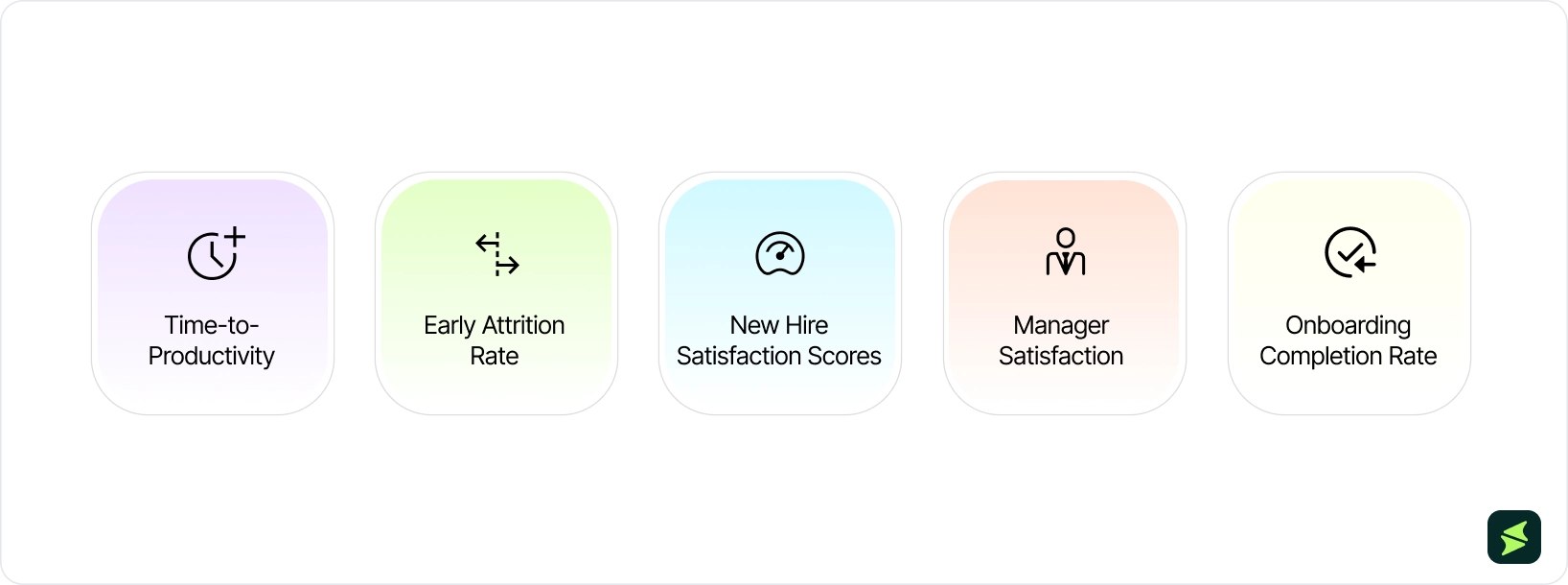
Running an onboarding program without tracking its effectiveness is like navigating without a map. To continuously improve the process, HR teams need to measure what is working and what is not.
Start by tracking the following key metrics that reflect onboarding impact:
Once collected, use this data to identify recurring patterns, refine weak areas, and make iterative improvements to your onboarding program. What works for one cohort may not work for another, so treat onboarding as a living process rather than a fixed checklist.
Many companies rely on software tools that offer onboarding templates and scalable training features to bring structure and consistency to their onboarding process. Instead of managing everything manually, these tools help standardize workflows and reduce gaps in the onboarding experience. Here are some commonly used options:
Software | Onboarding Features / How It Helps |
Provides customizable onboarding templates, automated workflows, e-signatures, and welcome kits to streamline the new hire experience | |
Offers role-specific onboarding templates, task management, and integration with HR systems to standardize processes | |
Supports automated onboarding, compliance tracking, and personalized learning paths for new hires | |
Delivers structured onboarding checklists, digital forms, and team collaboration tools to improve engagement and consistency |
An effective onboarding process needs to be more than training or orientation. It should focus on early preparation, clear role expectations, social integration, and continuous learning; so, companies can help new hires feel supported, contribute more quickly, and stay longer. Implementing structured onboarding steps, like the ones outlined in this guide, ensures a consistent and positive experience that improves engagement, productivity, and retention.
Ready to optimize your onboarding process? Explore our best onboarding software or request demos to implement structured processes tailored to their organization and team size.