Disclaimer: Pricing references are based on publicly available third-party information and industry benchmarks. Actual costs may vary.
The demand for home health services continues to grow due to an aging population, chronic diseases, and a shift to outpatient care. At the same time, home health providers are often unable to accept a significant share of referred patients due to staffing shortages. This gap in service delivery creates operational challenges for agencies and highlights the need to implement specialized home health electronic medical records (EMR) software to improve staff efficiency and support better patient care.
KanTime and MatrixCare are two leading home health EMR solutions designed to help agencies operate more efficiently. Both systems offer tools to simplify workflows, streamline documentation, and support compliance. But how do they compare?
In this KanTime vs MatrixCare comparison, we will break down their key features, usability, pricing, and overall benefits to help you determine which solution best fits your agency’s specific needs.
Head-On Comparison
KanTime is a web-based home health EMR designed to streamline agency operations across the entire care process. With top certifications like HITRUST and SOC 2 for data security, it offers powerful modules for patient intake, scheduling, billing, and payments, helping agencies improve efficiency and maximize revenue. Trusted by over 342,000 users, KanTime provides customizable, role-based solutions to support better workflows and compliance.
Moreover, KanTime is also strengthening its post-acute ecosystem through its strategic partnership with Tennr. This collaboration streamlines document processing and automates referral data entry, reducing administrative burden and enabling more efficient care operations.
MatrixCare, acquired by ResMed, is a comprehensive home health EMR designed to manage the entire patient journey, from intake and admission to revenue cycle management. It helps agencies improve efficiency, enhance patient care, and reduce rehospitalization. Recognized for its excellence, MatrixCare has won nine Best in KLAS from 2020 to 2024.
Additionally, the software ensures robust data security through encryption and secure cloud infrastructure, while continuous monitoring strengthens the protection of sensitive patient information and maintains system integrity.
KanTime And MatrixCare: At A Glance
Feature
KanTime
MatrixCare
Telehealth
✗
✓
Revenue Cycle Management
✓
✓
Interoperability
✓
✓
Family & Client Portal
✓
✗
Remote Patient Monitoring
✗
✓
Scheduling
✓
✓
Direct Messaging
✓
✓
Electronic Visit Verification
✓
✓
AI Capabilities
✓
✓
Pros And Cons
PROS
Automatic weekly insurance verification
Secure direct messaging system
Quick and easy goal-tracking
Efficient invoicing and billing system
Comprehensive video tutorials
User-friendly clinician interface
Efficient iPad charting
Strong interoperability features
Frequent content updates
Responsive customer support
CONS
Limited after-hours support
Difficult onboarding and setup
Location tracking issues on mobile
Limited customization in documentation
No batch eFax option available
Update rollout disrupts workflow
Side By Side Comparison
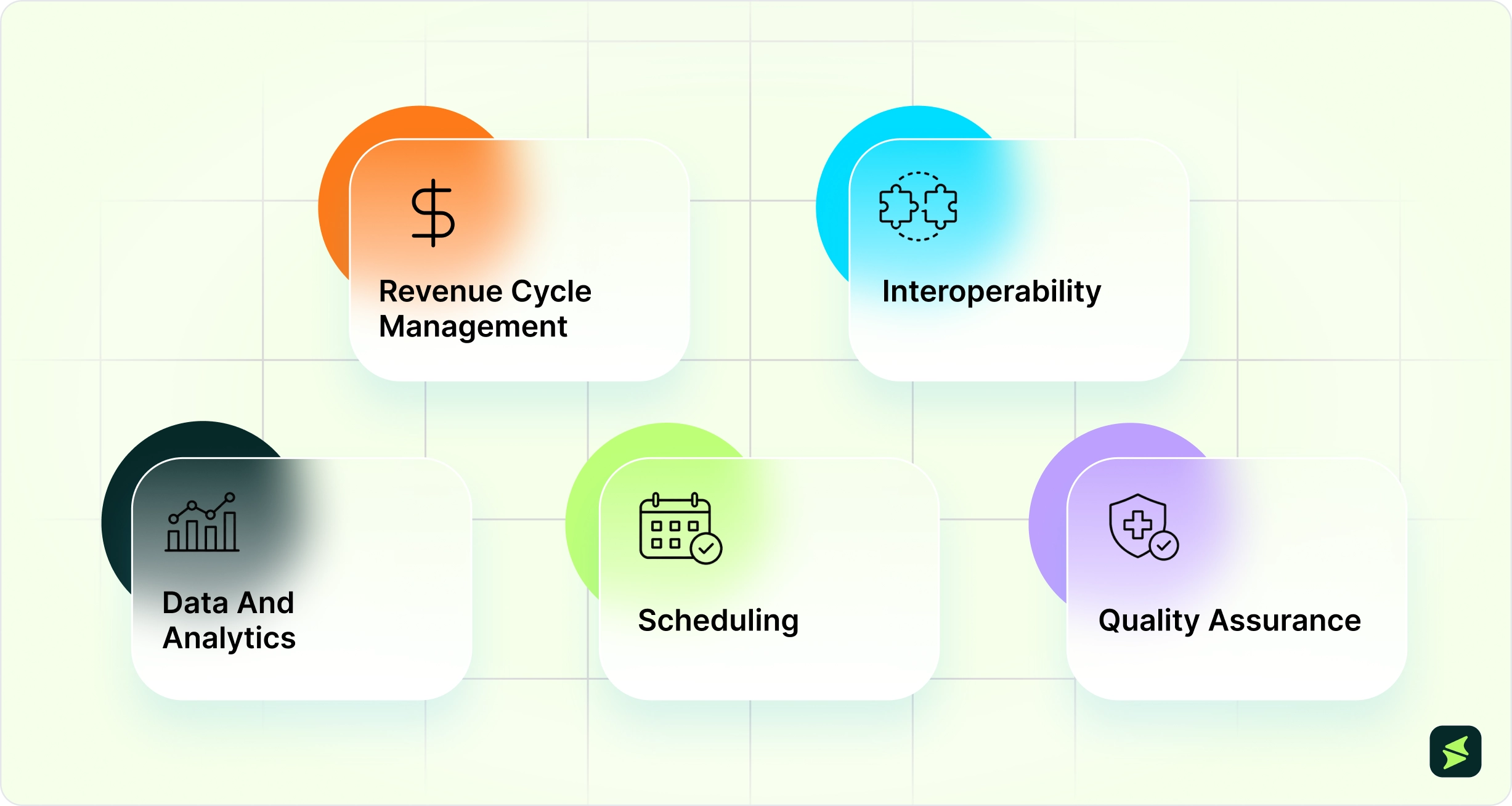
KanTime and MatrixCare are both comprehensive home health and hospice EMR solutions designed to streamline clinical workflows and enhance patient care. Here, we will compare their key features to help you determine which system best aligns with your agency’s operational needs and goals:
Revenue Cycle Management
KanTime provides a fully integrated revenue cycle management system designed to optimize billing accuracy and streamline financial workflows. The software includes clinician-specific payroll options, automated claim transfers, denial management workflows, and real-time filing alerts to reduce administrative workload. Additionally, its advanced location tracking and client-level billing overrides offer greater flexibility in financial management.
MatrixCare provides an automated revenue cycle management system that reduces errors and accelerates claim submissions. It includes automatic eligibility verification, eClaims for Medicare billing, and a configurable general ledger for financial tracking. Additionally, the platform offers outsourced RCM services, including billing management, authorization handling, accounts receivable (A/R) recovery, and additional documentation request (ADR) assistance to improve cash flow and reduce administrative burdens.
Winner: MatrixCare emerges as the winner due to its outsourced RCM services that provide comprehensive billing and financial support beyond automation.
Scheduling
KanTime offers an advanced scheduling portal that enhances care coordination and reduces miscommunication. Its scheduling engine allows agencies to organize tasks, manage shift assignments, and track staff availability using drag-and-drop functionality. The system also includes real-time alerts for late clock-ins and an ad-hoc visit feature to manage unscheduled visits efficiently. Additionally, the clinician search wizard and geographic scheduling tools help match patients with the most suitable caregivers based on skills and location.
MatrixCare focuses on workforce scheduling at scale and provides real-time visibility across departments. It offers a comprehensive ‘TimeTracker’ tool that automates attendance tracking, ensures compliance with labor laws, and supports group scheduling with real-time notifications. The platform also includes an employee self-service mobile app and absence management tools to help organizations maintain staffing efficiency.
Winner: KanTime edges out MatrixCare due to its advanced suite of scheduling tools that prioritizes both efficiency and patient care coordination.
Interoperability
KanTime offers a high-level interoperability hub that connects with over 125 healthcare partners through robust HL7, FHIR, and CCDA API integrations. It seamlessly integrates with platforms like Availity, BambooHR, and Clarity, enabling efficient data exchange across various healthcare and administrative systems. This extensive connectivity ensures seamless data flow across multiple care settings to reduce manual processes and enhance operational efficiency.
MatrixCare enables real-time data exchange by integrating with national networks like CommonWell Health Alliance and Carequality. The software also connects with leading EHRs such as Oracle Health and Epic EMR to streamline care coordination and minimize manual data entry. Additionally, it has partnered with Health Gorilla to access more than 220 million patient records and connect with over 147 thousand care sites nationwide.
Winner: MatrixCare stands out due to its integration with national networks and interoperability partnerships, which support seamless care coordination across a wide range of healthcare providers.
Data And Analytics
KanTime Data Science is a business intelligence tool designed to help home care and hospice agencies make informed decisions. The system enables users to aggregate data across multiple dimensions, apply customizable filters, and analyze trends in clinical, financial, and operational performance. With real-time scorecards and cost analytics, agencies can assess key performance indicators (KPIs) and understand how operational efficiency affects their financial outcomes.
MatrixCare provides customizable reporting and trend analysis tools that allow agencies to track critical key performance metrics. Its real-time dashboards offer a summarized view of organizational performance, helping users identify inefficiencies and monitor trends. The platform also enables agencies to build tailored reports and visualize data based on their specific needs.
Winner: KanTime wins this round with its advanced cost analytics and real-time scorecards that provide deeper insights into financial and operational performance.
Quality Assurance (QA)
KanTime simplifies the QA process by eliminating handwritten notes and centralizing documentation within its web-based platform. The software streamlines communication across teams through an intuitive dashboard, real-time alerts, and permission-based controls. Moreover, its correction tools and automated policies ensure thorough reviews, improving consistency and reducing oversight in the QA process.
MatrixCare takes a compliance-driven approach with its integrated quality assurance and analytics tools. Its ‘MyScrubber QA’ system facilitates detailed Outcome and Assessment Information Set (OASIS) assessment reviews, helping agencies meet CMS regulations while minimizing documentation errors. The system also automates compliance checks and flags inconsistencies to enhance documentation accuracy and support financial success.
Winner: MatrixCare takes the lead with its compliance-focused QA tools that enhance accuracy and streamline adherence to industry standards.
AI Capabilities
KanTime leverages AI-driven capabilities to enhance post-acute care by automating scheduling and improving caregiver matching with its ‘Algorithmic Scheduler.’ It streamlines intake, billing, and clinical workflows through real-time data and analytics, helping strengthen coordination across care settings. This reduces administrative workload and improves overall operational efficiency in home health, hospice, and long-term care environments.
MatrixCare incorporates AI to support post-acute and long-term care through predictive analytics, machine learning, and intelligent automation. It enables real-time insights at the point of care, helping clinicians identify risks, optimize visit planning, and improve documentation workflows. The platform also uses AI-driven tools like ambient documentation and voice-enabled input to reduce administrative burden and enhance care efficiency across healthcare settings.
Winner: KanTime wins for its AI use cases are more clearly tied to specific operational outcomes like scheduling and caregiver matching.
Pricing Comparison
KanTime pricing typically begins at $1,000–$3,000/month, with an upfront setup fee of $15,000–$50,000 for small agencies. For medium-sized agencies, costs usually range from $3,000–$8,000/month. Larger organizations serving 200+ patients/day may pay around $8,000–$20,000+/month.
MatrixCare offers a starting price of approximately $2,000/month. Final costs may vary depending on features and modules selected, customizations required, the number of users, etc.
Disclaimer: Pricing references are based on publicly available third-party information and industry benchmarks. Actual costs may vary.
What Users Have To Say?
We analyzed over 500 KanTime and MatrixCare reviews to understand how these systems perform in real-world home health and hospice settings. Here’s what users think about these platforms:
KanTime is highly praised for its compliance features, automation, and scheduling capabilities. A home care administrator reported, "Our scheduling is fully automated; we match the right caregiver to the patient on the first try, and our A/R is far easier to manage." Many users also appreciate the platform’s widgets and mobile app, which simplify patient interactions and streamline workflows.
However, some users mention challenges with charting and creating change orders, which they find less intuitive than expected.
MatrixCare stands out for its ease of use and ability to consolidate information across different departments. A user shared, “MatrixCare is incredibly user-friendly and quick to learn, which has been a huge plus for me. It makes our daily tasks so much easier by streamlining workflows and speeding up order verification.” An executive director of a home health group also credited MatrixCare for contributing to their organization's rapid growth.
On the downside, some users feel the resident trust module needs updates. Others mention that reports lack the level of detail they need in a single report.
Making The Right Choice For Your Home Health Agency
As home healthcare organizations deal with challenges like caregiver shortages, reimbursement issues, and regulatory compliance, choosing the right software solution is crucial to improving operations and patient care. Both KanTime and MatrixCare offer specialized solutions tailored to the needs of these facilities.
KanTime is ideal for agencies that require strong automation capabilities and compliance-driven workflows. MatrixCare, on the other hand, is known for its ease of use and comprehensive support for clinical and operational management.
Ultimately, the right choice depends on your organization’s size, budget, and specific workflow requirements. For verified reviews and in-depth comparisons, visit Software Finder.