


myUnity
Last Updated
Key Takeaways
Generated from the text of customer reviews
myUnity is an electronic health record system used by clinicians, care teams, and administrative staff in home health, hospice, and senior living organizations. Users say it is easy to use, though reporting is a common complaint, which users find limited and hard to navigate. Recently, myUnity received Community Health Accreditation Partner (CHAP) Verification for Home Health.
Our Verdict
The platform works well for midsize and large post-acute care organizations with multiple locations or service lines. Users often describe the pricing as steep for small agencies, but larger providers say the cost is reasonable at their size. We recommend it for established palliative and personal care providers that manage a high patient volume.
Overall Rating
Based on 10 users reviews
3.4
Rating Distribution
Positive
50%
Neutral
40%
Negative
10%
Starting Price
$1,500
per month
myUnity Specifications
- e-Prescriptions
- Patient Portal
- Mobile App
- Billing and Invoicing
What Is myUnity?
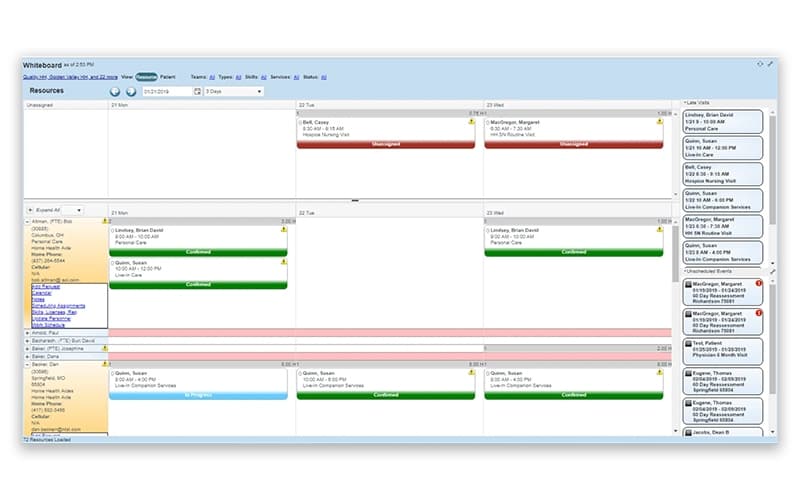
myUnity, by Netsmart, is a cloud-based, post-acute Electronic Health Record (EHR) system. Healthcare organizations use it to manage clinical, administrative, and financial workflows across settings such as home health, hospice, palliative care, senior living, skilled nursing and personal care.
Its care coordination tools allow providers to share patient information and coordinate services across care teams. The system also has analytics and Key Performance Indicator (KPI) dashboards that show how an organization is performing in its clinical, financial, and operational areas. Together, these tools support communication between care teams and let organizations monitor their operations.
What Is myUnity Best For?
The software is best known for Bells, an AI assistant that works inside the platform. Bells helps clinicians record more complete documentation while they are with the patient. It also flags patient risk earlier and helps staff see which patients need attention first and what resources each patient is likely to need. That fits organizations that want to add AI to the workflows they already have. It also works well for teams that need to improve their documentation or get an earlier view of what their patients require.
How Much Does myUnity Cost?
myUnity pricing is estimated to start at $1,500/month. This figure comes from comparing similar post-acute care EHR solutions. What a specific organization pays will depend on factors like the number of users, which care settings and modules are included, how complex the deployment is, and what integration, analytics, or implementation work is needed.
Additionally, users may also incur potential extra costs. The following figures are estimates and may vary depending on provider terms and requirements.
- Implementation: $15,000–$75,000
- Data Migration: $5,000–$40,000
- Training And Onboarding: $5,000–$30,000
- Integrations: $5,000–$35,000
- Customization And Configuration: $3,000–$25,000
Disclaimer: Pricing references are based on publicly available third-party information and industry benchmarks. Actual costs may vary.
myUnity Integrations
The software supports integration with platforms such as:
How Does myUnity Work?
Log in to your myUnity account then follow the steps below to use its features:
- Keep each patient's information in a single record that staff in every post-acute care setting can open and update
- Enter admissions and referrals through the admission workflow and the electronic referral connections
- Document care at the point of care using clinical forms that your team sets up
- Send and receive patient information with the other providers and healthcare partners involved in the patient's care
- Send prescriptions electronically and manage each patient's medications and orders
- Bill each payer under the payment model it uses
- Check clinical, financial, operational, and referral results on the KPI dashboards
Who Is myUnity For?
myUnity software is suitable for the following post-acute care settings and services:
- Hospice care
- Home health
- Palliative care
- Personal care
- Senior living
- Skilled nursing facilities
myUnity Use Cases
Based on our analysis of myUnity’s current capabilities, we have identified key scenarios where this software is a good fit for post-acute care organizations:
1. Organizations Serving Residents Across Multiple Levels Of Care
Residents often move from independent living to home health and later to hospice, and their records do not always move with them. Gaps form in the care history when that happens. myUnity keeps one patient record across these settings, so staff can see what took place in each earlier stage of a resident's care. Organizations that run several of these service lines can work from the same record as needs change.
2. Hospice Agencies Coordinating Interdisciplinary Teams
myUnity covers hospice admissions and inpatient unit processes, and it gives nurses, social workers, chaplains, and volunteers a common place to work from. A hospice plan of care depends on what each of these disciplines observes. The team needs current information at interdisciplinary group meetings and when a patient moves to inpatient care, and the platform provides access to that information in near real time.
3. Palliative Programs Entering Alternative Payment Models
Alternative payment models such as Guiding an Improved Dementia Experience (GUIDE) and Transforming Episode Accountability Model (TEAM) require palliative programs to collect particular data and submit claims in formats that change from one model to the next. myUnity is ONC-certified for palliative care reimbursement. Its documentation forms can be adjusted and its billing formats can be configured, so a program can line up its clinical records and claims with the model it joins.
4. Agencies Preparing For Surveys And Accreditation
Certification and survey cycles arrive while staff are still caring for patients every day, and documentation can fall behind during that time. myUnity is verified by the CHAP for home health and hospice, which reflects alignment with the Centers for Medicare & Medicaid Services (CMS) Conditions of Participation and CHAP Standards of Excellence. Bedside clinical documentation and compliance workflows in the software give staff a way to keep records consistent with those standards during regular work.
5. Providers Relying On Hospital And Accountable Care Organization (ACO) Referrals
myUnity accepts electronic referrals from Health Information Exchanges (HIEs), ACOs, and health systems, and it connects with EHRs such as Epic and Cerner. Agencies that rely on these partners for patient volume also want to know what happens to a patient after admission. The platform sends near real time alerts when a patient visits the emergency department or is hospitalized, which keeps the agency informed and supports the referral relationship.
Is myUnity Right For You?
If you are a post-acute provider that runs home health, hospice, palliative care, or senior living services, and you want clinical, billing, and referral workflows tied to one record, then myUnity may be worth considering. In 2022, it became the first post-acute technology vendor to meet 100% of the ONC Health IT certification base criteria. Black Book has named Netsmart an industry leader for 11 consecutive years, based on how post-acute care providers rate their experience as clients. Buckner Retirement Services, Benchmark Senior Living, and Ohioans Home Healthcare are among the organizations using it.
Netsmart is a designated Qualified Health Information Network (QHIN), which lets myUnity connect to the Trusted Exchange Framework and Common Agreement (TEFCA) network. This allows providers to exchange health information securely with participating organizations nationwide.
Still have doubts about myUnity software? Connect with us at (661) 384-7070 for further guidance.
myUnity Features
AI And Automation
myUnity places AI inside clinical and operational workflows. Clinicians complete records in the screens they already use, and text recommendations appear during documentation to keep entries consistent with quality and compliance requirements. Predictive insights within the EHR flag patient risk for care teams to review.
Actionable Analytics
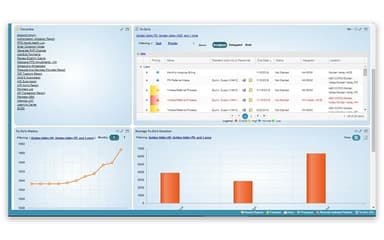
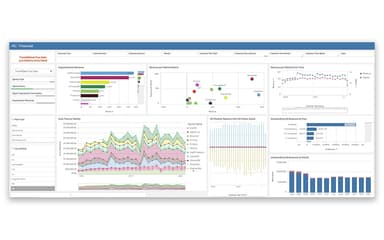
The software includes a KPI dashboard that shows clinical, financial, operational, and referral data in near real time. Users can follow trends in each area and analyze results based on current activity. Organizations can use those results when they report to payers and referral partners.
Care Coordination
The platform supports electronic care coordination between patients, residents, and their providers in the community. Care partners communicate and exchange information through the same system. It sends alerts about emergency department visits and hospitalizations in near real time. It can also query the network for resident information that is missing or incomplete and held by other providers.
Person-Centered Care
myUnity reports on the clinical quality measures that CMS requires and supports secure exchange of clinical data among providers. Its medication tools cover electronic prescribing and medication management. Providers can use a mobile version of the software, and an integration with a patient and family portal gives care teams and families another way to view information.
Interoperability
The software connects with health information exchanges, accountable care organizations, health systems, and local hospitals and providers to receive electronic referrals. It connects with the EHRs of acute health systems, including Allscripts, Cerner, and Epic. myUnity also provides secure access to and exchange of patient data among EHR systems and providers.
Pros And Cons of myUnity
Pros
Post-acute care teams from different disciplines coordinate more easily
Reduces duplicate work when managing patient information
Caregivers see the patient details they need for decisions
Patients move between care settings with fewer information gaps
Routine administrative tasks take less time for clinicians
Cons
Finding specific information often takes users extra effort
Reporting options can feel limited for some organizations
Support tickets pass through too many people before resolution
myUnity Reviews
Total 10 reviews
3.4
All reviews are from verified customers
Rating Distribution
5
Stars40%
4
Stars10%
3
Stars10%
2
Stars30%
1
Stars10%
Share your experience
Mid Market, 51-100 employees
“instant updates every time”
Pros
Any changes made in the system are reflected right away which is really helpful.
Cons
Mobile app isn't very user friendly when employees need to clock in and clock out.
Rating Distribution
Ease of use
10
Value for money
10
Customer Support
10
Functionality
10
Infection Preventionist and Nurse Educator, N/A employees
“better than paper charts”
Pros
At least it's an improvement over paper records and manual charting.
Cons
System still isn't very user friendly. It takes too many steps to finish a single task and reports can't be customized.
Rating Distribution
Ease of use
10
Value for money
10
Customer Support
10
Functionality
10
Enterprise, 500+ employees
“Too rigid”
Pros
Information is shared across all facilities which helps keep everyone on the same page.
Cons
The system feels very technology driven and is quite rigid when it comes to the order of operations.
Rating Distribution
Ease of use
4
Value for money
4
Customer Support
4
Functionality
4
Frequently Asked Questions
What other apps does myUnity integrate with?
myUnity integrates with platforms such as Epic EMR, Allscripts EMR, and Cerner EMR.
What types of pricing plans does myUnity offer?
myUnity pricing is estimated to start at $1,500/month based on comparable post-acute care EHR solutions. Get a detailed myUnity cost breakdown to make an informed decision.
Does myUnity have a mobile app?
Yes, myUnity has a mobile app available on iOS and Android devices.
Who are the typical users of myUnity?
The platform is primarily used by professionals working in hospice care and home health.
Does myUnity offer an API?
Yes, myUnity offers the FHIR API.
What level of support does myUnity offer?
#myUnity offers phone support and 24/7/365 online support through NetsmartCONNECT, including support tickets, user guides, release notes, solution roadmaps, and community user groups.
What language does myUnity support?
myUnity supports the English language.