


EvenUp
Last Updated
Overview
EvenUp helps personal injury firms organize case documents and medical records and prepare demands at each claim stage. While integrations with some third-party platforms could be smoother, its drafting tools, treatment monitoring, and communication agents are useful to firms that handle heavy caseloads.
Be the first one to leave a review!
No review found

Starting Price
$2,000
per month
EvenUp Specifications
- Case Management
- Document Management
- Document Automation/Assembly
- Workflow Automation
What Is EvenUp?
EvenUp is an AI-assisted legal platform that personal injury firms use to manage cases from intake and medical treatment through demand preparation, negotiation, discovery, and trial. Its Medical Management tools follow a client's treatment and flag gaps in care or missing records. Communication Agents make routine calls and send texts to clients and medical providers. The system also includes Executive Analytics, which tracks metrics such as how long it takes to complete a demand. Firms use these tools to notice problems earlier and to spend less time on manual follow-up.
What Is EvenUp Best For?
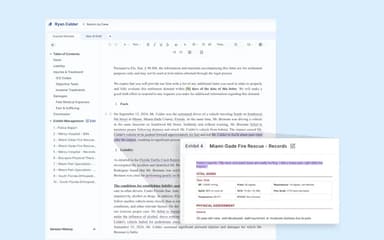
The software is best known for its AI drafting feature. It matches the style of a firm's existing documents and applies the firm's drafting standards to demand letters, discovery responses, complaints, and other case documents. Every line has a citation, so attorneys can see where the text came from when they review it. They can do this work inside Microsoft Word. It suits firms that handle a large number of legal documents, want consistent drafting, or want to reduce manual document preparation.
How Much Does EvenUp Cost?
EvenUp pricing is estimated to start at $2,000/month. This figure comes from comparing similar legal case management and document automation tools with AI features. What a specific firm pays will depend on factors like firm size, number of users, case volume, the number of demands or documents generated, and which modules are included.
In addition to the base subscription costs, organizations should keep the following potential costs in mind based on the industry benchmarks:
- Implementation: $3,000–$15,000
- Data Migration: $1,000–$8,000
- Training And Onboarding: $500–$5,000
- Integrations: $1,000–$10,000
- Customization And Configuration: $1,000–$8,000
Disclaimer: Pricing references are based on publicly available third-party information and industry benchmarks. Actual costs may vary.
EvenUp Integrations
The software supports integration with platforms such as:
How Does EvenUp Work?
Log in to your EvenUp account, then follow the steps below to use its features:
- Connect your case management system to EvenUp and select which case types, files, and fields to sync
- Read the summary for each new case and have the AI agents contact carriers to confirm liability and coverage
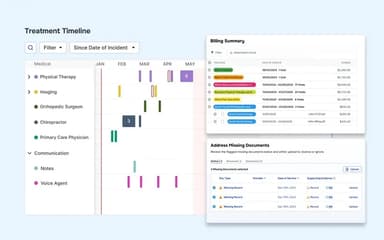
- Check each client's file for missing documents and review the care timeline for treatment gaps
- Generate a demand letter with AI or a legal professional and use the line-level citations to trace each fact to its source record
- Review the case financials, treatment costs, and medical bill summaries before negotiation, and edit the summaries if they need changes
- Assign the AI voice and text agents to open claims, follow up on treatment, and verify balances, then read the recorded communications
- Check firm performance metrics such as care attendance and demand turnaround, and filter them by time period, employee type, or staff member
Who Is EvenUp For?
EvenUp is suitable for professionals and organizations, including:
- Personal injury law firms
- Personal injury attorneys
- Case managers
- Legal support teams
EvenUp Use Cases
Based on our analysis of user reviews and EvenUp's current capabilities, we have identified key scenarios where this software is a good fit for personal injury law firms:
Firms Falling Behind On Demand Volume As Caseloads Grow
Firms that sign cases faster than staff can write demands have to navigate the resulting backlog. EvenUp can prepare demands with damages analysis, verdict analyses, and cited sources, which takes part of the writing off the team. A firm can also ask for review by a legal professional, so attorneys have more room to work as volume rises.
Practices Losing Case Value To Treatment Gaps
EvenUp tracks treatment activity and medical records in the background. Its AI agents handle treatment check-ins and balance verifications along the way. A missing record or a pause in treatment often goes unnoticed until it affects the claim, and this monitoring lets a personal injury team follow each client's progress and deal with documentation or treatment problems earlier.
Litigation Teams Preparing Discovery And Court Filings
Litigation teams with many active cases often face several discovery deadlines at once. EvenUp can prepare interrogatories, requests for admission, and requests for production from the facts already in the case. It can also draft responses, motions, and complaints, which helps when several filings are due at the same time.
Intake Teams Handling High Volumes Of New Cases
EvenUp's AI agents can take over much of the setup that follows a new client signing. They contact carriers to open the claim, confirm liability and coverage, and obtain an adjuster assignment, while intake teams read case summaries to assess each file. For a firm that signs new clients every week, this removes a lot of repeated manual work.
Managing Partners Reviewing Workloads And Turnaround
Managing partners at a growing firm may not know which teams or cases are moving slowly. Executive Analytics in EvenUp reports measures such as demand turnaround and can be filtered by time period, employee type, or staff member. Weekly email digests and peer benchmarking add context when partners review how the firm is performing.
Is EvenUp Right For You?
If you are a personal injury law firm that manages intake, treatment records, demand letters, and litigation across a growing caseload, then EvenUp could be a strong fit. Its clients include Jose Robles Jr. Law, Flager Law, and Moet Law Group. EvenUp has completed SOC 2 Type 2 examinations and a HIPAA attestation for handling medical information, and it lists CCPA among its privacy measures. The platform encrypts data in transit and at rest. It also uses access controls, monitoring, vulnerability management, and incident response.
Law firms are paying closer attention to how legal technology providers treat confidential client data, especially when it comes to model training and data retention. EvenUp addresses both concerns. Piai's reasoning stays within each individual case, and EvenUp does not allow outside providers to train on customer files. Where zero retention settings are available, the company turns them on.
Still not sure if EvenUp is right for you? Contact us at (661) 384-7070 for further guidance.
EvenUp Features
Piai
The platform uses specialized personal injury AI models to interpret medical and case records. The models extract treatment details from handwritten notes, scans, and provider documents, then reconcile care across providers. They also identify medical, liability, and damages information in those records. Legal and medical professionals review the results and give structured feedback, which refines how the models interpret later cases.
Proactive Workflows
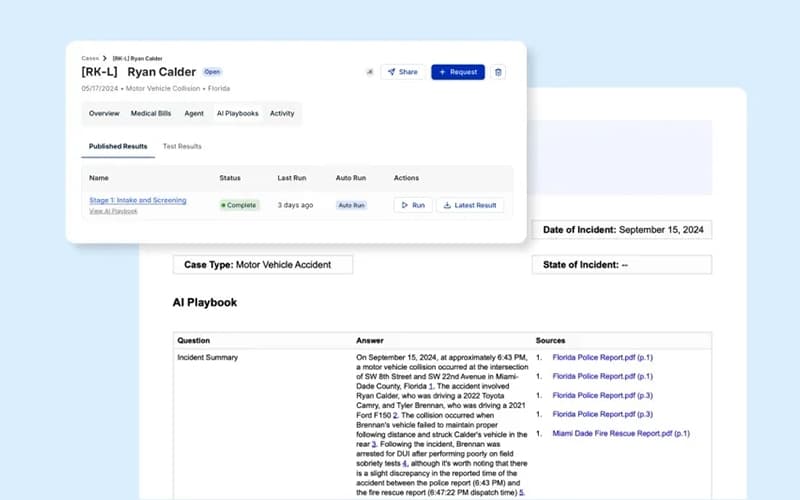
Throughout a case, the software reviews files to find risks, gaps in treatment, and other issues. AI Playbooks check each new file when it enters the case management system. They extract key facts, flag signs of a high-value case, and find information relevant to discovery. Firms can build playbooks around their own review criteria, and the software keeps a history of each analysis.
Communication Agents
Recurring case communications go through AI voice and SMS assistants. These assistants can open insurance claims, confirm liability and coverage, ask clients about their treatment, follow up on medical records, and verify medical balances. Each contact can produce a structured summary, a transcript, a recording, and supporting information. The team receives these to review and act on.
Case And Negotiation Prep
Before a demand or settlement discussion, the software gathers the needed information in one place. It finds medical records and bills that are absent from the file. This tool also shows treatment history alongside communications. It compares treatment costs with policy limits and gives an editable breakdown of economic damages for case review.
Express Demands
This feature turns case files into demand packages. Each package covers the facts and liability, injury and treatment history, damages, and inputs for valuation. The software organizes medical records into treatment timelines and sorts and names exhibits and references. Users can start from an EvenUp template or their own document format, then edit the language, sections, and exhibits while the references stay aligned.
MedChrons
MedChrons™ builds a structured chronology from large medical records. It lists visits, procedures, diagnoses, treatments, and relevant prior history. The timeline is searchable, and each entry links to the underlying record so users can verify it. Legal professionals review every chronology, and nurse review is optional. Each chronology includes organized exhibits that can be used in negotiation, mediation, or trial.
PLAAS
The platform’s Pre-Litigation As A Service (PLAAS) handles pre-litigation case management from claim setup through settlement, backed by experts. Its case managers cover claim investigation, care management, record and bill retrieval, demand preparation, settlement negotiation, and lien resolution. They work inside the firm's case management system and follow its procedures. AI supports record review, treatment monitoring, and other case activities along the way.
Pros And Cons of EvenUp
Pros
Personal injury case preparation and documentation take less time
Firms can handle more cases with the same staff
Reduces inconsistencies in legal documents and casework
Attorneys prepare more thoroughly for litigation and discovery
Managers get a clearer view of team performance
Cons
Connecting a CRM can take extra setup sessions
Users sometimes have to correct medical bill figures by hand
Attorney signatures may sometimes be left in demands
EvenUp Reviews

No reviews yet!
Be the first to review this product
Frequently Asked Questions
Who are the typical users of EvenUp?
EvenUp software is used by personal injury law firms, attorneys, case managers, and legal support teams.
What language does EvenUp support?
EvenUp’s interface primarily supports English, and its Communication Agents support both English and Spanish.
What level of support does EvenUp offer?
EvenUp provides support through email, blogs, webinars, guides, and videos.
Does EvenUp have a mobile app?
No, EvenUp does not have a mobile app.
What other apps does EvenUp integrate with?
EvenUp integrates with Litify, CASEpeer, SmartAdvocate, Dropbox, Google Drive, and Microsoft SharePoint.
What types of pricing plans does EvenUp offer?
EvenUp pricing is estimated to start at $2,000/month based on comparable AI-powered legal software. Get a tailored EvenUp cost estimate.
Does EvenUp offer an API?
Information about an API is currently unspecified by the vendor.