


Last Updated
Overview
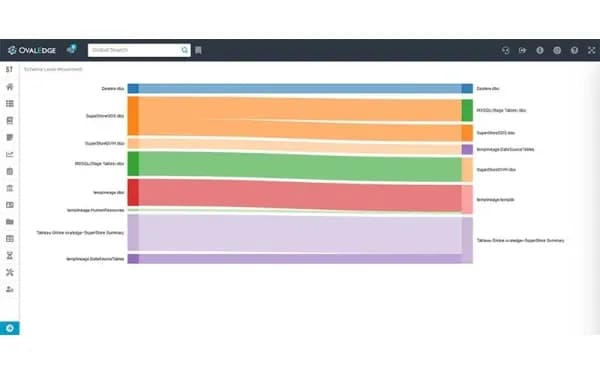
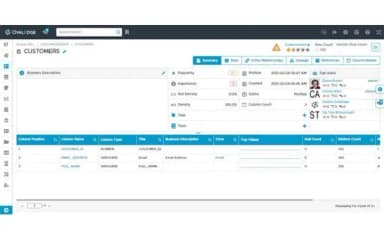
OvalEdge is an affordable data governance and data catalog solution that streamlines data management and enables seamless functionality, ensuring high quality data accessibility and trustworthiness. OvalEdge's data catalog is specifically designed for comprehensive data governance and promotes company-wide adoption.
OvalEdge Specifications
- Financial Reporting
- Invoice Management
- Expense Tracking
- Tax Management
Pros And Cons of OvalEdge
Pros
Easy to use
Useful features for data exploring
Great customer support
Quick data searching tool
Cons
Occasional bugs and visual interface errors
Inferior data quality
OvalEdge Reviews
Total 6 reviews
4.5
All reviews are from verified customers
Rating Distribution
5
Stars50%
4
Stars50%
3
Stars0%
2
Stars0%
1
Stars0%
Share your experience
Anonymous
Small Business, 11-50 employees
“great experience”
Pros
Working with and managing OvalEdge has been a very positive and flexible experience. One thing that really stands out is the wide range of ready to use data connectors which makes integrating different data sources much easier. It takes very little setup to connect across many systems and that level of connectivity makes it fit well into complex data environments. Another major advantage is the Data Catalog and Business Glossary features. These modules are strong, well designed and easy to navigate which helps a lot with organizing, finding, documenting and classifying data and business assets properly. What I like most is how customizable the platform is. Both setup and module configuration offer a lot of flexibility so admins and users can adapt it to their organization's specific needs. That makes it possible to improve workflows, define custom governance rules and processes and configure the platform in a way that truly fits how the business works.
Cons
A few areas could still be improved. Such as I would really value the ability to edit some of the informational pop-up text boxes marked with an i especially for features such as Data Classifications. The manual data upload process through Excel templates could also be made more user-friendly particularly when it comes to the naming of blank template column headers. It would also be very beneficial to have auto lineage work between two different data connectors even though I understand that is likely a complex enhancement to deliver.
Rating Distribution
Ease of use
10
Value for money
10
Customer Support
10
Functionality
10
Anonymous
Travel and Hospitality, 11-50 employees
“Packed with standout features”
Pros
One feature that really stands out is how well the business glossary works with the data catalog. The AI-driven term association capability gives a real boost to productivity. It uses existing user-defined links between business terms and data objects like tables, columns and report columns, then suggests new associations for someone to review and either approve or reject. That feedback helps train the learning algorithms so the recommendations get better the more the platform is used. This is the part I value most because it can save a lot of the time and effort involved in data classification.
Cons
The product installation process, UI/UX and release management practices still have room to improve.
Rating Distribution
Ease of use
9
Value for money
10
Customer Support
10
Functionality
10
Anonymous
IT Services, 51-100 employees
“user friendly UI and strong metadata”
Pros
The interface is very user friendly to work with and the metadata management capabilities are quite efficient.
Cons
One downside is the product documentation since the help content is not available in PDF format.
Rating Distribution
Ease of use
8
Value for money
8
Customer Support
8
Functionality
9
Frequently Asked Questions
Does OvalEdge offer an API?
Yes, OvalEdge provides API access.
What language does OvalEdge support?
OvalEdge supports the English language.
What apps does OvalEdge integrate with?
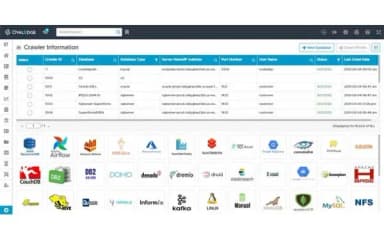
OvalEdge integrates with JIRA, Service Now, Okta, DevOps, SAP, Oracle Service Cloud, NetSuite, Google Drive, and many more.
Does OvalEdge support mobile devices?
No, OvalEdge does not offer support for mobile devices, but it can be interacted with through web browser extensions.
What types of pricing plans does OvalEdge offer?
OvalEdge offers three pricing plans: Essential, Professional, and Enterprise. While pricing starts at $15,600/year, users can get pricing details to select the best plan for their business requirements.
Who are the regular users of OvalEdge?
Businesses of all sizes and sectors, like healthcare, finance, hospitality, manufacturing, IT, management consulting, and many more, utilize OvalEdge.
What level of customer support does OvalEdge offer?
OvalEdge offers support through phone and chat, FAQs and forums, Email/Help Desk, and a knowledge base.