

ChartPath
Last Updated
Key Takeaways
Generated from the text of customer reviews
Our Verdict
Overall Rating
Based on 5 users reviews
4.6
Rating Distribution
Positive
100%
Neutral
0%
Negative
0%
Starting Price
$225
per provider per month
ChartPath Specifications
- Appointment Management/Scheduling
- e-Prescriptions
- Lab Integrations
- Patient Portal
ChartPath Features
E-Prescribing
With this feature, healthcare practitioners can create, manage, and transmit prescriptions to a patient's preferred pharmacy, reducing the need for handwritten prescriptions and potential errors. The system alerts healthcare professionals to potential drug interactions, allergies, and contraindications, ensuring that patients receive safe and appropriate medications.
Revenue Cycle Management
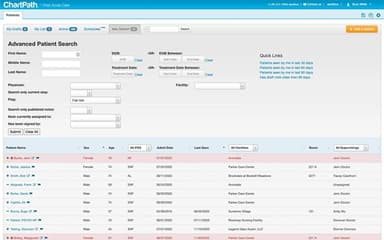
ChartPath RCM software optimizes the billing operations of health It enables efficient creation, care practices, improving practice efficiency and profitability. submission, and tracking of insurance claims. Integrated eligibility verification allows healthcare professionals to confirm patients' insurance coverage and benefits in real-time, reducing billing errors.
Coding Automation
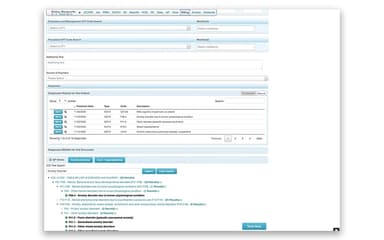
With coding automation, physicians and healthcare professionals can save time and effort in the coding process. The system suggests relevant codes based on clinical documentation, reducing manual entry. The system assists providers in selecting the most specific and accurate codes, reflecting the complexity and severity of the patient's condition.
Charting
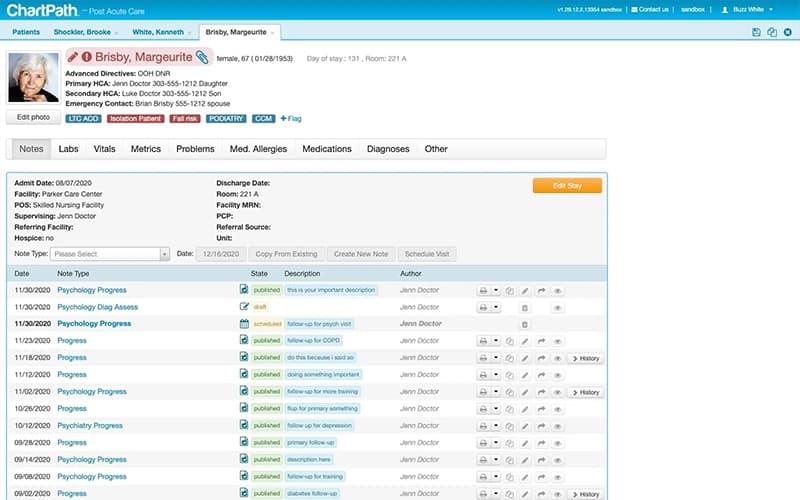
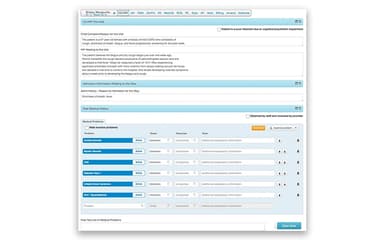
ChartPath RCM software offers customizable templates and free-text entry options catering to various healthcare specialties and individual preferences. It allows clinicians to capture structured data, making it easier to analyze patient information and identify trends for improved care planning.
Reporting And Analytics
This feature gives healthcare organizations valuable insights into their practice performance, patient outcomes, and financial metrics. The feature enables data-driven decision-making, improved revenue operations, and better patient care.
Pros And Cons of ChartPath
Pros
Easy documentation
Efficient billing and RCM capabilities
User-friendly interface
Great customer support
Cons
The scheduling/reminder feature needs improvement, according to some user reviews
ChartPath Pricing
ChartPath EasyRounds | ChartPath EHR | ChartPath Enterprise |
|---|---|---|
$225per provider per month | $299per provider per month | $450per provider per month |
|
|
|
Disclaimer: The pricing details were last updated on Sep 14, 2026 from the vendor's website. Please contact us for a tailored pricing list.
ChartPath Reviews
Total 5 reviews
4.6
All reviews are from verified customers
Rating Distribution
5
Stars60%
4
Stars40%
3
Stars0%
2
Stars0%
1
Stars0%
Share your experience
Healthcare, 51-100 employees
Less than a year
“So happy with this system!”
Pros
It's really easy to use and I love all the features. The support has also been outstanding.
Cons
I would love to see pcc- dx codes added into the system like the medications.
Rating Distribution
Ease of use
10
Value for money
10
Customer Support
10
Functionality
10
Healthcare, 11-50 employees
Less than a year
“Simple & smooth integrations”
Pros
The integration with Point Click Care and our billing software makes charting so much easier and ensures that we stay compliant with the guidelines in our practice.
Cons
I wish that as an administrator, I could customize our notes with simple field updates on my own without needing extra help.
Rating Distribution
Ease of use
8
Value for money
8
Customer Support
8
Functionality
8
Healthcare, 51-100 employees
Less than 6 months
“Excellent EMR, fantastic support team”
Pros
I can honestly say the customer service with Chartpath is unmatched. What an amazing team they have!
Cons
One thing I've noticed is that the scheduling or appointment feature doesn't automatically notify me in a noticeable way when a patient is due for a follow-up visit.
Rating Distribution
Ease of use
7
Value for money
8
Customer Support
7
Functionality
8
Frequently Asked Questions
Does ChartPath software have an app?
No, ChartPath does not have a mobile app.
Does ChartPath support mobile devices?
Yes, ChartPath can be accessed via Android and iOS devices.
How much does ChartPath software cost?
ChartPath pricing options include ChartPath EasyRounds at $225/provider/month, ChartPath EHR for $299/provider/month, and ChartPath Enterprise for $450/provider/month. You can request a custom ChartPath cost breakdown.
What languages does ChartPath support?
ChartPath EHR supports English.
What level of support does ChartPath software offer?
ChartPath EMR provides 24/7 phone support through its dedicated team and email assistance.
Who are the typical users of ChartPath software?
ChartPath software is designed for LTPAC and internal medicine professionals. It is also used in the following settings: general care, psychotherapy, psychiatry, physical medicine, and rehabilitation.
What other apps does ChartPath software integrate with?
The software integrates with various third-party applications, including eRx, dictation support, and billing that covers platforms such as PointClickCare, UpDox, Health Catalyst, NVoq, Dr First, Biscom, ThirdEye Health, and WoundZoom.
How does ChartPath help maximize practice efficiency for healthcare providers?
Chartpath is designed to maximize practice efficiency by streamlining documentation, billing, and care coordination in one platform.
Why was ChartPath built, and how do ChartPath solutions ultimately elevate clinical performance?
The team built ChartPath solutions to address the complex needs of LPACT practices. By unifying charting, reporting, and revenue management, it provides all the insights needed to make informed decisions and ultimately elevate both clinical outcomes and operational workflows.