Last Updated
Key Takeaways
Generated from the text of customer reviews
PracticeSuite is a cloud-based EHR, practice management, and revenue cycle management platform used by physicians, billing teams, and healthcare administrators. Users often praise its integrated billing workflows and customer support, though some report occasional system lags. Recently, PracticeSuite acquired MicroMD to expand its healthcare technology and support capabilities.
Our Verdict
PracticeSuite is a practical choice for independent practices, multi-provider clinics, and medical billing organizations seeking centralized administrative and financial workflows. Its pricing remains comparatively accessible for smaller healthcare providers, though larger organizations may incur additional implementation and integration costs. PracticeSuite is best suited for practices focused on improving billing coordination, patient communication, and long-term workflow management.
Overall Rating
Based on 18 users reviews
3.8
Rating Distribution
Positive
72%
Neutral
17%
Negative
11%
Starting Price
$299
per month
PracticeSuite Specifications
- Appointment Management/Scheduling
- e-Prescriptions
- Lab Integration
- Patient Portal
What Is PracticeSuite?
PracticeSuite brings medical practices an all-in-one, cloud-based electronic health records, medical billing, and practice management software. Its features help providers manage appointment scheduling, claims processing, patient records, and day-to-day administrative workflows.
Additionally, the EHR software is designed to deliver enhanced patient service tools, support improved clinical outcomes, and streamline patient flow within clinical facilities. Its patient-oriented set of features includes patient kiosks, patient portals, scheduling tools, and CRM (customer relationship management) integration. It is a physician-driven platform enabling doctors to create more efficient workflows and improve accuracy.
What Is PracticeSuite Known For?
PracticeSuite EHR is well-known for providing users with responsive customer support and an intuitive self-service portal. This comprehensive cloud-based system is designed to help patients and healthcare providers collaborate in real-time to execute effective treatment plans.
Additionally, patients and medical staff can access medical records through its efficient and secure digital interface. The software’s accessible customer service representatives are always on hand to address any technical issues as they arise.
How Much Does PracticeSuite Cost?
PracticeSuite pricing starts at $34.95/month for the Secure Office – Practice Edition plan. The platform also offers multiple pricing tiers, allowing medical institutions to choose a plan based on their size and operational needs. This estimation is intended for general budgeting purposes, as actual costs can differ based on the number of providers, selected modules, and practice-specific implementation needs. Other plans offered by PracticeSuite are:
- Secure Office – Facility Edition: $49.95/month
- Platform: $299/month
In addition to the base subscription costs, organizations should account for the following estimated expenses:
- Implementation And Setup: Approximately $8,000–$35,000 for small to mid-sized practices, depending on system configuration needs, workflow customization, and onboarding scope
- Data Migration: Typically $2,000–$10,000, based on the complexity of legacy systems, data volume, and data quality requirements
- Staff Training: Roughly $1,000–$5,000, varying by number of users and training depth for administrative, clinical, and billing teams
- Add-Ons And Optional Modules: Estimated at $1,200–$6,000 per year, depending on selected features such as telehealth, advanced analytics, or additional user licenses
- Support And Maintenance: Generally $1,500–$5,000 per year, influenced by support tier, software updates, and ongoing compliance requirements
- Integration Fees: Approximately $1,000–$5,000 per integration, depending on the type and complexity of external systems (e.g., laboratories, imaging, APIs)
Organizations typically assess PracticeSuite’s total cost holistically, smaller practices start with the base platform, while larger ones budget extra for customizations, integrations, add-ons, and support to manage overall costs.
Disclaimer: Pricing references are based on publicly available third-party information and industry benchmarks. Actual costs may vary.
PracticeSuite Integrations
Practice Suite practice management platform integrates with various other software and third-party applications. Here are some of its integration options:
How Does PracticeSuite Work?
Here’s how to use PracticeSuite EMR after its successful installation and implementation:
- Log in to Practice Suite EHR using the credentials provided by the vendor.
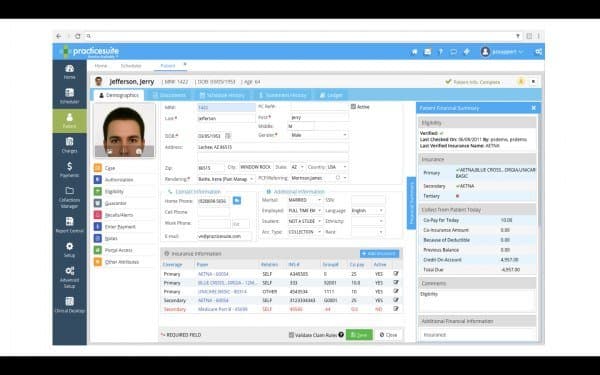
- Familiarize yourself with the dashboard and the patient-oriented features, such as the patient tab, appointment scheduling tab, and medical billing tab.
- Create a patient profile by entering the patient's personal and medical details.
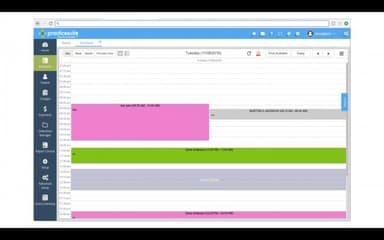
- Schedule appointments for patients by selecting the desired time and date on the appointment scheduling tab.
- Set up e-prescription services to start prescribing medication for patients.
- Document patient encounters by creating visit notes, adding diagnosis details, and treatment plans.
- Utilize the template feature to streamline documentation and reduce time spent on repetitive tasks.
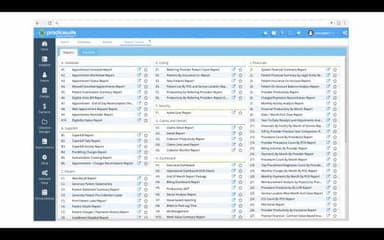
- Generate reports and analyze patient data to monitor progress and improve treatment outcomes.
- Use the medical billing tab to generate invoices, submit claims to insurance companies, and track payments.
Who Is PracticeSuite For?
PracticeSuite is a practice management software that allows healthcare providers to streamline clinical administration. It is used by physicians, medical billers, and practice administrators, and is suitable for healthcare centers of all sizes.
The following are the specialties supported by PracticeSuite:
- Physical therapy
- Mental health
- Primary care, and others
- Plastic surgery
- Cardiology
- Dermatology
PracticeSuite Use Cases
After reviewing user feedback alongside PracticeSuite’s existing capabilities, we identified a few areas where the platform works especially well. These include:
Independent Physician Practices Handling Everyday Operations
PracticeSuite works particularly well for independent physician practices that need one platform for scheduling, billing, clinical documentation, and patient communication. Smaller practices often have lean administrative teams, so having everything in a centralized system can make daily operations easier to manage.
Enterprise Healthcare Groups Managing Multiple Providers And Locations
For larger healthcare organizations and multi-provider groups, PracticeSuite can help create more consistent operational and financial processes across departments and locations. These organizations typically need broader visibility into scheduling, reimbursements, and patient management while coordinating multiple teams at once. The platform is a good fit for healthcare groups looking for a scalable system that keeps practice administration and billing connected instead of relying on separate tools.
New Medical Practices Building Digital Processes Early
Newly established practices can use PracticeSuite to put structured digital workflows in place from the beginning. Growing clinics and startups often need an all-in-one solution for appointment scheduling, patient management, billing, and engagement without investing in several disconnected systems.
Medical Billing Companies Supporting Multiple Clients
PracticeSuite is also well suited for medical billing companies managing reimbursement operations for multiple healthcare providers. Billing firms often need centralized oversight of claims processing, payer communication, reimbursement tracking, and reporting across different specialties and client accounts. The platform helps streamline revenue cycle operations while giving teams better visibility into financial performance and claim resolution activities across multiple practices.
Is PracticeSuite Right For You?
Data security and privacy are essential components of efficient and responsible healthcare management. PracticeSuite software is ONC certified and complies with HIPAA regulations. It ensures that the sensitive data stored within the system remains secure and private to avoid any breach of confidential data.
Patient records are consistently safeguarded by the latest standards, giving customers peace of mind regarding their data security and privacy needs. However, if you are unsure whether to invest in the software, PracticeSuite reviews will greatly help.
Additionally, you can contact our customer support experts at (661) 384-7070, who will help you decide whether PracticeSuite is a worthwhile fit for your organization.
PracticeSuite Features
Patient Engagement
PracticeSuite’s patient engagement capabilities are powered by HelloHealth. With PracticeSuite’s advanced two-way texting feature, patients and staff can communicate effectively and quickly with one another. This feature allows patients to reach out to their providers anytime without playing phone tag or waiting for someone to pick up the line. On the other hand, office staff can respond immediately without fully dedicating their time and attention. This feature is enabled by the application’s patient management platform, providing effective contact services and quality patient care.
Appointment Scheduling And Reminders
PracticeSuite includes an appointment scheduling and reminders feature, which is designed to help streamline patient flow. This feature assists with automated reminders and no-show reengagement notifications to provide patients with a modern digital communication experience. Moreover, the system allows configurable reminders based on the patient’s location, doctor, appointment type, or multiple appointments. It creates an efficient patient management platform. This feature allows clinics to swiftly remind patients of upcoming appointments and ensure their calendar is full.
Revenue Cycle Management (RCM)
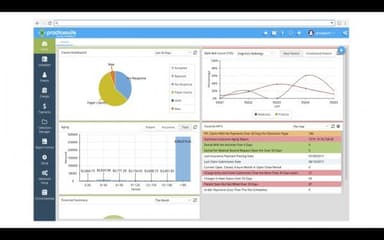
The RCM feature helps practices manage their services and scheduling and benchmark reimbursement rates against those of peers. The application can recoup lost revenue from unpaid claims by analyzing no-shows and canceled appointments. It can identify patient balances, leading to reduced revenues. The software can also devise strategies for increasing revenues derived from routine appointments and proactive patient outreach. Furthermore, it facilitates reviewing ways to increase patient satisfaction and referrals, driving up practice income. Additionally, PracticeSuite also incorporates AI-driven capabilities to help process claims faster and reduce claim denials within medical billing workflows.
Telehealth
PracticeSuite offers a telehealth feature for practitioners to conveniently manage all their communication with patients. With comprehensive practice management in the same application, healthcare practices can access patient data securely. Additionally, medical practices can stay connected with secure video conferencing and video chat tools. The software allows practices to not just offer complete care remotely but also ensure the security of private patient information.
Patient Portal
The patient portal feature allows patients to manage their health information with ease. Through secure portals, patient kiosks, and online portals integrated into the system, patients can access health care records, enter data on a secure platform, submit forms, and make payments. The tool increases clinicians’ productivity as they can handle more patients at a time without any stress. This further results in increased revenues by regulating medical billing.
Pros And Cons of PracticeSuite
Pros
Highly responsive customer support service
Improves patient satisfaction via patient engagement tools
Healthcare practices can efficiently deliver virtual care through the platform’s telehealth feature
Simplifies denial management and payment reporting workflows
Offers easy remote access
Cons
May have a steep learning curve, as per user feedback
Offers limited customization options
Users need a stable internet connection to access the software
Users may experience bugs and glitches at times
PracticeSuite Reviews
Total 18 reviews
3.8
All reviews are from verified customers
Rating Distribution
5
Stars39%
4
Stars33%
3
Stars11%
2
Stars6%
1
Stars11%
Share your experience
Lukas
TTC Inc, 1-10 employees
“outstanding product
Pros
The practice management features are great because they have been fully developed which allow doctors to add detailed reports. Also customer service has our vote for sure.
Cons
I am not a fan of interface and its not very user-friendly. It took me a long time to completely learn this system.
Rating Distribution
Ease of use
8
Value for money
10
Customer Support
10
Functionality
10
Lee Ann
Lightworks Accupuncture, 1-10 employees
“a solid alternative for EHR software
Pros
The customer support is great as always and they have been very helpful in managing the setup and answering questions. We can get our administrative processing done in a timely manner.
Cons
They keep improving the software so I don't have any complaints.
Rating Distribution
Ease of use
8
Value for money
8
Customer Support
9
Functionality
10
Corey
Medical Practice, 1-10 employees
“training sessions were well-organized
Pros
This software helps me in running my practise by assisting in collection/billing and monitoring new and existing patients, the customer support is also outstanding. The software is relatively easy to use and to train new staff with.
Cons
I wish the customization was easier than it is right now, other than that there is nothing much to complain about and its overall a helpful tool.
Rating Distribution
Ease of use
9
Value for money
7
Customer Support
8
Functionality
9
Frequently Asked Questions
How much does PracticeSuite EHR Software cost?
PracticeSuite pricing start from $34.95/month for Secure Office – Practice Edition. The plans also include Secure Office – Facility Edition for $49.95/month and Platform for $299/month. Request a custom PracticeSuite cost estimation breakdown today.
Who are the main users of PracticeSuite EHR?
What are the main features of PracticeSuite EHR?
The main features of PracticeSuite EHR include patient engagement, appointment reminder, appointment scheduling, patient portal, telehealth, and revenue cycle management.
What level of support does PracticeSuite EHR Software have?
Is PracticeSuite EHR Software cloud-based?
Does PracticeSuite support mobile devices?
No, the software doesn’t support mobile devices.
What languages does PracticeSuite support?
The software supports English language.
Does PracticeSuite offer an API?
Yes, PracticeSuite offers an API.
What other apps does PracticeSuite EHR integrate with?
PracticeSuite integrates with several third-party healthcare applications and platforms, including Elation Health, athenaHealth, Claimocity, NextGen, WebPt, and Practice Fusion.