Last Updated

Key Takeaways

Generated from the text of customer reviews

ARIA EMR is an oncology-specific EHR used by radiation oncologists, medical physicists, dosimetrists, and chemotherapy teams across cancer centers and hospital-based oncology departments. Users consistently value how it centralizes patient data and streamlines clinical workflows. However, users often report system slowness and occasional glitches as ongoing concerns.

Our Verdict

ARIA EMR suits large cancer centers and hospital-based oncology departments managing multidisciplinary workflows. Enterprise healthcare teams benefit most from its unified data environment. Pricing reflects its enterprise positioning and may challenge smaller practices. For institutions with the budget and scale, it is a worthwhile long-term investment.

Overall Rating

Based on 19 users reviews

3.5

Rating Distribution

Positive

63%

Neutral

21%

Negative

16%

Starting Price
Custom

ARIA EMR Specifications

  • Appointment Management/Scheduling
  • Billing And Invoicing
  • Claims Management
  • Customizable Forms
View All Specifications

What Is ARIA EMR?

ARIA EMR is an on-premises oncology information system developed by Varian Medical Systems, a Siemens Healthineers company. Designed for radiation oncologists, medical oncologists, physicists, and dosimetrists within cancer centers and comprehensive oncology practices, the software offers features such as treatment plan management, image review, charge posting, and health assessment tracking.

ARIA EMR consolidates radiation, medical, and surgical oncology data into a single oncology-specific EHR, helping care teams reduce administrative overhead, coordinate multidisciplinary workflows, and manage every stage of the patient journey from initial diagnosis through post-treatment follow-up.

What Is ARIA EMR Best Known For?

ARIA EMR is best known for its seamless integration between the treatment planning system, imaging, and treatment console, allowing care teams across all roles to access unified, real-time patient data without switching between systems or manually re-entering information.

ARIA EMR Integrations

The vendor has not listed any available third-party integrations for this software. Request an ARIA EMR demo to understand its features and potential compatibility.

How Much Does ARIA EMR Cost?

ARIA EMR pricing typically falls between $1,500 and $10,000/user/month, based on industry benchmarks for enterprise-grade oncology information systems with integrated radiation therapy, medical oncology, and imaging management capabilities.

The range below is intended for estimated budgeting purposes, as actual costs can differ based on the number of licensed modules, facility size, treatment machine count, and the complexity of the clinical environment being supported:

  • Implementation And Onboarding: $50,000 to $200,000 - System configuration, clinical workflow setup, staff training across roles, including physicists, dosimetrists, and radiation therapists, and integration with existing hospital infrastructure
  • Hardware And On-Premises Infrastructure: $20,000 to $100,000+ - Server setup, networking, and workstation provisioning required to support on-premises deployment across treatment areas and administrative departments
  • Third-Party Integrations: $10,000 to $50,000 - Connecting ARIA EMR with hospital information systems, lab platforms, pharmacy systems, and billing software via HL7 and DICOM interfaces
  • Annual Maintenance And Support: $15,000 to $75,000/year - Ongoing technical support, software updates, compliance maintenance, and access to vendor service resources
Request a custom ARIA EMR cost quote for your business.

Disclaimer: Pricing references are based on publicly available third-party information and industry benchmarks. Actual costs may vary. 

How Does ARIA EMR Work?

Here is how you can get started with the software once onboarding is complete:

  • Log in to the administrator or clinician dashboard to access the centralized oncology workspace 
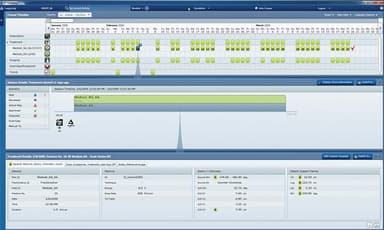
  • Review the main patient management dashboard to monitor appointments, treatment schedules, and active care plans 
  • Navigate through role-based portals for radiation oncology, medical oncology, scheduling, and billing workflows 
  • Configure user roles, permissions, and department access for physicians, nurses, physicists, and administrative staff 
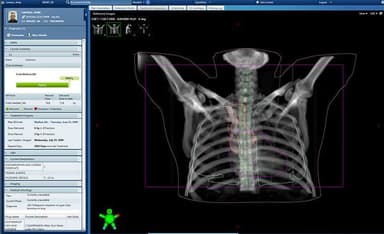
  • Create or open patient records to review clinical history, imaging data, treatment notes, and documentation 
  • Assign treatment plans, tasks, and follow-up workflows to the relevant care teams across departments 
  • Monitor live treatment progress, dose delivery records, and alerts from the clinical decision support panel 

Who Is ARIA EMR For?

ARIA EMR software serves a wide range of industries and sectors, including:

  • Oncology 
  • Healthcare technology 
  • Radiation therapy 
  • Medical oncology 
  • Hospital management 
  • Clinical research 
  • Digital health

ARIA EMR Use Cases

Based on our analysis of product capabilities and typical oncology workflows, we have identified key scenarios where this software is a strong fit for healthcare organizations and cancer care providers:

Large Cancer Centers Coordinating Multidisciplinary Treatment

Cancer centers managing radiation, medical, and surgical oncology workflows often rely on ARIA EMR to unify patient data across departments. In these environments, clinicians, physicists, and nurses must collaborate on a single treatment plan while maintaining data accuracy. The system supports coordinated decision-making by ensuring all stakeholders work from the same patient record. This is particularly valuable in high-volume centers where fragmented systems can lead to delays or inconsistencies.

Radiation Oncology Departments Requiring Precise Treatment Tracking

Radiation oncology teams benefit from ARIA EMR in settings where treatment accuracy and verification are critical. The platform enables clinicians to track planned versus delivered doses and review imaging within a single workflow. This reduces the risk of manual errors and supports compliance with strict treatment protocols. It is especially suited for facilities handling complex radiotherapy cases that demand continuous monitoring and validation.

Hospitals Standardizing Oncology Documentation And Compliance

Hospitals aiming to maintain consistent oncology documentation across departments often adopt ARIA EMR to enforce structured workflows. The system helps standardize patient records, treatment notes, and audit trails, which is essential for regulatory compliance and internal reviews. Administrators can monitor documentation quality and ensure adherence to clinical guidelines without relying on disparate systems. This makes it a strong fit for institutions focused on quality assurance and accreditation readiness.

Medical Oncology Practices Managing Chemotherapy Protocols

Specialized oncology clinics handling chemotherapy treatments use ARIA EMR to manage complex dosing and regimen workflows. In these settings, clinicians must balance patient-specific variables with standardized treatment protocols. The platform supports this by centralizing regimen data and aligning it with patient records, reducing the likelihood of dosing inconsistencies. It is particularly effective for practices that handle high volumes of infusion-based treatments.

Academic Medical Institutions Running Clinical Trials

Academic and research-driven healthcare institutions often utilize ARIA EMR to manage clinical trials alongside routine patient care. These environments require structured data collection, protocol tracking, and outcome monitoring. The system allows research teams to align trial documentation with clinical workflows without duplicating effort. This makes it well-suited for teaching hospitals and institutions conducting oncology research while delivering patient care.

Is ARIA EMR Right For You?

Are you looking for an oncology-specific EMR that unifies treatment planning, imaging, and patient management into one system? ARIA EMR centralizes fragmented oncology data, enabling coordinated care across multidisciplinary teams while reducing delays, improving workflow efficiency, and supporting audit-ready documentation through structured records and regulatory-aligned reporting standards.

The software supports HIPAA-aligned workflows to safeguard patient data and ensure privacy across oncology care processes, with secure access controls, audit trails, and compliant documentation aligned with healthcare regulations.

The platform is built with enterprise-grade security and data management practices, ensuring protected access, reliable performance, and scalable deployment across large healthcare environments.

Still not sure if ARIA EMR is right for you? Contact our customer support team at (661) 384-7070, who will help you make the best decision regarding ARIA EMR features and more.

ARIA EMR Features

RT Treatment Plan Review

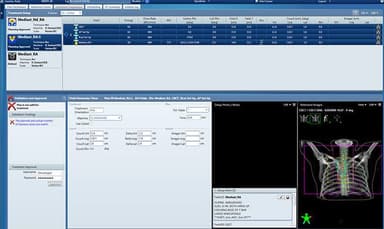
RT treatment plan review functionality enables clinicians to create and modify radiation therapy plans using customizable templates tailored to clinical protocols. The system allows direct access to Eclipse plans without requiring manual imports, while also supporting seamless integration with other DICOM-compliant systems, improving workflow efficiency and planning accuracy.

See How It Works
Image Review

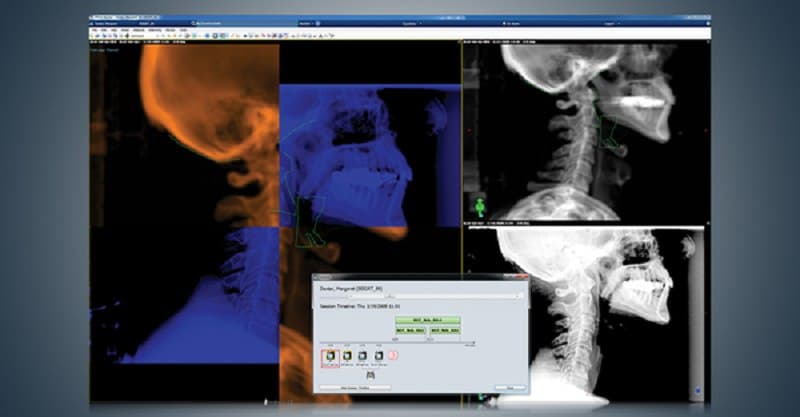
Clinicians can review multi-modality images within a unified interface, including CT, MR, PET, CBCT, MV, and kV formats. The system supports comparison through automatic, manual, or marker-based matching techniques. This helps improve treatment accuracy and enables remote verification of setup instructions and imaging quality.

See How It Works
RT Chart Auditing

Built-in chart auditing tools allow clinicians to review treatment records for accuracy and compliance. The system highlights plan modifications and overrides while maintaining a detailed audit trail. Date-stamped electronic signatures ensure accountability and support regulatory requirements in oncology environments.

See How It Works
Electronic Documentation

Digital documentation capabilities replace paper-based records with structured electronic files. The system stores clinical notes, images, patient photos, and supporting documents in a centralized repository. This improves accessibility, enhances record accuracy, and simplifies long-term data management across oncology departments.

See How It Works
Charge Posting

The system records clinical activities to support accurate charge capture and posting. It enables tracking of procedures, relative value units (RVUs), and productivity metrics. By separating technical and professional charges, it helps organizations maintain precise billing records and streamline financial reporting processes.

See How It Works
Information And Image Transfer

The platform facilitates secure sharing of patient data and imaging across departments. It supports real-time or scheduled data exchange using HL7 standards or custom interfaces. This ensures seamless interoperability and enables coordinated care across multiple clinical systems and teams.

See How It Works

Pros And Cons of ARIA EMR

Pros

  • Centralizes oncology data for coordinated patient care

  • Improves workflow efficiency across multidisciplinary oncology teams

  • Simplifies patient scheduling with clear visual organization

Cons

  • Complex interface requires time to learn fully

  • System can feel slow during initial login

ARIA EMR Reviews

Total 19 reviews

3.5

All reviews are from verified customers

Rating Distribution

5

Stars

26%

4

Stars

37%

3

Stars

11%

2

Stars

11%

1

Stars

16%

Share your experience

I

Isaac

Medical Practice, 101-500 employees

5.0
April 2023

ARIA Clinical Solutions ensures safer care

Pros

Well, my experience with ARIA Clinical Solutions was really complete and productive. Thanks to all the features this system offers, it made it so much easier for me to help health professionals do their work more quickly and efficiently. What I liked the most about working with ARIA Clinical Solutions was how it helped me streamline the clinical workflow and improve patient safety by simplifying the management of images and clinical data taken by health professionals.

Cons

The only downside I have noticed while working with ARIA Clinical Solutions is the initial cost and the high maintenance expenses for the whole system.

Rating Distribution

Ease of use

9

Value for money

8

Customer Support

9

Functionality

9

M

Minta

Not Specified, 51-100 employees

5.0
November 2022

Outstanding experience

Pros

I really love how much free time I have now because work does not take me as long. It's really impressive.

Cons

None, if I am being honest. However, I would like customer care to be a bit more responsive.

Rating Distribution

Ease of use

8

Value for money

10

Customer Support

8

Functionality

10

J

Jacob

Zero Chemotherapy, 51-100 employees

5.0
October 2022

East to use and learn

Pros

The training for Aria Oncology EHR Software was so extensive and detailed that we were able to start using the system to its full potential from day one.

Cons

There is no way for the data to be retrieved once we delete the file.

Rating Distribution

Ease of use

10

Value for money

10

Customer Support

8

Functionality

8

Frequently Asked Questions

Does ARIA EMR offer an API?

The vendor has not disclosed information regarding its API.

Does ARIA EMR have a mobile app?

No, ARIA EMR does not have a mobile app.

What language does ARIA EMR support?

ARIA EMR supports English, French, German, Spanish, and many more languages.

What types of pricing plans does ARIA EMR offer?

ARIA EMR pricing typically falls between $1,500 and $10,000/user/month. Request a custom ARIA EMR price quotation.

What other apps does ARIA EMR integrate with?

The vendor has not publicly shared information related to third-party integrations.

Who are the typical users of ARIA EMR?

ARIA EMR software serves a wide range of industries and sectors, including oncology, healthcare technology, radiation therapy, medical oncology, hospital management, clinical research, and digital health, supporting integrated and coordinated cancer care workflows across clinical environments.

What level of support does ARIA EMR offer?

ARIA EMR provides support via phone.