



Last Updated
Key Takeaways
Generated from the text of customer reviews
SPECRIGHT is a specification management platform for manufacturers, product development teams, packaging specialists, and supply chain staff. Users value its centralized product data and customization options, while some report challenges with search and configuration. Recently, SPECRIGHT announced new AI capabilities, including an R&D Workbench and specialist agents.
Our Verdict
SPECRIGHT is a suitable choice for mid-sized and large manufacturers managing complex product specifications across departments and product lines. Its pricing may be easier to justify for manufacturers with complex workflows, while smaller businesses with simpler needs may find the investment harder to justify. We recommend it for manufacturers prioritizing coordinated product data management over basic specification tracking.
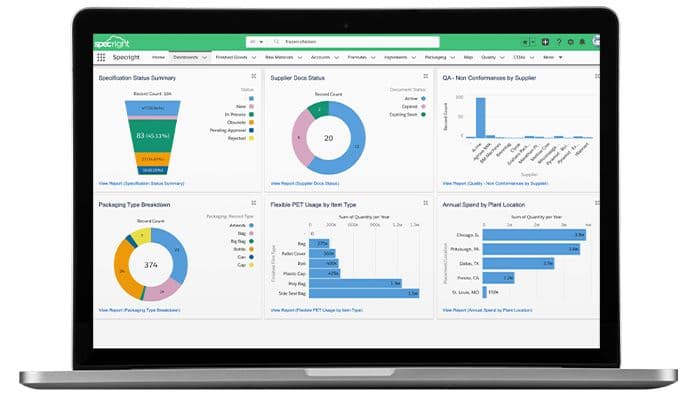
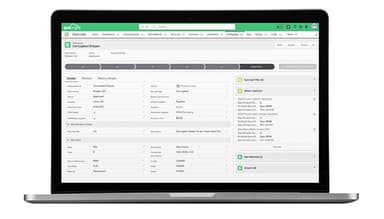
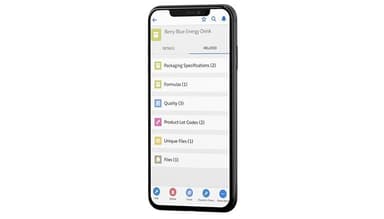
SPECRIGHT Specifications
- Quality Control
- Supply Chain Management
- Bill Of Materials (BOM)
- Product Lifecycle Management (PLM)
What Is SPECRIGHT?
SPECRIGHT is a cloud-based platform that helps businesses manage product specifications throughout the product lifecycle. It allows teams to maintain information about ingredients, materials, packaging, and product requirements in a centralized system. Users can organize specification data, share it with relevant departments and suppliers, and track changes as products move through development, manufacturing, and distribution. The platform also supports collaboration between teams working on product quality, compliance, and supply chain processes.
What Is SPECRIGHT Best For?
SPECRIGHT stands out for its AI Assistant, which lets product and supply chain teams ask questions about ingredients, formulas, packaging, and finished goods in plain English. It retrieves answers from live specification records and links them to their sources. Users can also ask follow-up questions and trace relationships across multiple product records without manually opening each one, making it useful for teams managing complex specification data.
How Much Does SPECRIGHT Cost?
SPECRIGHT pricing is estimated to start at $60,000/year. Actual cost may vary based on the required feature set. It also offers the following custom plans:
- Specright Foundations
- Specright Plus
- Specright Enterprise
Besides the base subscription, users should also consider the following potential expenses that can increase the SPECRIGHT cost:
- Implementation And Configuration: $10,000–$25,000 one-time for workflow setup, specification structures, and approval rules
- Data Migration: $5,000–$20,000 one-time for transferring legacy specifications, supplier records, formulas, and documents
- Additional Licenses: $500–$2,000/month for purchasing extra license bundles when the included allocation is insufficient
- ERP And Third-Party Integrations: $5,000–$25,000 one-time for connecting product specifications with existing business systems
- Advanced Modules: $1,000–$3,000/month for adding PLM, supplier management, or quality management capabilities
- Training And Onboarding: $2,000–$10,000 one-time for preparing teams to use the platform across departments and locations
- Enterprise Deployment: $10,000–$50,000 one-time for extending the platform across multiple business units, facilities, and supplier networks
Disclaimer: Pricing references are based on publicly available third-party information and industry benchmarks. Actual costs may vary.
SPECRIGHT Integrations
SPECRIGHT integrates with various third-party applications, including:
- Trayak
- NetSuite
- Lorax EPI
- Oracle
- SAP
How Does SPECRIGHT Work?
Here's how teams can get started with SPECRIGHT after logging into the platform:
- Create product and packaging specifications using standardized templates
- Add details about raw materials, ingredients, formulas, and finished goods
- Link related specifications to build bills of materials and product structures
- Review and update specification data as product requirements change
- Track revisions and access specification history to identify changes
- Share current specifications with internal teams and suppliers
- Use search tools to locate specifications and related documents
Connect specification data with ERP and other business systems through integrations or APIs
Who Is SPECRIGHT For?
It caters to manufacturing businesses of all sizes. Some of the industries using SPECRIGHT include:
- Food And Beverage
- Beauty
- Consumer Goods
- Packaging
- Industrials
- Life Sciences
- Quick Service Restaurants
SPECRIGHT Use Cases
Based on SPECRIGHT features and capabilities, we have identified several scenarios where the platform can support specific operational needs in manufacturing organizations.
Food Manufacturers Developing New Product Formulas
Food manufacturers often need to adjust recipes while checking ingredient quantities, allergen information, and nutritional claims. When an ingredient or formula changes, teams also need to understand how that change affects other products and their related specifications. SPECRIGHT connects ingredient and formula records, helping food manufacturers trace these changes across their product portfolios. Its R&D Workbench supports product development teams working on new and updated formulas.
Packaging Teams Preparing Regulatory Reports
Packaging manufacturers and brand owners must track material composition and reporting requirements across different markets. SPECRIGHT connects packaging specifications with material and product data used for Extended Producer Responsibility (EPR) reporting. It centralizes packaging data, including material type, weight, and recyclability, across suppliers. Through its partnership with Lorax EPI, teams can use this data for EPR reporting and fee calculations.
Quality Teams Reviewing Supplier Documents
Suppliers can submit information in different formats and languages, with documents such as certificates, certificates of analysis (COAs), and test reports attached. SPECRIGHT's Supplier Network accepts these submissions and maps and validates the information against required fields. Teams can review supplier data alongside the relevant material and product specifications when checking documentation and supporting quality processes.
Packaging Engineers Evaluating Material Options
Packaging engineers must compare material options against product requirements, sustainability goals, and packaging specifications. SPECRIGHT's Packaging Selection Agent identifies and ranks potential packaging options using connected specification data. Engineers can review the suggested alternatives and make the final selection based on their requirements, rather than evaluating each option without reference to existing packaging records.
Is SPECRIGHT Right For You?
SPECRIGHT is suited to manufacturers that manage product and packaging specifications across multiple teams and suppliers. It is trusted by Fortune 500. The platform also addresses data privacy through its privacy notice, which outlines how personal information is handled under regulations such as the GDPR and CCPA.
In recent years, packaging regulations have placed greater emphasis on material transparency and producer responsibility. SPECRIGHT addresses this shift through its specification management and EPR reporting capabilities, connecting packaging specifications with material data to help manufacturers assess their reporting obligations.
Still confused about investing in the SPECRIGHT software? Contact us at (661) 384-7070 to make the right decision.
SPECRIGHT Features
Packaging Management
SPECRIGHT provides a centralized system for managing packaging specifications and their related components. Users can link packaging components to bills of materials, compare specifications, detect potential duplicates, and track specification versions. The module also records material composition and recycled content, supports unit-of-measure conversions, and maintains change history and approval records for packaging data.
Product Data Management
SPECRIGHT’s Product Data Management module organizes product specifications, including formulas, ingredients, components, and finished goods. Users can link these records through bills of materials, scale ingredient quantities for different batch sizes, and manage product claims and allergen information across related records. It also includes data validation rules, version history, and a configurable grid for editing and filtering specification records.
Supplier Management And Collaboration
The software allows companies to collaborate with suppliers on specifications, documents, and shared workflows. Suppliers can submit information in formats such as Excel or PDF, while AI maps and validates submitted data against required fields. By using SPECRIGHT, companies can manage supplier permissions, store documents such as certificates and facility audits, set document expiration alerts, and performance reports.
Project Management
SPECRIGHT’s Project Management module helps teams organize product development projects, tasks, requirements, and timelines. Users can create task templates, set dependencies, and view project schedules through Gantt charts and milestones. Stage-gate workflows define the steps that must be completed before a project progresses, while requirements tracking and user assignments connect responsibilities with relevant product and packaging records.
Formulation Workbench
The feature uses AI to help research and development teams create, revise, and evaluate product formulas. SPECRIGHT allows the users to generate formula concepts from natural-language prompts, explore ingredient substitutions, and calculate nutritional values. The module also generates nutrition labels for supported regions, checks product claims against regulatory requirements, tracks formula versions, and manages allergen information across ingredients, formulas, and label outputs.
Pros And Cons of SPECRIGHT
Pros
Reduces duplicate work by centralizing product specifications and supplier records
Speeds up supplier quality checks by automatically providing feedback on specification compliance
Helps teams identify trends through customizable reports and dashboards
Helps teams spot outdated information through revision tracking
Reduces manual reporting by consolidating data across departments
Cons
Customization may be limited by its Salesforce-based architecture
Finding and linking records can require simpler navigation
Initial data migration and configuration can be complex
SPECRIGHT Reviews
Total 13 reviews
4.6
All reviews are from verified customers
Rating Distribution
5
Stars62%
4
Stars38%
3
Stars0%
2
Stars0%
1
Stars0%
Share your experience
Nonprofits, 500+ employees
“User interface is fairly intuitive, database is very comprehensive. Customizations can be limiting..”
Pros
The database impresses me with its comprehensiveness and power. I also love the ability that I can customize it to some extent, which is particularly useful for our company's unique specification nomenclature. The interface is fairly user friendly as well.
Cons
As an Administrator, I would prefer to have more flexibility in creating dialogs, fields and pages. The limitations imposed by the Salesforce platform can be annoying at times. The search function can also be challenging, as it's unclear where it draws previous history from in certain instances.
Rating Distribution
Ease of use
8
Value for money
8
Customer Support
10
Functionality
8
Construction, 500+ employees
“Exc”
Pros
The staff at Specright delivers excellent customer support. Throughout the entire process, they have dedicated resources to address our business needs.
Cons
My experience so far has been positive and currently have no cons.
Rating Distribution
Ease of use
10
Value for money
10
Customer Support
10
Functionality
10
Manufacturing, 500+ employees
“Growing with Specright”
Pros
I value the flexibility to create workflows and databases tailored to our specific needs. Moreover, the search tool is exceptional. Moreover generating reports and dashboards is both simple and easy.
Cons
The more complex the business, the greater the need for customization.
Rating Distribution
Ease of use
8
Value for money
10
Customer Support
8
Functionality
8
Frequently Asked Questions
How does SPECRIGHT handle changes to ingredients used in multiple product formulas?
SPECRIGHT links ingredient specifications to the formulas and finished goods that use them. When an ingredient specification changes, the connected records reflect the change, helping teams trace where that ingredient is used. Users can also access specification versions and change history.
Can SPECRIGHT identify duplicate packaging specifications?
Yes. SPECRIGHT includes a Duplicate Detector that flags packaging items that appear to match existing specifications. Teams can also compare up to five specifications side by side to review differences and similarities before deciding whether records should remain separate or be consolidated.
Can SPECRIGHT track packaging materials for sustainability and regulatory reporting?
Yes. SPECRIGHT records packaging material composition and recycled content within specifications. It also supports packaging-level tracking for Extended Producer Responsibility (EPR) reporting and can roll up conformity data across finished goods for relevant Packaging and Packaging Waste Regulation (PPWR) documentation. The specific reporting requirements depend on the applicable regulation and business needs.
What should companies know about SPECRIGHT’s search and customization limitations?
SPECRIGHT offers universal search, configurable specification data, and customizable reports. However, some users report limitations in search behavior and flexibility when creating fields, dialogs, and page layouts. Businesses with complex data structures should test their required search queries and configuration needs during a product demonstration.
Can SPECRIGHT replace an ERP or an existing PLM system?
No, SPECRIGHT is designed to manage detailed product, ingredient, packaging, and supplier specifications alongside existing business systems. Companies should assess their current PLM capabilities and integration requirements before deciding whether to replace or connect to existing systems.