Last Updated
Key Takeaways
Generated from the text of customer reviews
Microsoft Project, a project management tool, is used by managers and team leads across IT, construction, engineering, and professional services. Its users consistently praise strong scheduling capabilities, especially Gantt charts and resource planning. However, many mention a complex setup for smaller teams requiring initial training.
Our Verdict
Microsoft Project is a reliable option for structured, multi-phase project management. It suits mid to large organizations needing strong coordination, scheduling discipline, and resource visibility across complex workflows. Pricing can be high for smaller teams but offers strong long-term value. Best for scalable project control over lightweight task management.
Overall Rating
Based on 52 users reviews
4.4
Rating Distribution
Positive
90%
Neutral
10%
Negative
0%
Starting Price
$10.00
/user/month
Microsoft Project Specifications
- Time Tracking
- Task Management
- Reporting
- Budget Management
What Is Microsoft Project?
Microsoft Project is a comprehensive project management platform designed to help project managers and teams of all sizes plan, manage, and track projects efficiently. It is available as both a cloud-based service (Project for the web/Planner) and a desktop application (Standard/Professional). The cloud version operates within the broader Microsoft Planner work management ecosystem that gives teams access to tracking, scheduling, and collaboration tools directly from the browser. The desktop app, on the other hand, offers a feature-rich environment that suits complex and offline project planning.
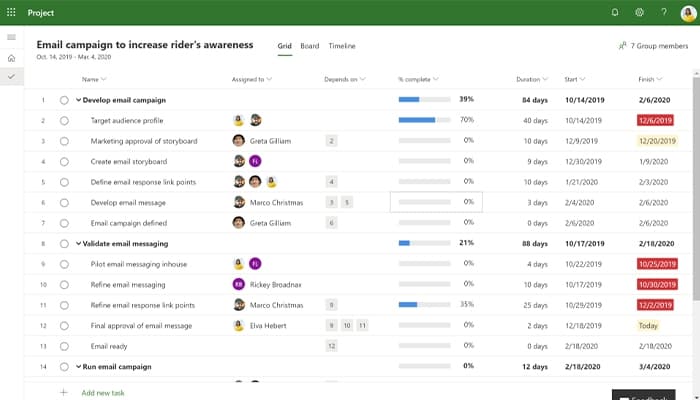
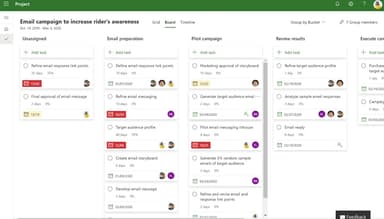
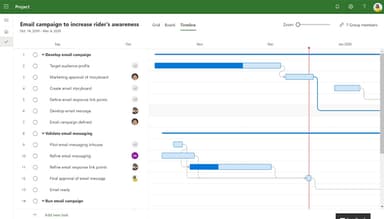
Besides the core project management capabilities, the platform offers tools such as Gantt charts for timeline visualization, Kanban boards for task flow management, and customizable dashboards for viewing progress at a glance.
What Is Microsoft Project Best For?
A standout feature of this tool is its powerful scheduling engine that lets teams build fully dependent project schedules. This means a delay in one task automatically cascades through the entire project timeline. It helps project managers to identify downstream impacts before they become problems.
How Much Does Microsoft Project Pricing Cost?
The starting price of this simple project management tool is $10.00/user/month for Planner Plan 1. A 30-day free trial is available on all subscription plans. The Microsoft Project license cost is customizable depending on the number of users and the subscription. MS Project price plans include:
- Planner And Project Plan 3 - $30.00/user/month
- Planner And Project Plan 5 - $30.00/user/month
For teams that prefer one-time purchase, Microsoft Project is available as perpetual desktop license:
- Project Standard 2024 - $719.99
- Project Professional 2024 - $1,409.99
- Project Server – Custom Pricing
The price range below is an estimate for budgeting purposes only:
- Microsoft 365 Subscription Dependency: $6–$22/user/month - Planner is often bundled within broader Microsoft 365 plans, which may be required for full functionality and access
- Advanced Project Features (Premium Plans): $10–$30/user/month - Includes timeline (Gantt), task dependencies, resource management, and portfolio-level planning
- Implementation And Admin Setup: $200–$2,000 - Initial configuration, team structuring, permissions setup, and workflow alignment within the Microsoft ecosystem
- Power Platform And Automation: $10–$40/user/month - Costs associated with Power Automate, Power Apps, or advanced workflow automation and integrations
Disclaimer: The pricing is subject to change.
Microsoft Project Integrations
It seamlessly integrates with other products available in the Microsoft 365 plan. MS Project works with Outlook, SharePoint, Microsoft SharePoint, Microsoft Excel software, Microsoft PowerPoint software, Planner, OneNote, and Microsoft Teams to create a streamlined experience.
Users have access to all these products via their Microsoft account, simplifying the project planning process. The MS Project server allows you to manage tasks, create a project schedule, and overview your project plan – all in one place.
How Does Microsoft Project Work?
Here is how you can get started with Microsoft Project management tool after logging into the system and begin managing and distributing work across your team:
- Access the main dashboard to get a centralized view of all active projects, timelines, and recent updates
- Create a new project plan using templates or start from a blank workspace to define project scope and structure
- Define project tasks by breaking down work into phases, milestones, and individual actionable items
- Assign tasks to team members and set ownership to ensure clear accountability across the project
- Set timelines and dependencies to map out task sequences and manage scheduling conflicts effectively
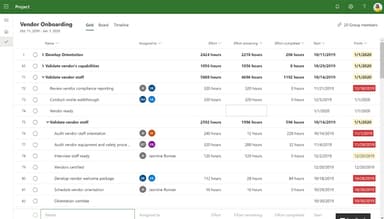
- Monitor progress using visual tools like Gantt charts, boards, and dashboards to track completion status
- Allocate resources and budgets to ensure proper distribution of workload and financial tracking across tasks
Who Is Microsoft Project For?
Microsoft Project software is most prominently used in the construction, engineering, IT, marketing, and product development sectors. It has project management tools relevant to the following occupations:
- Project manager
- Project teams
- System administrators
- Stakeholders
- Individual contributors
Microsoft Project Use Cases
Based on our analysis of MS Project’s capabilities and common user workflows, we have identified key scenarios where this software is a strong fit for project-driven teams and organizations:
Enterprise PMOs Managing Multi-Department Project Portfolios
Large organizations often use Microsoft Project to oversee multiple simultaneous initiatives across different departments. Usually, project managers rely on it to maintain visibility across interlinked projects, track dependencies, and flag scheduling conflicts early. This helps give leaderships a single view of the project health, without them having to chase the status updates from every team.
Construction And Engineering Teams Handling Complex Scheduling
Project managers in construction and engineering environments frequently adopt Microsoft Project to manage highly structured schedules with interdependent tasks. It is effective in mapping out long project lifecycles where delays in one phase directly impact downstream activities. Teams use it to coordinate contractor schedules, timelines, and resource allocation across multiple job sites while maintaining a clear project roadmap.
IT Teams Delivering Software Development And Infrastructure Projects
IT teams commonly use MS Project to manage software development cycles, infrastructure rollouts, and system upgrades. The platform is particularly useful for breaking technical work into structured phases, assigning responsibilities, and tracking progress across agile or hybrid workflows. It allows engineering, QA and operations teams to benefit from getting visibility into where each team’s work sits in the broader timeline without constant check-ins.
Manufacturing And Operations Teams Coordinating Production Cycles
Manufacturing and operations-focused teams rely on Microsoft Project to plan production schedules, manage supply chain dependencies, and align operational workflows. This tool helps teams connect procurement, production, and delivery in a single schedule. It is especially valuable in environments where delays in one operational stage can impact overall output and delivery commitments.
Is Microsoft Project Right For You?
The MS Project tool is considered one of the best project management software because it can juggle complex projects, manage resources, and keep stakeholders informed. It allows users to streamline project planning, boost collaboration, and gain real-time insights while being secure and scalable. This feature makes it suitable for businesses of all sizes, from small teams to large enterprises across various industries.
Built on Microsoft’s trusted infrastructure, it adheres to ISO 27001, SOC 1, SOC 2, and GDPR standards. By supporting companies like Ontic, the platform delivers precision and control in environments where errors are costly.
If you're still unsure about whether to buy Microsoft Project, contact us at (661) 384-7070, and we'll guide you in making the best decision for your project management needs.
Microsoft Project Features
Gantt Charts
With Gantt charts, teams can map out project timelines, task relationships, and dependencies in a structured format. It helps identify critical paths, break large projects into manageable phases, and share a clear picture of what is due when. This improves planning accuracy and ensures better communication of expectations across all stakeholders.
Real-Time Updates
The platform supports real-time updates that enable seamless collaboration across teams working on shared projects. Since the tool has a centralized environment and is connected to Microsoft ecosystem, whenever a task is updated, progress is logged or deadline is shifted, team members can see it. This eliminates confusion and also reduces back-and-forth that comes with manually syncing project status.
Resource Allocation
MS Project provides advanced resource management capabilities, including allocation, leveling, and tracking of timesheets. It gives project managers visibility into who is working on what and how much capacity they have left. With resource leveling, managers can ensure team members are not double-booked across projects. Timesheet tracking keeps workload and budget in check, so managers can proactively identify bottlenecks and adjust plans accordingly.
Project Portfolio Management
The software delivers a consolidated view of all ongoing projects within an organization, making portfolio oversight more structured and efficient. It enables prioritization of initiatives, balanced resource distribution, and improved alignment with organizational goals. This helps decision-makers optimize project execution across multiple teams and departments.
Dashboards
Microsoft Project includes customizable dashboards and reporting tools that provide clear insights into project performance, resource usage, and key metrics. Managers can generate reports such as project overviews, burn-down charts, and allocation summaries. These dashboards support data-driven decision-making and improve visibility for stakeholders at all levels.
Pros And Cons of Microsoft Project
Pros
Provides clear visualization of project timelines
Improves coordination through centralized real-time updates
Enhances resource planning across multiple projects
Cons
Limited flexibility for non-linear project structures
Resource allocation needs careful manual adjustment
Microsoft Project Reviews
Total 52 reviews
4.4
All reviews are from verified customers
Rating Distribution
5
Stars52%
4
Stars38%
3
Stars6%
2
Stars4%
1
Stars0%
Share your experience
Priscilla S.
Information Technology and Services, 11-50 employees
“remarkable powerhouse for optimization
Pros
It's truly a remarkable powerhouse.. one that excels across every critical dimension of our work. From portfolio optimization and making sure goals stay tightly aligned with broader strategy, to dependable resource allocation and highly effective project management, it delivers consistently. What impresses me most is how it integrates all these complex functions into a single, cohesive platform without sacrificing ease of use or clarity. It's become an indispensable engine for how we plan, execute and track success.
Cons
To be honest I have no cons to share as it is an amazing tool that has everything I needed.
Rating Distribution
Ease of use
10
Value for money
10
Customer Support
10
Functionality
10
Arie G.
Information Technology and Services, 11-50 employees
“Best solution with patience, top-notch allocation
Pros
I would say that if you're willing to be patient this is the best solution I have found and I guarantee it delivers top-notch resource allocation and scheduling along with excellent task management and full project management capabilities you could ever ask for.
Cons
It took me quite a while to learn because it is so powerful and designed to handle very large projects.
Rating Distribution
Ease of use
8
Value for money
9
Customer Support
9
Functionality
9
Isa M.
Information Technology and Services, 11-50 employees
“Packs all features for planning and budgeting
Pros
The software packs all the features I need for planning and budgeting my projects. Also I can clearly map out timelines and dependencies and I have found its resource allocation tools reliable for keeping things on track.
Cons
For my small business it feels like a lot. In other words the software can be more than I really need and ends up being heavier than what my team can comfortably handle.
Rating Distribution
Ease of use
8
Value for money
8
Customer Support
8
Functionality
8
Frequently Asked Questions
Does Microsoft Project offer an API?
The vendor has not disclosed information about any APIs.
What language does Microsoft Project support?
Microsoft Project Online supports multiple languages depending on the user's operating system.
What other apps does Microsoft Project integrate with?
Microsoft Project integrates with all other MS products, including, but not limited to, MS Teams, Power BI, Outlook, SharePoint, Excel and Dynamics 365.
Does Microsoft Project support mobile devices?
Yes, Microsoft Project offers a mobile app available for Android and iOS devices.
What types of pricing plans does Microsoft Project offer?
Microsoft Project pricing starts at $10.00/user/month for Planner Plan 1, $30.00/user/month for both Planner and Project Plan 3 and Planner and Project Plan 5. For teams preferring a one-time purchase, perpetual licenses include Project Standard 2024 at $719.99 and Project Professional 2024 at $1,409.99, while Project Server is available with custom pricing. Get in touch with us for a custom Microsoft Project cost quote.
Who typically uses Microsoft Project?
Typical users of Microsoft Project include project managers, project teams, stakeholders, individual contributors, and system administrators.
What kind of support is offered to Microsoft Project users?
Microsoft offers various support options, such as online contact forms, resource articles, community forums, and documentation. The specific level of support might vary depending on the chosen Microsoft 365 plan.