




Last Updated
Key Takeaways
Generated from the text of customer reviews
Our Verdict
athenaOne Specifications
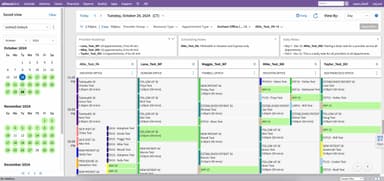
- Appointment Management/Scheduling
- e-Prescriptions
- Lab Integration
- Patient Portal
athenaOne Features
Electronic Health Record
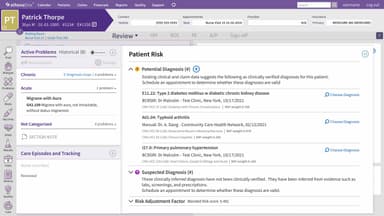
The main feature of the software is athena electronic medical records system which streamlines documentation and improves clinical efficiency. With system protocols like pre-encounter prep and customizable workflows, you’ll be able to spend less time documenting and boost accuracy and engagement. The software also integrates with a mobile app called athenaOne where you can access patient records and do other clinical work on the go. The software also integrates with a mobile app called athenaOne where you can access patient records and do other clinical work on the go.
Patient Engagement
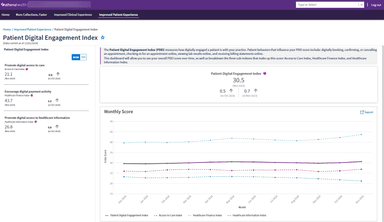
On the athena practice management system, you can communicate with patients at scale to deliver health information online, streamline payment, and enable self-scheduling for appointments. Patients can exchange messages with physicians, view lab test results, and request prescription refills using mobile devices. Automated reminders and notifications regarding appointments, billing, and follow-up care are also available. Through athenahealth EMR’s patient portal, patients can easily schedule appointments, and view their current medical history, medications, and supplements online. Healthcare professionals can further configure the platform’s functionality to meet their practice’s needs, drive patient satisfaction, and limit manual scheduling tasks for front desk staff.
Revenue Cycle Management
If you’re an independent medical practice, collecting what you’re owed is one of the biggest challenges. With athena revenue cycle management services like authorization management, medical coding, and denials resolution, you’ll be able to collect more revenue faster (and with less work). If you work at a large, complex healthcare organization, you can lower cost-to-collect and reduce A/R days through low-touch, automated workflows on athena EMR. You’ll also be able to tailor the athena RCM product to your needs and integrate it with your current clinical solutions.
Medical Billing
athena billing software provides its users with features for managing their medical bills, and revenue, improving first-pass resolution rates by scrubbing insurance claims to detect errors prior to submission. In addition, the platform’s fostered high return on investment can help increase small to medium-sized health organizations’ revenue in the long run.
TeleHealth™
Through athenaTelehealth, healthcare providers will be able to conduct virtual visits with patients remotely, using videoconferencing or phone calls. This can be especially useful during the COVID-19 pandemic, when in-person visits may not be possible or may pose a risk to patients and providers. During the telehealth appointment, you can directly chat with patients, conduct virtual examinations, review patient records, and discuss treatment options. Then, you can update their records directly and record notes from the appointment on the athena healthcare software.
Reporting And Analytics
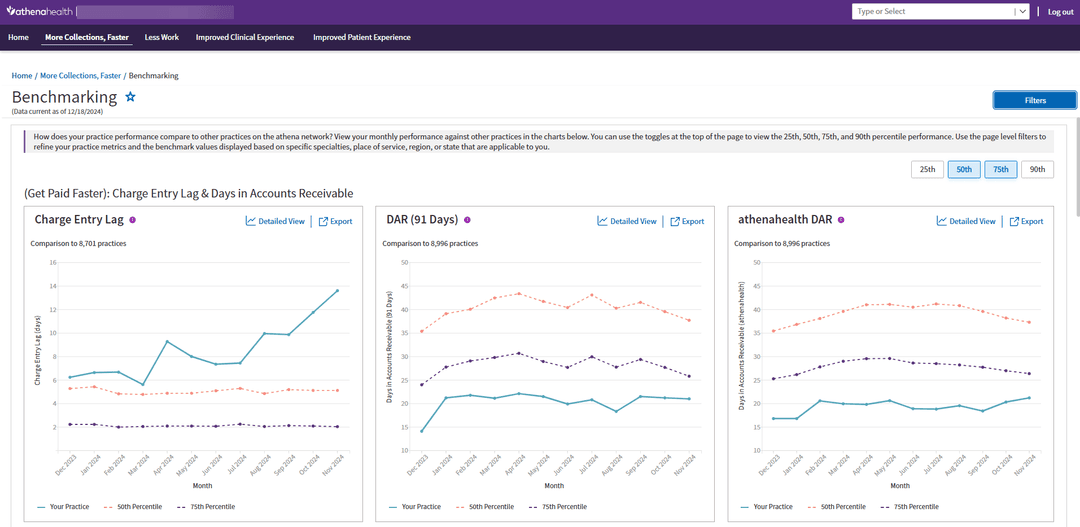
athena EMR includes tools for generating reports, tracking performance metrics, and analyzing data to help healthcare practices improve their operations. In addition, the platform allows providers to access and update patient records, including medical history, patient charts, patient data, medications, allergies, and test results in real-time.
Pros And Cons of athenaOne
Pros
Tailorable EHR platform allows customization to specific specialty needs
Automated workflows help reduce administrative burdens and improve efficiency
Telehealth services facilitate virtual care delivery
Communication and care tools improve patient relationships
Marketplace program connects with industry-leading partners
Cons
Initial training may be required
Limited customization options for a few advanced features
Dependency on reliable internet connectivity for cloud-based features
athenaOne Reviews
Total 667 reviews
3.9
All reviews are from verified customers
Rating Distribution
5
Stars38%
4
Stars36%
3
Stars13%
2
Stars5%
1
Stars9%
Share your experience
Reneisha H.
Hospital & Health Care, 500+ employees
Less than a year
“organized EMR for clinics”
Pros
athenaOne delivered an adaptive, efficient workflow that made day-to-day clinical operations feel more organized than the other EMR systems i've tried. the interface is simple, appointment scheduling and patient management are handled really well and it also improves communication and day-to-day workflow efficiency across the practice. i also appreciated how responsive the system is and how easily i can access key patient information whenever i need it.
Cons
a few workflows and customization options may take some extra training time or tweaking based on how the practice runs. occasionally, updates or changes to certain workflows created a bit of a learning curve for staff when they shifted between processes.
Rating Distribution
Ease of use
8
Value for money
10
Customer Support
9
Functionality
10
Veronica Carr
Health Services, 1-10 employees
Less than a year
“quick messaging with care team”
Pros
Messaging my care team has been really convenient, whenever I have a question or need to request an appointment, I can send it right through the app.
Cons
There have been a fair number of bugs and glitches particularly over the past year and it's getting frustrating. I'm hoping the team can get them sorted out soon.
Rating Distribution
Ease of use
5
Value for money
7
Customer Support
6
Functionality
8
Brook Lynn
Hospital & Health Care, 51-100 employees
More than a year
“reliable appointment reminders!!”
Pros
Athena One has consistently notified me about my appointment reminders without any misses and it also nudges me to handle the appointment scheduling tasks through its user-friendly interface. I haven't run into any bugs or operational issues either. Overall, it's been a top choice for the price, with strong security features and 24/7 customer support.
Cons
Wish I had found it earlier instead of wasting time on other appointment management tools that didn't provide much (if any) protection for my information.
Rating Distribution
Ease of use
10
Value for money
10
Customer Support
10
Functionality
10
Frequently Asked Questions
Who are the typical users of athenahealth?
The typical users of athena EHR system include healthcare facilities of all sizes across various specialties, including primary care, orthopedics, cardiology, and urgent care.
What level of customer support and training does athenahealth provide?
athena EMR is a cloud-based electronic health records software used in healthcare settings to manage patient information, clinical documentation, billing, and practice management.
Does athenahealth support mobile devices?
Yes, athenahealth supports mobile devices.
What type of software is athena EMR?
athena health EMR is a cloud-based electronic health records software used in healthcare settings to manage patient information, clinical documentation, billing, and practice management.
Is athena EMR user friendly?
Yes, EMR athena is designed with a user-friendly interface that is intuitive and easy to use for healthcare professionals.
How does athenahealth integrate with third-party applications?
athenahealth integrates with third-party applications through robust APIs, allowing developers to access patient data, automate workflows, and build custom solutions. Use cases include patient portals, billing systems, EHR integration, and telehealth platforms. Developers can find detailed documentation in the athenahealth API documentation.
Is athenahealth HIPAA compliant?
Yes, athenahealth is HIPAA compliant, safeguarding patient data. This compliance is crucial for protecting sensitive health information and maintaining legal standards. Furthermore, athenahealth holds electronic healthcare network accreditation commission (EHNAC) certification. This certification demonstrates conformance with federal healthcare reform legislation, including HIPAA, HITECH/ARRA, ACA, and other applicable state laws.
How does athenahealth EMR compare to Epic EHR?
athenahealth caters to smaller practices, emphasizing user-friendly interfaces and scalability through its cloud-based platform. In contrast, Epic EHR dominates the acute care hospital market, offering extensive customization options but requiring server-based deployment.
What languages does athenaOne support?
The software supports English and Spanish.
Does athenaOne offer an API?
Yes, the platform offers API access.
What do athenahealth reviews say about the platform’s performance?
athenahealth EMR reviews highlight the software’s ease of use, customizable templates, and integrated billing capabilities. Many athena EMR reviews highlight the platform's intuitive interface and efficient claims management, while some note that initial setup and learning curves can take time depending on practice size.
How does athenahealth EHR pricing compare to other EMR systems?
athena health pricing is typically based on a percentage of monthly collections rather than fixed fees. This model makes it cost-effective for small to mid-sized practices, though larger organizations may find subscription-based alternatives more predictable in cost structure.