


Lightning Step
Last Updated
Overview
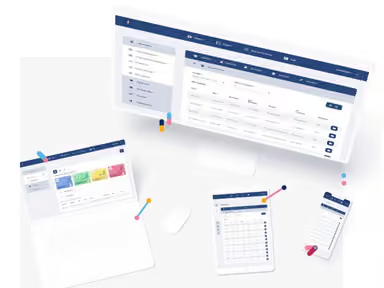
Lightning Step helps behavioral health providers manage patient records, clinical documentation, and billing in one system. Although its range of features may take time to learn, customizable templates and AI-assisted workflows can help reduce repetitive tasks. Overall, it gives practices practical tools for handling clinical and administrative tasks.

Lightning Step Specifications
- Appointment Management/Scheduling
- Patient Portal
- Billing and Invoicing
- Claims Management
What Is Lightning Step?
Lightning Step, now part of Sunwave, is a behavioral health software platform that brings clinical documentation, client management, marketing, and revenue management into one shared system. Built for treatment centers and clinics, it connects administrative and clinical work, keeping patient information accessible from the first inquiry through discharge. Its Electronic Health Record (EHR) tools support assessments, configurable treatment plans, and individual or group progress notes, while billing tools cover claims, payment posting, and financial reporting. What sets it apart is the built-in Customer Relationship Management (CRM) module, with a contact management dashboard and call tracking insights, so admissions work lives in the same record as treatment and billing.
What Is Lightning Step Best For?
At the center of Lightning Step’s behavioral health platform is LIA (Lightning Intelligent Assistant). It supports documentation, reporting, and clinical workflows. It helps staff produce accurate, compliant notes, learn better documentation practices, and spend less time on repetitive tasks. Currently, it supports patient summaries and individual and group notes, while telehealth call transcripts and assessments are in development. For practices facing heavy paperwork demands, this could ease staff workloads. Still, actual savings will vary with existing workflows.
How Much Does Lightning Step Cost?
Lightning Step price is estimated to start at $200/user/month, based on industry benchmarks. Actual costs vary and may depend on factors such as the number of users, capabilities selected, and more.
Additionally, users may need to budget for potential extra costs. The following figures are estimates and may vary based on provider terms and requirements.
- Implementation and configuration: $5,000–$25,000
- Data migration and chart conversion: $2,000–$20,000
- Custom integrations and interfaces: $3,000–$15,000 per interface
- Workflow customization: $2,000–$10,000
- Additional staff training: $1,200–$5,000
- Historical clinical document digitization: $1,000–$5,000
- Insurance and claims workflow configuration: $1,000–$5,000
- Multi-location deployment: $5,000–$20,000
- Go-live support and transition assistance: $1,000–$5,000
Disclaimer: Pricing references are based on publicly available third-party information and industry benchmarks. Actual costs may vary.
Lightning Step Integrations
The platform integrates with several third-party applications and systems, such as:
- Availity
- PaySimple
- Twilio software
- Waystar
- CallTrackingMetrics
- Microsoft BI
- Salesforce
Lightning Step supports API-based integrations with external systems. HL7 and FHIR connectivity supports healthcare data exchange with major external EHR systems and healthcare networks.
How Does Lightning Step Work?
Here’s a step-by-step guide to how users can navigate the software:
- Log in to Lightning Step using your authorized account credentials
- Open the CRM dashboard to review inquiries, referrals, and prospective clients
- Create or update client records and manage admissions, assessments, and bed assignments
- Schedule appointments and coordinate pre-admission assessments through the calendar
- Access the EHR to document clinical assessments, treatment plans, progress notes, and medication orders
- Use the client portal and communication tools to coordinate messaging and patient engagement
- Open the revenue cycle management dashboard to verify insurance eligibility, process claims and payments, and review billing reports
Who Is Lightning Step For?
Lightning Step is well-suited for private practices to large treatment centers in the behavioral health sector. It supports:
- Substance abuse treatment centers
- Behavioral health treatment centers
- Mental health clinics
- Eating disorder treatment centers
Lightning Step Use Cases
Based on our analysis of user feedback and the software’s current capabilities, we believe it can work well in the following scenarios:
Behavioral Health Organizations Managing The Full Patient Journey
When admissions teams, clinicians, and billing staff keep separate records, information gets hard to track as patients move through care. Lightning Step connects admissions, scheduling, treatment, documentation, and billing in one system, giving staff a single view of each patient’s progress. Treatment centers coordinating several departments are the clearest fit. Organizations should check whether the platform’s broader workflow matches their existing processes before migrating records.
Treatment Centers Facing Heavy Documentation Workloads
Clinical staff can spend a large share of their time completing progress notes and maintaining records instead of focusing on patient care. Lightning Step’s LIA assistant supports clinical documentation and guides staff toward more accurate, compliant notes, while cutting down on repetitive work. This can help facilities with demanding documentation requirements and ongoing staff onboarding needs. The reported time savings are a vendor claim, so they shouldn’t be treated as a guaranteed result for every clinical team.
Facilities Struggling With Billing Follow-Up And Claims
Unresolved insurance claims, eligibility checks, and payment tracking can leave revenue cycle teams unsure what work is still outstanding. Lightning Step brings insurance eligibility and verification of benefits, claims management, payment processing, and customizable reporting into its revenue cycle management tools. Billing teams get a clearer way to monitor claim status and spot follow-up needs. Practices should still evaluate how well its billing workflows handle their specific payer rules and reporting requirements.
Providers Losing Prospective Patients During Admissions
Behavioral health facilities can lose track of referrals and inquiries when staff doesn’t have a consistent process for moving prospective patients toward admission. The customer relationship management tools support referral tracking, patient inquiries, and admissions coordination, with available-bed information helping teams weigh placement options. Treatment centers managing steady referrals and limited bed capacity stand to benefit most. Its value depends on staff keeping referral, inquiry, and bed-availability information current.
Is Lightning Step Right For You?
Behavioral health organizations have to protect sensitive patient information while keeping up with clinical and administrative demands. Lightning Step brings specialized behavioral health workflows together.
Its data safety protocols include encryption, access controls, and continuous monitoring, alongside its stated compliance with the HIPAA standard. Its ISO 27001 certification points to a focus on information security management, while ISO 42001 certification addresses the responsible management of AI.
The platform also adheres to PCI DSS requirements and offers a Business Associate Agreement (BAA). Its Health IT Module also meets applicable ONC certification criteria for Health Information Technology, though that doesn’t amount to federal endorsement. Acknowledged in the industry, the software’s LIA has also won the 2025 CIO 100 Award.
Lightning Step may suit behavioral health providers that put specialized workflows first, while organizations needing extensive customization should assess its capabilities before committing.
Still doubtful if Lightning Step software is the right fit for you? Connect with us at (661) 384-7070 for further guidance.
Lightning Step Features
Appointment Scheduling
The calendar manages individual and group appointments, with color coding and group calendar views to tell sessions apart. Staff can check internal availability, block time for non-client activities, and set customizable appointment reminders. Online booking and integrated telehealth support scheduling across in-person and virtual care, so practices can coordinate appointments while keeping staff availability visible.
Documentation And Treatment Plans
Progress notes, assessments, clinical documentation, and configurable treatment plans all live within Lightning Step’s documentation suite. A custom template builder lets practices create documentation templates that match their own workflows. Staff can record clinical information and organize treatment documentation without leaving the platform.
Client Management
Lightning Step’s client management tools include a client list, individual client profiles, a client portal, and messaging with clients. This way, staff get centralized access to client records, and communication runs through the platform as well. The client portal and messaging tools also give clients channels to interact with the practice beyond internal recordkeeping.
Medication Management
Prescriptions, medication and non-medication orders, protocol-based orders, and medication history are all covered in the medication management feature. Staff can also see contraindication information and manage workflows involving Medication-Assisted Treatment (MAT), controlled substances, and psychotropic medications. Prescribing and medication-related records stay organized, including information relevant to treatment decisions.
Marketing Insights
Lightning Step features marketing capabilities. These include marketing analytics, web inquiry forms, online booking, secure messaging, and staff messaging. Analytics helps practices track outreach tied to referral sources, while inquiry forms and online booking give prospective clients ways to reach the practice. Together, these tools support referral monitoring and communication across intake activities.
Admissions Dashboard
Inquiries, admissions, discharges, and assessments come together in the software’s admissions dashboard view. Separate dashboards cover contact management, Verification Of Benefits (VOB), and the client portal. Bed management is also available. With this capability, admissions teams can monitor patient intake, insurance verification, and bed availability from a single workspace, which makes tracking placement and admission activity easier.
Financial Dashboards
Patient financial details are consolidated into dashboards covering utilization reviews, management key performance indicators (KPIs), payments, VOB, and charges and claims. Billing teams track payments and claims without switching between dashboard areas. Patients can also use the portal to submit insurance cards, pay by card, and set up payment plans. Claim submission runs through clearinghouse connections such as Availity, which need payer enrollment first.
Patient Portal Billing
Through the patient portal, patients can submit insurance cards, pay by credit card, sign billing consents, set up payment plans, and complete surveys and forms. This way, they can provide insurance information, manage payment arrangements, and finish required paperwork in one place. Practices also get a dedicated channel for collecting billing information and handling patient-facing financial tasks.
Pros And Cons of Lightning Step
Pros
Integrated clinical, billing, and admissions workflows reduce duplicate data entry
AI-assisted documentation reduces clinicians’ time spent writing progress notes
Users praise the financial dashboards consolidating claims, payments, and utilization data
Cons
Frequent feature releases can outpace available user documentation
Billing and calendar setup problems have disrupted implementation, as per some reviewers
Lightning Step Reviews
Total 7 reviews
4.7
All reviews are from verified customers
Rating Distribution
5
Stars71%
4
Stars29%
3
Stars0%
2
Stars0%
1
Stars0%
Share your experience
Behavioral Health, Medicine, Occupational Therapy, Speech Therapy, 11-50 employees
More than a year
“Luna Recovery”
Pros
Having both financial and clinical components in one place is a major advantage.
Cons
I found that some of the reporting features and the CRM could be improved.
Rating Distribution
Ease of use
10
Value for money
8
Customer Support
8
Functionality
7
Behavioral Health, Medicine, Occupational Therapy, Speech Therapy, 1-10 employees
More than a year
“Lightning Step EMR is great!!”
Pros
Its user-friendly with plenty of helpful features. Their customer support is also outstanding!
Cons
If I had to point out a drawback it would be the mobile app which I wish were better.
Rating Distribution
Ease of use
10
Value for money
10
Customer Support
10
Functionality
10
Behavioral Health, Medicine, Occupational Therapy, Speech Therapy, 11-50 employees
More than a year
“Best EMR for SUD/MH”
Pros
Its incredibly user-friendly making it easy for new hires to pick up. The support staff are the most knowledgeable and responsive EMR staff Ive ever encountered.
Cons
Overall I dont have many complaints. Like all EMRs Lightning Step experiences glitches occasionally but they are usually resolved quickly often within 30 minutes.
Rating Distribution
Ease of use
10
Value for money
10
Customer Support
10
Functionality
9
Frequently Asked Questions
Is Lightning Step cloud-based and HIPAA-compliant?
Yes. Lightning Step describes its platform as cloud-based and HIPAA-compliant.
Who owns Lightning Step?
Lightning Step is now part of Sunwave. The platform remains under the same team with enhanced capabilities under Sunwave.
Does Lightning Step support telehealth?
Yes. Lightning Step includes an integrated telehealth platform alongside clinical documentation and patient communication tools.
Does Lightning Step offer AI features?
Yes. Its LIA AI assistant can generate individual and group progress notes and patient summaries. It can also assist in clinical workflows and reporting.
Does Lightning Step include billing and revenue cycle management?
Yes. Its platform includes revenue cycle management tools for insurance claims, eligibility verification, billing, and payment workflows, alongside its EMR and CRM.