Last Updated
Key Takeaways
Generated from the text of customer reviews
Relatient is a web-based patient access and scheduling platform for healthcare organizations of varying sizes. Users value its automated appointment reminders, EHR integration, and digital intake tools, while some note inconsistent support response times. It suits high-volume practices managing complex scheduling. Recent updates include Dash Voice AI and a 2026 athenahealth Preferred Solution Partner designation.
Our Verdict
Relatient is a practical fit for mid-to-large health systems, specialty groups, and FQHCs managing high appointment volumes and call center demand. Pricing is reasonable for larger organizations but may feel steep for smaller practices once implementation and support costs are factored in. We recommend it for volume-driven healthcare environments prioritizing coordinated patient access.
Overall Rating
Based on 24 users reviews
4.4
Rating Distribution
Positive
88%
Neutral
8%
Negative
4%
Starting Price
Custom
Relatient Specifications
- Appointment Management/Scheduling
- Patient Portal
- Billing and Invoicing
- Claims Management
What Is Relatient?
Relatient is a web-based tool created to assist medical facilities in scheduling appointments and streamlining phone, text, and email communication with patients. Its core product, Dash® by Relatient, unifies scheduling, communication, intake, and payments into one coordinated system. Some key features include online registration, data collection, survey data collection, patient recalls, broadcast messaging, and targeted health campaigns. The HIPAA-compliant application allows you to notify patients of missed appointments and note the acknowledgment or cancellation of patients.
What Is Relatient Best For?
The software stands out for its ability to automate appointment reminders across text, email, and voice channels. This directly reduces no-show rates and keeps patients informed ahead of their visits. The result is better schedule adherence and measurably improved clinic productivity, without adding to staff workload.
How Much Does Relatient Cost?
Relatient's platform commonly starts at $99/month. The final cost is based on organizational size, number of providers, locations, and the specific Dash® modules selected. Organizations evaluating Relatient should account for the following costs beyond the base subscription:
Implementation/Setup: $500–$5,000 (small to mid-size practices); $5,000–$25,000+ (enterprise health systems)
EHR/PM Integration: $1,000–$15,000 one-time, depending on the complexity of the integration and the number of connected systems
Data Migration: $500–$10,000, depending on volume and source system
Project Management/Go-Live Support: $500–$10,000
Premium Support: 10%–20% of annual software spend
Dedicated Customer Success Manager: $2,000–$15,000/year
SMS/Text Message Usage: $0.005–$0.05/message
Voice Reminder Usage: $0.02–$0.10/call
User reviews describe Relatient's pricing as generally reasonable relative to its feature depth. Several reviewers specifically note that the platform's automation capabilities — particularly appointment reminders and bidirectional EHR write-back — justify the cost by reducing staff hours and lowering no-show rates. However, some smaller practices and solo offices flag the cost of support tiers and implementation as concerns, particularly when weighed against inconsistent customer service response times.
Disclaimer: Pricing references are based on publicly available third-party information and industry benchmarks. Actual costs may vary.
Relatient Integrations
The software integrates with multiple third-party applications, including:
How Does Relatient Work?
Here's how you can get started with the software:
Log into the Relatient software using the provided credentials
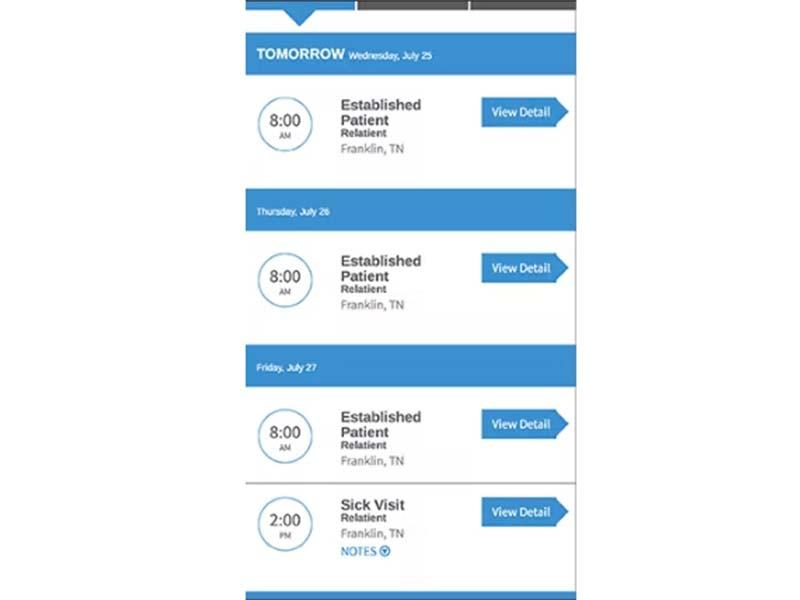
Upon logging in, view a comprehensive dashboard displaying appointment schedules and patient communications
Navigate to the scheduling section to manage appointments and availability using rules-based intelligent scheduling logic
Send patients a digital registration link ahead of their appointment to collect clinical history, consent forms, and insurance and ID details before arrival
Verify patient insurance eligibility and share pre-visit cost estimates so patients understand their financial responsibility before the appointment
Access patient profiles to update details and preferences
Configure automated reminders by selecting communication preferences (text, email, voice)
Tailor reminder messages with personalized content and branding
Reminders are automatically sent based on scheduled times to ensure patients are informed about upcoming appointments
Monitor reminder effectiveness and adjust settings as needed to optimize patient engagement and reduce no-show rates
Who Is Relatient For?
The software is used by healthcare organizations of all sizes, including:
- Federally Qualified Health Centers (FQHC)
- Hospitals and health systems
- Specialty groups and practices (such as orthopedics, cardiology, ENT, gastroenterology, and urology)
Relatient Use Cases
Based on our analysis of user reviews and Relatient's current capabilities, we identified several situations where the platform aligns well with healthcare organizations focused on strengthening patient access and communication:
Multi-Location Health Systems Managing Consistent Patient Communication
Healthcare organizations operating across several locations often need a standardized approach to patient outreach. Relatient works well in environments where communication processes need to remain consistent regardless of site or provider. Centralized workflows help maintain a more uniform patient experience across the organization.
Federally Qualified Health Centers Expanding Patient Access
Federally Qualified Health Centers (FQHCs) and community-based providers often serve diverse patient populations with varying communication preferences. Relatient supports outreach efforts through multiple communication channels, making it easier to engage patients and encourage timely access to care. This can be particularly valuable for organizations managing large patient volumes.
Specialty Practices Requiring Integration With Existing Clinical Systems
Specialty groups that depend on established EHR and practice management systems can use Relatient without significantly disrupting existing workflows. The platform is a practical option for organizations seeking to improve patient engagement while maintaining their current technology environment. This makes it suitable for practices focused on gradual operational improvements rather than large-scale system replacements.
Organizations Implementing Self-Scheduling Initiatives
Health systems and physician groups aiming to provide more convenient access to care can benefit from Relatient's scheduling capabilities. The platform is well-suited for organizations that want to give patients greater control over booking appointments while maintaining scheduling rules. This approach can help improve access without creating additional scheduling complexity.
Clinics Focused On Improving Pre-Visit Preparedness
Practices that frequently encounter incomplete paperwork, missing insurance information, or delays during check-in can use Relatient to prepare patients before arrival. Collecting information in advance helps support more efficient office workflows. This can be particularly useful for busy outpatient clinics managing high patient volumes.
Is Relatient Right For You?
If your organization is managing high appointment volumes, dealing with call center overload, or looking to modernize how patients schedule and communicate with your practice, Relatient is built specifically for that environment. It is a compelling choice for your practice, especially recognized with the 2024 KLAS Patient Self-Scheduling Award.
With automated reminders, customizable patient communication options, and seamless integration with existing systems, Relatient significantly reduces no-shows and improves patient satisfaction. Moreover, the software collects insurance and ID information upfront, which helps reduce wait times, ensures accuracy, and enhances the overall patient experience.
When it comes to trust and compliance, Relatient holds HIPAA, HITRUST, and SOC 2® Type 2 certifications, so patient data is protected to the highest industry standards. Furthermore, Relatient is also recognized as an athenahealth Preferred Solution Partner for Intelligent Scheduling in 2026.
Still unsure whether Relatient is the best fit for your practice? Call us at (661) 384-7070, and our team will help you decide based on your requirements.
Relatient Features
Financial Clearance
This feature facilitates secure and convenient payment options, reducing paper statements and accelerating cash flow. Automated balance notifications via SMS, email, and patient-initiated payment plans ensure compliance with financial standards. Insurance eligibility is verified upfront during intake to reduce claim denials and billing delays, while personalized pre-visit cost estimates are shared digitally, so patients know their financial responsibility before arrival.
eRegistration
The eRegistration feature allows you to configure digital registration forms to integrate with your PM or EHR system. It meets all security and HIPAA compliance standards while seamlessly connecting documentation to patient records. Patients can complete clinical history forms and sign consent documents electronically from their phone, with an optional in-office kiosk available for check-in without tying up front-desk staff.
Appointment Reminders
Appointment reminders improve attendance and revenue. They can be configurable and delivered through SMS/text, email, and voice messages. You can tailor messages based on patient preferences and include essential appointment details, registration, and payment links. Patient recalls are also triggered automatically to prompt patients to reschedule missed appointments or book follow-ups, supporting continuity of care.
Reporting And Analytics
The platform provides real-time insights into payment status, registration completion, and scheduling performance through built-in dashboard monitoring and analytics. These tools support data-driven decisions across the revenue cycle and patient access workflows, with dashboards available across both the Financial Clearance and Digital Registration modules.
Dash Voice AI
This is Relatient's agentic AI solution for healthcare call centers, designed to answer inbound patient calls and handle scheduling autonomously without staff involvement. Using the same rules-based engine as Dash Schedule, it books, reschedules, confirms, and cancels appointments while applying provider-specific logic at every step. Patients can also opt to receive a secure text link to self-schedule digitally during the same call.
AI-Enabled Chat
Dash Chat reduces call volumes and administrative workload through two-way patient communication. Staff can send and receive messages, protecting sensitive data while managing patient inquiries efficiently. AI-powered virtual agents handle routine patient inquiries 24/7, including appointment scheduling, rescheduling, and common questions, so there's minimal need for staff intervention.
Pros And Cons of Relatient
Pros
Improves patient engagement through automated appointment reminders and intelligent scheduling
Delivers better access and support with real-time chat options
Mobile accessibility enhances access to healthcare
Personalized messaging campaigns enhance patient experience
Simplifies the patient intake process with digital registration
Cons
Customization complexity for a few advanced features
Some online forms could be improved
Customer support response times may vary
Relatient Reviews
Total 24 reviews
4.4
All reviews are from verified customers
Rating Distribution
5
Stars63%
4
Stars25%
3
Stars8%
2
Stars0%
1
Stars4%
Share your experience
Val
Health, Wellness and Fitness, 101-500 employees
More than a year
“Used to be amazing”
Pros
While the support used to be exceptional, recent experiences have left much to be desired.
Cons
No longer needing to call for support is a relief, but the recent shift to tech support based in India has led to frustrating experiences in resolving issues.
Rating Distribution
Ease of use
6
Value for money
6
Customer Support
4
Functionality
6
Lisa
Hospital & Health Care, 51-100 employees
Less than a year
“Relatient Review”
Pros
The functionality and diverse patient engagement options are notable strengths.
Cons
The program's customer support and cost are noteworthy factors.
Rating Distribution
Ease of use
10
Value for money
8
Customer Support
10
Functionality
10
Wendy
Hospital & Health Care, 11-50 employees
Less than 6 months
“Horrible Customer Service”
Pros
Although the reporting features are commendable, their utility diminishes if the service itself is unreliable.
Cons
In my 30 years of professional experience, I've never encountered such atrocious customer service from any company.
Rating Distribution
Ease of use
2
Value for money
2
Customer Support
2
Functionality
7
Frequently Asked Questions
How does Relatient software help health systems?
Relatient software helps health systems by improving patient engagement, streamlining communication, and enhancing operational efficiency. It offers features such as appointment reminders and secure messaging, which give patients access to care and allow them to actively participate in their care journey.
What level of support does Relatient software provide?
Relatient software provides multiple channels to reach customer service teams, such as live chat, contact form, and email support options.
Who are the typical users of Relatient software?
Hospitals, health systems, specialty practices, and Federally Qualified Health Centers (FQHC) are typical users of Relatient software. Specialty organizations using the platform include orthopedics, urology, cardiology, ENT, and gastroenterology.
What is Relatient?
Relatient is intelligent patient access platform designed for healthcare centers and hospitals. It assists in streamlining patient communication via emails, text, and voice messages and scheduling appointments.
How much does Relatient software cost?
Pricing typically starts at $99/month, with final cost based on organization size, number of providers, and selected Dash® modules. Request a personalized Relatient pricing quote for your practice today!
What languages does Relatient offer?
Relatient is offered in the English language.
Does Relatient have a mobile app?
The vendor doesn't offer a native mobile app. However, the platform is accessible via web on desktop and mobile browsers.
Is Relatient free?
No, Relatient does not offer a free plan or a free trial.
What other apps does Relatient integrate with?
Relatient integrates with several third-party applications, including athenaOne, Veradigm, Epic, ModMed, Cerner, and Nextgen EHR, Greenway Health, and eClinicalWorks.
Does Relatient offer an API?
Yes. Relatient offers API access.