


Litmos

Last Updated
Key Takeaways
Generated from the text of customer reviews
Litmos is a cloud-based learning management system used mainly by HR, L&D, and training teams. It is particularly suited to regulated industries and distributed workforces. Users commonly value its community and knowledge-sharing environment, while some find the reporting difficult to navigate. Recently, Litmos partnered with American Medical Compliance to add over 450 healthcare compliance courses to its content library.
Our Verdict
Litmos is a suitable option for mid-sized and large organizations managing employee, compliance, and external training across multiple teams or locations. Its pricing is generally viewed as competitive, although some users report significant increases over time. We recommend it for organizations that need scalable learning management and can accommodate potentially higher long-term costs.
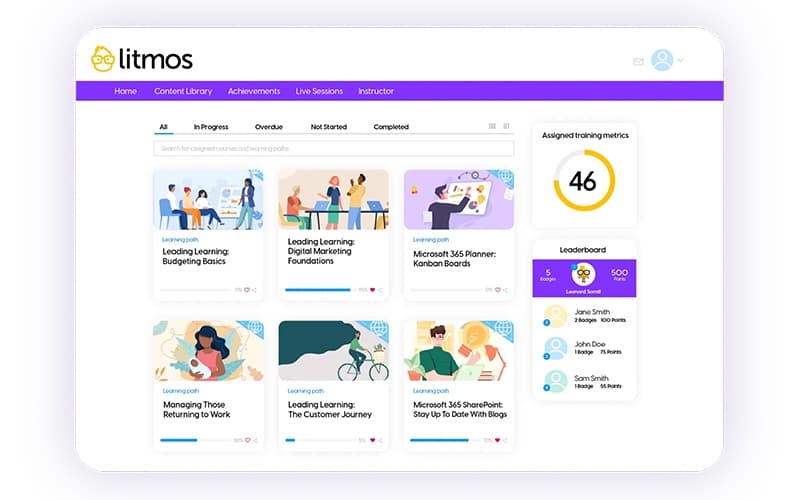
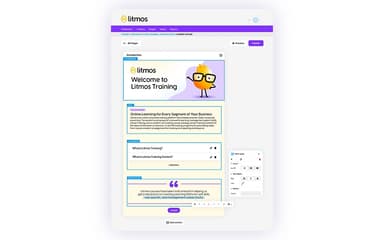
Litmos Specifications
- Activity Dashboard
- Asynchronous Learning
- Activity Tracking
- Access Controls/Permissions
What Is Litmos?
Litmos is a cloud-based learning management system (LMS) that organizations use to train employees, customers, partners, and other external audiences. It combines course delivery, learning paths, assessments, certifications, compliance workflows, reporting, and content management in one platform. Because course content, learner data, and reporting all sit in one platform, L&D teams can build and update training programs without waiting on IT or outside vendors.
What Is Litmos Best For?
A standout feature of Litmos is its Content Libraries which includes ready-made training content for teams. The libraries provide thousands of pre-built courses covering compliance, safety, leadership, sales, technology, and industry-specific training. Content is reviewed and freshness-tracked, with collections available for areas such as healthcare, financial services, and manufacturing. This suits L&D teams under pressure to launch programs fast, without months of content development.
How Much Does Litmos Cost?
Litmos pricing ranges from approximately $6–$10/user/month and offers plans at custom rates, including:
- Foundation
- Platinum
- Platinum AI
A 14-day free trial is also available. Organizations may also incur the following estimated additional costs:
- Implementation And Onboarding: Approximately $1,000–$5,000 for standard deployments and $5,000–$15,000+ for more complex or enterprise implementations, depending on integration and configuration requirements
- Data Migration And Setup Support: Approximately $500–$3,000+, depending on the volume, complexity, and format of historical training data
- Training And Workflow Configuration: Approximately $500–$3,000+, based on organizational size and the level of customization required
- Advanced Reporting: Approximately $1,000–$5,000+ annually, where applicable
Disclaimer: The pricing is subject to change.
Litmos Software Integrations
Litmos integrates with several third-party applications, including:
How Does Litmos Work?
Here’s how you can access the platform and move from account access to training delivery and reporting:
- Log in to Litmos using your account credentials to access the learning environment and available administration tools
- Create or add training content using your own courses, Litmos content libraries, or available authoring tools
- Organize courses into learning paths and training programs based on roles, skills, compliance requirements, or other learning needs
- Assign courses and learning activities to employees, customers, partners, or other learner groups
- Configure certifications, enrollment rules, compliance requirements, and automated learning workflows where required
- Deliver training through online courses, videos, assessments, webinars, blended learning paths, or other supported formats across desktop and mobile devices
Who Is Litmos For?
Litmos is designed for businesses of all sizes across the following industries:
- Financial services
- Technology
- Healthcare
- Education
- Retail
- Manufacturing
Litmos Use Cases
Based on our analysis of Litmos features and user feedback, we identified several situations where the platform is a practical fit:
Financial Services Teams Managing Regulatory Training
Financial institutions often need to keep employees, advisors, agents, and brokers current on changing regulatory requirements. Litmos fits this environment when training needs to extend beyond internal employees to branch staff and external distribution networks. Its financial services workflows cover areas such as AML, KYC, FINRA, SEC, and other compliance requirements, with certification and renewal tracking. This helps reduce gaps in mandatory training and gives compliance staff clearer records when they need to verify completion.
Hospitality Groups With Seasonal And Frontline Staff
Hotels and hospitality groups face frequent hiring cycles and need new employees to understand service, safety, and operational procedures quickly. Litmos is suited to organizations that need consistent training across multiple properties while accommodating seasonal workers. The platform supports role- and property-specific onboarding, food safety training, and recurring compliance requirements. For hospitality operators, this can shorten the time needed to prepare new staff and help maintain consistent service and compliance standards across properties.
Construction Companies Managing Job-Site And Subcontractor Training
Construction companies can face training gaps when workers move between projects or subcontractors join a site. Litmos works well where safety inductions, certifications, and site-specific requirements need to be applied across employees and external crews. Its construction workflows cover OSHA training, equipment qualifications, site induction, and certification tracking by project or location. This creates a more consistent way to verify that workers have completed the training required for a particular project before they begin work.
Retailers Training Large Distributed Store Networks
Retailers with many stores need to maintain consistent training while dealing with employee turnover and seasonal hiring. Litmos fits this model when training needs to vary by store, role, department, or region. Its retail use cases include associate onboarding, product and brand training, compliance programs, and seasonal workforce training across large numbers of locations. For retailers, this can reduce inconsistencies between stores and help managers keep large numbers of frontline employees aligned with current procedures and brand standards.
Is Litmos Software Right For You?
If you manage learning across a growing workforce or multiple external audiences, Litmos can support training at an enterprise scale. Trusted by companies such as Hewlett Packard Enterprise, USA Volleyball, Air General, and Russel Mineral Equipment, it is SOC 2 Type II and ISO 27001:2022 certified, with the ISO certification covering the Litmos LMS, Litmos Training Ops, and supporting cloud services.
Still unsure if the software is right for you? Contact us at 661-384-7070, and we will help you make the best decision.
Litmos Features
Content Authoring
This feature lets an L&D team type a topic or learning objective into the platform and have Litmos AI generate a structured course draft in return. This can include an outline, written module content, and assessment questions built from that outline. It also supports existing SCORM, xAPI, AICC, video, PDF, PowerPoint, and HTML5 content, so teams can combine internally created material with imported courses.
Litmos AI
Beyond content generation, Litmos AI handles the operational side of running a training program. It triggers enrollment automatically based on events like a hire date, a role change, or a certification nearing expiration, then follows up with reminder sequences and manager escalations if someone falls behind. For large organizations with different employee groups, this can reduce the amount of manual work involved in assigning recurring or role-specific training.
Compliance And Training Management
Litmos provides a dedicated set of controls for recurring compliance programs. Administrators can assign courses according to an employee's role, department, location, or risk classification, set certification expiration periods, and automate re-enrollment. The platform also maintains time-stamped training records and supports digital acknowledgments for policies and procedures. This is particularly relevant to financial services, healthcare, and other regulated organizations where teams need to demonstrate that specific employees completed required training within defined periods.
Customer Education
Litmos supports structured learning programs for customers, including onboarding courses, product training, certifications, and self-paced education. Organizations can trigger training based on customer lifecycle stages, product tiers, or behavior signals and track learning activity after enrollment. Training can also be delivered in multiple languages, with Litmos supporting more than 37 languages.
Content Analytics
Litmos provides content analytics that show which learners complete, skip, or revisit training materials. L&D teams can use engagement and completion data to identify underperforming content, update or retire it, and focus resources on content that supports learning outcomes.
Pros And Cons of Litmos
Pros
Extensive course library supports engaging, scalable employee learning
Flexible permissions streamline access across complex organizational structures
Parent account controls provide autonomy and centralized oversight
Cons
Limited bulk actions make managing large learner groups time-consuming
Customer support can be difficult to reach for certain issues
Litmos Pricing
Foundation | Platinum | Platinum AI |
|---|---|---|
Custom pricing | Custom pricing | Custom pricing |
|
|
|
Disclaimer: The pricing details were last updated on Sep 25, 2026 from the vendor's website. Please contact us for a tailored pricing list.
Litmos Reviews
Total 132 reviews
4.1
All reviews are from verified customers
Rating Distribution
5
Stars49%
4
Stars26%
3
Stars13%
2
Stars8%
1
Stars5%
Share your experience
Non-Profit Organization Management, 101-500 employees
More than a year
“One central spot for everything!”
Pros
It's great having one central hub for all our content. Learners can easily find specific topics and for us admins, building and managing everything is just as simple.
Cons
The initial setup does take some time. There are a lot of sections in the backend to configure before everything is ready to use but that's to be expected.
Rating Distribution
Ease of use
8
Value for money
10
Customer Support
8
Functionality
9
Biotechnology, 51-100 employees
More than a year
“A time-saver for reports!!”
Pros
I have to say, the analytics suite for admins is second to none. The level of detail is fantastic. But the feature I probably love the most is the automated report delivery. Setting up scheduled reports for different department heads and company leaders has not only saved me hours of work but also guarantees they're always looking at the latest data.
Cons
Every now and then, the link with our HRIS would glitch out and reset people's account permissions. Sometimes it even locked us out of admin accounts, which meant we always had to be ready to manually restore access.
Rating Distribution
Ease of use
9
Value for money
10
Customer Support
8
Functionality
8
Small Business, 11-50 employees
“duplicates, no fix, no refund”
Pros
Definitely made a strong first impression. On day one, importing my LinkedIn contacts was quick and easy but I do have some complaints to mention.
Cons
I joined LeadDelta after hearing it was one of the top CRM options for professionals who rely on LinkedIn. I put a lot of time into setting everything up and tailoring it to my needs. My goal was to enrich my CRM contacts with details from my Google account so I went through the whole process of migrating my Google contacts. Instead, the system duplicated every contact. When I tried to clean it up, I realized there was no actual delete option, only the ability to hide the imported contacts. The problem is that hiding them doesn't remove them from the dashboard metrics. I contacted support and I actually had to argue my case just to explain that the dashboard was still counting the hundreds of contacts I had manually hidden. Their response was that they couldn't remove the contacts on their side. As a software engineer, that explanation made no sense to me because updating a database is not some impossible task. I then asked for a refund (politely and on two separate occasions) but they refused, even though I had subscribed just two days earlier and never got to use the platform properly for tracking my contacts. In the end, I had to dispute the charge through my credit card company and LeadDelta is still pushing back on the refund. The level of customer service and lack of care has been honestly shocking.
Rating Distribution
Ease of use
1
Value for money
2
Customer Support
1
Functionality
2
Frequently Asked Questions
What types of pricing plans does offer?
Litmos pricing generally ranges from approximately $6–$10/user/month. The platform also offers customized pricing options across its Foundation, Platinum, and Platinum AI plans, allowing organizations to select a package that aligns with their training needs and requirements. Request a customized Litmos cost quote from us.
What language does Litmos software support?
Litmos LMS supports more than 37 languages, including English.
Does Litmos have a mobile app?
Yes, Litmos offers a mobile app compatible for both Android and iOS devices.
Does Litmos offer an API?
Yes, Litmos has an API available for use.
What other apps does Litmos software integrate with?
Litmos integrates with various third-party applications such as Microsoft Teams, Okta, ADP, BambooHR, and Salesforce.
What level of support does Litmos offer?
Litmos provides various customer support options such as a customer portal, FAQs, live support, and a contact form.
Who are the typical users of Litmos?
Litmos is a versatile solution for businesses of all sizes across sectors like technology, healthcare, education, retail, and manufacturing.